
雪板

Search documents
中产追捧的法国跑鞋 一年狂销140亿
2 1 Shi Ji Jing Ji Bao Dao· 2026-02-25 16:11
Core Insights - Amer Sports reported a strong performance with global sales projected to reach $6.6 billion by 2025, marking a turnaround to profitability [2] - Salomon, a key brand under Amer Sports, achieved annual sales exceeding $2 billion for the first time, driven by rapid growth in the outdoor segment [2] Group 1: Brand Transformation - Salomon is evolving from a brand perceived as "ugly and expensive" to a favorite among young middle-class consumers [3] - The brand, established in 1947, specializes in skiing, hiking, and trail running products, with a focus on professional gear [4][5] - Salomon has adopted a strategy similar to Arc'teryx, targeting middle-class consumers while integrating trendy lifestyle elements [6] Group 2: Marketing and Engagement - The brand has implemented a lottery system for popular shoe releases and collaborates with celebrities and KOLs to enhance brand visibility [7] - Salomon launched the Tea Horse Road series during the 2026 Spring Festival to deepen emotional connections with Chinese consumers [8] - The brand is actively involved in major trail running events globally and locally, reinforcing its professional image [8][9] Group 3: Retail Expansion - Salomon has seen significant growth in female consumers, with women making up 50% of its customer base in China [10] - The brand's retail footprint has expanded from fewer than 20 stores in 2019 to nearly 300 by the end of 2025, with a focus on both first-tier and lower-tier cities [10] - Salomon's flagship store in Chengdu is the world's first to combine skiing and trail running, showcasing a diverse range of high-end functional products [11] Group 4: Future Projections - The outdoor segment, including Salomon, is expected to see revenue growth of 18% to 20% in 2026, aligning with the growth of the Arc'teryx segment [11] - Management plans to continue investing in Salomon to support its ongoing expansion [11][12]


“冰雪+”串起消费产业链
Jin Rong Shi Bao· 2026-02-11 02:00
Group 1 - The Winter Olympics in Italy has reignited public interest in ice and snow sports, leading to increased participation in activities such as ice skating and skiing in popular locations like Beijing and Chongli [1] - Chongli, a key area for ice and snow tourism, is projected to receive over 10 million visitors by 2025, with weekend visitor numbers at certain ski resorts reaching around 15,000 [1] - The Northeast region of China is experiencing a booming ice and snow economy, highlighted by the launch of the "2026 'Buy in China' National Ice and Snow Consumption Season" in Harbin [1] Group 2 - The "Ice and Snow +" initiative aims to broaden the consumption chain, transforming ice and snow entertainment into a diversified consumer experience [2] - A complete ice and snow consumption chain has formed, with consumers spending significantly on equipment and travel, indicating the growing potential of the ice and snow economy [3] - Popularity in ski resorts is driving growth in related sectors such as transportation, accommodation, and dining [3] Group 3 - Hotel bookings in Chongli are in high demand, with some hotel types already fully booked, and snow equipment stores are also seeing increased customer traffic [4][5] - The China Tourism Research Institute forecasts that ice and snow tourism participants will reach 360 million by the winter of 2025-2026, generating an income of 450 billion yuan, with 220 million tourists primarily motivated by ice and snow activities [6] - Local governments are implementing targeted policies and initiatives to stimulate ice and snow consumption, integrating it into the overall New Year consumption season [6] Group 4 - Hubei province plans to launch a "Dance with Winter" ice and snow consumption season, distributing consumption vouchers and creating premium tourism routes to boost related spending by over 200 million yuan [7] - Jilin province aims to establish itself as a world-class ice and snow tourism destination, with a 5 billion yuan fund and 1 billion yuan in consumption vouchers to promote the industry [7] - Financial institutions are introducing various financial products to support the ice and snow economy, including interest-free installment plans and discounts for consumers [8] Group 5 - The ice and snow economy is transitioning from a seasonal trend to a high-quality, full-industry chain development, becoming a significant driver for domestic demand and consumption [8]
新春走基层丨燕山脚下冰雪“热”
Xin Hua Wang· 2026-02-04 12:20
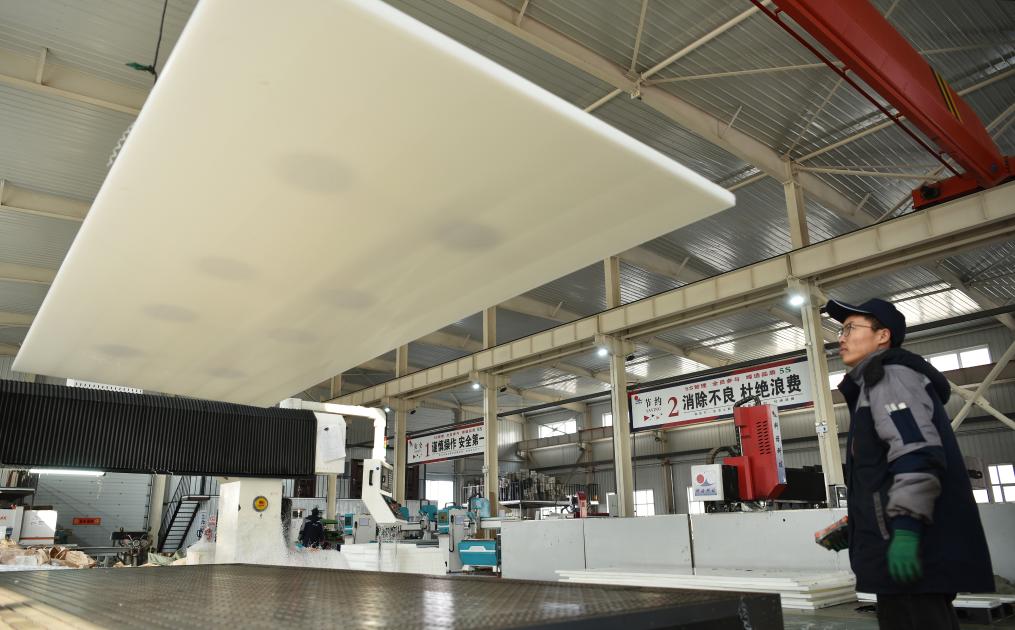
Group 1 - Zhangjiakou's industrial base is transitioning into the ice and snow equipment manufacturing sector, with strong demand reflected in full order books extending to July and August of this year [1] - The company Zhongsu Guoyou is innovating with detachable grip cable cars, allowing for high-speed operation on the line while ensuring safety for passengers boarding and alighting [1] - Keno Engineering Plastics is producing synthetic ice panels that significantly reduce the cost of ice rink construction to one-third of that of real ice, enhancing accessibility to ice sports [2] Group 2 - Lidakex is adapting to market trends by innovating lightweight snowboards, which weigh approximately 1.8 kg, making them easy to handle for users [4] - The company is leveraging its traditional manufacturing strengths to address industry challenges through precise R&D, contributing to the regional industrial transformation [4]
岷县:冰雪“冷资源”激活文旅“热经济”
Xin Lang Cai Jing· 2026-01-27 01:13
Core Insights - The article highlights the transformation of Mincounty's winter tourism through the activation of ice and snow resources, turning the "cold resources" into a "hot economy" for the local tourism industry [1][3]. Group 1: Economic Impact - Mincounty's winter tourism has shifted from a "low season" to a "high season," significantly contributing to the local economy [3]. - In 2025, the county is projected to receive 4.6684 million tourists, generating a total tourism revenue of 3.17 billion yuan, reflecting a year-on-year growth of 36.6% [3]. Group 2: Business Model Innovation - The innovative "summer-winter linkage" business model at the Hongse Farm in Mazichuan Town includes summer activities like boating and dining, while winter operations focus on skiing, enhancing visitor experiences and service quality [2]. - The farm averages around 300 visitors daily during winter, with a revenue of approximately 6,000 yuan per day, while also supporting local communities by renting space to help them increase their income [2]. Group 3: Cultural and Ecological Integration - The development strategy emphasizes the integration of red culture and ecological resources, leveraging historical sites and natural attractions to enhance tourism offerings [2]. - The local government aims to improve tourism infrastructure and diversify experiences, ensuring the transmission of red cultural heritage and the sustainable utilization of green resources [2].
从体验到制造全链条发力 开年中国冰雪经济焕新扩容
Yang Guang Wang· 2026-01-18 13:24
Group 1 - The core viewpoint of the articles highlights the booming ice and snow economy in China, with projections indicating that the number of ice and snow tourism participants will reach 360 million and revenue is expected to exceed 450 billion yuan during the 2025-2026 winter season [1] - The ice and snow economy is characterized by a younger demographic, with "post-95" and "Generation Z" being the main contributors, and family consumption accounting for over 50% [1] - There is a notable trend of southern tourists traveling north for winter sports, with over 70% of visitors coming from southern regions, indicating a shift in consumer behavior towards value and quality [1] Group 2 - The rapid growth of ice and snow consumption is attributed to a transformation in consumer spending from material satisfaction to experiential value, with a growing willingness to invest in novelty, ritual, and social experiences [2] - The ice and snow industry is experiencing a technological boom in domestic equipment manufacturing, with strong development potential across various segments such as snow-making equipment, cable cars, and apparel [2] - Establishing independent core brands is essential for long-term success in the ice and snow equipment industry, emphasizing the need for continuous improvement in technology, product quality, and brand foundation [2]
晶采观察丨从体验到制造全链条发力 开年中国冰雪经济焕新扩容
Yang Guang Wang· 2026-01-18 12:57
Group 1 - The core viewpoint of the articles highlights the booming ice and snow economy in China, with projections indicating that the number of ice and snow tourism participants will reach 360 million and revenue is expected to exceed 450 billion yuan during the 2025-2026 winter season [2] - The ice and snow economy is characterized by a younger demographic, with "post-95" and "Generation Z" being the main growth drivers, and family consumption accounting for over 50% [2][3] - There is a notable trend of southern tourists traveling north for winter sports, with over 70% of visitors coming from southern regions, indicating a shift in consumer behavior towards seeking quality experiences and value [2][3] Group 2 - The rapid growth of ice and snow consumption is attributed to a transformation in consumer spending from material satisfaction to experiential value, with people increasingly willing to invest in novelty, rituals, and social experiences [3] - The domestic ice and snow equipment manufacturing industry is experiencing a technological boom, with significant advancements in snow-making and ice-making equipment, ski resort operations, and apparel, showcasing strong development potential across various segments [4] - Establishing independent core brands is essential for long-term success in the ice and snow equipment industry, emphasizing the need for companies to focus on technological innovation, product quality, and brand foundation to secure a foothold in the trillion-yuan market [4]

从各地规划看“十五五”科技风口
Ke Ji Ri Bao· 2026-01-14 07:24
Group 1: Core Themes - The focus on "technological innovation" is prominent in the "14th Five-Year Plan" proposals across various provinces, emphasizing the need for original innovation and the construction of trillion-level industrial clusters [1] - Traditional industries are being upgraded through digital and green technologies, with provinces like Shanxi and Guangdong highlighting the importance of integrating technology with traditional sectors to ensure smooth transitions between old and new development drivers [2][3] Group 2: Digital Economy and Infrastructure - The construction of a national integrated data market and the deep integration of the digital economy with the real economy are key goals for the next five years, as provinces aim to leverage digitalization and intelligence to stimulate industrial momentum [4][5] - Guizhou is positioning itself as a significant player in the digital economy by developing its electronic information industry and enhancing its computing power infrastructure [5] Group 3: Future Industries and Technological Advancements - Future industries are seen as vital for cultivating new productive forces, with provinces like Anhui and Hainan focusing on quantum technology, biomanufacturing, and other cutting-edge fields to drive economic growth [10][11] - Sichuan is targeting advancements in sixth-generation mobile communication, quantum technology, and other frontier technologies to establish incubators and pilot zones for future industries [11] Group 4: Regional Specialization and Competitive Advantages - Regions are encouraged to develop distinctive industries based on their unique resources and conditions, with Beijing and Heilongjiang focusing on healthcare technology and winter sports equipment, respectively, to enhance market competitiveness [7][8] - The integration of culture and technology is emphasized in Hunan, aiming to promote new cultural industries through digital transformation [8]
中国冰雪技术开始向海外“反向输出”
Xin Lang Cai Jing· 2026-01-13 18:48
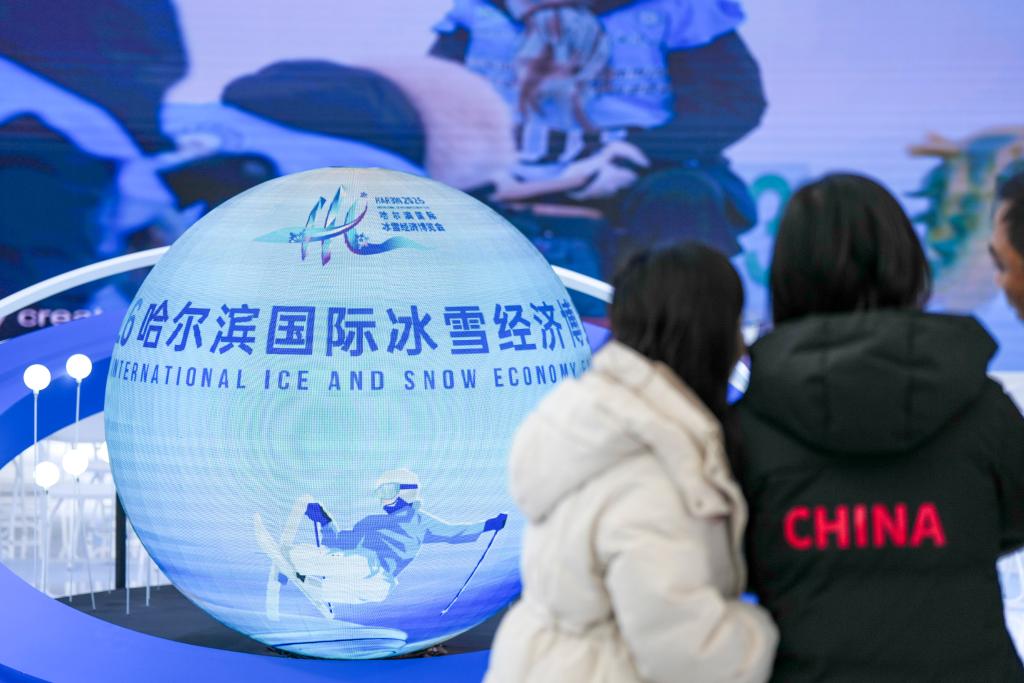
Core Insights - The 2026 Harbin International Ice and Snow Economic Expo, which recently concluded, attracted around 300 well-known enterprises from over 20 countries and regions, indicating the significant impact of China's initiative to engage 300 million people in winter sports, translating consumer enthusiasm into manufacturing strength [9][11]. Industry Overview - The expo showcased a full industrial chain of ice and snow equipment, highlighting the rise of domestic brands in the ice and snow industry. Notable innovations included color-changing ski goggles developed by Harbin Institute of Technology, which can adapt to extreme cold conditions [10][11]. - The 2023-2024 winter season saw participation in various ice and snow sports reach 264 million people, with over 385 million visits for ice and snow leisure tourism, establishing a solid foundation for ice and snow sports in China [10]. Market Dynamics - The expo introduced the "Ice and Snow Economy Full Industry Chain Map," which visually represented the entire industrial chain from equipment manufacturing to tourism and cultural services, facilitating investment cooperation in the ice and snow economy [11]. - Global ice and snow giants are shifting from merely selling products to conducting research and production in China, driven by the country's vast market potential and favorable innovation environment. For instance, the Italian company, which holds a 60% share of the global market, plans to establish its fourth global equipment center in China [13][14]. Future Prospects - The Chinese government aims for the ice and snow economy to reach a total scale of 1.5 trillion yuan by 2030, as outlined in a recent policy document. Local authorities in Harbin are focusing on developing five specialized industrial chains and creating four industrial clusters [14]. - The successful hosting of the Beijing Winter Olympics and the Harbin Asian Winter Games has created historic opportunities for China's ice and snow equipment manufacturing industry, transforming "cold resources" into a "hot industry" [14].

“三亿人上冰雪”催生“新蓝海”:中国为世界冰雪产业发展创造新机遇
Xin Hua Wang· 2026-01-09 12:56
Core Insights - The Harbin International Ice and Snow Economy Expo showcased China's efforts to engage 300 million people in winter sports, indicating a shift from tourism consumption to manufacturing strength in the ice and snow industry [2][4][6] - The expo featured 300 renowned companies from over 20 countries, highlighting the growing domestic capabilities in ice and snow equipment manufacturing [2][6] Industry Developments - The 2023-2024 winter season saw 264 million participants in various ice and snow sports and over 385 million people engaged in ice and snow tourism in China, demonstrating a solid grassroots foundation for winter sports [4] - The expo introduced a comprehensive "ice and snow economy industry chain map," illustrating the entire industry chain from equipment manufacturing to tourism and cultural services [4][6] Technological Innovations - Harbin's local universities and research institutions presented 80 ice and snow technology transformation achievements, including advanced products like deep-sea exploration devices and ice sculpture robots [4] - Innovations such as color-changing ski goggles developed by Harbin Institute of Technology were showcased, featuring Bluetooth technology and automatic lens adjustment [2][4] Market Trends - Chinese companies are increasingly exporting ice and snow technology, with firms like Ma Die Er Group and Hai Rui Ice and Snow exporting landscape construction and mobile ice-making technologies to countries like Kazakhstan and Saudi Arabia [6][7] - Global ice and snow giants are shifting from merely selling products to developing and manufacturing in China, as seen with brands like TPR and Italian Tianbing Group planning to establish R&D centers in China [7][9] Future Outlook - The Chinese government aims for the ice and snow economy to reach a total scale of 1.5 trillion yuan by 2030, supported by local initiatives to cultivate specialized industrial chains [9] - The successful hosting of the Beijing Winter Olympics and the upcoming Harbin Asian Winter Games are expected to further enhance the ice and snow equipment manufacturing industry in China [9]
“三亿人上冰雪”孕育产业蓝海——从哈尔滨冰博会看冰雪装备新趋势
Xin Hua She· 2026-01-09 11:35
Group 1 - The first Harbin International Ice and Snow Economy Expo attracted over 300 enterprises from more than 20 countries and regions, showcasing a blend of ice and snow art with advanced technologies like unmanned snow removal machines and solid-state batteries [1] - The expo highlighted China's goal of engaging 300 million people in ice and snow sports, indicating a shift from cultural tourism consumption to manufacturing strength in the supply chain [1] - The event featured 80 ice and snow technology transformation achievements from 29 local universities and research institutions, demonstrating the integration of technology into the ice and snow economy [2][4] Group 2 - The Chinese ice and snow sports participation reached 264 million people, with over 385 million people engaging in ice and snow leisure tourism, indicating a strong grassroots foundation for the industry [4] - The Chinese government aims for the ice and snow economy to reach a total scale of 1.5 trillion yuan by 2030, with local authorities in Heilongjiang and Harbin developing specialized plans to cultivate five key industrial chains [3] - Domestic brands are rising, with companies utilizing aerospace materials to innovate products like carbon fiber ski helmets, showcasing a collaborative approach between academia and industry [4] Group 3 - Foreign enterprises are shifting from merely selling products in China to establishing R&D and production facilities within the country, indicating a trend towards localization [6] - Global ice and snow giants are planning to set up significant manufacturing centers in China, which will not only support local ice and snow sports development but also extend their reach to Southeast Asia and Japan [6] - The successful hosting of the Beijing Winter Olympics and the Harbin Asian Winter Games has positioned China as a historical opportunity for the ice and snow equipment manufacturing industry [7]