冷冻水产品

Search documents
2025年中国农产品加工行业研究报告
硕远咨询· 2026-02-15 00:20
Investment Rating - The report does not explicitly state an investment rating for the agricultural product processing industry Core Insights - The agricultural product processing industry in China is experiencing robust growth, driven by rising consumer income, health awareness, and technological advancements, with an expected growth rate of over 8% in the next five years [14] - The industry is undergoing a transformation towards smart, green, and high-end processing, integrating advanced information technology and environmental concepts to enhance production efficiency and product quality [12][14] - The market is characterized by a diverse product range, including grain processing, oil processing, fruit and vegetable processing, livestock product processing, and aquaculture processing, with emerging sectors like biofuels and biochemicals gaining importance [4][9] Industry Overview - Agricultural product processing refers to the transformation of primary agricultural products into value-added products through various technical means and processes, including physical, chemical, and biological treatments [3] - The industry serves as a bridge between agriculture and industry, effectively extending the shelf life of agricultural products and enhancing their quality and value [3] Industry Development History - The industry began with small-scale workshops and has evolved significantly since the 1950s, transitioning from rudimentary processing to large-scale mechanized operations, although challenges in product diversity and technology remain [9][11] - Post-reform, the industry has seen rapid growth due to market economy establishment and foreign policy, leading to increased enterprise numbers and product diversification [11] Current Industry Analysis - As of 2024, the market size of China's agricultural product processing industry has surpassed several trillion RMB, indicating strong development momentum and market potential [13] - The industry is primarily concentrated in regions with significant agricultural production, such as Northeast, North China, East China, and South China, forming specialized agricultural processing clusters [15][17] Market Demand and Consumer Trends - Consumer demand for processed agricultural products is becoming more diverse, with a shift towards functional foods, organic products, and convenience foods driven by rising health awareness [19][20] - The emphasis on product quality is increasing, with consumers prioritizing nutritional value, safety, and transparency in food production [21] Technological Development and Innovation Trends - The application of smart manufacturing technologies is becoming widespread in agricultural product processing, enhancing production efficiency and quality stability [37] - The introduction of biotechnology and enzyme engineering is revolutionizing traditional food processing methods, improving product taste and nutritional value [38] Policy Environment and Regulatory Impact - The government is actively promoting agricultural modernization through various policies, including subsidies for processing equipment and support for agricultural technology innovation [53] - Environmental protection and energy-saving policies are increasingly influencing industry practices, encouraging companies to adopt green development strategies [58] Competitive Landscape and Major Company Analysis - The industry is characterized by a mix of large leading enterprises and numerous small and medium-sized enterprises, creating a competitive yet complementary environment [18] - Leading companies are focusing on R&D investment and brand building to enhance their core competitiveness and market influence [72][73]
2025年同江边民互市贸易进口商品量和贸易额同比分别增285.8%和258.6%
Zhong Guo Xin Wen Wang· 2026-02-02 08:19
Core Insights - The cross-border trade at the Tongjiang port has seen significant growth, with imports reaching 927.95 tons and trade volume at 9.7831 million RMB in 2025, marking increases of 285.8% and 258.6% year-on-year, respectively, setting a historical high [1][2] Group 1 - The establishment of border resident cooperatives has facilitated the import of Russian pre-packaged foods and frozen seafood, reducing customs clearance time to half a day, thereby increasing income for local residents [1] - The Tongjiang Customs has implemented policies to support the high-quality development of the cross-border trade zone, including face-to-face policy explanations to help residents understand and utilize trade policies effectively [2] - The introduction of the Mutual Trade 2.0 system has enhanced regulatory efficiency through a comprehensive risk warning and verification system, allowing for faster customs clearance and an expanded range of trade goods [2] Group 2 - The customs authority emphasizes its dual role as a protector of national borders and a supportive partner for businesses, aiming to provide quality services to enhance the convenience and smoothness of cross-border trade [2]
“无菌蛋”靠谱吗?专家:很难达到绝对无菌,营养与普通鸡蛋无异
Yang Shi Xin Wen· 2026-01-09 03:18
Group 1: Food Safety and Quality - The increasing consumer focus on food safety highlights the importance of eggs as a key protein source in Chinese households, with "sterile eggs" being marketed as "safer," "more nutritious," and "healthier" [1] - Professor Liu Jingbo from Jilin University states that achieving absolute sterility in eggs is difficult, and the term "sterile eggs" should more accurately be referred to as "edible raw eggs," which can meet safety standards for consumption [1] - There are currently no national or industry standards for edible raw eggs in China, although group standards have been established to regulate them [1] Group 2: Food Additives and Regulations - The excessive use of food additives, particularly composite phosphates in shrimp products, has raised public concern, as highlighted by the "water-retaining shrimp" incident [2] - The national standard GB 2760-2024 specifies that water-retaining agents can be used in frozen aquatic products, with a maximum limit of 5 grams per kilogram [2] - Experts emphasize the need for companies to adhere to food safety responsibilities and to innovate in technology to enhance the quality of frozen aquatic products [2] Group 3: Supply Chain and Traceability - There is a call for stricter regulation of the shelf life and cold chain transport conditions for key raw materials like frozen meat and seafood [3] - Increased sampling inspections of food supply materials and the use of new technologies to improve inspection levels are recommended [3] - A transparent regulatory network involving multiple stakeholders is essential for public trust in food safety [3] Group 4: Salmonella Prevention in Egg Production - In the breeding phase, it is crucial to ensure that eggs are free from Salmonella, requiring monthly testing of feed, water, and the environment [4] - Edible raw eggs must be transported and stored under cold chain conditions, with specific temperature and humidity requirements [4] - The recommended consumption period for raw eggs is within 15 days of production, and vulnerable populations should avoid consuming raw eggs [4]
韩7月份进出口物价均上升
Shang Wu Bu Wang Zhan· 2025-08-21 03:58
Core Insights - The July import price index in South Korea rose to 134.87, marking a 0.9% month-on-month increase, ending a five-month decline since February [1] - The rise in import prices was influenced by increases in international oil prices and the Korean won's exchange rate against the US dollar [1] - The July export price index also increased by 1.0% to 128.19, ending a four-month downward trend [1] Import Price Details - Raw material prices increased by 1.5%, while intermediate goods, capital goods, and consumer goods rose by 0.6%, 0.5%, and 0.5% respectively [1] - Notable price increases were observed in methyl ethyl ketone, precious metal refining products, flash memory chips, and secondary batteries [1] - The exchange rate of the Korean won against the US dollar rose by 0.6%, and the average price of Dubai crude oil increased by 2.3% [1] Export Price Details - Agricultural, forestry, and fishery products saw a price increase of 4.2%, while mining products rose by 1.0% [1] - Significant price increases were noted in computers, electronics, optical instruments, coal, and petroleum products, with frozen seafood, diesel, and DRAM also showing notable rises [1] Trade Indices - In dollar terms, the July import quantity index and value index increased by 7.8% and 1.8% year-on-year, respectively [1] - The export quantity index and value index rose by 8.2% and 4.3% year-on-year, respectively [1] - The net commodity trading conditions index increased by 2.1% year-on-year, marking 25 consecutive months of growth, attributed to a larger decline in import prices compared to export prices [1] - The income trading conditions index rose by 10.5% year-on-year, benefiting from the increases in net commodity trading conditions and export quantity index [1]
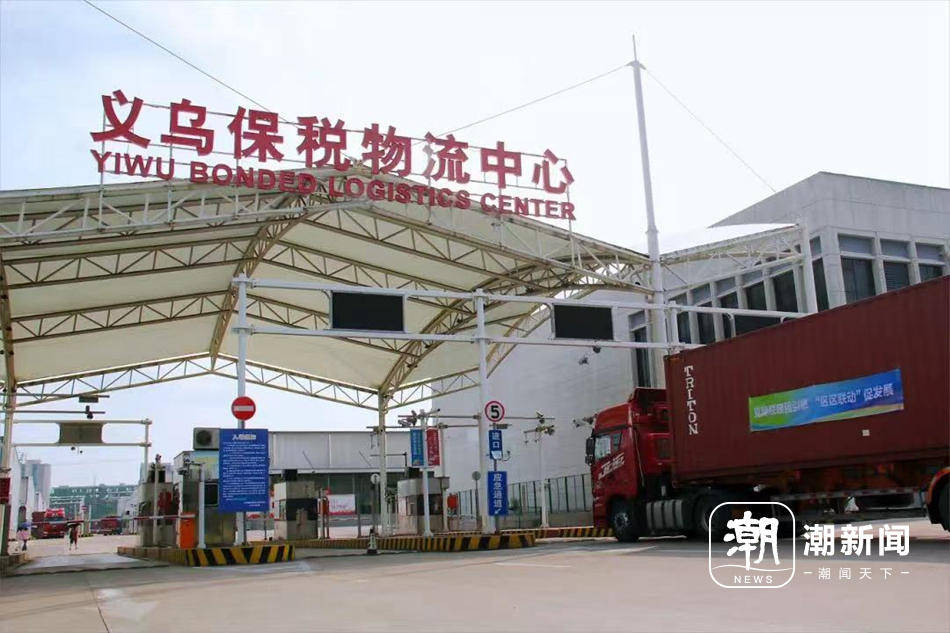
义乌创新打造“保税+冷链”进口贸易新模式
Sou Hu Cai Jing· 2025-07-21 04:33
Core Insights - The "bonded + cold chain" innovative model has officially commenced operations, allowing Australian almonds to reach the cold storage within 2 hours after customs clearance at the Yiwu Bonded Logistics Center [3][5]. Group 1: Operational Efficiency - The collaboration between Yiwu Bonded Logistics Center and Huishang Cold Chain Company has addressed issues such as insufficient bonded cold chain storage space and low distribution efficiency, resulting in a 30% increase in storage utilization and a 40% reduction in order delivery time in the Yangtze River Delta region [2][5]. - The logistics cost per box is expected to decrease by 1,600 yuan due to the direct transportation of goods to the cold storage after customs clearance [5]. Group 2: Service Platform Development - The integration of bonded policy advantages with the 300,000 cubic meters of high-standard cold storage and intelligent distribution systems has led to the creation of a comprehensive service platform that includes customs clearance, storage, distribution, and financial services [7]. - Over 20 enterprises have been connected to this platform, supporting the collaborative development of "bonded + professional market" and enhancing the services for imported cold chain businesses [7]. Group 3: Future Projections - The first batch of 5,000 high-standard bonded cold chain dedicated storage units has been put into use, focusing on imported nuts, dried fruits, and frozen seafood [8]. - It is projected that by the end of 2025, the import scale of related categories will exceed 500 million yuan, driving the upgrade of imported cold chain business services [8].