
保水虾仁

Search documents
牢记食品安全知识,很重要
Xin Lang Cai Jing· 2026-01-18 21:31
Core Viewpoint - The article discusses the importance of food safety and health in China, highlighting recent developments and regulations aimed at improving food safety governance and addressing public concerns [1]. Group 1: Regulatory Developments - In March 2025, the Central Committee and State Council issued guidelines to enhance food safety through a full-chain regulatory approach, addressing eight weak links and proposing 21 specific measures to shift from reactive to proactive governance [2]. - The new regulations focus on emerging challenges such as online food delivery and cross-regional risks, aiming to include all stakeholders in the food supply chain under regulatory oversight [2]. Group 2: Food Labeling Improvements - New food labeling standards were introduced in March 2025, which include digital labels to resolve issues of visibility and accessibility of food information [3]. - The updated standards require clear labeling of expiration dates and allergenic substances, enhancing consumer awareness and safety [3]. Group 3: Food Safety Incidents - The "water-retaining shrimp" incident raised concerns over excessive use of food additives, highlighting the need for companies to adhere to legal standards and ensure safe practices in food production [5]. - The issue of "sterile eggs" was discussed, clarifying that they are not absolutely sterile and emphasizing the importance of consumer awareness regarding food safety [7]. Group 4: New Food Ingredients - D-alloheptulose was approved as the first bio-synthesized food ingredient in China, marking a significant step in the application of synthetic biology in the food sector [9]. - The approval indicates a mature technological capability and policy support for synthetic biology in food production, presenting new opportunities for the industry [9]. Group 5: Nutritional Products for Seniors - The draft standards for "senior nutrition supplements" were released in July 2025, indicating a growing market demand for products tailored to the nutritional needs of the elderly [17]. - The development of these products requires collaboration between enterprises, academia, and government to ensure scientific research and standardized production [17]. Group 6: Food Safety Awareness - Recent incidents, such as the use of non-food-grade colorants in school meals, underscore the need for heightened awareness and training among food industry workers to prevent food safety violations [11]. - The article emphasizes the importance of robust monitoring and traceability systems in the food supply chain to enhance safety and quality [15].

尚方舟食品新增被执行7884万,因“保水虾仁”遭央视3·15晚会曝光
Xin Lang Cai Jing· 2026-01-14 12:28
Core Viewpoint - Zhanjiang Shangfangzhou Food Co., Ltd. is facing significant legal and regulatory challenges due to excessive phosphate levels in its shrimp products, leading to financial liabilities and operational restrictions [1][5]. Financial and Legal Issues - As of January 14, Zhanjiang Shangfangzhou Food Co., Ltd. has three execution records totaling over 83.6 million yuan, with additional frozen equity amounting to 5 million yuan and tax arrears exceeding 11.39 million yuan [1]. - The company has a history of being executed for nearly 4.5 million yuan [1]. Product Quality and Regulatory Compliance - The company was implicated in a scandal regarding "water-retaining shrimp," with its phosphate levels in shrimp products reportedly reaching 30 grams per 1,000 grams, significantly exceeding the legal limit of 5 grams [3]. - The shrimp soaking process reportedly increases the weight by 20%, raising concerns about product safety and compliance with national regulations [2][3]. Regulatory Actions - Following the exposure on the CCTV 3.15 Gala, local market regulatory authorities conducted inspections, leading to the seizure of raw materials and products, and mandated the recall of shrimp products produced between September 16, 2023, and March 15, 2025 [5]. - The company has been fined and had its food production license revoked by the Zhanjiang market regulatory authorities [6].
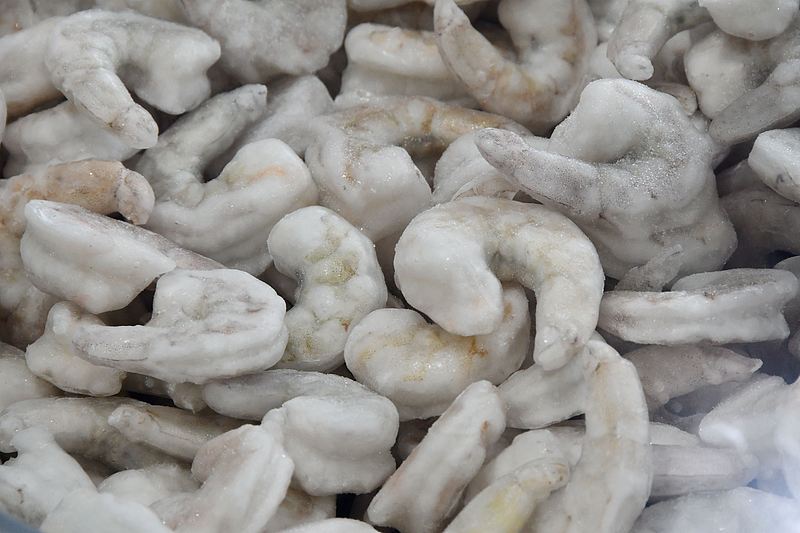
湛江尚方舟食品新增被执行7884万,因“保水虾仁”遭3·15晚会曝光
Xin Lang Cai Jing· 2026-01-14 12:28
Core Viewpoint - Zhanjiang Shangfangzhou Food Co., Ltd. has been implicated in a scandal involving excessive use of phosphates in shrimp products, leading to significant legal and financial repercussions for the company [1][3]. Financial and Legal Issues - On January 12 and 13, Zhanjiang Shangfangzhou Food Co., Ltd. was listed as an executor in two new cases, with a total execution amount exceeding 78.84 million yuan, as reported by the Zhanjiang Intermediate People's Court [1]. - As of January 14, the company has three execution cases with a total amount exceeding 83.6 million yuan, alongside two instances of equity freeze involving 5 million yuan [1]. - The company has four tax arrears announcements, with a cumulative tax debt of over 11.39 million yuan [1]. - Historically, the company has faced execution cases totaling nearly 4.5 million yuan [1]. Product Quality and Regulatory Actions - The company was highlighted in the 2025 CCTV 3.15 Gala for its involvement in the "water-retaining shrimp" scandal, alongside three other companies [1]. - Investigations revealed that the company used phosphates in shrimp products at levels reaching 30 grams per 1000 grams, significantly exceeding the legal limit of 5 grams [3]. - Following the scandal, local market regulatory authorities conducted inspections, leading to the seizure of raw materials and products, and mandated the company to recall affected shrimp products produced between September 16, 2023, and March 15, 2025 [3]. - The company was fined and had its food production license revoked in April due to these violations [4].
遭315晚会曝光保水虾仁企业等被执行7884万
Xin Lang Cai Jing· 2026-01-14 07:15
Company Overview - Zhanjiang Shangfangzhou Food Co., Ltd. was established in September 2010 with a registered capital of 5 million RMB [1] - The legal representative is Huang Yuzhu, and the company is primarily engaged in food production, food sales, wholesale and retail of aquatic products, and processing of edible agricultural products [1] Recent Legal Issues - On January 12 and 13, 2023, the company was listed as a defendant in two new enforcement cases, with a total enforcement amount exceeding 78.84 million RMB [1] - The enforcement courts involved are Zhanjiang Chikan District People's Court and Zhanjiang Potou District People's Court [1] Shareholder Information - The company is owned by Huang Yuzhu and Huang Mader, holding 90% and 10% of the shares respectively [1] Regulatory Actions - In April 2025, following the exposure of "water-retaining shrimp" by CCTV's 315 Gala, the Zhanjiang market regulatory authority imposed administrative fines and revoked the food production licenses of four involved companies, including Zhanjiang Shangfangzhou Food Co., Ltd. [1]
“无菌蛋”靠谱吗?专家:很难达到绝对无菌,营养与普通鸡蛋无异
Yang Shi Xin Wen· 2026-01-09 03:18
Group 1: Food Safety and Quality - The increasing consumer focus on food safety highlights the importance of eggs as a key protein source in Chinese households, with "sterile eggs" being marketed as "safer," "more nutritious," and "healthier" [1] - Professor Liu Jingbo from Jilin University states that achieving absolute sterility in eggs is difficult, and the term "sterile eggs" should more accurately be referred to as "edible raw eggs," which can meet safety standards for consumption [1] - There are currently no national or industry standards for edible raw eggs in China, although group standards have been established to regulate them [1] Group 2: Food Additives and Regulations - The excessive use of food additives, particularly composite phosphates in shrimp products, has raised public concern, as highlighted by the "water-retaining shrimp" incident [2] - The national standard GB 2760-2024 specifies that water-retaining agents can be used in frozen aquatic products, with a maximum limit of 5 grams per kilogram [2] - Experts emphasize the need for companies to adhere to food safety responsibilities and to innovate in technology to enhance the quality of frozen aquatic products [2] Group 3: Supply Chain and Traceability - There is a call for stricter regulation of the shelf life and cold chain transport conditions for key raw materials like frozen meat and seafood [3] - Increased sampling inspections of food supply materials and the use of new technologies to improve inspection levels are recommended [3] - A transparent regulatory network involving multiple stakeholders is essential for public trust in food safety [3] Group 4: Salmonella Prevention in Egg Production - In the breeding phase, it is crucial to ensure that eggs are free from Salmonella, requiring monthly testing of feed, water, and the environment [4] - Edible raw eggs must be transported and stored under cold chain conditions, with specific temperature and humidity requirements [4] - The recommended consumption period for raw eggs is within 15 days of production, and vulnerable populations should avoid consuming raw eggs [4]
保水虾仁、无菌蛋、长保食品…… 热议食品安全,你敢吃吗?
2 1 Shi Ji Jing Ji Bao Dao· 2026-01-08 09:25
Group 1: Food Safety Concerns - The excessive use of additives, such as water-retaining agents in shrimp products, has raised significant safety concerns, with one company exceeding the legal limit of phosphate by 145% [2] - Microbial contamination, particularly from botulinum toxin, remains a major risk in food safety, necessitating strict control measures from production to storage [3] - Experts emphasize that the safety of long shelf-life foods does not correlate directly with their nutritional value, and modern processing techniques can ensure both safety and nutrition [3] Group 2: Industry Trends and Innovations - The demand for "suitable elderly food" is increasing, with a significant gap in the market for scientifically defined products that cater to the nutritional needs of older adults [5] - The approval of D-alloheptulose as a new food ingredient marks a significant advancement in synthetic biology applications within the food industry, indicating a mature technological and policy framework [5] - The introduction of new food safety standards, including updated labeling regulations, aims to enhance consumer awareness and safety, addressing long-standing industry concerns [6][7] Group 3: Regulatory Developments - The release of 50 new national food safety standards, including those for prepackaged food labeling, represents a significant upgrade in food labeling management [6] - The new regulations require clear labeling of expiration dates and allergenic substances, aiming to reduce food allergy risks and improve consumer information [6] - The implementation of comprehensive food safety regulations across the entire supply chain reflects a shift towards proactive risk management and consumer safety [7]
酒企在啤酒中添加类似“伟哥”物质,被追究刑事责任
Qi Lu Wan Bao· 2025-07-30 03:49
Core Viewpoint - The market regulatory authorities have intensified their enforcement actions against food safety violations, resulting in significant penalties and legal actions against non-compliant companies [1] Group 1: Regulatory Actions - In the first half of the year, the regulatory system handled 181,000 food safety violation cases, imposing fines and confiscations totaling 740 million yuan [1] - The authorities have reported five typical cases of food safety violations, highlighting the ongoing commitment to consumer protection [1] Group 2: Case Summaries - **Case 1: Guangdong Zhanjiang "Water Shrimp" Incident** Four companies were found to have illegally added excessive phosphates to frozen shrimp products, resulting in fines totaling 7.4943 million yuan and the revocation of their food production licenses for five years [2] - **Case 2: Beijing Haidian "Toxic Candy" Incident** A product sold through live streaming was found to contain a banned diuretic, leading to the arrest of over 40 suspects and the closure of 15 live streaming channels, with the case involving over 50 million yuan [3] - **Case 3: Chongqing Munibro Beer Incident** A beer product was found to contain a harmful substance similar to a prescription drug, resulting in a fine of 150,000 yuan and the referral of the case to criminal authorities [4] - **Case 4: Zhejiang Shaoxing Sifang Food Co. Incident** The company was found to be producing vinegar that did not meet safety standards, with over 900 boxes of problematic vinegar seized and the case referred to criminal authorities [5] - **Case 5: Fujian Shishi Restaurant Incident** A restaurant was found to have illegally used borax in food products, leading to an investigation and referral to criminal authorities [7] Group 3: Industry Implications - The reported cases indicate a lack of legal awareness and responsibility among some food producers, emphasizing the need for stricter compliance with food safety regulations [6] - The market regulatory authorities are committed to enhancing enforcement measures, including joint law enforcement and credit penalties, to ensure food safety and protect consumers [6]

啤酒中加类似“伟哥”物质、水饺中使用硼砂……五起食品安全案例公布
Yang Shi Xin Wen· 2025-07-29 23:14
Core Viewpoint - The market regulatory authorities have intensified their enforcement actions against food safety violations, revealing significant illegal activities in the food industry and emphasizing the importance of compliance and consumer safety [1]. Summary by Relevant Sections Enforcement Actions - In the first half of the year, the regulatory system handled 181,000 food safety violation cases, imposing fines and confiscations totaling 740 million yuan, and referred 653 cases to judicial authorities [1]. Case Summaries - **Case 1: Guangdong Zhanjiang "Water Shrimp" Incident** - Four frozen shrimp companies were found to have illegally added excessive phosphates and falsely labeled their products as "zero additives," resulting in fines totaling 7.4943 million yuan and the revocation of their food production licenses for five years [2]. - **Case 2: Beijing Haidian "Toxic Candy" Incident** - A product sold through live streaming was found to contain a banned diuretic, leading to a criminal investigation that resulted in the arrest of over 40 suspects and the closure of 15 live streaming channels, with the case involving over 50 million yuan [3]. - **Case 3: Chongqing Munibro Brewery Illegal Additives** - A beer was found to contain a substance similar to a prescription drug, leading to a fine of 150,000 yuan and the referral of the case to criminal authorities [4]. - **Case 4: Zhejiang Shaoxing Sifang Food Co. Vinegar Incident** - The company was found to be using acetic acid to produce counterfeit vinegar, with over 900 boxes of non-compliant products seized, and the case has been referred to criminal authorities [5]. - **Case 5: Fujian Shishi Restaurant Borax Use** - A restaurant was found to have illegally used borax in food products, leading to an investigation and referral to criminal authorities [6]. Regulatory Emphasis - The regulatory body highlighted the need for food producers to adhere to legal standards and emphasized that violations will result in severe penalties, urging societal participation in monitoring food safety [1][6].
市场监管总局通报:一酒企在啤酒中添加类似“伟哥”物质,线上线下销售67箱,被罚款15万元,追究其刑事责任
Mei Ri Jing Ji Xin Wen· 2025-07-29 14:46
Core Viewpoint - The market regulatory authorities have intensified their enforcement actions against food safety violations, resulting in significant penalties and legal actions against offending companies [1] Summary by Relevant Sections Enforcement Actions - In the first half of the year, a total of 181,000 food safety violation cases were investigated, resulting in fines and confiscations amounting to 740 million yuan, with 653 cases referred to judicial authorities [1] Case Summaries - **Case 1: Guangdong Zhanjiang "Water Shrimp" Incident** - Four companies were found to have illegally added excessive amounts of phosphates to frozen shrimp products while falsely labeling them as "zero additives." Fines totaled 7.4943 million yuan, and all four companies had their food production licenses revoked for five years [2] - **Case 2: Beijing Haidian "Toxic Candy" Incident** - A product sold through live streaming was found to contain a banned diuretic. The sales network spanned nine provinces, and over 40 suspects were arrested, with the case involving over 50 million yuan [3] - **Case 3: Chongqing Munibro Beer Illegal Additives** - A beer product was found to contain a substance similar to a prescription drug, leading to a fine of 150,000 yuan and referral of the case to criminal authorities [4] - **Case 4: Zhejiang Shaoxing Sifang Food Company** - The company was found to be producing vinegar that did not meet safety standards, with over 900 boxes of problematic vinegar seized, involving over 1 million yuan [5] - **Case 5: Fujian Shishi Restaurant Using Borax** - A restaurant was found to have illegally used borax in food products, leading to a criminal investigation [6] Regulatory Insights - The regulatory authorities emphasize the importance of legal compliance and consumer safety, urging businesses to adhere to laws and ethical standards to avoid severe penalties [6]

上半年,全国市场监管部门查办食品违法案件18.1万件
Xin Jing Bao· 2025-07-29 12:23
Core Viewpoint - The market regulatory authority has intensified its enforcement actions against food safety violations, resulting in significant penalties and legal actions against offending companies [1]. Summary by Relevant Sections Enforcement Actions - In the first half of the year, the regulatory system handled 181,000 food safety violation cases, imposing fines and confiscations totaling 740 million yuan, and referred 653 cases to judicial authorities [1]. Case Summaries - **Case 1: Guangdong Zhanjiang "Water Shrimp" Incident** - Four frozen shrimp companies were found to have illegally added excessive phosphates and falsely labeled their products as "zero additives," resulting in fines of 7.4943 million yuan and revocation of their food production licenses for five years [2]. - **Case 2: Beijing Haidian "Toxic Candy" Incident** - A product sold through live streaming was found to contain a banned diuretic, leading to a criminal investigation that resulted in the arrest of over 40 suspects and involved an estimated 50 million yuan in illicit sales [3]. - **Case 3: Chongqing Munibro Beer Illegal Additives** - A beer product was found to contain a harmful substance similar to a prescription drug, leading to a fine of 150,000 yuan and referral of the case for criminal prosecution [4]. - **Case 4: Zhejiang Shaoxing Sifang Food Co. Vinegar Fraud** - The company was caught using acetic acid to produce counterfeit vinegar, with over 900 boxes of non-compliant products seized, and the case has been referred to law enforcement [5]. - **Case 5: Fujian Shishi Restaurant Borax Use** - A restaurant was found to have illegally used borax in its dumpling fillings, leading to an investigation and referral for criminal charges [6].