
功能健康食品

Search documents
强强联合,智领“味”来:双汇携手中国农科院共建营养健康食品联合研究中心
Zhong Guo Xin Wen Wang· 2026-02-11 09:08
Core Viewpoint - The establishment of the "Nutrition and Health Food Joint Research Center" by Shuanghui Development and the Chinese Academy of Agricultural Sciences marks a significant step towards enhancing technological innovation and industry upgrading in the food sector, aligning with national health strategies and consumer demands for healthier food options [3][5][9]. Group 1: Strategic Importance - The shift in consumer dietary needs from "eating enough" to "eating healthily" is emphasized as a critical trend, necessitating the development of nutritious food products [3][5]. - The collaboration with a national research institution signifies a strong partnership aimed at integrating scientific research with industry practices, which is essential for advancing the food sector [5][9]. Group 2: Research Center Objectives - The Joint Research Center will focus on key areas such as children's food, senior nutrition, and functional health foods, providing comprehensive research support [7]. - Five core strategic directions have been established for the center, including: - Technological breakthroughs in major research projects [7]. - Precision in developing low-GI foods and organic products to meet diverse nutritional needs [7]. - Accelerating the transformation of research outcomes into market-ready products [7]. - Cultivating innovative talent through deep integration of industry and academia [7]. - Leading industry standards and participating in national research projects [7]. Group 3: Industry Impact - The partnership is expected to bridge the gap between research and market application, fostering a technology-driven innovation system that benefits both Shuanghui and the Chinese Academy of Agricultural Sciences [9]. - This initiative is anticipated to enhance Shuanghui's position in the meat protein supply sector while providing practical applications for the research outcomes of the Chinese Academy [9]. - The establishment of the center signals a new phase in the Chinese food industry, focusing on high-quality development driven by technological innovation, ultimately benefiting consumers with healthier food choices [9].


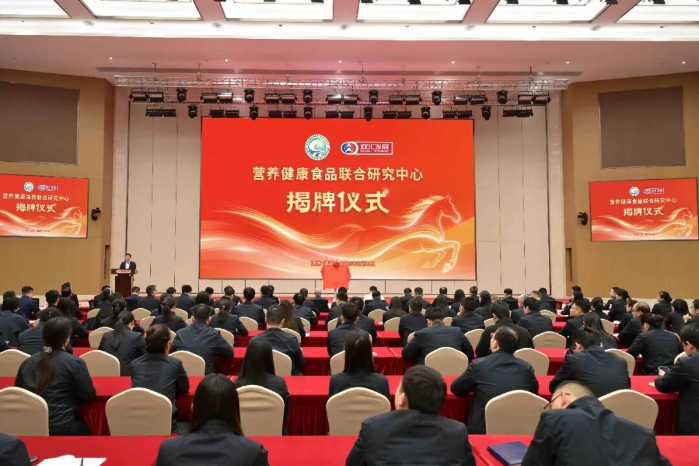
强强联合,智领味来:双汇携手中国农科院共建营养健康食品联合研究中心
Jin Rong Jie· 2026-02-11 07:43
Core Viewpoint - The establishment of the "Nutrition and Health Food Joint Research Center" by Shuanghui Development and the Chinese Academy of Agricultural Sciences marks a significant step towards enhancing technological innovation and industry upgrading in the health food sector, aligning with national food safety strategies and the "Healthy China 2030" initiative [2][11]. Group 1: Strategic Importance - The shift in consumer dietary needs from "sufficient food" to "nutritious and healthy food" is accelerating, necessitating the development of health food products [2][5]. - The collaboration between Shuanghui and the Chinese Academy of Agricultural Sciences represents a strong alliance between industry and academia, aiming to create a deep integration of research and practical application [5][11]. Group 2: Research Focus and Goals - The Joint Research Center will focus on key areas such as children's food, senior food, and functional health food, providing comprehensive research support [7]. - Five core strategic directions were announced for the center, including: - Tackling major scientific research projects with a focus on key technologies [8]. - Developing low GI foods, organic foods, health products, and specialized dietary products to meet diverse nutritional needs [8]. - Ensuring seamless integration from laboratory to consumer through the entire production chain [8]. - Cultivating innovative talent through deep integration of industry and academia [8]. - Leading industry standards and participating in national standard formulation [9]. Group 3: Future Outlook - The partnership is expected to break down barriers between research and market, establishing a technology innovation system that is market-oriented and enterprise-led [11]. - The establishment of the center is anticipated to enhance Shuanghui's position in the meat protein supply sector and provide application scenarios for the research achievements of the Chinese Academy of Agricultural Sciences [11]. - This initiative signifies a new phase in the Chinese food industry, driven by technological innovation, promising consumers a wider range of healthier food options [11].
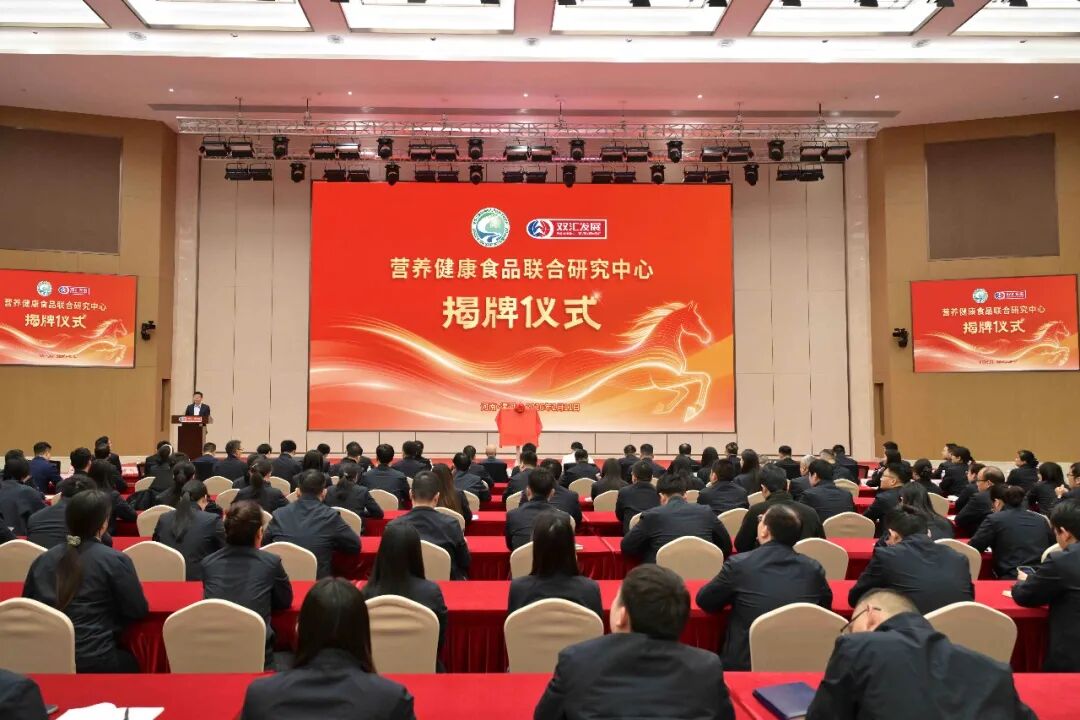
注重以质取胜、强化数智赋能 轻工业优化供给扩消费
Jing Ji Ri Bao· 2025-10-29 00:59
Core Insights - The Ministry of Industry and Information Technology, the Ministry of Commerce, and the State Administration for Market Regulation jointly released the "Light Industry Stabilization and Growth Work Plan (2025-2026)", emphasizing the role of light industry in stabilizing growth, promoting consumption, and benefiting people's livelihoods [1][2] - The plan aims to address structural contradictions in consumption supply and enhance the quality and reasonable growth of light industry, providing strong support for industrial stability and consumption recovery [1][2] Summary by Sections Economic Performance - In the first seven months of this year, the revenue of large-scale light industry reached 13.2 trillion yuan, with profits of 760.1 billion yuan, and an industrial added value growth of 6.7% year-on-year [2] - The plan sets a growth target focused on stability, which is crucial for responding to complex international situations, while the industry possesses the capability to achieve these goals [2] Product Supply Optimization - The light industry is a major production sector in China, but it faces challenges such as supply structure imbalance and insufficient high-quality supply [3] - The plan proposes three key measures: accelerating product innovation, enhancing quality assurance, and strengthening brand cultivation [3] Digital Transformation - Companies like Luhua Group and Shandong Haihua are leveraging digital transformation to enhance operational efficiency and overall benefits [4] - The digitalization rate of light industry enterprises for R&D design tools reached 86.2%, with management digitalization at 82.3%, indicating a solid foundation for intelligent transformation [5] Consumer Demand Activation - The light industry is closely linked to the daily lives of over 1.4 billion people, making it a key player in promoting consumption and benefiting livelihoods [7] - The plan identifies new growth points in smart home products, elderly and infant goods, and health-related products, focusing on meeting the new consumer demands driven by AI and digital transformation [7][8] Future Development Trends - The plan emphasizes the importance of enhancing consumer experience through new application scenarios and promoting AI in product design and manufacturing [8] - It encourages the development of high-value-added products and the expansion of international market shares for key industries like home appliances and toys [8]
轻工业优化供给扩消费
Jing Ji Ri Bao· 2025-10-28 22:17
Core Viewpoint - The "Light Industry Stabilization and Growth Work Plan (2025-2026)" aims to enhance the role of light industry in stabilizing growth, promoting consumption, and benefiting people's livelihoods, with a focus on quality improvement and reasonable growth [3][4][5]. Group 1: Industry Overview - Light industry is a significant sector in China's economy, contributing to consumption, exports, and employment, with a revenue of 13.2 trillion yuan and a profit of 760.1 billion yuan in the first seven months of this year [5]. - The plan emphasizes stable growth in key industries and the development of new growth points, particularly in smart home products, elderly and infant goods, and sports leisure fashion products [3][4]. Group 2: Strategic Goals - The plan sets a growth target focused on stability, addressing structural contradictions in consumption supply, and aims for qualitative improvements alongside reasonable quantitative growth [4][5]. - It highlights the need for optimizing product supply, addressing issues like supply structure imbalance and insufficient quality assurance [6]. Group 3: Digital Transformation - The plan promotes digital transformation in light industry, with a focus on AI integration and operational intelligence, moving from resource management to knowledge creation [7][9]. - By 2024, the digital design tool penetration rate in light industry is expected to reach 84.9%, with significant advancements in AI applications across various sectors [8]. Group 4: Consumer Engagement - The plan aims to enhance consumer experience through new applications of AI, promoting personalized production and improving the overall consumption environment [10][11]. - It identifies key growth areas such as smart home products and health-related goods for the elderly and infants, aligning with emerging consumer demands [10][11].

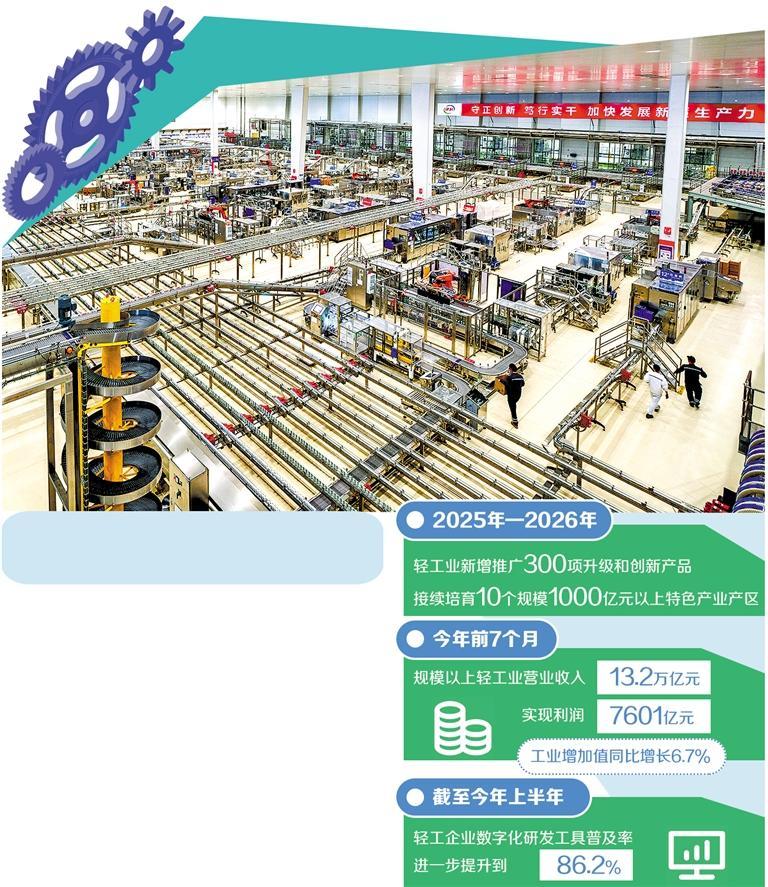
我国轻工业智能制造水平明显提升
Xin Hua Wang· 2025-10-02 07:43
Core Insights - The Chinese light industry is significantly advancing in digital economy and intelligent manufacturing, with 167 national-level 5G factories established [1] - The digital research and development tool penetration rate in light industry enterprises is 86.2%, while the digital management penetration rate is 82.3% [1] Group 1: Digital Transformation - The light industry has made notable progress in digitalizing equipment and facilities, as well as in the numerical control of key processes [1] - The industry is seeing a rich variety of intelligent home products, customized products, and functional health foods, alongside rapid development in smart toys, musical instruments, and glasses [1] Group 2: Artificial Intelligence Application - Despite advancements, the application of artificial intelligence in the light industry remains sporadic, uneven, and lacking depth [1] - Future efforts should focus on systematic planning and strong measures to deepen the integration of "artificial intelligence+" in the light industry, promoting technological innovation, industrial transformation, and consumption upgrades [1]
金乡加速构建全国调味品产业高质量发展标杆区
Zhong Guo Shi Pin Wang· 2025-07-07 02:56
Group 1 - The core viewpoint highlights Jinxiang County's strategic development of its garlic industry, aiming to be included in the provincial "14th Five-Year" agricultural and rural planning, and striving to create a national-level condiment production and processing base [1] Group 2 - Jinxiang County has a leading advantage in garlic planting and storage, with 700,000 acres of garlic cultivated, supporting around 2 million acres in the surrounding area, accounting for one-third of the national garlic planting area. The annual processing capacity exceeds 3 million tons, with exports covering over 170 countries and regions, representing more than 70% of the national export volume [1] - The county's logistics system for condiments is among the best in the country, with a cold chain storage capacity of 4.8 million tons, ranking high in the industry. It holds the largest storage volume for spices like San Ying pepper and black pepper, and significant storage for star anise and cinnamon, ensuring stable raw material supply for condiment production [1] Group 3 - The professional park in Jinxiang, covering 11 square kilometers, is the largest specialized food park in the country, promoting an integrated service model for wastewater treatment, heat supply, and foreign trade services. It hosts 82 enterprises, including Fortune Global 500 companies, forming four major industrial clusters and nurturing 24 national high-tech enterprises and 13 provincial leading enterprises [1] - In 2024, the park is set to be included in Shandong Province's pillar industry cluster, with its industrial scale and competitiveness ranking among the top in the province [1] Group 4 - The industry has a complete certification system, enhancing ecological upgrades. Jinxiang has established strategic cooperation with the Shandong Condiment Association, aiming to receive titles such as "Quality Raw Material Base for Spices" by June 2025. Several local enterprises have been recognized as quality condiment producers, achieving full-chain quality certification from raw materials to manufacturing [2] - Jinxiang is accelerating the construction of a national benchmark area for high-quality development in the condiment industry, leveraging its "five major centers" industrial ecosystem [2]