加氢服务

Search documents
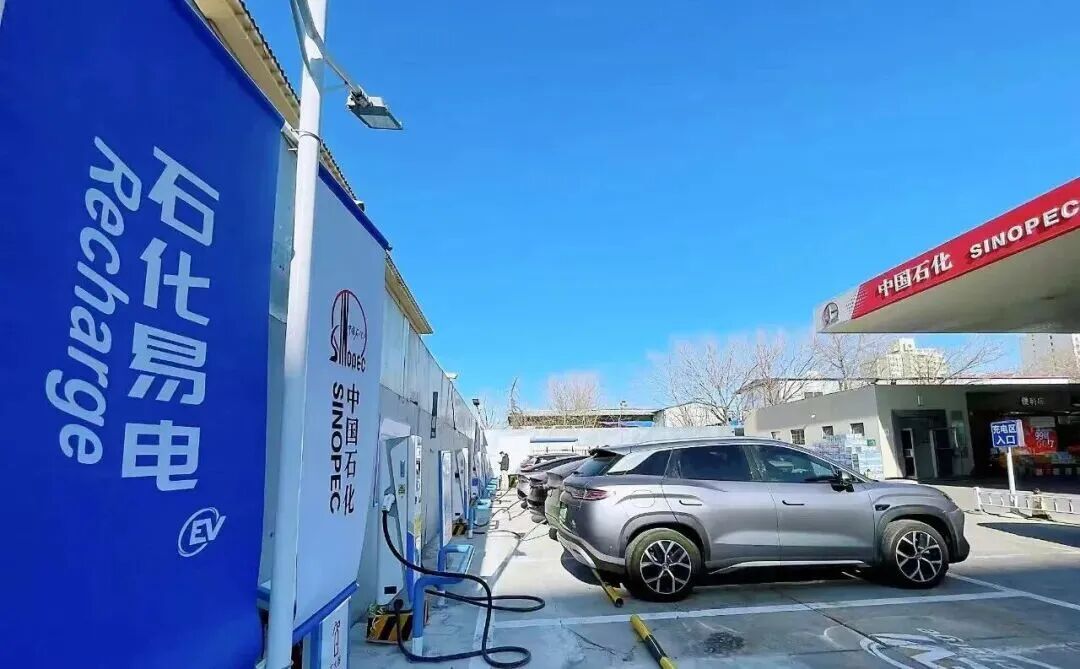
能加油、能充电!石景山、房山两区迎来首座综合能源站
Bei Jing Wan Bao· 2026-01-31 11:59
Group 1 - The core viewpoint of the news is the launch of integrated energy stations in Shijingshan and Fangshan districts, which aim to meet diverse refueling needs for different users, combining oil, hydrogen, and electric services [1][2][6]. Group 2 - The first integrated energy station in Shijingshan, located at the Sinopec Lugu Gas Station, features 10 fast charging terminals and 2 super charging terminals, serving an average of 121 vehicles daily, with a peak of 156 vehicles [1][4]. - The station is designed to alleviate charging pressure in the area and enhance user experience while ensuring safety through physical separation of charging and refueling areas, along with comprehensive fire safety measures [4]. Group 3 - The first integrated energy station in Fangshan, the Yanshan Comprehensive Energy Station, offers a one-stop refueling solution for both traditional and new energy vehicles, featuring hydrogen refueling capabilities [6][10]. - The station includes a hydrogen refueling machine with a capacity of 1000 kg per day and can potentially increase to 70 MPa hydrogen capacity, catering to various vehicles including sanitation and public transport [8][11]. Group 4 - The Fangshan station also provides gasoline, electric vehicle charging (with 4 charging guns at 60 kW), and retail services, achieving comprehensive coverage of oil, hydrogen, electricity, and services [10]. - This initiative supports local logistics, sanitation, and public transport systems, while also promoting the hydrogen industry and contributing to carbon reduction goals [11].


首座全业态综合能源站投运
Zhong Guo Hua Gong Bao· 2026-01-27 01:21
Core Insights - The article highlights the launch of China's first comprehensive energy station, the Shatinggang Comprehensive Energy Station, which integrates multiple energy services and aims to significantly reduce carbon emissions in the transportation sector [1] Group 1: Energy Station Overview - The Shatinggang Comprehensive Energy Station is a collaborative project by Baiyun Investment Group, Yuntao Hydrogen Energy, and Baiyun New Energy, located in the Baiyun District of Guangzhou [1] - The energy station is designed to serve over 100,000 vehicle trips annually and is expected to reduce carbon emissions by over 10,000 tons per year in the transportation sector [1] Group 2: Functional Capabilities - The energy station combines 12 functional areas, including refueling, hydrogen refueling, electric charging, photovoltaic power generation, energy storage, and commercial services [1] - It features two hydrogen refueling machines with a daily hydrogen refueling capacity of 500 kilograms, sufficient to meet the needs of 60 hydrogen fuel cell vehicles [1] Group 3: Environmental and Safety Measures - The station utilizes photovoltaic power for self-consumption and incorporates energy storage to manage peak and off-peak electricity usage, effectively reducing carbon emissions [1] - Advanced oil and gas recovery technologies are employed to significantly decrease volatile organic compound emissions [1] - A comprehensive safety management system is in place, including real-time monitoring and emergency response mechanisms, to ensure public safety during hydrogen production and refueling processes [1]
加氢站:燃料电池车先锋军
2025-12-08 00:41
Summary of Hydrogen Station Industry Conference Call Industry Overview - The hydrogen station industry in China primarily adopts an external hydrogen supply model, with construction methods including standalone hydrogen stations and co-built stations. The main pressure level is 35 MPa, while 70 MPa technology is gradually maturing [1][3] - The core infrastructure of hydrogen stations includes compressors, hydrogen storage facilities, and refueling systems, with technology choices impacting operational efficiency and costs [1][4] Key Insights - The global number of hydrogen stations is continuously increasing, with significant growth in China. By the end of 2024, approximately 500 hydrogen stations are expected to be built in China. However, achieving the national target of 1,000 stations by 2025 may be challenging [1][5][7] - The cost of refueling varies significantly based on type and specifications, with large-scale effects being notable. The internal hydrogen production model can save transportation costs, but production costs remain high, necessitating a comprehensive consideration of scale and technological advancements to optimize economics [1][8] Economic Factors - Key factors affecting hydrogen project profitability include: - Hydrogen procurement costs, terminal prices, and the composite rate of hydrogen stations [1][9] - Current hydrogen retail prices are high, with government efforts aiming to reduce prices to below 35 yuan per kilogram by 2025, supported by subsidies [10] Government Support and Policy - Local governments provide financial subsidies and policy support for hydrogen station construction, typically covering 30% to 50% of investment costs. However, the lack of unified industry standards and regulatory frameworks poses challenges [10] - The operational composite rate of hydrogen stations is currently low due to the limited number of fuel cell vehicles, impacting efficiency and profitability [10] Future Development Focus - Future development priorities for hydrogen stations include: - Continuous policy support for infrastructure development - Monitoring the annual construction numbers of hydrogen stations to assess market expansion speed - Observing trends in procurement costs and terminal sales prices, which are closely related to the sales volume and ownership of fuel cell vehicles [11][12]
克拉玛依:全疆首座对外运营加氢站投运
Zhong Guo Xin Wen Wang· 2025-11-11 01:09
Core Viewpoint - The launch of the hydrogen refueling station in Karamay marks a significant step in promoting hydrogen energy infrastructure in Xinjiang, aligning with national carbon neutrality goals and supporting the transition to cleaner energy sources [1] Group 1: Project Overview - The Karamay hydrogen refueling station is the first operational hydrogen station in Xinjiang and serves as a key facility for the region's hydrogen energy infrastructure [1] - The station has a daily hydrogen refueling capacity of 500 kilograms, catering to the hydrogen needs of commercial vehicles such as buses and logistics [1] Group 2: Strategic Importance - The project is part of China National Petroleum Corporation's efforts to implement the national "dual carbon" strategy and transform the energy structure [1] - Karamay is positioned as a crucial oil and petrochemical base in the country, aiming to establish a hydrogen energy industry demonstration zone in Xinjiang through a clear path of "wind-solar hydrogen production, petrochemical hydrogen use, and hydrogen-electric power supply" [1] Group 3: Impact on Local Economy - The operation of the hydrogen station addresses the "last mile" bottleneck in hydrogen application, facilitating the transition to clean energy in urban transportation and providing new options for green travel and low-carbon production for enterprises [1]
锚定“油气氢电服”战略 北京石油重塑综合加能生态
Zhong Guo Zheng Quan Bao· 2025-10-13 21:48
Core Viewpoint - The transformation of traditional gas stations into comprehensive energy stations is crucial for the energy industry's development, especially in the context of the popularization of new energy vehicles and the advancement of "dual carbon" goals. China Petroleum & Chemical Corporation (Sinopec) is leading this transformation in Beijing by integrating hydrogen, electricity, and gas services to enhance urban green travel and economic development [1][2]. Group 1: Strategic Development - Sinopec Beijing Petroleum is implementing an integrated strategy of "oil, gas, hydrogen, electricity, and services" to adapt to the changing energy landscape and urban planning needs [2]. - The company has achieved a significant milestone by expanding its charging network from zero to full coverage in Beijing within two years, with 114 operational charging stations and 2,771 charging terminals as of August 2025 [2][5]. - The focus is on increasing the proportion of charging and hydrogen refueling services while ensuring the stability of traditional fuel operations, thus promoting a dual development model [2][6]. Group 2: Infrastructure and Technology - The establishment of the first oil-hydrogen integrated energy station in southern Beijing serves various vehicle types, including heavy-duty trucks, and is a key node in the hydrogen energy corridor [3]. - Technological upgrades have significantly improved charging efficiency, with the average waiting time at charging stations reduced from four hours to a much shorter duration, achieving the goal of "one cup of coffee, full charge" [4][5]. - The introduction of advanced charging technologies, such as Huawei's liquid-cooled ultra-fast charging, allows for charging power up to 600 kW, enhancing the overall charging experience [5][6]. Group 3: Future Plans and Innovations - Beijing Petroleum plans to further expand its charging terminal network to meet the growing demand for electric vehicle charging, aiming for comprehensive coverage within 3 kilometers of urban centers and accessibility in surrounding villages [6]. - The company is exploring new energy replenishment methods, including partnerships with leading firms to develop integrated solar-storage-charging stations, which will optimize operational costs and enhance clean energy utilization [6]. - Future initiatives also include trials of wireless and autonomous charging technologies to provide customized energy solutions for logistics and smart parking scenarios [6].

锚定“油气氢电服”战略北京石油重塑综合加能生态
Zhong Guo Zheng Quan Bao· 2025-10-13 20:56
Core Insights - The transformation of traditional gas stations into comprehensive energy stations is crucial for the energy sector amid the rise of electric vehicles and the "dual carbon" goals in China [1][2] Group 1: Strategic Initiatives - China Petroleum Beijing Branch is implementing an integrated strategy of "oil, gas, hydrogen, electricity, and services" to enhance its hydrogen and charging businesses [1][2] - The company has achieved full coverage of charging networks in Beijing within two years, addressing the issue of long waiting times for charging [1][2] - Future plans include exploring battery swapping and wireless charging to support the construction of a "charging-friendly capital" [1][2] Group 2: Infrastructure Development - As of August 2025, Beijing Petroleum operates 114 charging stations, including 29 supercharging stations, with a total of 2,771 charging terminals [2] - The company is actively constructing hydrogen refueling stations, with the first oil-hydrogen integrated energy station in southern Beijing serving various vehicle types [2][3] - The average queuing time for charging has significantly decreased, achieving the goal of efficient service for electric vehicle owners [3][4] Group 3: Technological Advancements - The charging stations utilize Huawei's liquid-cooled ultra-fast charging technology, achieving a maximum charging power of 600 kW [4] - The company is enhancing charging equipment to improve charging time and safety, ensuring compatibility with various electric vehicle brands [4][5] - Future plans include upgrading existing stations and establishing new ones with 480 kW supercharging terminals as standard [5] Group 4: New Energy Ecosystem - The demand for charging services is expected to surge with the increasing number of electric vehicles in Beijing [4][5] - Beijing Petroleum aims to achieve comprehensive network coverage and high service standards in line with the city's development plans [5] - The company is collaborating with leading firms to develop integrated solar-storage-charging battery swap stations, promoting efficient use of clean energy [5]
湖南布局建设LNG加气站和加氢站
Zhong Guo Hua Gong Bao· 2025-09-26 04:31
Core Points - The article discusses the construction plan for LNG refueling stations and hydrogen stations in Hunan Province, aiming to support the green and low-carbon transformation of transportation in line with the "dual carbon" goals [1][2] Group 1: LNG Refueling Network - The plan aims to establish a comprehensive LNG refueling network across the provincial highway system, with a target of 174 LNG refueling stations by 2035, ensuring full coverage of the highway network [1] - Short-term goals include the construction of 78 new LNG refueling stations by the end of 2027, totaling 102 stations; by the end of 2030, an additional 36 stations will be built, reaching a total of 138 stations; and by 2035, another 36 stations will be added to complete the network [1] Group 2: Hydrogen Demonstration Corridor - The plan also focuses on creating a hydrogen demonstration corridor along major national highways, with 16 hydrogen stations planned for high-traffic routes, including the G4 and G60 highways [2] - The construction of hydrogen stations will be phased, with immediate goals set for 2025-2027 to complete 8 hydrogen stations, followed by additional stations in the subsequent years [2] - The strategy emphasizes building stations in areas with high traffic and favorable market conditions, with a guideline of one LNG station every 100 kilometers on national highways and every 200 kilometers on provincial highways [2]
中国石油销售公司:责任赋能未来
Sou Hu Cai Jing· 2025-06-10 12:49
Core Viewpoint - Under the guidance of the "dual carbon" goals, China Petroleum Sales Company actively practices its responsibilities as a central energy enterprise, continuously deepening its green development practices and integrating ESG (Environmental, Social, and Governance) concepts into all aspects of its operations in 2024 [1][14]. Energy Supply Assurance - China Petroleum Sales Company focuses on stabilizing the market and ensuring stable oil supply across various regions, including remote areas and urban centers, especially during critical periods such as natural disasters and seasonal demands [3]. - The company has implemented emergency supply mechanisms to quickly allocate resources and optimize logistics during extreme weather events, ensuring the continuous supply of essential goods [3]. - In 2024, the company successfully managed oil supply during severe weather conditions, maintaining operations at 22,000 gas stations to support transportation and economic activities [3]. Green and Low-Carbon Development - The company emphasizes green development as a core issue for transformation and social responsibility, implementing high standards for pollution prevention and environmental protection [5]. - As of now, the company has established 17 carbon-neutral oil depots and 69 carbon-neutral gas stations, while also enhancing its capabilities in energy conservation and carbon reduction [6]. - Various sales enterprises are actively promoting renewable energy initiatives, such as solar power projects and electric vehicle charging infrastructure, contributing to a more sustainable energy landscape [7]. Social Responsibility and Community Engagement - The company integrates social responsibility into its corporate culture, focusing on employee development and health, as well as community support through various initiatives [8]. - Significant contributions have been made in poverty alleviation and community support, with projects that have created over 130 jobs and provided training to thousands of individuals [9]. - The company has established numerous service points to support rural communities, offering essential services and resources to enhance local livelihoods [9]. Governance and Compliance - China Petroleum Sales Company is committed to modernizing its governance structure, focusing on compliance management and risk assessment to ensure long-term sustainability [11][12]. - The company has implemented a comprehensive compliance management system, achieving international certification for its governance practices [12]. - Emphasis on technological innovation is evident, with various projects aimed at improving operational efficiency and environmental management [13].


2025加氢站产业进展汇总
势银能链· 2025-05-23 03:26
Core Viewpoint - The growth rate of hydrogen refueling stations in China has slowed down significantly since 2024, contrasting sharply with the high growth rates of previous years. The promotion of hydrogen fuel cell vehicles is gradually unfolding, but large-scale application has not yet formed, directly impacting the utilization rate of hydrogen refueling stations. Currently, the online rate of hydrogen vehicles in demonstration city clusters is around 25%, while the online rate of hydrogen refueling stations is about 40% [2][3]. Summary by Sections Hydrogen Refueling Station Development - Since 2025, there has been a noticeable change in the development momentum of hydrogen refueling stations in China, with frequent progress reported in various aspects such as construction, acceptance, operation, and policy [3]. Hydrogen Vehicle and Refueling Station Statistics - Total hydrogen vehicles: 13,344, with 3,301 online (24.7% online rate) - Total hydrogen refueling stations: 139, with 56 online (40.3% online rate) - Specific city cluster statistics include: - Beijing-Tianjin-Hebei: 4,286 vehicles, 1,071 online (25.0% online rate), 27 stations, 15 online (55.6% online rate) - Shanghai: 4,079 vehicles, 960 online (23.5% online rate), 24 stations, 6 online (25.0% online rate) - Guangdong: 759 vehicles, 104 online (13.7% online rate), 24 stations, 8 online (33.3% online rate) - Hebei: 2,441 vehicles, 670 online (27.4% online rate), 25 stations, 6 online (24.0% online rate) - Zhengzhou: 1,779 vehicles, 498 online (28.0% online rate), 39 stations, 21 online (53.8% online rate) [3]. Progress in Construction and Operation of Hydrogen Refueling Stations - In May, the first hydrogen energy comprehensive energy station in Liupanshui, Guizhou, passed acceptance with a daily hydrogen refueling capacity of 2,000 kg [5]. - The hydrogen refueling station project at the Fuping service area on the Jingkun Expressway received approval for fire safety design, marking its entry into the construction phase [5]. - In April, the Rongcheng New Energy hydrogen refueling station officially commenced operations, supporting clean transportation for upstream and downstream steel products [5]. - The Sinopec Guizhou comprehensive energy station completed a green upgrade and began operations, serving as a key energy hub for the "hydrogen corridor" in the western region [5]. Certification and Qualification Progress - In May, the first phase of the wind-solar hydrogen integrated demonstration project in Jiujiang, Jiangxi, was approved, with a hydrogen production capacity of 400 Nm³/h and a refueling station capacity of 500 kg/d [9]. - The hydrogen refueling station on Pinghai Road in Suzhou became the first in Jiangsu to receive "carbon neutral" certification, having provided clean fuel for over 8,900 hydrogen buses [9]. Contractual Developments - In March, Hubei Guanggu East Holdings signed a contract with Sinopec for the operation of the Dazhong East comprehensive energy station, which will be the largest hydrogen refueling station in Hubei [11]. - Strategic cooperation agreements were signed between various companies to enhance collaboration in hydrogen refueling station construction, hydrogen sales, and logistics applications [11]. Policy Overview for Hydrogen Refueling Stations in 2025 - Various regions have introduced policies to support the construction of hydrogen refueling stations, including allowing construction outside chemical parks, encouraging partnerships between enterprises and research institutions, and providing financial subsidies for new and upgraded stations [13][14].