勇闯天涯superX

Search documents
华润啤酒东北大撤退:告别老工厂,押注新未来,一个时代的背影
Sou Hu Cai Jing· 2025-12-16 06:49
Core Insights - The closure of the China Resources Snow Beer (Changchun) factory marks the end of an era for the company in Northeast China, with the factory officially deregistered after six years of inactivity [1][3] - China Resources Beer has shut down 36 factories since 2017, resulting in nearly 30,000 layoffs as part of its operational optimization strategy [1][5] Group 1: Company Strategy and Operations - The Changchun factory was part of China Resources Beer's strategic presence in Northeast China, reflecting the company's 30-year development in the region [3] - The company has reduced the number of operational breweries in mainland China from 98 to 62 between 2016 and 2023 as part of its "streamlining" plan [5] - The chairman of China Resources Beer, Hou Xiaohai, explained that the closures were driven by competitors achieving higher profits with fewer employees [6] Group 2: Market Dynamics - The Chinese beer market has shifted from a fragmented landscape to a competitive environment dominated by five major players, including China Resources Snow Beer and Tsingtao Brewery [12] - From 2017 to 2022, the market share of high-end beer products in China increased from 9.66% to 12.61%, with revenue share rising from 30.4% to 36.48% [8] - To address its shortcomings in the high-end market, China Resources Beer acquired Heineken China in April 2019 and established a high-end brand matrix [13] Group 3: Future Developments - Despite the closures, China Resources Beer is not completely exiting Northeast China; a new brewery project in Chaoyang with an annual production capacity of 300,000 kiloliters is under construction, expected to start trial production in October 2025 [10] - This new project is anticipated to generate an annual output value of 1 billion yuan and create 1,000 jobs [10] - The city of Shenyang is actively promoting itself as "China's Beer Capital," with its beer production in 2023 reaching 694,000 kiloliters, accounting for 41.6% of the province's total output [15]


深圳再添总部企业,华润啤酒全国总部迁入宝安
Sou Hu Cai Jing· 2025-12-15 02:23
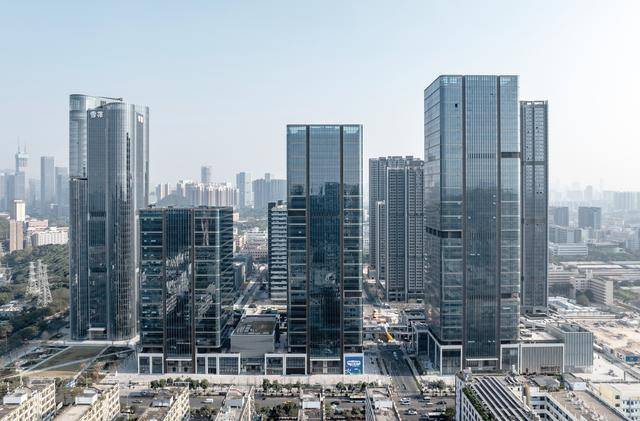
Group 1 - China Resources Beer has officially relocated its headquarters from Beijing to the Snowflake Innovation City in Bao'an, Shenzhen, with the new 180-meter headquarters building now in operation [1] - Established in 1993, China Resources Beer is a subsidiary of China Resources (Group) Company, focusing on the production, sales, and distribution of beer products, with a total of 60 breweries across the country and an annual production capacity of approximately 19.2 million kiloliters by June 30, 2025 [3] - The company has developed a high-end brand matrix that includes four domestic brands and four international brands, catering to various market segments [3] Group 2 - The Snowflake Innovation City project, co-developed by China Resources Land and China Resources Snow Beer, spans approximately 1.15 million square meters and integrates headquarters offices, R&D, high-end manufacturing, and technology experiences [5] - The project aims to create an innovative industrial ecosystem focused on information technology and intelligent manufacturing, attracting over 80 well-known companies, including 9 listed companies and 49 national high-tech enterprises [5] - Additionally, the project features the Snow Beer Town, a commercial space of nearly 50,000 square meters that combines retail, dining, and entertainment, with over 120 brands already established, more than 40% of which are city or regional first stores [5]
华润啤酒上半年净利润同比增23%,白酒销售收入降三成
Xin Lang Cai Jing· 2025-08-19 13:24
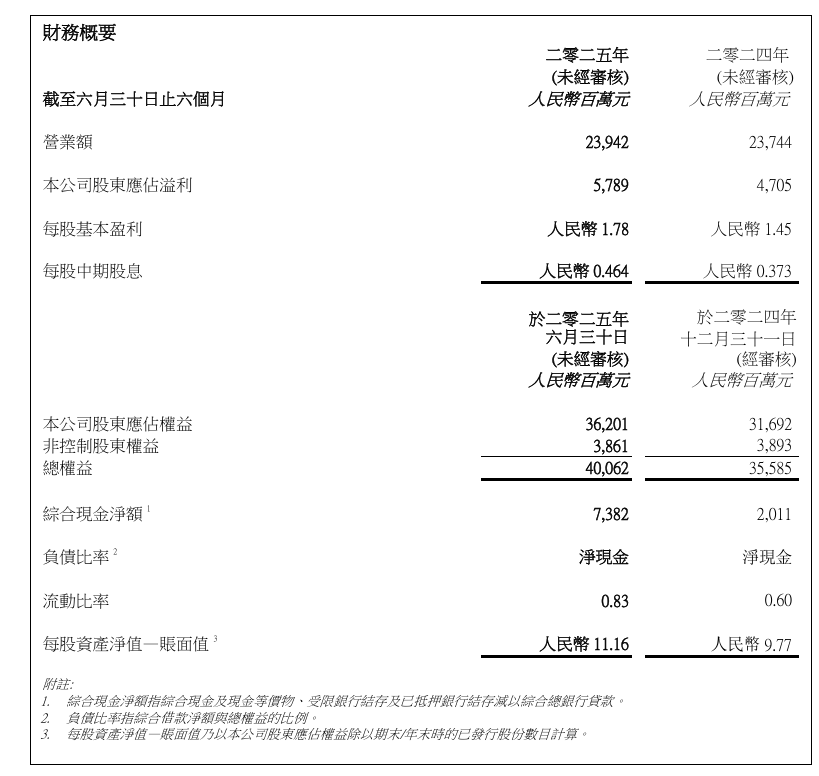
Core Viewpoint - China Resources Beer Holdings Company Limited reported a 20% year-on-year increase in net profit for the first half of 2025, while its liquor sales revenue declined by 30% [1][5]. Financial Summary - The group's total revenue for the first half of 2025 was RMB 23.942 billion, a 0.8% increase from RMB 23.744 billion in the same period of 2024 [2]. - Shareholders' profit attributable to the company was RMB 5.789 billion, up 23% from RMB 4.705 billion [2]. - Basic earnings per share increased to RMB 1.78 from RMB 1.45 [2]. - The interim dividend per share was set at RMB 0.464, a 24.4% increase from RMB 0.373 [2]. - The company's total equity reached RMB 40.062 billion, compared to RMB 35.585 billion at the end of 2024 [2]. Beer Business Performance - The beer segment achieved sales volume of approximately 6.487 million kiloliters, a 2.2% increase year-on-year [3]. - Revenue from the beer business was RMB 23.161 billion, reflecting a 2.6% growth [3]. - The gross margin for the beer business rose by 2.5 percentage points to 48.3%, driven by high-end product sales and cost savings [3][4]. - High-end beer products saw sales growth exceeding 10%, with brands like "Heineken" and "Red Baron" experiencing significant increases in sales [3]. Liquor Business Performance - The liquor segment's revenue was RMB 0.781 billion, down 33.7% from RMB 1.178 billion in the previous year [4]. - The major product "Abstract" accounted for nearly 80% of the liquor segment's revenue [4]. - The liquor business currently contributes only 3.26% to the total revenue of the company [4]. Strategic Initiatives - The company is focusing on long-term strategies to strengthen its liquor business despite short-term market fluctuations [5]. - Plans include price restructuring and enhanced cost control measures [5]. - The company aims to expand the coverage and sales of mid-range and light bottle liquor products through established beer distribution channels [5]. Industry Context - The overall beer industry in China is undergoing a contraction, with a 0.3% decline in production for the first half of 2025 [6]. - Among major beer companies, China Resources Beer and Yanjing Beer reported year-on-year revenue and profit growth, while others like Budweiser APAC and Chongqing Beer faced declines [6]. New Product Development - The company is actively developing new products to align with changing consumer trends, including specialty beers and high-end offerings [7]. - Online sales and instant retail business saw significant growth, with GMV increasing by nearly 40% and 50% respectively [7]. Leadership Changes - The company announced the resignation of Chairman Hou Xiaohai, who had been in charge for nine years, with the position currently vacant [7].
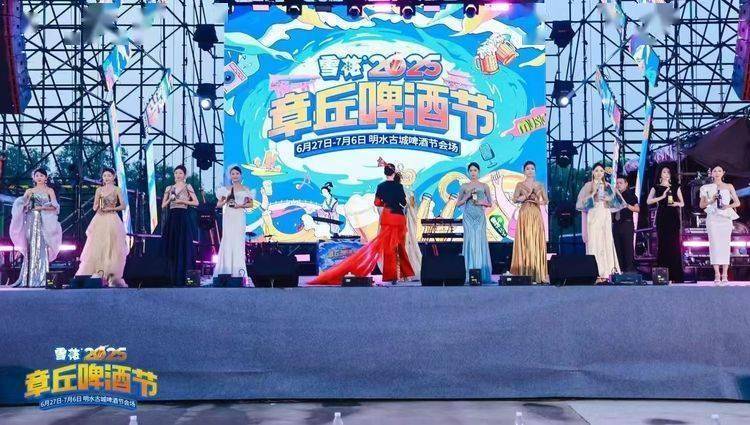
畅享泉城夏夜 点燃消费激情——雪花2025章丘啤酒节盛大启幕
Sou Hu Cai Jing· 2025-06-29 03:51
Core Points - The Snow Beer Festival 2025 in Zhangqiu District aims to stimulate summer economic activity and consumer spending through a vibrant cultural and tourism event [1][3][24] - The festival will run from June 27 to July 6, lasting for 10 days, featuring a diverse range of activities that integrate food, drink, entertainment, and culture [9][30] Group 1: Event Overview - The festival is organized by the Zhangqiu District Business Service Center and Snow Beer, showcasing local culture and industry vitality [3][28] - It aims to convert the "flow" of festival activities into "increment" for economic development, enhancing local consumer engagement [3][24] Group 2: Activities and Attractions - The festival includes seven themed functional areas, offering a mix of gourmet food, various beers, entertainment, and cultural experiences [9][16] - Special brand theme days will feature unique performances and interactive games to engage attendees [21][30] Group 3: Economic Impact - The event is part of a broader strategy to integrate cultural tourism with industrial development, enhancing local economic vitality [24][25] - The Snow Beer production facility in Zhangqiu is the largest single investment project in the company's national layout, with an annual capacity of 1 million kiloliters [28]
侯孝海卸任华润啤酒:34年“倔强”职业生涯,起落之间未改“勇闯”本色
Cai Jing Wang· 2025-06-27 09:43
Core Viewpoint - The resignation of Hou Xiaohai from China Resources Beer marks a significant transition in the company, as he has been a pivotal figure in its growth and strategic direction, particularly in the high-end beer market and the recent foray into the white liquor sector [1][2][17]. Group 1: Resignation Announcement - Hou Xiaohai officially announced his resignation as Executive Director and Chairman of the Board of China Resources Beer, citing a desire to spend more time on personal matters [2]. - Following his resignation, the position of Chairman will be temporarily vacant until a suitable successor is appointed, with current Executive Director and President Zhao Chunwu taking on the responsibilities during the transition [2]. Group 2: Career Background - Hou Xiaohai has worked in the beer industry for over 20 years, with significant contributions to China Resources Beer, which has been a leader in the domestic beer market, focusing on capacity efficiency and high-end transformation [1][3]. - His career trajectory includes experiences in various companies, including a notable tenure at PepsiCo, where he developed key marketing strategies that later influenced China Resources Beer [6][7]. Group 3: Strategic Developments - Under Hou's leadership, China Resources Beer successfully implemented the "Courage to Explore the World" marketing strategy, which helped the company achieve significant sales milestones, including becoming the top-selling beer brand in China by 2008 [8][9]. - The company has also made strategic moves to enter the white liquor market, with a significant acquisition of a controlling stake in Guizhou Jinsha Liquor, marking a major investment in diversifying its product offerings [16][17]. Group 4: Market Position and Future Outlook - China Resources Beer is positioned to capitalize on the growing high-end beer market, with a reported 60% increase in sales for the Heineken brand, indicating strong performance in its premium segment [18]. - The company aims to navigate the challenges in the white liquor sector, addressing inventory and pricing issues while maintaining a focus on high-quality development and consumer engagement [19][20].
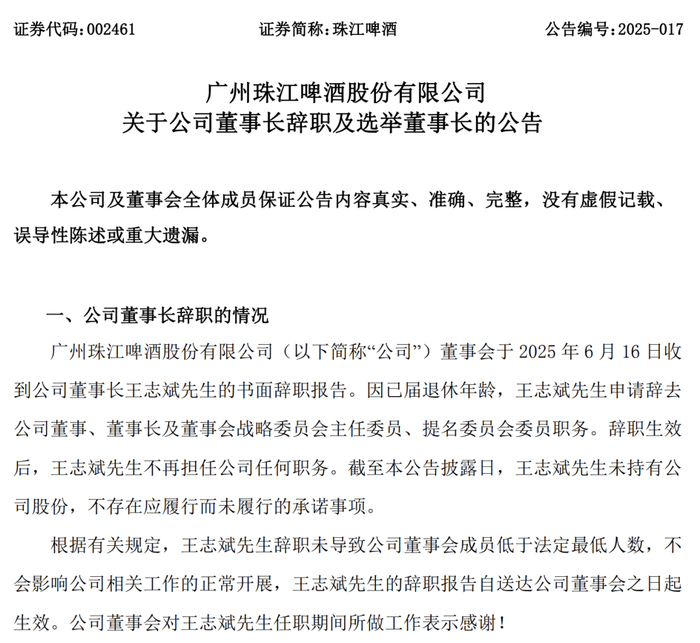
8元啤酒混战起,珠江啤酒能否入场全国赛?
Xin Lang Cai Jing· 2025-06-26 03:53
Core Viewpoint - The leadership change at Zhujiang Beer marks a critical moment as the company transitions from a focus on high-end product development to addressing its national expansion challenges, particularly in the competitive 8 yuan beer segment [1][8]. Financial Performance - In 2024, Zhujiang Beer achieved a revenue of approximately 5.731 billion yuan, a year-on-year increase of 6.56%, with beer sales reaching 143.96 million tons, up 2.62% [2][3]. - The net profit attributable to shareholders was about 810 million yuan, reflecting a significant year-on-year growth of 29.95% [2][3]. - High-end products generated revenue of 3.904 billion yuan, a 13.97% increase, accounting for nearly 70% of total revenue, with a gross margin of 48.6% [4]. Product Strategy - Zhujiang Beer has established a "3+N" product strategy, focusing on high-end brands such as the Xuebao series and the 97 Pure Draft, which has seen remarkable growth since its launch [4][6]. - The 8 yuan price segment has become a battleground for various brands, with Zhujiang Beer positioning its 97 Pure Draft as a key player in this competitive landscape [6][8]. Regional Dependency - Zhujiang Beer heavily relies on the South China market, with 95.81% of its revenue coming from this region, indicating a lack of national market penetration [8][10]. - The gross margin in Guangdong is significantly higher at 47.8%, compared to only 12.06% in markets outside the province, highlighting the disparity in profitability [10][11]. National Expansion Challenges - The company acknowledges its limited brand recognition outside of South China, facing stiff competition from established brands like Qingdao and Yanjing in other regions [11][15]. - Zhujiang Beer’s sales expenses as a percentage of operating costs are lower than competitors, suggesting a need for increased marketing investment to enhance brand presence nationally [15][16]. - The current distribution network is primarily traditional, with nearly 90% of revenue coming from these channels, indicating a need for modernization to adapt to changing consumer behaviors [16][18].