
摘要

Search documents
华润啤酒(00291.HK):主业利润稳健增长 关注需求改善
Ge Long Hui· 2026-03-27 21:18
Core Viewpoint - The company reported a decline in revenue and net profit for 2025, primarily due to goodwill impairment in the liquor segment, while the beer segment showed resilience with improved margins and profitability [1][2]. Financial Performance - In 2025, the company achieved revenue of 37.99 billion and net profit of 3.37 billion, representing a year-on-year decline of 1.7% and 28.9% respectively [1]. - Core EBITDA reached 9.88 billion, up 9.9% year-on-year, and adjusted net profit was 5.72 billion, an increase of 19.6% [1]. - The company proposed a final dividend of 0.557 per share, with total annual dividends of 1.021 per share, marking a 34.3% increase and the highest in five years, resulting in a payout ratio of 98% [1]. Beer Segment Performance - The beer segment contributed 36.49 billion in revenue, remaining flat year-on-year, with sales volume of 11.03 million kiloliters, up 1.4% [2]. - The product mix showed clear upgrades, with mid-to-high price segments experiencing single-digit growth, and premium products growing approximately 10% [2]. - The beer gross margin improved by 1.4 percentage points to 42.5%, benefiting from a focus on high-end products and declining raw material costs [2]. Liquor Segment Performance - The liquor segment faced significant challenges, with revenue declining by 30.4% to 1.49 billion due to industry downturns and increased competition [2]. - The company recognized a goodwill impairment of 2.877 billion related to its subsidiary, aligning with market expectations and alleviating financial risks [2]. Cost Management and Efficiency - The company achieved a reduction in beer production costs, with a year-on-year decrease of 2.9% in the second half and 3.7% for the entire year, primarily due to savings in raw material costs [3]. - Sales and management expense ratios showed a mixed trend, with sales expenses increasing slightly while management expenses decreased, indicating effective cost control measures [3]. Future Outlook - The company is focused on upgrading its product offerings and enhancing profitability through cost management and efficiency improvements, with expectations for continued growth in the beer segment [3]. - The liquor business is anticipated to stabilize as goodwill impairments are addressed, with a focus on demand recovery in the market [3].

华润啤酒(00291):主业利润稳健增长,关注需求改善
CMS· 2026-03-27 06:05
Investment Rating - The report maintains a "Strong Buy" rating for China Resources Beer [2] Core Views - The company reported a revenue of 37.99 billion and a net profit of 3.37 billion for 2025, reflecting a year-on-year decline of 1.7% and 28.9% respectively, primarily due to goodwill impairment in the liquor segment [6] - Core EBITDA increased by 9.9% to 9.88 billion, while adjusted net profit rose by 19.6% to 5.72 billion [6] - The beer segment showed stable performance with a revenue contribution of 36.49 billion, maintaining sales volume at 11.03 million kiloliters, a year-on-year increase of 1.4% [6] - The liquor segment faced challenges with a revenue drop of 30.4% to 1.49 billion, leading to a goodwill impairment of 2.88 billion [6] - Cost savings and efficiency improvements helped maintain profitability despite price pressures, with beer gross margin improving by 1.4 percentage points to 42.5% [6] - The company plans to distribute a final dividend of 0.557 HKD per share, marking a 34.3% increase year-on-year, achieving a five-year high dividend payout ratio of 98% [6] Financial Data and Valuation - Total revenue projections for 2026 are estimated at 38.78 billion, with a growth rate of 2% [10] - The company’s total market capitalization is 80.3 billion HKD, with a current share price of 24.74 HKD [2] - The projected earnings per share (EPS) for 2026 is 2.08 HKD, with a price-to-earnings (PE) ratio of 12 times [11] - The company’s return on equity (ROE) stands at 10.4%, with a debt-to-asset ratio of 47.6% [2][11]
华润啤酒(00291.HK):白酒业务减值落地 啤酒业务盈利稳步提升
Ge Long Hui· 2026-03-26 05:17
Core Viewpoint - The company demonstrated resilience in overall performance supported by its beer business, while the liquor segment faced short-term pressure due to industry adjustments. In 2025, total revenue was 37.985 billion yuan, a slight decrease of 1.68% year-on-year, with net profit attributable to shareholders at 3.371 billion yuan, down 28.87% primarily due to a goodwill impairment of 2.877 billion yuan related to the liquor business [1]. Group 1: Beer Business Performance - The beer business generated revenue of 13.33 billion yuan, a year-on-year decline of 4.3%. However, the overall beer business revenue remained stable at 36.49 billion yuan, with sales volume reaching 11.03 million kiloliters, a growth of 1.4% [2]. - The average price per ton for beer was 3,308 yuan, down 1.4% year-on-year, mainly due to pressure in the second half of the year. Despite this, the beer business's gross margin improved by 1.4 percentage points to 42.5% [2]. - The core product "Heineken" achieved nearly 20% sales growth, while regional high-end products like "Old Snow" and "Red Duke" saw growth of 60% and 100%, respectively. The company is expected to maintain a high growth rate in 2026 due to a clear trend of structural upgrades and strong core product momentum [2]. Group 2: Liquor Business Challenges - The liquor business reported revenue of 1.496 billion yuan in 2025, a decline of 30.39% year-on-year, facing challenges such as reduced market capacity and increased inventory [3]. - The company recognized a goodwill impairment of 2.877 billion yuan for the liquor business, which, while impacting current profits, alleviated market concerns regarding potential risks associated with goodwill valuation [3]. - The company plans to enhance the liquor business by optimizing personnel and supply chain efficiency, focusing on key products like "Zhai Yao" and "Jin Sha" series. If external demand improves, the liquor business may exhibit significant fundamental elasticity [3]. Group 3: Financial Metrics and Profitability - In 2025, the company achieved a gross margin of 43.07%, an increase of 0.43 percentage points year-on-year, with a sales expense ratio decreasing by 1.36 percentage points to 20.33% [3]. - The adjusted net profit margin (excluding impairments and special items) improved by 2.75 percentage points to 15.07%, indicating ongoing enhancements in profitability [3]. - The company anticipates further optimization of expense ratios, suggesting that profitability improvements may be sustainable in the future [3]. Group 4: Profit Forecast - The company forecasts net profits attributable to shareholders for 2026-2028 to be 6.009 billion, 6.342 billion, and 6.567 billion yuan, with year-on-year growth rates of 78.3%, 5.5%, and 3.5%, respectively [4]. - The current stock price corresponds to price-to-earnings ratios of 11.93, 11.3, and 10.92 for the respective years [4].
华润啤酒(00291.HK)2025年报点评:稳进笃行筑根基 踔厉奋发开新局
Ge Long Hui· 2026-03-26 05:16
Core Viewpoint - The company reported a decline in revenue and net profit for 2025, but adjusted figures show growth when excluding certain impairments and costs [1][2] Financial Performance - In 2025, the company achieved total revenue of 37.99 billion yuan, a decrease of 1.7% year-on-year; net profit attributable to shareholders was 3.37 billion yuan, down 28.9% [1] - For the second half of 2025, total revenue was 14.04 billion yuan, a decline of 5.7%, with a net profit of -2.42 billion yuan compared to 0.03 billion yuan in the same period last year [1] - The company recognized goodwill impairment of 2.88 billion yuan; if adjusted for this and other factors, the net profit would be 5.72 billion yuan, an increase of 19.6% [1] Beer Segment Performance - Beer revenue in the second half of 2025 decreased by 4.3%, but sales volume showed resilience with a slight increase of 0.4% to 4.543 million kiloliters; average price per ton fell by 4.6% due to increased promotional activities [1] - For the full year, beer revenue remained stable with a sales volume increase of 1.4%; premium and above product sales grew nearly 10%, while mid-high tier products saw single-digit growth [1] - Notable brands like Heineken and Snow Beer experienced significant growth, with Heineken increasing nearly 20% and Snow Beer around 60% [1] Cost and Efficiency - The company benefited from lower beer costs, with a ton cost decrease of 3.1%, leading to a gross margin decline of 1.1 percentage points to 32.4% in the second half of 2025 [2] - For the full year, the gross margin was 42.5%, an increase of 1.4 percentage points; operational efficiency improved with reductions in sales and management expense ratios [2] White Spirit Segment - The white spirit business faced challenges with revenue of 1.5 billion yuan, down 30.4% for the year, and a 25.9% decline in the second half [2] - The company recorded a significant goodwill impairment of 2.88 billion yuan, leading to a 69.0% decline in EBITDA for the white spirit segment [2] Strategic Initiatives - The new leadership team demonstrated strong execution and cohesion, focusing on innovation to drive growth, including the launch of new beer products [3] - The company is exploring new channel opportunities and partnerships with platforms like Alibaba and JD.com to expand its market reach [3] - Plans to cultivate the Greater Bay Area as a new growth engine and to enhance the resilience of its channel ecosystem were highlighted [3] Investment Outlook - The company is expected to continue its high-end strategy and product upgrades, with improved gross margins and operating cash flow [4] - Adjusted profit forecasts for 2026-2028 are set at 6.39 billion, 6.78 billion, and 7.14 billion yuan respectively, maintaining a target price of 40 HKD [4]
华润啤酒:高端化逻辑未改,减值出清迎弹性-20260326
First Shanghai Securities· 2026-03-26 00:45
Investment Rating - The report assigns a "Buy" rating to the company with a target price of HKD 31.55, representing a potential upside of 21.3% from the current price of HKD 26.00 [4]. Core Insights - The company demonstrates resilience in profits despite revenue pressure, with a slight decline in revenue to HKD 37.99 billion in 2025, primarily due to a significant adjustment in the liquor business, which saw a 30.4% drop. The core beer business remained stable [5]. - EBITDA increased by 9.9% to HKD 9.88 billion, showcasing strong operational leverage, with beer and liquor segments growing by 17.4% and declining by 69.0%, respectively [5]. - The company is committed to a "limited diversification" strategy, focusing on core markets and promoting specific brands to leverage distribution channels effectively [5]. Financial Summary - Revenue is projected to grow from HKD 39.85 billion in 2026 to HKD 42.08 billion in 2028, with a compound annual growth rate (CAGR) of approximately 2.6% [3][7]. - Net profit is expected to rebound significantly, reaching HKD 5.89 billion in 2026, with further growth to HKD 6.49 billion by 2028, reflecting a recovery from a low of HKD 3.37 billion in 2025 [3][7]. - The basic earnings per share (EPS) is forecasted to increase from HKD 1.81 in 2026 to HKD 2.00 in 2028, indicating a positive trend in shareholder returns [3][7]. Operational Performance - The beer business's gross margin is expected to improve to 44% by 2026, driven by premiumization, cost savings, and efficiency improvements [5]. - The company anticipates a return to positive sales price growth in the beer segment as resource allocation adjustments conclude, enhancing profitability [5]. - The report highlights a robust cash flow position, with operating cash flow increasing by 3% to HKD 7.13 billion and free cash flow rising by 54% to HKD 5.29 billion [5]. Market Positioning - The company is strategically positioned to capitalize on the recovery of the dining sector and the growth of instant retail, which are expected to drive overall profit margins upward [5]. - The report emphasizes the company's focus on high-end beer products, with sales of premium brands projected to grow significantly, supporting long-term profitability [5]. Financial Ratios - The report indicates a projected return on equity (ROE) of 16% by 2026, reflecting improved profitability and efficient capital utilization [7]. - The debt-to-equity ratio is expected to remain stable around 49% to 51% over the forecast period, indicating a balanced financial structure [7].
华润啤酒(00291):中高端啤酒稳健增长,白酒承压
INDUSTRIAL SECURITIES· 2026-03-25 11:25
Investment Rating - The investment rating for the company is "Buy" (maintained) [1] Core Insights - The company has experienced a slight decline in revenue, with a year-on-year decrease of 1.7% to 37.985 billion RMB in 2025. However, the gross margin improved by 0.5 percentage points to 43.1%. EBITDA decreased by 13.7% to 7.701 billion RMB, and net profit attributable to shareholders fell by 28.9% to 3.371 billion RMB. Excluding special items, EBITDA increased by 9.9% to 9.879 billion RMB, and net profit rose by 19.6% to 5.724 billion RMB [3][4]. - Beer sales showed steady growth, with revenue from beer reaching 36.490 billion RMB, remaining stable year-on-year. Beer sales volume increased by 1.4% to 11.03 million kiloliters. The high-end beer segment continued to perform well, with premium and above beer sales growing by nearly 10%, and the overall high-end beer products accounting for nearly 25% of total sales [3][4]. - The company is focusing on innovation in its beer product line, launching new products such as health-oriented beers and expanding its production capacity by optimizing its brewery layout [3][4]. Financial Summary - For the fiscal year 2025, the company reported total revenue of 37.99 billion RMB, with a projected revenue increase to 39.21 billion RMB in 2026, 40.86 billion RMB in 2027, and 42.58 billion RMB in 2028. The net profit attributable to shareholders is expected to rebound significantly to 5.92 billion RMB in 2026, reflecting a growth rate of 75.6% [4][5]. - The earnings per share (EPS) for 2025 is 1.04 RMB, projected to rise to 1.82 RMB in 2026, 1.96 RMB in 2027, and 2.07 RMB in 2028 [4][5].
华润啤酒:中高端啤酒稳健增长,白酒承压-20260325
兴证国际· 2026-03-25 10:24
Investment Rating - The investment rating for the company is "Buy" (maintained) [1] Core Insights - The company experienced a slight revenue decline of 1.7% year-on-year to 37.985 billion RMB in 2025, but benefited from a high-end strategy that improved gross margin by 0.5 percentage points to 43.1% [3] - The EBITDA decreased by 13.7% to 7.701 billion RMB, while the net profit attributable to shareholders fell by 28.9% to 3.371 billion RMB. Excluding special items, EBITDA increased by 9.9% to 9.879 billion RMB, and net profit rose by 19.6% to 5.724 billion RMB [3] - Beer sales showed steady growth, with revenue from beer reaching 36.490 billion RMB, remaining stable year-on-year. Beer sales volume increased by 1.4% to 11.03 million kiloliters, with high-end beer products driving growth [3] - The company plans to optimize its beer production capacity, having stopped operations at four breweries and opened a new smart craft brewery in Shenzhen [3] - The white liquor segment faced significant challenges, with revenue declining by 30.4% to 1.496 billion RMB in 2025, leading to a goodwill impairment charge of 2.877 billion RMB [3] - The company expects a total dividend of 1.021 RMB per share in 2025, a year-on-year increase of 34.3% [3] Financial Summary - For the fiscal year 2025, the company reported total revenue of 37.99 billion RMB, with projected revenues of 39.21 billion RMB, 40.86 billion RMB, and 42.58 billion RMB for 2026, 2027, and 2028 respectively [4] - The net profit attributable to shareholders for 2025 was 3.37 billion RMB, with forecasts of 5.92 billion RMB, 6.35 billion RMB, and 6.72 billion RMB for the following three years [4] - The earnings per share (EPS) for 2025 was 1.04 RMB, expected to rise to 1.82 RMB, 1.96 RMB, and 2.07 RMB in the subsequent years [4]
华润啤酒品牌营销策略 国际本土双轨并行提升知名度
Sou Hu Cai Jing· 2026-03-25 04:27
Core Viewpoint - China Resources Beer Holdings Company Limited achieved remarkable performance in 2025, driven by high-end positioning and comprehensive innovation in the beer segment, while the liquor segment adapted to market changes through differentiated strategies [1] Beer Segment: High-End Breakthrough and Comprehensive Innovation - The beer segment recorded a sales volume of 11.03 million kiloliters, a year-on-year increase of 1.4%, outperforming the industry average [3] - High-end development became the core growth engine, with premium and above beer sales experiencing mid to high single-digit growth, accounting for nearly 25% of total sales [3] - The overall revenue for the beer business remained stable at 36.489 billion yuan, with a gross margin increase of 1.4 percentage points to 42.5% [3] - The operating profit before interest, tax, depreciation, and amortization (EBITDA) reached 9.611 billion yuan, a significant increase of 17.4% year-on-year [3] - The company optimized its production capacity by closing four breweries and successfully launched a smart craft brewery in Shenzhen, achieving an annual production capacity of 19.1 million kiloliters by the end of 2025 [3] Product and Channel Innovation - The company introduced new product categories such as Belgian-style white beer, black beer, tea beer, and fruit beer, along with health concept innovations like "Zhang Zhongjing Medicinal Beer" [4] - Online business led the industry, forming strategic partnerships with major platforms and developing several e-commerce exclusive products [4] - Brand marketing effectively reached target consumer groups, enhancing brand youthfulness and recognition through event and media partnerships [4] Overall Operations: Quality and Efficiency Improvement - In 2025, the company achieved a total revenue of 37.985 billion yuan, with an overall gross margin increase of 0.5 percentage points to 43.1% [6] - The profit attributable to shareholders reached 5.724 billion yuan, reflecting a year-on-year increase of 19.6% [6] - Operating cash flow increased by 2.9% to 7.127 billion yuan, with net cash reaching 4.23 billion yuan, a growth of over 111% [8] - The total dividend per share reached 1.021 yuan, a 34.3% increase from 2024, marking a five-year high [8] Liquor Business: Proactive Response and Long-Term Strategy - The liquor segment achieved a revenue of 1.496 billion yuan amid a challenging market environment, with a goodwill impairment of 2.877 billion yuan impacting cash flow [8] - The company implemented a differentiated regional market strategy, focusing on key products and enhancing digital tracking management [8] - The liquor business aims to strengthen consumer engagement and explore e-commerce and instant retail channels for business collaboration and innovation [8] Future Outlook - The company plans to develop more competitive product lines and enhance market responsiveness through digital transformation [10] - Strengthening partnerships will be a key focus to build a more robust and efficient value chain, ensuring continued shareholder returns [10]

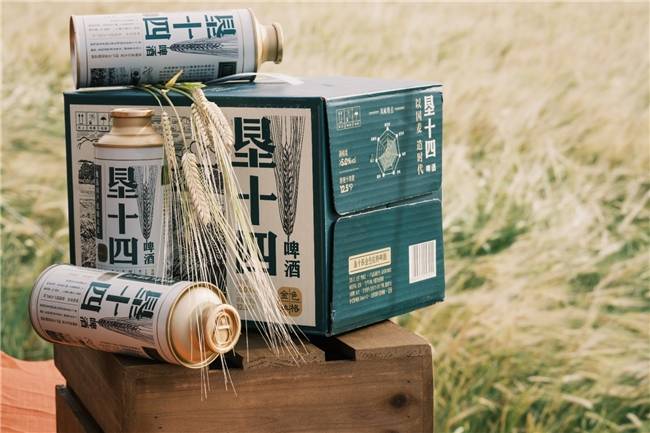
华润啤酒品牌营销出彩 多元化策略见成效
Sou Hu Cai Jing· 2026-03-25 04:27
Core Insights - The company reported steady growth in its core beer business, with a focus on premiumization, leading to significant shareholder returns and demonstrating strong operational momentum [1][3] Financial Performance - In 2025, the company's total revenue reached 37.985 billion yuan, reflecting a steady increase in overall operational scale [3] - The overall gross margin improved by 0.5 percentage points year-on-year to 43.1%, driven by the implementation of premiumization strategies and cost optimization [3] - Adjusted EBITDA grew by 9.9% year-on-year to 9.879 billion yuan, while net profit attributable to shareholders increased by 19.6% to 5.724 billion yuan [3] - Operating cash flow increased by 2.9% year-on-year to 7.127 billion yuan, supporting a dividend per share of 1.021 yuan, a 34.3% increase from 2024, marking a five-year high in dividends [3] Beer Business Performance - Despite a declining overall beer market, the core beer business achieved a volume of 11.03 million kiloliters, a year-on-year increase of 1.4%, with revenue stable at 36.489 billion yuan [5] - Premium and above beer sales saw mid to high single-digit growth, accounting for nearly 25% of total sales, with brands like Heineken, Snow, and Red爵 experiencing significant growth [5] - The beer business gross margin increased by 1.4 percentage points to 42.5%, with adjusted EBITDA for the beer segment reaching 9.611 billion yuan, a 17.4% year-on-year increase [5] - The company closed four breweries while opening a new smart craft brewery in Shenzhen, bringing the total number of operational breweries to 59 with an annual capacity of approximately 19.1 million kiloliters [5] White Wine Business Performance - The white wine sector faced significant adjustments in 2025, with revenue of 1.496 billion yuan amid shrinking consumer demand and increased industry fragmentation [7] - The company recognized an impairment of 2.877 billion yuan related to goodwill in the white wine business, but adjusted EBITDA, excluding this impairment, was 264 million yuan, indicating operational potential [7] - The company is implementing a differentiated regional development strategy and focusing on key products while enhancing digital inventory management and exploring synergies between beer and white wine businesses [7] Future Outlook - The company is expected to continue optimizing its product structure and market positioning, with growth potential driven by premiumization and innovation [9] - Plans to enhance brand influence and maintain steady business development through cost control and capacity optimization are in place to create greater shareholder value [9]
华润啤酒去年营收、股东应占溢利双降
Mei Ri Jing Ji Xin Wen· 2026-03-24 23:16
Core Viewpoint - China Resources Beer reported a decline in revenue and profit for 2025, highlighting challenges in both its beer and liquor segments, while emphasizing a commitment to high-end product strategies and exploring new business models in response to market changes [3][4][7]. Beer Business Performance - In 2025, the company achieved beer revenue of 364.89 billion yuan, remaining flat year-on-year, with a gross margin increase of 1.4 percentage points to 42.5% due to high-end product strategies and reduced raw material costs [4]. - The overall beer sales volume reached 11.03 million kiloliters, reflecting a 1.4% year-on-year growth, outperforming the industry average despite limited growth momentum [4]. - The company’s sales price decreased by 1.4% year-on-year as part of a strategic adjustment to optimize resource allocation and capture market feedback more effectively [4][5]. Strategic Direction - The company’s chairman reaffirmed the commitment to a high-end strategy, noting that while the narrative around high-end products may be losing appeal, sales in this segment have not declined [5]. - In 2025, nearly 25% of beer sales came from mid-to-high-end products, with significant growth in brands like "Heineken" and "Snow" [5]. - The company plans to address emerging business development gaps by enhancing its presence in new consumption channels, including e-commerce partnerships with major platforms [6]. Liquor Business Challenges - The liquor segment reported a revenue of 1.496 billion yuan in 2025, a decrease of 30.77% year-on-year, attributed to a complex and changing market environment [7]. - The company recognized a goodwill impairment of 2.877 billion yuan for its liquor business, reflecting cautious financial management in light of market conditions [7][8]. - The chairman emphasized the importance of the liquor business as a strategic pivot for growth, despite current challenges, and expressed confidence in the long-term potential of this segment [9]. Operational Adjustments - The company is transitioning from aggressive expansion to a lifecycle management approach for distributors, focusing on sustainable growth rather than short-term profits [9]. - A dual-brand strategy has been implemented for the liquor segment, with distinct marketing approaches for different product lines to better align with market demands [8].