北京银行直销银行App

Search documents
银行整合旗下信用卡、直销银行App 折射数字化转型新趋势
Zheng Quan Ri Bao· 2025-11-11 16:12
Core Insights - The trend of "thinning" bank apps is becoming increasingly significant, with independent credit card apps and direct banking apps being the main categories for shutdown and integration [1][2] - Several banks, including China Bank, are consolidating their credit card app functionalities into their main banking apps, reflecting a shift towards centralized services [1] - The closure of direct banking apps is also on the rise, with Beijing Bank announcing the cessation of its direct banking app and website, migrating functionalities to its main app [1] Industry Trends - The decline in the proportion of credit card business within banks' credit structures and the redundancy of functions in independent apps are driving the integration trend [2] - The shift from a multi-app operation model to a focus on a single, comprehensive app is aimed at reducing maintenance costs and meeting user demand for one-stop services [2][3] - Regulatory pressures for financial client app registration are also prompting banks to streamline redundant applications, enhancing the usage frequency and data security of main platforms [2] Digital Transformation - The banking industry's digital transformation is characterized by three new trends: moving from "many and complete" to "focused and specialized," shifting from product-oriented to user-oriented services, and evolving from isolated online services to integrated ecosystems [3] - Challenges in the app integration process include technical compatibility, user habit migration, and data security [3] - Recommendations for banks include optimizing mobile ecosystems, enhancing digital capabilities, exploring diversified services, and ensuring compliance and security during data migration [3]


银行App,迎来关停潮
Zhong Guo Ji Jin Bao· 2025-11-10 07:35
Core Viewpoint - The trend of banks shutting down their mobile applications has gained significant attention, with over 20 banks ceasing operations of certain apps in 2023, indicating a shift towards consolidation and efficiency in the banking sector [1][8]. Group 1: Bank App Shutdowns - Multiple banks have announced the closure of their respective apps, particularly in the credit card and direct banking sectors [2][3]. - China Bank announced in late September that its "Bountiful Life" app will gradually migrate to the China Bank app, leading to the eventual shutdown of the former [4]. - Beijing Bank stated that its direct banking app and website will cease operations on November 12, 2025, with functionalities migrating to the "Jingcai Life" mobile banking app [6]. Group 2: Industry Trends and User Reactions - Since the beginning of 2023, over 20 banks have stopped operating certain apps, with 25 apps, including Minsheng Direct Bank and Kunlun Direct Bank, voluntarily deregistering, covering various financial sectors [8]. - Public sentiment appears supportive of the consolidation, with many users expressing that having one app per bank is sufficient [10]. Group 3: Expert Insights - Industry experts believe that the wave of app shutdowns and consolidations will help banks reduce costs and improve efficiency while enhancing user experience [12]. - Recommendations for banks include optimizing mobile ecosystems, upgrading main apps, integrating credit card functions for a "one-stop" service, and enhancing digital capabilities through AI and big data [12]. - There is an emphasis on exploring diversified services within main apps and ensuring compliance and security during data migration [12].


冲上热搜!银行App,迎来关停潮
中国基金报· 2025-11-10 07:13
Core Viewpoint - The article discusses the recent trend of banks in China shutting down and integrating their mobile applications, which has garnered significant public attention and support [2][9]. Group 1: Bank App Shutdowns - Multiple banks have announced the closure of certain mobile applications, particularly in the credit card and direct banking sectors [4][6]. - China Bank announced at the end of September that its "Bountiful Life" app will gradually migrate to the main China Bank app, leading to the eventual shutdown of the former [4]. - Beijing Bank stated that its direct banking app and website will cease operations on November 12, 2025, with functionalities transferred to the "Jingcai Life" mobile banking app [6]. Group 2: Industry Trends - Over 20 banks have stopped operating certain apps in 2023, including Beijing Rural Commercial Bank, Jiangxi Bank, and others, consolidating functions into their main mobile banking applications [7]. - According to a report from the China Internet Finance Association, 25 apps, including Minsheng Direct Bank and Kunlun Direct Bank, have voluntarily canceled their registrations, covering various financial sectors [7]. Group 3: Public and Expert Reactions - Public sentiment is largely supportive of the app consolidation, with many users expressing that having one app per bank is sufficient [9]. - Industry experts believe that the trend of shutting down and integrating apps can help banks reduce costs and improve efficiency, as well as enhance user experience [11]. - Recommendations for banks include optimizing mobile ecosystems, enhancing digital capabilities, exploring diversified services, and ensuring compliance and security during data migration [11].

多家银行关停信用卡与直销银行App,中国银行缤纷生活功能迁移
Shan Xi Ri Bao· 2025-11-10 01:31
Core Viewpoint - The banking industry is experiencing a wave of app shutdowns, particularly in the credit card and direct banking sectors, as banks consolidate their services to enhance user experience and reduce operational costs [1][5][12]. Group 1: App Shutdown Trends - Multiple banks, including state-owned and leading city commercial banks, have announced the closure of various banking apps, leading to discussions among users about the necessity of so many banking applications [1][4]. - The shutdown trend is particularly evident in credit card apps, with China Bank recently announcing the migration of its "Colorful Life" app functions to its main app, marking a significant shift as previously, such closures were mainly among smaller banks [5][6]. - In 2023, at least 21 banks have ceased operations of their direct banking apps, with only about 10 remaining in the market, a significant drop from their peak [2][6]. Group 2: User Experience and Market Dynamics - Users have expressed frustration over the multitude of banking apps, which they find unnecessary for infrequent financial transactions, leading to a high number of inactive apps on their devices [1][11]. - The average daily usage time for mobile banking apps has decreased from 4.93 minutes to 2.70 minutes, indicating a decline in user engagement [11]. - The banking sector is shifting focus from acquiring new customers to retaining existing ones, as evidenced by the decline in credit card numbers over the past three years [15][16]. Group 3: Regulatory and Operational Considerations - Regulatory pressures are driving the consolidation of banking apps to enhance risk management and consumer protection, with over 25 banks reported for privacy issues in 2024 [13][14]. - The operational costs associated with maintaining multiple apps are becoming unsustainable, prompting banks to streamline their offerings to improve efficiency and reduce compliance burdens [15][16]. - The future of banking apps is expected to evolve towards a more integrated ecosystem, focusing on user-centric services rather than merely serving as transaction channels [18].

多家银行关停旗下App,银行App关闭潮意味着什么?
Sou Hu Cai Jing· 2025-10-18 01:21
Group 1 - Multiple banks have recently announced the shutdown of their mobile apps, with over 10 banks ceasing operations of various apps, including credit card and direct banking apps [3][4] - The trend of shutting down apps is attributed to the inefficiencies and high operational costs associated with maintaining multiple apps, which often leads to resource wastage and management confusion [6][9] - The closure of these apps is also driven by the need for banks to optimize resources and reduce operational costs in a tightening economic environment, as banks face pressure on profitability and must focus on core business areas [10][12] Group 2 - The proliferation of multiple apps within banks has created a "data island" effect, making it difficult for banks to achieve a comprehensive understanding of their customers and provide personalized services [9] - The competitive landscape with internet financial platforms necessitates that banks consolidate their efforts to create a powerful "super app" that can compete effectively against third-party payment platforms [10][12] - The future of banking apps is expected to shift from quantity to quality, with a focus on developing a core app that serves as a comprehensive service platform, integrating financial and lifestyle services [12]

银行App“瘦身”进行时:直销银行、信用卡等独立应用持续整合
Zhong Guo Zheng Quan Bao· 2025-10-13 23:28
Core Viewpoint - The banking industry is increasingly integrating various app functionalities into mobile banking apps to enhance user experience, reduce operational costs, and improve risk management [1][4]. Group 1: App Integration Trends - Several banks, including Beijing Bank and China Bank, are shutting down their standalone direct banking and credit card apps, migrating functionalities to their main mobile banking apps [2]. - The trend of app integration is not limited to direct banking and credit card apps; many banks are also consolidating their corporate banking and lifestyle service apps [2]. - The integration is driven by the need to address low user engagement, poor experience, and redundant functionalities associated with multiple apps [3]. Group 2: User Experience and Operational Efficiency - The initial focus on lightweight, specialized apps has led to an overwhelming number of applications for consumers, creating a burden rather than enhancing service [3]. - Users have expressed a preference for fewer, more comprehensive apps that can meet their needs without cluttering their devices [3]. - Regulatory guidance has emphasized the need for banks to manage mobile applications effectively, leading to the optimization and potential termination of underperforming apps [3]. Group 3: Risk Management and Cost Reduction - By consolidating apps into a "super app," banks can significantly enhance user experience while lowering the costs associated with maintaining multiple applications [4]. - A unified app approach allows for centralized monitoring of transactions, improving the ability to identify and mitigate risks [4].
十余家银行关停旗下App,功能整合至手机银行
Cai Jing Wang· 2025-10-12 08:18
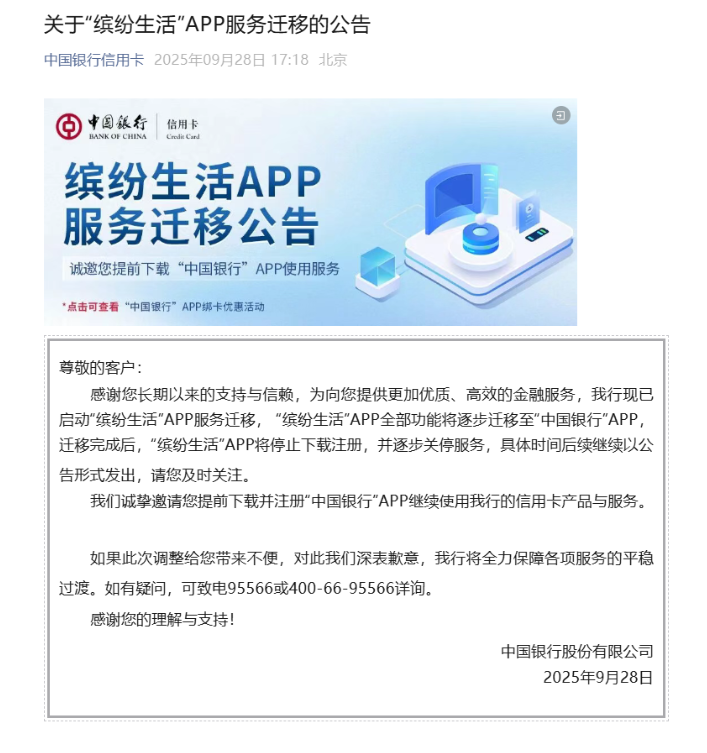
Core Viewpoint - Multiple banks in China are shutting down their mobile applications, particularly credit card and direct banking apps, as part of a trend towards consolidating services into fewer platforms [1][2][3] Group 1: App Shutdowns - Over 10 banks have closed or are in the process of closing various mobile apps this year, including credit card apps and lifestyle service apps [1] - The "缤纷生活" app from China Bank is migrating its services to the main "中国银行" app, with plans to cease operations of the former [1][4] - Other banks, such as Beijing Rural Commercial Bank and Jiangxi Bank, have also migrated their credit card app functionalities to their main banking apps [2] Group 2: Regulatory Environment - The National Financial Regulatory Administration issued a notice in September 2024 emphasizing the need for banks to manage mobile applications more effectively, including maintaining a record of apps and optimizing or terminating those with low user engagement or high risks [3] - As of June 2025, 2,664 mobile financial apps have completed registration, with 75 apps being deregistered in the first half of 2025 [3] Group 3: Industry Analysis - The initial rush to develop multiple banking apps has led to issues such as poor customer experience and redundant internal systems, prompting a need for consolidation [3]
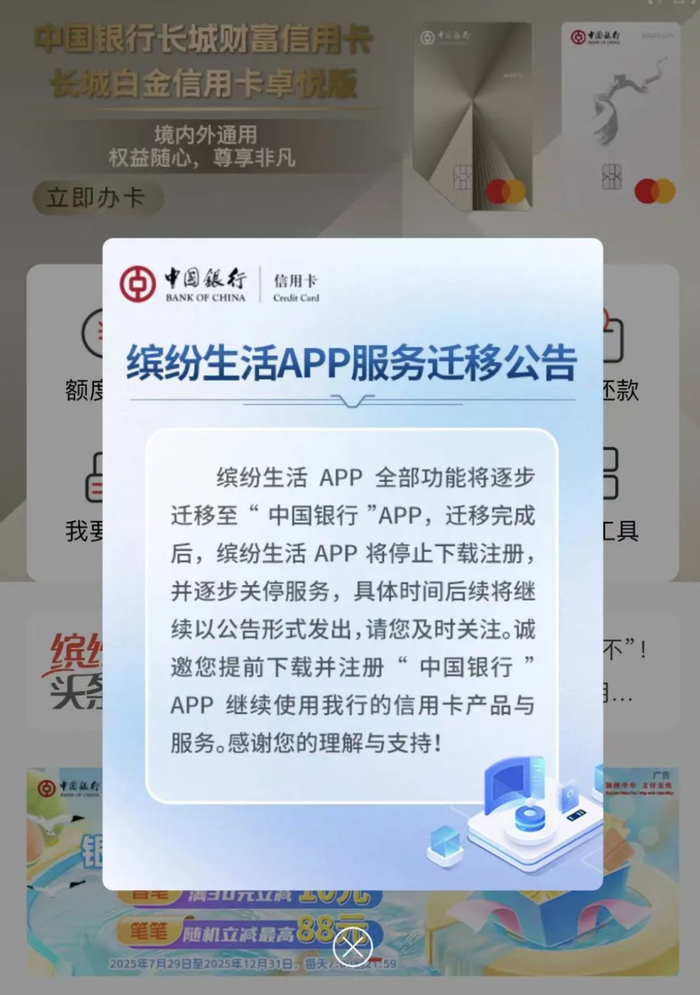
中国银行“缤纷生活”将逐步关停 银行APP关停潮背后:降本增效成主因
Zhong Guo Neng Yuan Wang· 2025-10-09 08:37
Core Insights - The recent trend of banks shutting down independent apps is driven by regulatory requirements and operational challenges within the industry [5] - Major banks, including China Bank, are migrating functionalities from independent apps to their main banking apps, indicating a significant consolidation trend [1][2] Group 1: Bank Consolidation Actions - China Bank has initiated the migration of its "Colorful Life" app services to the "China Bank" app, with plans to eventually discontinue the former [1] - Other banks, such as Bohai Bank, have already completed similar migrations, providing a template for the industry [2] - The integration trend is evident among major state-owned banks, with Construction Bank enhancing the integration of its "Construction Life" app into its main banking app [2] Group 2: Independent App Closures - The closure of independent apps is particularly pronounced in the credit card and direct banking sectors, with over ten banks having shut down their standalone apps since 2024 [1][4] - Beijing Bank's direct banking app is set to close in June 2025, marking it as the first direct banking app to officially exit the market [4] Group 3: Regulatory and Market Drivers - The regulatory push from the National Financial Supervision Administration emphasizes the need for banks to manage their mobile applications effectively, leading to the consolidation of underperforming apps [5] - The operational difficulties faced by independent apps, such as low user engagement and high maintenance costs, have prompted banks to streamline their services [5] - The integration of services into main platforms aims to enhance user experience and address competitive pressures from internet finance and third-party payment platforms [5]