
医美服务

Search documents
美丽田园医疗健康(02373):内生外延驱动,业绩亮眼高增
GUOTAI HAITONG SECURITIES· 2026-03-30 06:26
Investment Rating - The investment rating for the company is "Buy" [5] Core Insights - The company achieved rapid revenue and adjusted profit growth in 2025, completing the integration of Narier and announcing the acquisition of Siyuanli, indicating a strong outlook for market share expansion through both organic and external growth strategies [2][3] Financial Summary - Total revenue for 2025 is projected at 30.01 billion RMB, representing a year-on-year increase of 16.7% - Adjusted net profit for 2025 is expected to reach 3.81 billion RMB, up 41.0% year-on-year - Gross profit margin increased by 2.8 percentage points to 49.1%, with adjusted net profit margin rising by 2.2 percentage points to 12.7% - Operating cash flow for 2025 is forecasted at 9.99 billion RMB, a 25.4% increase year-on-year [4][9] Business Performance - The "Double Beauty + Double Health" model effectively enhances member value, with beauty and health services being the largest revenue sources, generating 16.58 billion RMB in 2025, a 14.9% increase, accounting for 55% of total revenue - The number of visitors to direct-operated stores reached 1.724 million, a 23.2% increase year-on-year, while active members grew by 11.8% to 146,400 - Medical beauty services generated 10.17 billion RMB, a 9.6% increase, with a gross margin improvement of 3.6 percentage points to 55.9% - Sub-health medical services saw revenue growth of 62.2% to 3.26 billion RMB, with a gross margin increase of 6.1 percentage points to 64.3% [9] Acquisition and Integration - The acquisition of Narier, the second-largest brand in the Chinese beauty industry, has shown positive integration results, with single-store revenue increasing from 5.75 million RMB pre-acquisition to 8.10 million RMB, and adjusted net profit margin rising from 6.5% to 10.5% - The company announced the acquisition of Siyuanli for 1.25 billion RMB, expected to close in January 2026, aiming to replicate the successful integration experience of Narier to achieve significant market share growth [9]
美丽田园医疗健康(02373):美业龙头,气场全开
Orient Securities· 2026-03-26 15:02
Investment Rating - The report assigns a "Buy" rating for the company, with a target price of HKD 31.21 based on a projected average PE of 15 times for 2026 [4][7]. Core Insights - The company has established itself as a leader in the beauty and healthcare industry in China, with over 700 stores and a diversified business model that includes beauty services, medical aesthetics, and health management [7][14]. - The domestic beauty industry is characterized by a fragmented market that is ripe for consolidation, with the company holding a market share of approximately 0.29% in the beauty services sector and 0.53% in medical aesthetics [7][38]. - The company's dual beauty and health model enhances operational efficiency and customer acquisition, supported by a strong digital infrastructure that improves service delivery and customer retention [7][30]. Financial Summary - Revenue is projected to grow from CNY 21.45 billion in 2023 to CNY 25.72 billion in 2024, with a CAGR of 12.79% from 2019 to 2024 [3][28]. - Adjusted net profit is expected to increase from CNY 2.52 billion in 2024 to CNY 3.8 billion in 2025, reflecting a growth rate of over 40% [3][28]. - The company’s gross margin is expected to stabilize and improve, with significant contributions from the health management services segment [30][34]. Business Model and Market Position - The company operates under a "dual beauty and dual health" model, which integrates beauty services with health management, creating a comprehensive service ecosystem [7][44]. - The beauty services segment accounts for over 50% of revenue, while medical aesthetics and health management services are steadily increasing their contribution [7][22]. - The company has a strong management team with extensive experience in the beauty industry, which supports its strategic initiatives and operational execution [17][20]. Industry Outlook - The beauty services market in China is projected to grow to CNY 640.2 billion by 2030, with a CAGR of 5.3% from 2024 to 2030, indicating a robust growth trajectory [38][39]. - The medical aesthetics market is expected to reach CNY 415.7 billion by 2030, with a CAGR of 15.5%, driven by increasing consumer acceptance of non-surgical procedures [53][54]. - The health management services sector is also anticipated to grow significantly, with a projected market size of CNY 29 billion by 2030, reflecting a CAGR of 16.2% [7][38].
海通国际2026年3月金股
Haitong Securities International· 2026-03-04 14:34
Investment Focus - The report highlights the strong growth potential in the storage industry, with domestic storage manufacturers expected to exceed production expansion forecasts, benefiting companies closely tied to these manufacturers [1] - NVIDIA is projected to have a strong performance in FY4Q26, with a significant increase in overall revenue and EPS trajectory, supported by a robust order backlog of 500 billion [1] - Alphabet's cloud business is expected to grow significantly, driven by AI solutions, with a 48% growth rate in the last quarter, leading to an increase in EPS for 2026 and 2027 [1] - Alibaba's cloud growth is anticipated to exceed consensus estimates by 2-3% for the year, despite short-term performance pressures [1] Company Analysis - Zhongwei Company is positioned as a leading player in the hardware sector, benefiting from a deepening platform strategy that expands its capabilities in etching, film deposition, and measurement [1] - Tencent is recommended as a top pick in the internet sector, with a target price of 700, driven by steady growth in core gaming and advertising businesses, alongside new revenue streams from mini-games and video accounts [2] - New Oxygen is recognized for its strong marketing capabilities and low customer acquisition costs, with a target price of 10.1 USD based on its growth trajectory in the light medical beauty sector [2] - Ato Hotel is expected to achieve a revenue growth of 26% to 12.39 billion, with a strong market position in the mid-to-high-end hotel sector [3] - HashKey is positioned as a leading digital asset platform in Asia, benefiting from regulatory trends and expected to expand its product offerings in derivatives and leveraged trading [4] - Tesla's advancements in autonomous driving and robotics are highlighted, with expectations for accelerated overseas expansion and significant product developments [4] - MP Materials is noted for its strategic importance in the rare earth industry, benefiting from domestic supply chain localization and increasing demand from the defense and renewable energy sectors [7] - ACWA Power is recognized as a leader in the renewable energy sector, with a focus on solar, wind, and green hydrogen projects, supported by government power purchase agreements [8] - Vestas is highlighted as a dominant player in the wind energy sector, benefiting from global wind power growth and technological advancements in turbine efficiency [9] - Three-Six Pharmaceutical is noted for its strong market position in kidney, blood, and oncology sectors, with promising pipeline products and collaborations with Pfizer [10]




周刊观察|从2025上市公司业绩预告,看中国服装产业“分化与融合”的进阶之路
Sou Hu Cai Jing· 2026-02-03 03:08
Core Insights - The Chinese apparel industry is undergoing significant transformations as companies adapt their strategies to navigate uncertainties and seek growth opportunities in a competitive landscape [1][6]. Group 1: Company Performance and Strategies - Anta's target price has been raised to HKD 117.9, with expected revenue growth of 2%-4% from 2025 to 2027, driven by brand strength and effective cost control [1][3]. - Bosideng reported a revenue increase of 8.3% to CNY 65.7 billion in its down jacket business, which constitutes 73.6% of total revenue, while maintaining a high gross margin of 50% [4]. - Longzi's net profit is projected to surge by 245%-303% to CNY 9 billion to 10.5 billion, largely due to investment gains from asset disposals, highlighting its strategic shift towards women's wear, medical aesthetics, and children's apparel [6][7]. - Geli's forecasted net profit of CNY 1.6 billion to 2.1 billion indicates a successful turnaround, aided by decisive actions to close underperforming stores and optimize resource allocation [7]. Group 2: Industry Trends and Collaborations - The strategic alliance between Fast Retailing (Uniqlo's parent company), Chenfeng Group, and Lutai Textile marks a shift towards collaborative ecosystems in the textile industry, aiming to create a comprehensive production base in Cambodia [9][11]. - This partnership represents a new competitive paradigm, focusing on shared capabilities and risk management, which may redefine the operational landscape of the Chinese textile and apparel sector [11]. - The collaboration emphasizes a dual-engine development approach, retaining high-end processes domestically while relocating labor-intensive production overseas, aligning with national initiatives and responding to global trade dynamics [11].



悦己消费产业链研究之银发经济:社会结构演进及政策加码支持,银发悦己需求快速扩容
Guoxin Securities· 2026-02-02 13:44
Investment Rating - The report maintains an "Outperform the Market" rating for the industry [2][48]. Core Insights - The silver economy in China is rapidly expanding, with the market size projected to grow from 4.3 trillion yuan in 2019 to 7.1 trillion yuan in 2023, and further to 8.3 trillion yuan in 2024. By 2030, the market is expected to exceed 16.2 trillion yuan, indicating significant growth potential [3][5][42]. - The new generation of elderly consumers, primarily those born in the 1960s and 1970s, exhibit different consumption habits compared to previous generations, focusing more on enjoyment and quality rather than just practicality [19][34]. Summary by Sections Market Size and Growth - The silver economy market size in China reached 4.3 trillion yuan in 2019, growing to 7.1 trillion yuan in 2023, and is expected to reach 8.3 trillion yuan in 2024. By 2030, it is projected to surpass 16.2 trillion yuan, with a compound annual growth rate (CAGR) of approximately 11.5% from 2025 to 2030 [3][5][42]. Consumer Behavior - The new elderly demographic is characterized by higher education levels and disposable income, leading to a shift in consumption from "saving" to "enjoyment." They prioritize health, quality, and emotional experiences in their purchasing decisions [19][25][34]. - Online shopping is becoming increasingly popular among the elderly, with 1.56 billion users aged 60 and above, representing 14.1% of total internet users. This demographic is significantly influenced by peer recommendations and social media [20][24]. Industry Trends - Retailers are adapting to the needs of elderly consumers by creating shopping environments that combine social interaction with purchasing. Companies like Bailian and Chongqing Department Store are developing tailored business models to cater to the preferences of this demographic [3][26][42]. - In the jewelry sector, older consumers remain a key market, with a focus on investment and brand loyalty. Companies like Caibai and Laofengxiang are enhancing their offerings to meet the demands of this consumer group [4][43]. Beauty and Healthcare - The beauty and healthcare market for the elderly is expanding, with a notable increase in the consumption of skincare and medical beauty services. The market for beauty products among consumers aged 50 and above is growing, with significant sales increases reported [34][37]. - The medical beauty sector is also expected to grow, with older consumers increasingly seeking anti-aging treatments and comprehensive care solutions [39][40]. Policy Support - Recent government policies are aimed at promoting the silver economy, emphasizing the importance of addressing the needs of the elderly population and fostering the development of related industries [9][12].
传统消费正淡出公募十大重仓股 新生代基金经理偏爱新消费
Zheng Quan Shi Bao Wang· 2026-01-25 23:26
Core Insights - The latest 2025 public fund quarterly report reveals a significant shift in the top ten holdings of active equity funds, with technology and new energy stocks occupying nine positions, while only one position is held by Kweichow Moutai (600519) [1] Group 1: Market Trends - The change in top holdings reflects a divergence in the public consumption sector, where some funds continue to invest heavily in traditional consumer stocks, with certain liquor stocks being held for 36 consecutive quarters [1] - New consumption trends driven by collectibles, the millet economy, and medical beauty are gaining popularity among a new generation of fund managers [1]

中信建投:看好26年高端消费复苏投资机会 中前期刚需性强品类率先复苏
智通财经网· 2026-01-13 03:13
Core Viewpoint - The report from CITIC Securities indicates a gradual recovery in high-end consumption in China since Q3 2025, driven by the wealth effect from rising stock markets, with positive signs from international luxury brands and high-end retail properties [1] Group 1: Recovery Indicators - International luxury brands have shown signs of recovery since Q2 2025, with revenue growth returning in the Asia-Pacific region by Q3 2025 [2] - High-end retail properties in China began to recover at the end of 2024 and early 2025, with improved occupancy rates and sales, particularly in top luxury malls [2] - The global luxury market also entered a recovery phase starting Q3 2025 [2] Group 2: Investment Opportunities in High-End Consumption - The recovery of high-end consumption is influenced by factors such as the proportion of VIC (Very Important Customer) groups, the sequence of consumption based on wealth increase, the elasticity of supply, and consumption trends [3] - Categories with strong initial demand, driven by social status and identity needs, are expected to recover first, while categories with a high proportion of VIC customers and good supply conditions will show more sustained growth [3] - The fastest-growing segments in the luxury market from 2019 to 2025 include luxury cruises, private jets, high-end dining, personal luxury goods, luxury hotels, and high-end home goods [3] Group 3: Recommended Investment Targets - The report recommends focusing on luxury jewelry and leather goods, high-end domestic beauty products, and high-end outdoor sports [4] - Specific companies to watch include gold and jewelry brands like Lao Pu Gold and Chow Tai Fook, beauty brands like Mao Ge Ping, and sportswear brands like Anta Sports [4] - Other areas of interest include high-end commercial real estate, high-end residential real estate, gaming, private aviation, high-end tourism and dining, and premium liquor [4]





美丽田园20260112
2026-01-13 01:10
Summary of the Conference Call for Meitian Company Industry Overview - The service industry is benefiting from supportive policies, with Meitian Company expanding into medical beauty, beauty services, and sub-health businesses, aligning with the long-term growth logic of service consumption [2][3] Key Points and Arguments - **High-End Consumption Market**: The high-end consumption market remains robust, with significant growth in retail sales data from first-tier cities like Shanghai, which saw a year-on-year increase of approximately 5% from January to November 2025. Meitian's customer base, primarily consisting of high-income women aged 30-50, shows low price sensitivity, supporting a projected future growth rate of 30% [2][3] - **Customer Engagement and Operational Efficiency**: Meitian enhances customer loyalty through information management, precise marketing, and private domain operations. The company has expanded its service offerings from beauty to medical beauty, thereby increasing its profitability [2][3][5] - **Revenue and Profit Forecasts**: For 2025, Meitian's revenue is expected to be around 3 billion, with a year-on-year growth of over 20%. The adjusted net profit is projected to be approximately 380 million, reflecting a nearly 40% increase. In 2026, revenue is anticipated to reach about 4 billion, with a year-on-year growth of nearly 30%, and an adjusted net profit of around 450 million, also showing a nearly 30% increase [4] - **Mergers and Acquisitions**: Meitian has enhanced its brand attraction and operational efficiency through acquisitions of brands like Nairuier and Silanli, which improves profit margins and supports external growth [2][5] Additional Important Insights - **Supply Chain Advantages**: Meitian's supply chain benefits from the founder's extensive experience in importing medical beauty products, which strengthens the company's supply chain management capabilities. The company plans to extend upstream to improve profit margins. A partnership with Shiseido is expected to enhance supply chain efficiency as market share and scale increase [6][7] - **Investment Value**: From a valuation perspective, Meitian's transition to a 2026 valuation is below 15 times, with a compound annual growth rate of 25%-30%. Given the high confidence in performance growth, policy support, recovery in high-end service consumption, and excellent operational efficiency, the company's stock price has the potential for at least a 50% increase, indicating significant investment value [7]
王思聪与秦岚、甘薇联手开医美诊所
Sou Hu Cai Jing· 2026-01-06 10:17
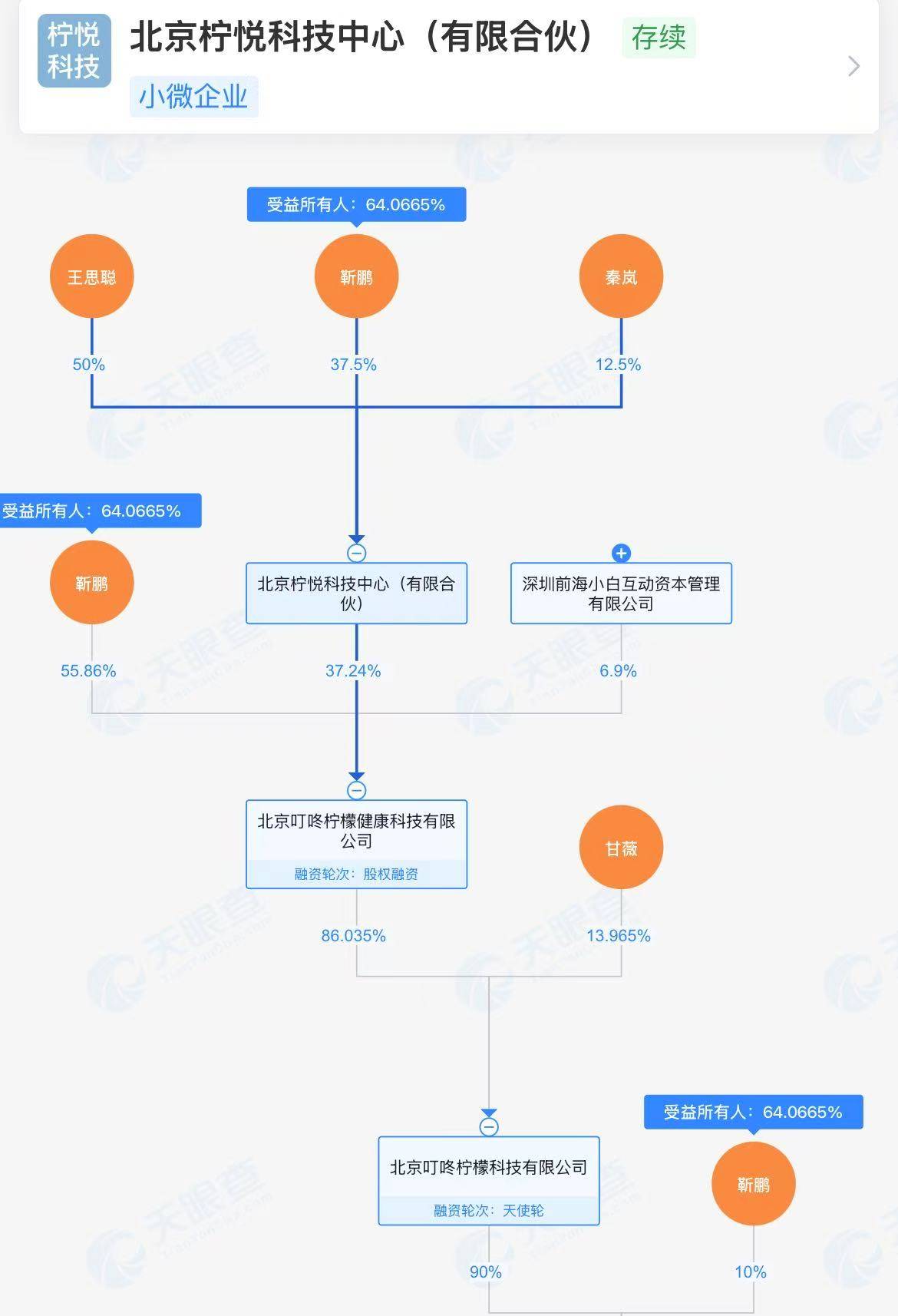
Group 1 - The establishment of Beijing Ningyue Medical Aesthetic Clinic Co., Ltd. has been officially registered, with a registered capital of 1 million RMB and a broad range of services including medical and lifestyle beauty services [1] - The company is primarily owned by Beijing Dingdong Lemon Technology Co., Ltd., which holds 90% of the shares, while Jin Peng holds the remaining 10%. Notably, Gan Wei owns 13.965% of Beijing Dingdong Lemon Technology Co., Ltd. [1] - Wang Sicong and Qin Lan hold indirect stakes in Beijing Dingdong Lemon Technology Co., Ltd. through Beijing Ningyue Technology Center (Limited Partnership) [1] Group 2 - This is not Wang Sicong's first venture into the medical beauty sector, as he was a co-founder of the Ningyue brand during its launch event in December 2016 [4] - Prior reports indicated that Ningyue Clinic's membership cards had reached 70% coverage among celebrities and influencers, which could enhance brand reputation and attract both fans and general consumers [4] - Currently, there is only one operational store for Ningyue Medical Aesthetics in Beijing, with an average consumer spending of 2,409 RMB. Another store is under renovation, with no confirmed opening date yet [4]
今年起整容要交税
Sou Hu Cai Jing· 2026-01-06 03:35
Core Viewpoint - The implementation of the new VAT law and its regulations will end the tax exemption previously enjoyed by profit-oriented medical beauty institutions in China, effective from January 1, 2026 [1][2]. Group 1: Tax Policy Changes - The new VAT law explicitly excludes profit-oriented medical beauty institutions from the tax exemption that applies to medical services provided by qualified medical institutions [1][2]. - Prior to this change, many medical beauty institutions benefited from tax exemptions due to their classification as medical service providers, which was a point of contention [2][3]. - The adjustment aims to eliminate the unfair competitive advantage that profit-oriented medical beauty institutions had over traditional beauty services, which have always been subject to VAT [3][4]. Group 2: Industry Impact - The medical beauty industry in China has seen rapid growth, with market estimates exceeding 300 billion yuan, driven by increasing demand and a growing number of young consumers [2]. - The removal of the tax exemption may lead to price increases for medical beauty services, although the extent of this impact will vary based on factors such as regional market conditions and individual business strategies [6][7]. - Experts suggest that while some lower-end services may see price hikes due to the new tax burden, high-end services may not be as affected due to their already high profit margins [6][7]. Group 3: Tax Rate Application - The applicable VAT rate for medical beauty institutions is expected to be 6%, aligning with the rate for medical services and traditional beauty services [5][6]. - The complexity of the medical beauty industry's business model, including high marketing costs and low material costs, may necessitate a restructuring of its commercial practices in light of the new tax compliance requirements [6][7].