
半导体光刻机

Search documents
突发:ASML大裁员,重点“砍向”管理者!网友:经理越多,收入越少
AI前线· 2026-01-29 02:29
Core Insights - ASML announced a plan to cut approximately 1,700 jobs globally due to a slowdown in demand for mature process equipment and tightening export regulations, marking its first large-scale layoffs since the AI boom began in 2023 [2][5] - The CEO emphasized the company's readiness to capitalize on significant growth opportunities in the semiconductor ecosystem over the coming years, while also acknowledging the need for organizational flexibility and efficiency [3][4] Group 1: Job Cuts and Organizational Changes - The job cuts will primarily affect management positions, with a focus on simplifying the technology and IT departments to enhance engineering and innovation efforts [5][7] - The restructuring aims to transition from a matrix organization to a product and module-centric model, which is expected to streamline processes and decision-making [4][5] - The company plans to create new engineering positions to support existing and new projects, despite the net reduction in jobs [5][7] Group 2: Industry Reactions and Historical Context - The announcement has sparked significant discussion in the tech community, particularly regarding the trend of management expansion leading to decreased engineering efficiency and innovation in European tech companies [7][10] - Comparisons have been made to Philips, ASML's predecessor, highlighting concerns that ASML could face similar challenges if management continues to grow without corresponding productivity [9][10] - Observations from various engineers indicate a broader issue within the German industrial system, where companies have experienced stagnation due to management bloat, leading to operational inefficiencies [10][11]



光刻机大厂,不如预期
半导体行业观察· 2025-11-09 03:14
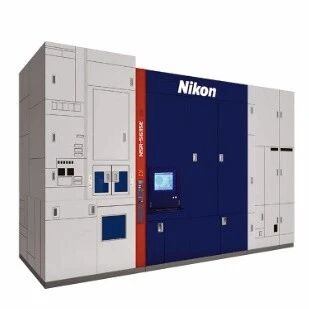
Core Viewpoint - Nikon has reported its first operating loss in five years due to a decrease in semiconductor lithography machine sales and the impact of U.S. tariffs, leading to a downward revision of its lithography machine sales forecast for the year [2][3]. Financial Performance - Nikon's consolidated revenue for the first half of the fiscal year (April-September 2025) decreased by 6.0% year-on-year to 312.915 billion yen, with an operating loss of 4.829 billion yen compared to an operating profit of 5.8 billion yen in the same period last year [2]. - The company's net profit surged by 80.7% to 5.356 billion yen, benefiting from one-time gains from the dissolution of a subsidiary [2]. Business Segments - Precision machinery segment revenue, which includes semiconductor and FPD lithography machines, fell by 14.3% year-on-year to 69.886 billion yen, while operating profit increased by 222.6% to 3.044 billion yen due to structural reforms [2]. - The imaging segment, which includes cameras, saw revenue decline by 4.4% to 145.037 billion yen, with operating profit plummeting by 47.5% to 15.143 billion yen [2]. Sales Volume - For the period of April-September, Nikon's global sales of single-lens digital cameras increased by 17% year-on-year to 480,000 units, while interchangeable lens sales rose by 3% to 670,000 units [3]. - Sales of semiconductor lithography machines were 9 units, down from 10 units last year, and FPD lithography machine sales were 15 units, down from 16 units [3]. Revised Sales Targets - Nikon has maintained its global sales target for single-lens cameras at 950,000 units for the fiscal year, representing a 12% increase, and for interchangeable lenses at 1.4 million units, a 7% increase [3]. - The sales target for semiconductor lithography machines has been revised down from 34 units to 29 units, while the target for FPD lithography machines has been adjusted from 35 units to 33 units [3]. Revenue and Profit Forecasts - Nikon has lowered its consolidated revenue forecast for the fiscal year from 700 billion yen to 680 billion yen, a decrease of 4.9%, and its operating profit forecast from 21 billion yen to 14 billion yen, an increase of 478.1% [3]. - The net profit forecast has also been reduced from 27 billion yen to 20 billion yen, an increase of 226.6% [3].
"Taco交易"再现,机构瞄准投资机会,APEC峰会成关键节点
Feng Huang Wang· 2025-10-25 12:03
Core Viewpoint - The recent escalation of trade tensions between the US and China has led to the re-emergence of the "Taco trade" strategy, characterized by Trump's pattern of pressuring China with tariffs followed by signals of easing tensions, creating potential investment opportunities [1][4][11] Group 1: Trade Tensions and Market Reactions - The current trade friction is perceived to have a lesser impact compared to April, with the market expected to show greater resilience [2][3] - Trump's announcement of a 100% tariff effective after the APEC summit on November 1 indicates that the summit will be a critical point for negotiations [2][3] - Historical patterns suggest that the time between Trump's threats and subsequent retreats is short, indicating limited windows for market declines [2][3] Group 2: Taco Trade Logic - The "Taco trade" logic remains valid despite increasing tensions, with the potential for negotiations at the upcoming APEC summit [4][6][11] - The market has gained experience and adaptability since the trade war began in 2018, leading to reduced volatility compared to previous instances [3][6] - The current market environment, characterized by "loose monetary and fiscal" policies, differs from April, with investors having more experience in handling such situations [6][7] Group 3: Investment Opportunities - The "Taco trade" has historically provided good buying opportunities following market declines triggered by tariff threats [6][8] - The technology sector, particularly in AI and semiconductor industries, is recommended for investment, especially if short-term market corrections occur [6][7] - The Hong Kong stock market is expected to face short-term pressure but may present buying opportunities due to its limited exposure to US exports [7][8] Group 4: Future Outlook - The upcoming APEC summit is seen as a potential venue for US-China negotiations, with expectations that the intensity and duration of the current trade conflict will be limited [5][9] - The market's response to trade tensions is becoming more rational, with diminishing marginal effects from tariff impacts as both sides continue to engage in economic cooperation [11]
广发证券:关税扰动或提供再次买入机会
Xin Hua Cai Jing· 2025-10-13 02:21
Core Insights - The report from GF Securities highlights that since 2018, tariffs imposed by Trump have created disturbances, but China's manufacturing competitiveness remains resilient and cannot be easily contained or replaced [1][2] - The capital market typically experiences a one-time "provision," followed by a "rebound" as events stabilize and a "hedge" as policies warm up in response to external shocks [1] - The intrinsic safety margin of assets is a more critical pricing factor compared to external disturbances [1] Group 1 - The report maintains a medium to long-term confidence in the Chinese economy and assets, noting that by 2024, there will be 463,000 high-tech enterprises in China, 1.7 times that of 2020, with over 570 industrial companies in the global R&D investment top 2500, accounting for nearly a quarter [2] - In the event of external demand shocks, the timing of counter-cyclical policy signals is often a crucial asset pricing coordinate, with expectations of concentrated growth stabilization in Q4 if external trade conditions fluctuate [2] - It is advised to moderately enhance asset allocation "broadly" to avoid excessive unilateral asset risk exposure, as the S&P 500 Shiller P/E ratio averaged 39.2 in September, indicating a high level of intrinsic vulnerability compared to the trade war periods of 2018 and 2019 [2][3] Group 2 - The report suggests that the recent volatility in global asset classes triggered by Trump's tweets is likely a typical "TACO trade," where short-term declines provide good buying opportunities [3] - If a short-term sharp decline occurs due to liquidity shocks, the recommended sectors for allocation remain in domestic substitution related to AI computing power chips, semiconductor equipment, semiconductor lithography, and AI edge applications [3]

关于当前A股,六大机构最新研判
Zhong Guo Zheng Quan Bao· 2025-10-12 14:51
Market Overview - A-shares experienced adjustments after reaching new highs, with external uncertainties suppressing market risk appetite, but core driving factors remain unchanged [1][4] - Future market movements are expected to be characterized by oscillation and rotation, with a focus on safety margins in investments [1][8] Key Policy Developments - The Ministry of Industry and Information Technology (MIIT) and six other departments issued a plan for promoting service-oriented manufacturing innovation from 2025 to 2028, emphasizing the integration of AI and manufacturing [2] - The logistics industry in China showed signs of improvement, with the logistics prosperity index rising to 51.2% in September, indicating stable expansion in new orders [2] Investment Insights - China Galaxy suggests that the core factors driving the current market remain intact, with a focus on policy-driven sectors and companies with strong earnings visibility during the upcoming earnings season [4] - CITIC Securities highlights three structural themes for investment: resource security, corporate globalization, and technological competition, recommending attention to upstream resource sectors and specific chemicals [5] - GF Securities advises to capitalize on technology industry trends, particularly in AI computing chips and semiconductor equipment, in case of short-term market corrections [6] Market Sentiment - The market is expected to experience oscillation and rotation as the main theme in the near term, with a potential shift towards risk aversion [7][8] - Fund managers emphasize the need to verify the fundamental growth of hot sectors after rapid price increases, laying the groundwork for future investments [9]