
卖家助手

Search documents
跨境电商仓储成本可望节省两成以上
Nan Fang Du Shi Bao· 2025-12-10 02:50
Core Insights - Amazon launched the "Next Generation Global Selling" strategy at the 2025 Cross-Border Summit, introducing the Global Warehousing and Distribution (GWD) hub in Shenzhen, which aims to streamline cross-border e-commerce for sellers [1][2][3] Group 1: GWD Overview - The GWD hub will allow sellers to store products locally and distribute them globally, significantly reducing logistics costs by 20% to 40% compared to traditional methods [3][4] - GWD addresses challenges faced by cross-border sellers, such as high overseas storage costs and complex logistics management, by integrating warehousing, customs clearance, and transportation [2][3] Group 2: Supply Chain Enhancements - Amazon is expanding its global logistics network, adding new shipping routes and enhancing services like Seller Managed Placement and Origin Splits to optimize costs and delivery times [4][5] - The company has invested over $100 billion in its logistics infrastructure, enabling delivery to over 200 countries and regions, with over 800 billion items shipped through its Fulfillment by Amazon (FBA) service [5] Group 3: AI and Market Opportunities - Amazon is focusing on AI technology to enhance seller efficiency in product development and marketing, with tools like the "Seller Assistant" to help sellers concentrate on core business [6][8] - The global e-commerce market is growing rapidly, with Chinese sellers experiencing a 15% sales increase in mature markets and 30% in emerging markets, indicating significant opportunities for growth [8][9] Group 4: Industry Context - China has become a major player in global cross-border e-commerce, with a reported import and export value of approximately 2.06 trillion yuan in the first three quarters of the year, reflecting a 6.4% growth [9] - The launch of GWD is seen as a systematic solution to the challenges faced by Chinese sellers in their globalization efforts, particularly in managing costs and market entry risks [9][10]

亚马逊“下一代跨境链”首落深圳,山东产业带借势跃向品牌深蓝
Qi Lu Wan Bao· 2025-12-09 05:21
Core Insights - Amazon launched the "Next Generation Global Selling" project in Shenzhen, marking a significant upgrade in cross-border e-commerce infrastructure with the introduction of its first Global Warehouse Distribution (GWD) center [1] - This initiative aims to empower sellers to achieve "one location storage, global sales," potentially catalyzing a shift from traditional manufacturing exports to high-quality brand exports for the Shandong industrial belt [1] Group 1: Shandong Industrial Belt's Strengths and Challenges - Shandong is a key manufacturing base in China, covering over 40 cross-border e-commerce product categories, with notable advantages in sectors like agricultural machinery, chemicals, textiles, tires, and home goods [2] - Many Shandong enterprises primarily engage in OEM production, limiting their brand influence and cross-border operational capabilities, which hinders their integration into the global value chain and profitability [2] - Amazon's China VP acknowledged Shandong's strong industrial foundation but noted the region's late start in brand development, using the example of small excavators successfully entering high-end overseas markets [2] Group 2: Core Value of the "Next Generation Global Selling" - The GWD's innovative "inventory sharing and dynamic allocation" supply chain management allows sellers to store goods in domestic hubs, with Amazon automatically distributing them to destination country fulfillment centers based on real-time sales forecasts [3] - This model significantly reduces inventory risks and financial pressures for Shandong enterprises, with storage costs potentially decreasing by 20%-40% compared to existing U.S. warehousing models [3] - It simplifies cross-border logistics by providing an integrated, end-to-end logistics solution, reducing management costs and uncertainties associated with coordinating multiple service providers [3] Group 3: Key Pathways for Shandong's Leap Forward - Since signing a memorandum of cooperation with the Shandong Provincial Department of Commerce in March 2024, Amazon has been advancing specialized incubation plans for Shandong's unique product categories [4] - Amazon Business has opened 11 global sites to Chinese sellers, aligning with Shandong's strengths in chemicals, machinery, and building materials, providing a stable growth channel with lower return rates and higher transaction efficiency compared to B2C [4] - Utilizing Amazon's AI tools like "Seller Assistant" can enhance operational efficiency in compliance, advertising, and inventory management, while data tools like "Opportunity Detector" help identify unmet overseas market demands [4] Group 4: Future Outlook - The "14th Five-Year Plan" identifies cross-border e-commerce as a new driver for foreign trade development, providing dual support for the transformation of the Shandong industrial belt [6] - The industry is moving towards product quality enhancement, innovative models, and global market expansion, with the challenge for Shandong enterprises being the transition from OEM to brand building [6] - Amazon's "Next Generation Global Selling" is reshaping the operational paradigm of cross-border e-commerce, transitioning from heavy asset overseas warehouse layouts to a lightweight, intelligent global supply chain network [6]
深圳拿下亚马逊全球首发项目!本地入仓卖全球,明年3月开放
Nan Fang Du Shi Bao· 2025-12-09 02:13
Core Insights - Amazon announced the establishment of its first Global Warehousing and Distribution (GWD) hub in Shenzhen during the 2025 Global Selling Cross-Border Summit, aiming to enhance logistics for Chinese sellers and facilitate their transition from "Made in China" to "Global Brands" [1][6] - The GWD is expected to reduce storage costs by 20% to 40% compared to traditional Amazon Warehousing and Distribution (AWD) methods, addressing challenges such as high overseas storage costs and complex logistics management [2][3] Group 1: GWD Overview - The GWD will allow sellers to store products locally and distribute them globally, simplifying supply chain management and reducing upfront inventory costs [2][3] - The GWD is part of Amazon's Next Generation Global Selling strategy, which aims to empower cross-border e-commerce businesses with advanced technology and operational capabilities [2][3] Group 2: Logistics and Supply Chain Enhancements - Amazon is expanding its global logistics network, including new shipping routes from China to the US, Europe, and the UK, and plans to add more shipping services by 2026 [3][4] - The company has invested over $100 billion in its global logistics network, which now covers over 200 countries and regions, with more than 800 billion items delivered through its Fulfillment by Amazon (FBA) service [4] Group 3: AI and Market Trends - Amazon is heavily investing in AI technology to enhance seller efficiency in product development, content creation, and advertising, with tools like the "Seller Assistant" [6] - The online retail sector is growing rapidly, with Chinese sellers experiencing a 15% sales increase in mature markets and 30% in emerging markets, indicating significant opportunities for growth [6][7] Group 4: Challenges and Opportunities for Chinese Sellers - Chinese sellers face challenges such as high overseas storage costs and complex logistics, particularly when entering emerging markets [7] - The introduction of GWD is seen as a systematic solution to these challenges, enabling sellers to leverage Amazon's global resources for brand development and market competitiveness [7]
降息夜市场剧烈震荡,美股三大股指涨跌不一,中国金龙指数大涨2.8%
Feng Huang Wang· 2025-09-17 22:19
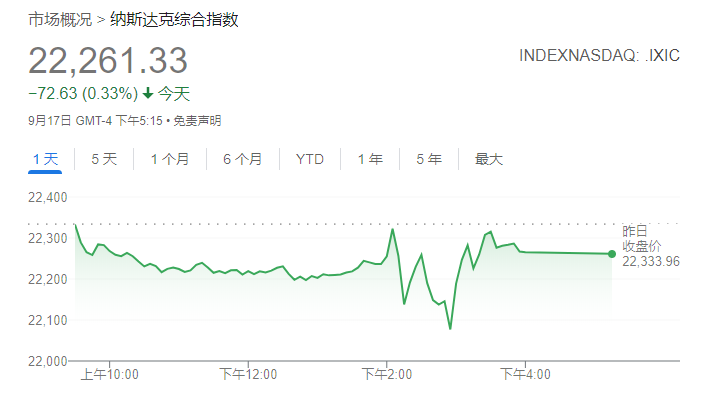
Federal Reserve Actions - The Federal Reserve lowered the federal funds rate target range by 25 basis points to 4.00%-4.25% and indicated two more rate cuts of 25 basis points each in 2025 [3] - Chairman Powell noted that the U.S. economy has shown signs of slowing growth, while inflation remains elevated, and the labor market is experiencing increased downside risks [3] - Powell described the rate cut as a "risk management" measure, suggesting it is a preventive action rather than the start of a long-term easing cycle [3] Market Reactions - The Dow Jones Industrial Average rose by 260.42 points (0.57%) to 46018.32, while the Nasdaq fell by 72.63 points (0.33%) to 22261.33, and the S&P 500 decreased by 6.41 points (0.10%) to 6600.35 [4] - Among the S&P 500 sectors, the financial sector increased by 0.96%, while the information technology sector declined by 0.7% [4] Industry ETFs Performance - Semiconductor ETFs fell by 0.64%, while financial ETFs rose by 0.97% and regional bank ETFs increased by 1.19% [5] Notable Stock Movements - Major tech stocks showed mixed results, with Nvidia down 2.62% and Tesla up 1.01% [6] - Lyft surged by 13% following news of a partnership with Waymo for autonomous taxi services, while Uber dropped by 5% [6] - Workday's stock rose by 7.25% after Elliott Management acquired over $2 billion in shares [6] Company News - Reddit is in preliminary talks with Google for a new content licensing agreement, aiming for higher revenue from its data used in search results and AI training [7] - Nvidia's CEO Huang Renxun stated that natural gas will be needed to power new AI data centers in the UK, highlighting the challenges posed by high electricity prices [8] - Amazon introduced an AI assistant feature in its Seller Assistant tool to help sellers manage their online stores more efficiently [9]

中国消费向“新”而行 服贸会解锁电商“智”变新图景
Sou Hu Cai Jing· 2025-09-12 05:39
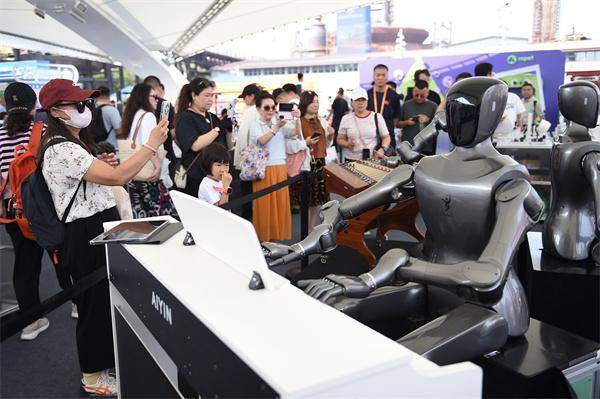
Core Insights - The integration of artificial intelligence (AI) in e-commerce is becoming an inevitable trend, driving the expansion of consumer services and enhancing the overall shopping experience [3][5][6] - The Chinese e-commerce market is experiencing robust growth, with the network retail market scale maintaining its position as the largest globally, providing a solid foundation for quality upgrades in e-commerce [3][4] - The dual forces of digital technology and quality upgrades are propelling the e-commerce industry forward, with AI and big data revolutionizing service delivery and consumer experience [4][5][7] Group 1: AI and E-commerce - AI is reshaping the "people, goods, and environment" in e-commerce, leading to digital and intelligent upgrades in service consumption [3][4] - AI technologies are embedded throughout the e-commerce operation process, enhancing efficiency and providing personalized shopping experiences for consumers [5][6] - The application of AI in e-commerce includes intelligent product selection, precise marketing, and personalized services, significantly improving merchant efficiency and consumer satisfaction [5][6] Group 2: Market Trends and Developments - The cross-border e-commerce sector is rapidly developing, with innovation being key for brands to stand out in the global market [4][6] - In the first half of the year, China's digitally deliverable service imports and exports reached 1.5 trillion yuan, while cross-border e-commerce imports and exports hit 1.3 trillion yuan, both setting historical highs [6][7] - The "Silk Road E-commerce" initiative is fostering effective cooperation with international partners, highlighting the opportunities for growth in the digital economy [6][7] Group 3: Challenges and Opportunities - Despite the advancements, challenges such as technology maturity, data security, and privacy protection remain in the realm of "AI+" [6] - The digital transformation of small and medium-sized enterprises (SMEs) is critical for survival, with over 80% of surveyed companies successfully reducing costs and increasing efficiency through digital technologies [6][7] - The emphasis on collaboration and shared opportunities is essential for navigating the complexities of the global market and enhancing competitiveness [7]

服贸会解锁电商“智”变新图景
Sou Hu Cai Jing· 2025-09-12 04:33
Core Viewpoint - The integration of artificial intelligence (AI) and digital technologies is transforming the e-commerce landscape in China, enhancing consumer experiences and driving industry growth [2][4][5]. Group 1: E-commerce Development - China's e-commerce market is the largest globally, with a focus on quality upgrades and digital transformation [4]. - The Ministry of Commerce is promoting quality e-commerce to enhance consumption and drive growth from both supply and demand sides [4]. - AI and big data are identified as key drivers of the e-commerce industry's evolution, enhancing consumer experience and brand value [4][5]. Group 2: AI Integration - AI is reshaping the "people, goods, and environment" in e-commerce, leading to digital and intelligent upgrades in service consumption [2][5]. - AI tools are being utilized across the e-commerce value chain, improving operational efficiency and customer insights [5]. - The application of AI in e-commerce includes personalized services, smart product selection, and targeted marketing [5]. Group 3: Cross-border E-commerce - Cross-border e-commerce is rapidly developing, with innovation being crucial for brands to stand out in global markets [5][7]. - China's cross-border e-commerce imports and exports reached a historical high of 1.3 trillion yuan in the first half of the year [7]. - The "Digital Silk Road" initiative is fostering effective international partnerships, enhancing China's global trade presence [7][8]. Group 4: Challenges and Opportunities - The e-commerce sector faces challenges such as technology maturity, data security, and privacy protection [6]. - Digital transformation is essential for small and medium enterprises (SMEs) to remain competitive amid global pressures [7]. - Embracing technological changes and building ecosystems are vital for companies to seize opportunities in the evolving market [8].
中国科技巨头AI赋能,9万亿大出海如风破浪
2 1 Shi Ji Jing Ji Bao Dao· 2025-06-05 10:42
Core Insights - The article emphasizes that going global is no longer an option but a necessity for companies, presenting significant strategic opportunities for growth [1][2] - Chinese companies are facing unprecedented complexities and uncertainties in their international expansion due to geopolitical tensions, trade protectionism, and regulatory challenges [1][3] - AI and cloud computing are becoming essential tools for companies to navigate these challenges and enhance their international competitiveness [2][4] Group 1: AI Empowerment - AI is significantly lowering the barriers for companies to expand internationally, enhancing their competitiveness and facilitating a transition from merely "going out" to "moving up" in the global market [2][3] - Cultural differences, compliance issues, and talent shortages are major challenges for Chinese companies entering foreign markets, which AI can help address [3][4] - AI applications in cross-border e-commerce, such as AI customer service and marketing, have shown to improve conversion rates and customer satisfaction by 1% to 30% [5][6] Group 2: Digital Infrastructure - Companies need a robust digital infrastructure to support their international operations, as traditional IT systems are insufficient for rapid market changes [8][9] - Cloud computing services are highlighted as the best solution for companies looking to expand globally, providing flexibility and scalability [8][9] - Major cloud providers like Alibaba Cloud and Huawei Cloud are enhancing their support for Chinese companies going global, emphasizing the importance of localized services [10]