
取栓支架

Search documents
归创通桥20260318
2026-03-19 02:39
Summary of the Conference Call Company Overview - The company discussed its performance and strategies in the vascular intervention industry, focusing on neurovascular and peripheral vascular interventions. [2][3] Financial Performance - Revenue for 2025 is projected to exceed 1 billion RMB, with a net profit of 244 million RMB, showing significant growth from 100 million RMB in 2024. [3][4] - The compound annual growth rate (CAGR) over the past four years is nearly 50%. [2][4] - Gross margin is stable at 72.1%, expected to remain above 70% in 2026 due to supply chain optimization and high-margin new product launches. [2][4] - Operating cash flow reached 385 million RMB in 2025, significantly higher than net profit, attributed to strict cash management practices. [4] Business Segments - Neurovascular intervention revenue reached 676 million RMB, a 28% increase, with the "Jiaolong" catheter holding a 29% market share. [2][4] - Peripheral vascular intervention business grew by 50%, with drug-coated balloons (DCB) winning the first bid in national procurement. [2][4] - The company plans to acquire German company Optimed in April 2026, expected to contribute 180 million RMB in revenue. [2][3][15] Market Trends and Strategies - The national procurement process is nearing completion, with 90% of products included, leading to market concentration among leading companies. [5][19] - The company has successfully leveraged procurement to double market share in core products like spring coils and balloons. [5] - The focus on high-value innovation includes new products like the "Feilong" intracranial stent and large-bore aspiration catheters, expected to contribute tens of millions in incremental revenue in 2026. [2][8] International Expansion - The company achieved nearly 50 million RMB in overseas sales in 2025, with 29 products commercialized in 40 countries. [3][6] - The acquisition of Optimed is aimed at accelerating global penetration through its European direct sales network. [3][15] - The company plans to deepen its presence in key European markets and expand into North America, with two products undergoing IDE trials. [6][7][15] Product Development and Innovation - The R&D pipeline includes 61 approved products, with significant new launches planned for 2026, including a new intracranial stent and liquid embolic agents. [8][12] - The "Feilong" stent is expected to capture a 10% market share in its first year, while the Mammotome large-bore aspiration catheter is anticipated to generate 30-40 million RMB in sales in its first year. [9][10] Competitive Landscape - The vascular intervention market is shifting towards consolidation, with leading companies gaining market share. The company aims to maintain its position as a market leader in neurovascular interventions by 2026. [19][20] - The company is well-positioned to compete with multinational corporations (MNCs) by leveraging its innovative products and expanding its international footprint. [17][19] Future Outlook - The company expects to maintain a gross margin of 70% in 2026, despite the pressures from procurement. [18][22] - The net profit margin is projected to be around 26% for its core business in 2026, with overall net margin expected to be about 23% after the acquisition of Optimed. [15][18] - The company plans to execute valuable acquisitions and enhance operational efficiency through automation and AI to support its growth strategy. [22]
沛嘉医疗20260209
2026-02-10 03:24
Summary of the Conference Call for Peijia Medical Company and Industry Overview - **Company**: Peijia Medical - **Industry**: Medical Devices, specifically focusing on TAVR (Transcatheter Aortic Valve Replacement) and neurointerventional products Key Points and Arguments Industry Updates 1. The TAVR industry is projected to grow at a rate of 7-8% by 2025, which is slower than previous expectations of around 10% [3] 2. The overall surgical volume in January showed positive growth, indicating a potential recovery in the TAVR market [3] 3. Price adjustments initiated by the healthcare authorities have led to a more favorable pricing structure for innovative products, allowing for higher price points for new offerings [4][11] Company Performance 1. Peijia Medical reported a surgical volume of nearly 3,900 TAVR procedures, with a growth rate of approximately 15%, which is double the industry average [7] 2. The company’s new 2.5 generation valve has gained significant market acceptance, contributing to a 5% increase in implant volume despite being priced at a premium [7] 3. The company expects to achieve a break-even point in profitability by 2026, driven by the performance of its neurointerventional products and the anticipated growth in TAVR procedures [21][56] Product Developments 1. The company successfully launched its new aortic valve product, which is expected to drive significant revenue growth in 2026 [6] 2. Peijia Medical has submitted registration applications for its mitral valve product in Europe, with expectations for approval by the end of the year [6] 3. The company anticipates that the new mitral valve product will generate substantial revenue, with an estimated 1,000 procedures expected in the first half of 2026 [25] Pricing and Market Strategy 1. The pricing strategy for the new mitral valve product aims to position it at the highest price point among domestic competitors, reflecting its innovative features [24] 2. The company has adopted a more conservative approach to subsidies, focusing on financial profitability rather than aggressive market share expansion [32] 3. The recent price adjustments are expected to enhance patient affordability and increase surgical volumes, despite concerns about reimbursement from healthcare authorities [35][41] Competitive Landscape 1. New entrants in the market are expected to increase competition, but Peijia Medical believes that these companies will require time to establish themselves [50] 2. The company maintains a strong market position, with a market share increase to approximately 26.5%, reflecting a growth of 1-2 percentage points from the previous year [10] Other Important Insights 1. The company is optimistic about the long-term growth potential of the TAVR market, despite current challenges [3] 2. Peijia Medical's strategy emphasizes continuous innovation and product differentiation to maintain a competitive edge in the market [52] 3. The management is focused on balancing immediate profitability with long-term growth objectives, ensuring that investments in R&D continue to drive future success [56]
归创通桥董事长赵中:未来三至五年,国产医疗器械市场份额有望过半
Mei Ri Jing Ji Xin Wen· 2026-01-21 13:03
Core Viewpoint - The domestic high-value medical consumables market is undergoing significant changes due to centralized procurement, with domestic companies expected to capture approximately 70% of the mainstream market in the coming years [1][2]. Group 1: Market Dynamics - The sixth batch of national centralized procurement for high-value medical consumables was announced, with 202 companies and 440 products winning bids, indicating a shift towards domestic brands [1]. - Since the implementation of centralized procurement in 2020, the market share of imported brands, which previously dominated over 90%, has been continuously eroded, leading to significant price reductions in products like coronary stents and drug-coated balloons [1][2]. - The average price of joint bone cement dropped by 83.13% due to centralized procurement, significantly reducing the financial burden on patients [2]. Group 2: Competitive Landscape - Domestic companies face a more severe challenge in the medical device sector compared to pharmaceuticals, as the technological gap between domestic products and imported brands is more pronounced [2]. - The centralized procurement model has created a dual-edged sword for domestic companies, allowing them to gain market access while also compressing profit margins due to intense price competition [2][3]. Group 3: Company Performance - Guichuang Tongqiao has actively embraced centralized procurement, resulting in a compound annual growth rate of 50-60% in performance after its products were included in procurement lists [3]. - The company has successfully maintained a gross margin of 71.6% in 2024, only slightly down from 2023, indicating resilience against price pressures [4]. Group 4: Future Outlook - The market for neuro-interventional consumables is expected to slow down after rapid growth, while the peripheral vascular business is projected to maintain a steady growth rate of around 40% [5]. - The company recognizes the need to enhance product quality and build trust among clinicians to facilitate the adoption of domestic brands [5]. Group 5: International Expansion - The international market for medical devices is significantly larger than the domestic market, making global expansion a necessity for companies like Guichuang Tongqiao [6][8]. - The company has entered into an agreement to acquire a stake in the German medical technology company Optimed, aiming to leverage its established R&D and commercialization platform in Europe [8][9]. - Innovation is deemed essential for gaining recognition in mainstream international markets, with the company focusing on both mergers and innovative product development to enhance its global presence [9].
心玮医疗-B:成功实现扭亏为盈,神经介入全管线布局显成效
Sou Hu Cai Jing· 2025-09-02 01:45
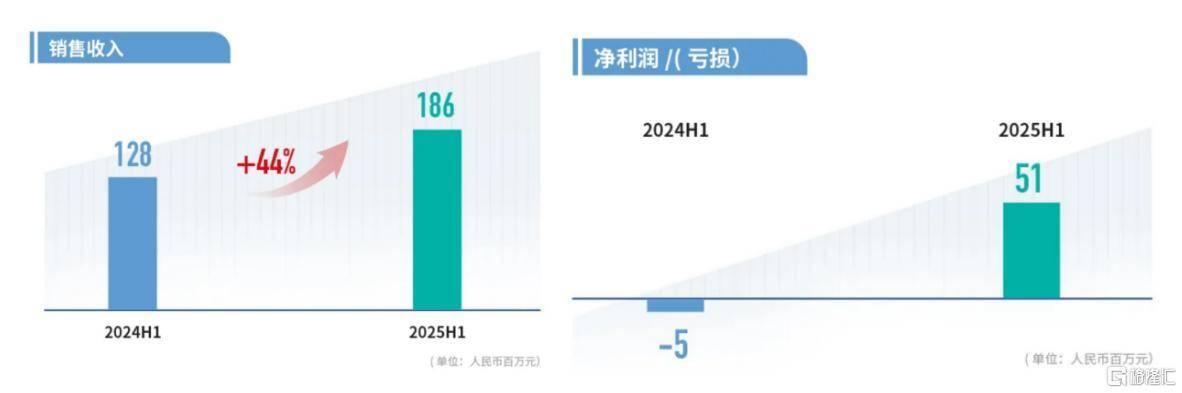
Core Insights - The company has entered its 2.0 development phase, showcasing significant growth in its mid-2025 performance report, with a revenue of 186 million yuan, a year-on-year increase of 44.4%, and a net profit of 50.94 million yuan, marking a return to profitability [1][8] Financial Performance - Revenue for the first half of the year reached 186 million yuan, reflecting a 44.4% year-on-year growth [1] - Gross margin improved to 68.2%, up four percentage points from the previous year [1] - Operating cash flow reached 53.6 million yuan, supported by a reduction in sales and management expense ratio from 44.8% to 37% [1] Product Line Growth - The company experienced explosive growth in three core product lines, particularly in the hemorrhagic stroke segment, which saw a 563% increase due to a combination of innovative products [4] - The ischemic stroke treatment devices also performed well, with a 60% increase in implant volume and a market share exceeding 10% [4] - The "Pulse" hemostatic device in the interventional access field achieved nearly 100,000 implants, a 28% increase year-on-year, capturing over 20% of the vascular closure market [5] Global Expansion and R&D - The company is accelerating its global strategy, having obtained CE or FDA certifications for several products and pursuing approximately 100 product registrations across 21 countries [6] - The R&D pipeline includes a self-expanding drug-eluting stent for intracranial stenosis, with plans to submit a registration application by the end of the year [7] Future Outlook - The management team anticipates maintaining a revenue growth rate of over 35% annually, with profit levels expected to reach between 70 million to 80 million yuan this year [9] - The company aims to expand its overseas market presence from over 30 to more than 50 regions next year, with projected sales growth of 50% to 100% in the coming years [10] - Long-term gross margin targets are set between 65% to 70%, with net profit margins expected to reach 20% to 25% as the company scales [14]

归创通桥(2190.HK):政策拐点已至 利润增速超预期 迎来戴维斯双击
Ge Long Hui· 2025-08-21 19:35
Core Viewpoint - The company reported strong mid-year performance for 2025, with significant revenue and profit growth driven by its neurovascular and peripheral vascular intervention products [1][2]. Group 1: Financial Performance - The company achieved operating revenue of 482 million yuan, an increase of 31.7% year-on-year [1] - Gross profit reached 343 million yuan, up 31.5%, with a gross margin of 71.2%, slightly down by 0.1 percentage points [1] - Unadjusted profit was 121 million yuan, a 76.0% increase, while adjusted profit was 131 million yuan, up 68.1% [1] - Cash on hand amounted to 2.53 billion yuan [1] Group 2: Product Performance - Neurovascular intervention products generated revenue of 305 million yuan, accounting for 63.3% of total revenue, with a growth of 25.0% [1] - Peripheral vascular intervention products saw revenue of 177 million yuan, a 46.2% increase, raising their revenue share to 36.6% [1] Group 3: Cost Management - The company improved operational efficiency, with sales and distribution expense ratio at 17.7%, down 4.2 percentage points [1] - Research and development expense ratio was 25.2%, down 2.5 percentage points [1] - Administrative expense ratio stood at 11.6%, down 0.3 percentage points [1] Group 4: Market Opportunities - The company has seen significant success in centralized procurement, with notable wins in various product categories [2] - The global neurointerventional market is valued at approximately 7 billion USD, with China accounting for 15%-20% [2] - The global peripheral intervention market is around 10 billion USD, with China representing 12%-15% [2] - The company has a diverse product matrix, with 73 products approved or in development, and 22 products commercialized in 27 countries [2] Group 5: International Expansion - The company is expanding its international business, particularly in Europe and emerging markets like Brazil, India, and South Africa [2] - Overseas sales revenue reached 15.72 million yuan, a year-on-year increase of 36.8% [2]