医疗器械集采

Search documents
华创医药投资观点&研究专题周周谈:第167期:医药零售:2025全渠道数据更新及B2C财报总结
Huachuang Securities· 2026-03-22 07:45
Investment Rating - The report does not explicitly state an investment rating for the industry. Core Insights - The pharmaceutical retail industry is undergoing a transformation with a focus on high-quality development and market recovery expected by the end of 2025. The cumulative scale of physical pharmacies in China is projected to reach 616.5 billion yuan, a slight decline of 0.6% year-on-year, but with a growth of 3.2% in Q4 2025 [12][20]. Summary by Sections Market Overview - The overall market for the pharmaceutical sector is experiencing a restructuring phase, driven by ongoing national medical and insurance reforms that are clearing out outdated supply. Leading companies are adapting to market demands by accelerating compliance and upgrading health services, which is expected to solidify the foundation for industry recovery [20]. B2C and O2O Market Analysis - The B2C pharmaceutical market is expected to grow steadily, with a cumulative scale increase of 5.4% year-on-year for the first 11 months of 2025. Major players like JD Health and Alibaba Health are showing significant revenue growth, with JD Health's revenue reaching 73.4 billion yuan (+26.3%) and Alibaba Health's revenue at 30.6 billion yuan (+13.2%) [15][50]. Retail Trends - The retail scale of physical pharmacies is projected to be 5,013 billion yuan for 2025, reflecting a year-on-year increase of 0.6%. Q4 alone is expected to see a cumulative scale of 1,359 billion yuan, with a growth of 4.7% [24]. Monthly data indicates fluctuations, with October showing a 2.2% increase year-on-year, driven by innovative drug demand [24]. Product Category Insights - In 2025, the pharmaceutical category is expected to account for 81.3% of the market share, with a 1.0 percentage point increase year-on-year. The traditional Chinese medicine segment is projected to decline slightly, while the medical device segment remains stable [21]. Chemical Drug Market Analysis - The top 20 chemical drug categories accounted for 78.3% of sales in October 2025, with a year-on-year growth of 7.5%. Notably, categories such as antiviral drugs and hemostatic agents are experiencing significant growth, while some categories like mineral supplements are seeing declines [40][41]. Traditional Chinese Medicine (TCM) Insights - The TCM market is showing a mixed performance, with the top 20 categories holding 86.4% of the market share in November 2025. Growth is primarily seen in cold and pediatric cold medications, while other categories are facing declines [45][46]. Medical Device Market - The medical device retail market is projected to be 288 billion yuan in 2025, with a slight decline of 0.3%. However, Q4 is expected to show a 4.0% increase, indicating a potential recovery trend [35]. Health Products Market - The health products segment is expected to see a cumulative scale of 229 billion yuan in 2025, reflecting a year-on-year decline of 15.2%. However, the decline is narrowing, indicating a potential stabilization in the market [37].
华创医药周观点:医药零售:2025全渠道数据更新及B2C财报总结 2026/03/21
华创医药组公众平台· 2026-03-21 13:04
Core Viewpoint - The article discusses the updates on the pharmaceutical retail market and B2C financial summaries for 2025, highlighting the industry's transition towards high-quality development and the recovery of retail channels [9][12]. Market Overview - The overall market for physical pharmacies in China is projected to reach CNY 616.5 billion in 2025, showing a slight year-on-year decline of 0.6%. However, the last quarter of 2025 is expected to see a cumulative scale of CNY 167.5 billion, reflecting a growth of 3.2% year-on-year [15][16]. - The B2C pharmaceutical market is anticipated to grow by 5.4% year-on-year, with major platforms like JD Health and Alibaba Health continuing to capture online pharmaceutical consumption demand [45][49]. Pharmaceutical Retail Trends - The retail scale of pharmaceuticals in physical pharmacies is expected to reach CNY 5,013 billion in 2025, with a year-on-year growth of 0.6%. The fourth quarter is projected to see a cumulative scale of CNY 1,359 billion, with a year-on-year increase of 4.7% [23]. - Monthly retail scale data indicates that in October 2025, the retail scale for pharmaceuticals was CNY 424 billion, showing a year-on-year increase of 2.2% driven by innovative drugs [23][16]. B2C Market Insights - The B2C market structure shows that prescription drug sales accounted for 61% of total sales, with a year-on-year growth of 14%, while OTC sales experienced a decline of 5% [45]. - JD Health reported a revenue of CNY 734 billion in 2025, marking a 26.3% increase, with a net profit of CNY 53.8 billion, reflecting a 29.2% growth and achieving a historical high in profitability [15][49]. Category Analysis - In 2025, the market share of pharmaceuticals is expected to be 81.3%, with traditional Chinese medicine (TCM) at 7.8%, health products at 3.7%, and medical devices stable at 4.7% [17]. - The top 20 categories of chemical drugs saw a market share of 78.3% in October 2025, with significant growth in categories such as antiviral drugs and diabetes medications [40]. Future Outlook - The pharmaceutical retail industry is undergoing a critical phase of reform and restructuring, with ongoing national medical and insurance reforms driving the exit of outdated supply and enhancing the competitive landscape [16]. - The integration and consolidation of the industry are expected to accelerate, with leading companies adapting to market demands and enhancing compliance and health service upgrades [16].

华创医药投资观点&研究专题周周谈 · 第164期:海外CXO2025财报总结&2026年展望-20260228
Huachuang Securities· 2026-02-28 14:15
Investment Rating - The report does not explicitly state an investment rating for the industry or specific companies Core Insights - The report highlights that China's innovative drug research and development is experiencing high-quality growth, significantly outpacing the global average, establishing China as a key player in the global innovative drug market [11] - The medical device sector is seeing a recovery in bidding scale, with a positive outlook for domestic companies as they expand internationally [11] - The CXO and raw material drug sectors are expected to benefit from a recovering financing environment and increasing demand, with several companies showing strong growth potential [11] - The report emphasizes the importance of AI and emerging technologies in transforming the healthcare industry [11] Market Overview - The CITIC pharmaceutical index increased by 0.41%, underperforming the CSI 300 index by 0.67 percentage points, ranking 24th among 30 primary industries [8] - The top ten stocks by increase included Aidi Te, Koyuan Pharmaceutical, and Duorui Pharmaceutical, while the top ten stocks by decrease included Zexing Pharmaceutical and Meihua Medical [8] Sector Analysis Innovative Drugs - The report suggests focusing on companies like Bai Li Tianheng, Bai Ji Shen Zhou, and Heng Rui Pharmaceutical due to their strong growth prospects in innovative drug development [11] Medical Devices - High-value consumables are expected to see a value reassessment as collection pressures ease, with companies like Spring Medical and Maipu Medical recommended for investment [11] CXO and Raw Material Drugs - The report indicates a positive outlook for CXO companies, with a recovery in orders expected to translate into performance improvements [11] - The raw material drug sector is anticipated to benefit from price stabilization and increased demand for high-end markets [11] Traditional Chinese Medicine - The report highlights the potential for growth in traditional Chinese medicine, particularly in proprietary basic drugs and OTC products, with companies like Kunming Pharmaceutical and Kangyuan Pharmaceutical recommended [11] Pharmacy Sector - The report expresses optimism for the pharmacy sector, driven by prescription outflow and market optimization, recommending companies like Yibao Pharmacy and Dazhenglin [11] Medical Services - The medical services sector is expected to return to a growth trajectory as the negative impacts of medical reform diminish, with companies like Tongce Medical and Aier Eye Hospital highlighted [11] Blood Products - The blood products sector is projected to grow due to relaxed approval processes and increasing demand, with companies like Tiantan Biological and Boya Biological recommended [11]
南微医学(688029):内镜诊疗耗材龙头亮剑全球
HTSC· 2026-02-10 10:47
Investment Rating - The report maintains a "Buy" rating for the company with a target price of RMB 97.65 [1][5] Core Insights - The company, Nanwei Medical, is a leading domestic player in endoscopic medical consumables, with significant growth in international markets, particularly in developed countries. From 2014 to 2024, overseas revenue is expected to grow 12.6 times, with nearly 60% of revenue coming from international markets in 9M25. The company is well-positioned to benefit from a stable domestic policy environment regarding centralized procurement [1][16] - The report highlights the company's strong global expansion capabilities, with a compound annual growth rate (CAGR) of 30% in overseas revenue from 2013 to 2024. The direct sales model has significantly increased its contribution to revenue, indicating a robust international market presence [2][4] Summary by Sections Overseas Market Performance - The company has achieved a CAGR of 30% in overseas revenue from 2013 to 2024, with 9M25 overseas revenue reaching RMB 1.4 billion, a year-on-year increase of 42%. The Americas, EMEA, and Asia-Pacific regions have shown growth rates of 20%, 73%, and 32% respectively, with overseas revenue accounting for 59% of total revenue [2][16] - The global endoscopic market is projected to grow from approximately USD 6 billion in 2023 to USD 7.4 billion by 2026, with the company currently holding less than 6% market share, indicating significant growth potential [2][33] Domestic Market Dynamics - The impact of centralized procurement on domestic revenue is expected to diminish, with the company winning bids in key regions without further price declines. The government has emphasized quality over price in procurement policies, which stabilizes expectations for future revenue [3][18] - Domestic revenue for 9M25 was RMB 980 million, reflecting a year-on-year decrease of 4.7% due to procurement pressures, but the company anticipates a gradual recovery as overseas revenue continues to grow [3][24] Differentiation from Market Views - The report argues that concerns regarding the impact of centralized procurement are manageable and decreasing. The company’s overseas revenue share is expected to continue rising, while the share of non-procurement products in domestic revenue is likely to decline [4][19] - The market has not fully recognized the company's exceptional global business capabilities, with overseas revenue growth and contribution metrics indicating that Nanwei Medical is among the top tier of domestic medical device companies [4][19] Financial Projections - The company forecasts net profits of RMB 600 million, RMB 710 million, and RMB 840 million for 2025, 2026, and 2027 respectively, with corresponding earnings per share (EPS) of RMB 3.22, RMB 3.76, and RMB 4.49. The valuation is set at 26x PE for 2026, leading to a target price of RMB 97.65 [5][9]

沛嘉医疗20260209
2026-02-10 03:24
Summary of the Conference Call for Peijia Medical Company and Industry Overview - **Company**: Peijia Medical - **Industry**: Medical Devices, specifically focusing on TAVR (Transcatheter Aortic Valve Replacement) and neurointerventional products Key Points and Arguments Industry Updates 1. The TAVR industry is projected to grow at a rate of 7-8% by 2025, which is slower than previous expectations of around 10% [3] 2. The overall surgical volume in January showed positive growth, indicating a potential recovery in the TAVR market [3] 3. Price adjustments initiated by the healthcare authorities have led to a more favorable pricing structure for innovative products, allowing for higher price points for new offerings [4][11] Company Performance 1. Peijia Medical reported a surgical volume of nearly 3,900 TAVR procedures, with a growth rate of approximately 15%, which is double the industry average [7] 2. The company’s new 2.5 generation valve has gained significant market acceptance, contributing to a 5% increase in implant volume despite being priced at a premium [7] 3. The company expects to achieve a break-even point in profitability by 2026, driven by the performance of its neurointerventional products and the anticipated growth in TAVR procedures [21][56] Product Developments 1. The company successfully launched its new aortic valve product, which is expected to drive significant revenue growth in 2026 [6] 2. Peijia Medical has submitted registration applications for its mitral valve product in Europe, with expectations for approval by the end of the year [6] 3. The company anticipates that the new mitral valve product will generate substantial revenue, with an estimated 1,000 procedures expected in the first half of 2026 [25] Pricing and Market Strategy 1. The pricing strategy for the new mitral valve product aims to position it at the highest price point among domestic competitors, reflecting its innovative features [24] 2. The company has adopted a more conservative approach to subsidies, focusing on financial profitability rather than aggressive market share expansion [32] 3. The recent price adjustments are expected to enhance patient affordability and increase surgical volumes, despite concerns about reimbursement from healthcare authorities [35][41] Competitive Landscape 1. New entrants in the market are expected to increase competition, but Peijia Medical believes that these companies will require time to establish themselves [50] 2. The company maintains a strong market position, with a market share increase to approximately 26.5%, reflecting a growth of 1-2 percentage points from the previous year [10] Other Important Insights 1. The company is optimistic about the long-term growth potential of the TAVR market, despite current challenges [3] 2. Peijia Medical's strategy emphasizes continuous innovation and product differentiation to maintain a competitive edge in the market [52] 3. The management is focused on balancing immediate profitability with long-term growth objectives, ensuring that investments in R&D continue to drive future success [56]
机构称医疗器械有望迎来行业新发展周期,医疗创新ETF(516820)交投活跃
Xin Lang Cai Jing· 2026-02-06 02:57
Group 1 - The core viewpoint of the news highlights the positive performance of the Chinese pharmaceutical and medical device innovation index, with significant gains in specific stocks and a new development plan for traditional Chinese medicine [1] - The China Securities Regulatory Commission and eight other departments have issued a plan to promote the high-quality development of traditional Chinese medicine, aiming to approve a batch of innovative traditional Chinese medicines and cultivate ten major traditional Chinese medicine products by 2030 [1] - The overall funding congestion in the innovative drug sector has slightly decreased compared to Q2, with some funds temporarily withdrawing from innovative drugs, while the medical device sector remains stable and is expected to attract more investment [1] Group 2 - The China Medical and Medical Device Innovation Index (931484) includes 30 listed companies with good profitability and growth potential, reflecting the overall performance of profitable and growth-oriented pharmaceutical and medical device companies [2] - As of January 30, 2026, the top ten weighted stocks in the index account for 63.9% of the total index, including companies like WuXi AppTec, Mindray Medical, and Hengrui Medicine [2]
归创通桥董事长赵中:未来三至五年,国产医疗器械市场份额有望过半
Mei Ri Jing Ji Xin Wen· 2026-01-21 13:03
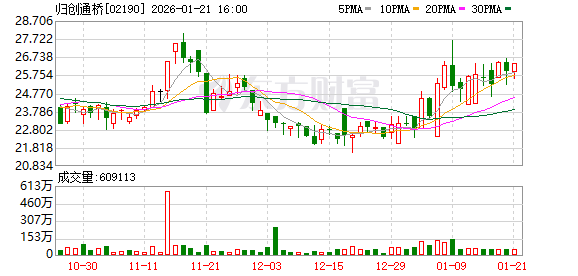
Core Viewpoint - The domestic high-value medical consumables market is undergoing significant changes due to centralized procurement, with domestic companies expected to capture approximately 70% of the mainstream market in the coming years [1][2]. Group 1: Market Dynamics - The sixth batch of national centralized procurement for high-value medical consumables was announced, with 202 companies and 440 products winning bids, indicating a shift towards domestic brands [1]. - Since the implementation of centralized procurement in 2020, the market share of imported brands, which previously dominated over 90%, has been continuously eroded, leading to significant price reductions in products like coronary stents and drug-coated balloons [1][2]. - The average price of joint bone cement dropped by 83.13% due to centralized procurement, significantly reducing the financial burden on patients [2]. Group 2: Competitive Landscape - Domestic companies face a more severe challenge in the medical device sector compared to pharmaceuticals, as the technological gap between domestic products and imported brands is more pronounced [2]. - The centralized procurement model has created a dual-edged sword for domestic companies, allowing them to gain market access while also compressing profit margins due to intense price competition [2][3]. Group 3: Company Performance - Guichuang Tongqiao has actively embraced centralized procurement, resulting in a compound annual growth rate of 50-60% in performance after its products were included in procurement lists [3]. - The company has successfully maintained a gross margin of 71.6% in 2024, only slightly down from 2023, indicating resilience against price pressures [4]. Group 4: Future Outlook - The market for neuro-interventional consumables is expected to slow down after rapid growth, while the peripheral vascular business is projected to maintain a steady growth rate of around 40% [5]. - The company recognizes the need to enhance product quality and build trust among clinicians to facilitate the adoption of domestic brands [5]. Group 5: International Expansion - The international market for medical devices is significantly larger than the domestic market, making global expansion a necessity for companies like Guichuang Tongqiao [6][8]. - The company has entered into an agreement to acquire a stake in the German medical technology company Optimed, aiming to leverage its established R&D and commercialization platform in Europe [8][9]. - Innovation is deemed essential for gaining recognition in mainstream international markets, with the company focusing on both mergers and innovative product development to enhance its global presence [9].
归创通桥董事长赵中:未来三至五年 国产医疗器械市场份额有望过半
Mei Ri Jing Ji Xin Wen· 2026-01-21 12:59
Core Viewpoint - The recent announcement of the sixth batch of high-value medical consumables procurement in China indicates a significant shift towards domestic brands, with industry experts predicting that leading domestic companies will capture approximately 70% of the mainstream market [2]. Group 1: Market Dynamics - Since the implementation of high-value consumables procurement in 2020, the process of domestic substitution has accelerated, with imported brands previously dominating over 90% of the market share being increasingly challenged [2]. - The average price of coronary stents has dropped to around 1,000 yuan, and drug-coated balloon prices have also fallen to similar levels, significantly reducing surgical costs [2]. - By 2024, the market share of domestic neurointerventional products has risen to 26%, reshaping the competitive landscape [5]. Group 2: Company Performance - Guichuang Tongqiao has successfully embraced procurement, resulting in a compound annual growth rate of 56% in performance after its products were included in the procurement list [4]. - The company has maintained a gross margin of 71.6% in 2024, only slightly down by 1.3 percentage points from 2023, indicating resilience against price pressures [5]. - Guichuang Tongqiao's products have achieved significant market penetration, with certain products like the capture device leading in market share in Hebei [5]. Group 3: Challenges and Opportunities - Despite the rapid growth of domestic medical devices, there remains a notable gap in innovation capabilities compared to foreign counterparts, with many domestic products lacking substantial intellectual property [2][3]. - The procurement model has created a dual-edged sword for domestic companies, providing opportunities for market access while also compressing profit margins due to intense price competition [3]. - The company recognizes the need to build trust with clinicians, who are often accustomed to using imported products, emphasizing the importance of product quality and user education [6]. Group 4: International Expansion - The international market presents a significant opportunity for domestic medical device companies, with Guichuang Tongqiao already entering over 80 countries and regions [9]. - The company plans to expand its global footprint through acquisitions, such as the agreement with Optimed Medizinische Instrumente GmbH, to leverage established R&D and commercialization platforms in Europe [9]. - Innovation remains crucial for gaining recognition in mainstream markets, with the company acknowledging the longer timelines required for medical device innovation compared to pharmaceuticals [10].
医疗器械ETF领涨丨ETF基金日报
2 1 Shi Ji Jing Ji Bao Dao· 2026-01-06 02:59
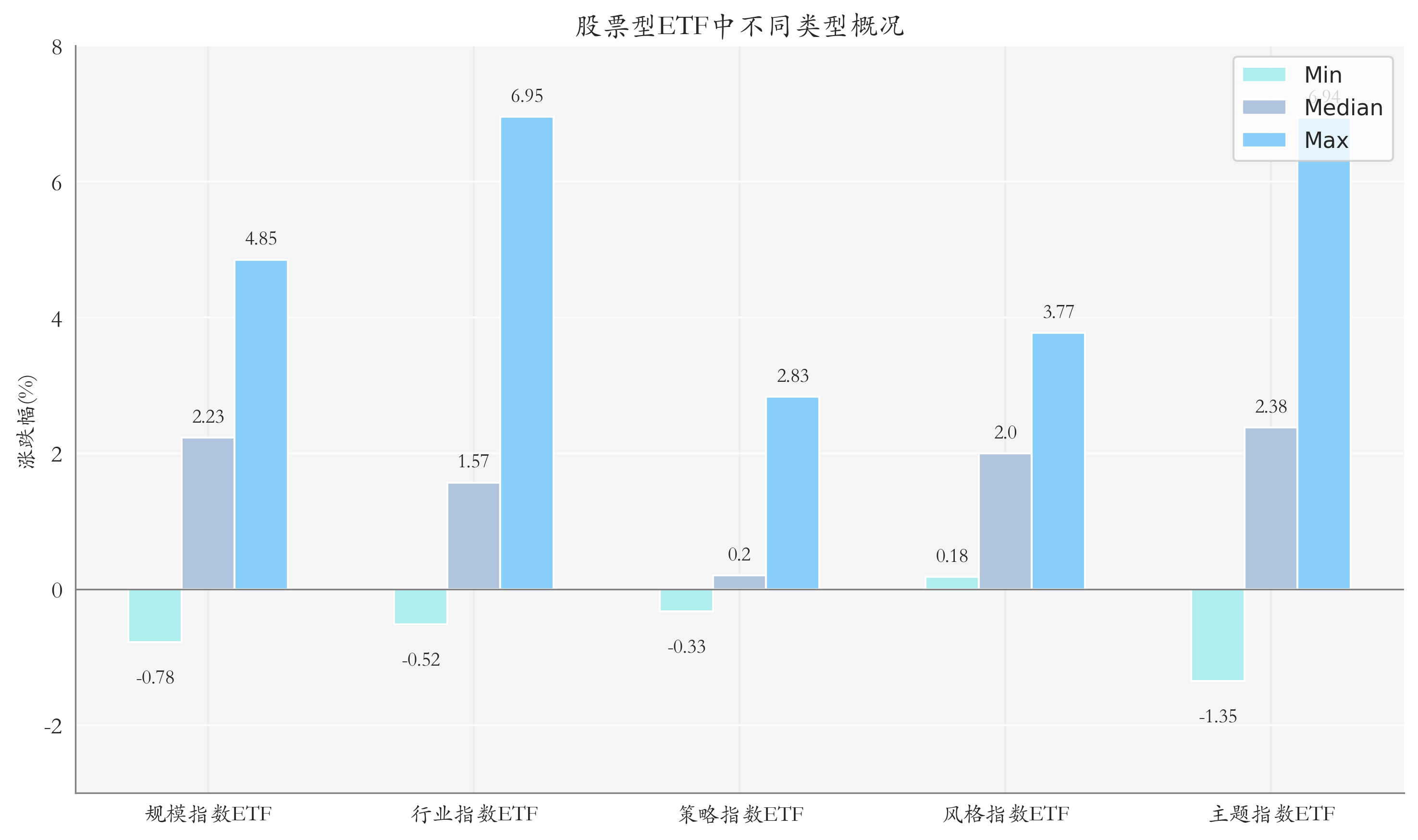
Market Overview - The Shanghai Composite Index rose by 1.38% to close at 4023.42 points, with a daily high of 4025.26 points [1] - The Shenzhen Component Index increased by 2.24% to close at 13828.63 points, reaching a high of 13828.97 points [1] - The ChiNext Index saw a rise of 2.85%, closing at 3294.55 points, with a peak of 3295.29 points [1] ETF Market Performance - The median return of stock ETFs was 2.12%, with the highest return from the Southern CSI Star Market 50 ETF at 4.85% [2] - The highest performing industry index ETF was the China Securities All Index Medical Devices ETF, yielding 6.95% [2] - The highest return among thematic index ETFs was from the Ping An CSI Hong Kong-Shanghai Online Consumption Theme ETF at 6.94% [2] ETF Gains and Losses - The top three ETFs by gain were: - China Securities All Index Medical Devices ETF (6.95%) - Ping An CSI Hong Kong-Shanghai Online Consumption Theme ETF (6.94%) - Yongying CSI All Index Medical Devices ETF (6.37%) [5] - The top three ETFs by loss were: - China Securities Tourism Theme ETF (-1.35%) - Fortune CSI Tourism Theme ETF (-1.11%) - Penghua CSI 800 Free Cash Flow ETF (-0.78%) [6] ETF Fund Flows - The top three ETFs by fund inflow were: - Southern CSI 500 ETF (28.42 billion) - Huatai-PB CSI 300 ETF (11.02 billion) - Southern CSI Shenwan Nonferrous Metals ETF (9.15 billion) [8] - The top three ETFs by fund outflow were: - Southern CSI A500 ETF (12.88 billion) - Huaan ChiNext 50 ETF (9.97 billion) - Huatai-PB CSI A500 ETF (8.82 billion) [9] ETF Margin Trading Overview - The highest margin buy amounts were for: - Huatai-PB CSI 300 ETF (0.776 billion) - China Securities Star Market 50 ETF (0.682 billion) - Guotai Junan CSI All Index Securities Company ETF (0.47 billion) [11] - The highest margin sell amounts were for: - Huatai-PB CSI 300 ETF (63.87 million) - China Securities Star 50 ETF (34.55 million) - Southern CSI 500 ETF (23.85 million) [12] Institutional Insights - Century Securities suggests focusing on the transformation progress of leading companies in the medical device sector, which has gained market share post centralized procurement [13] - Guojin Securities emphasizes investment strategies in the medical device sector should focus on overseas expansion and innovation, as these areas provide additional growth opportunities and support profit margins during price declines in traditional businesses [14]
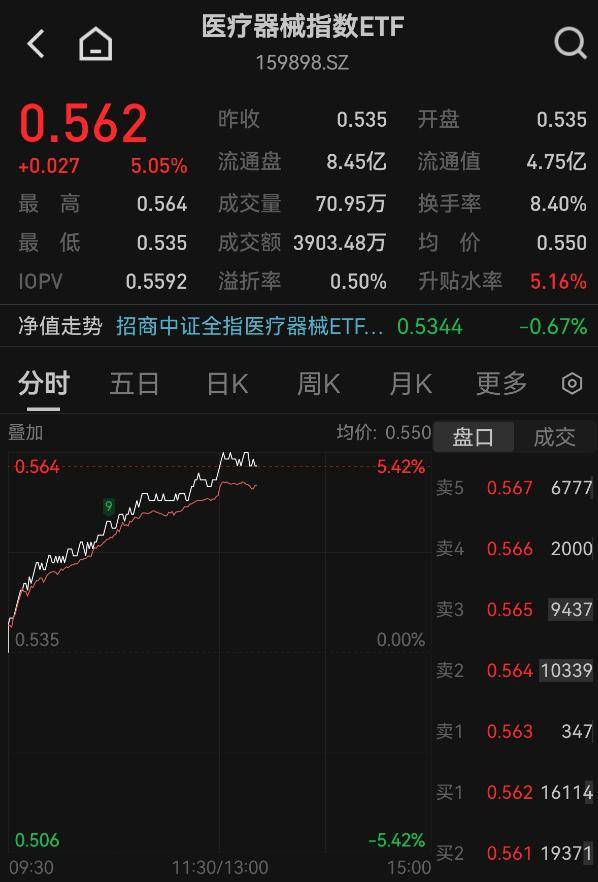
国产器械逆袭时刻?政策暖风重塑格局,医疗器械指数ETF(159898)强势拉升逾5%!
Sou Hu Cai Jing· 2026-01-05 05:50
Group 1 - The medical device sector experienced a strong start in 2026, with multiple stocks hitting the daily limit up, including Mindray Medical, United Imaging, and South Micro Medical, among others [1] - The Medical Device Index ETF (159898) saw a significant increase of over 5%, with a net subscription of 27 million units and a net inflow of over 15 million yuan [1][2] - Recent government initiatives, such as the National Medical Products Administration's (NMPA) establishment of a priority approval list for high-end medical devices, aim to accelerate the market entry of innovative products [3] Group 2 - The medical device sector has gained attention in specific areas like brain-computer interfaces, indicating potential for continued performance [3] - The NMPA's new regulations on export sales certificates for medical devices will facilitate better pricing strategies for companies in the global market [3] - Century Securities suggests that domestic medical device manufacturers have gained significant market share post-consolidated procurement, benefiting from scale effects and export policies [4] Group 3 - The Medical Device Index ETF (159898) tracks the CSI All-Index Medical Devices, with major holdings in leading companies like Mindray Medical and United Imaging, reflecting a strong representation of the A-share medical device sector [4]