
味精

Search documents
供应继续放量,碱价压力重重
Dong Zheng Qi Huo· 2026-03-30 13:40
1. Report Industry Investment Rating - Not provided in the content 2. Core Viewpoints of the Report - The soda ash industry is in a downward cycle due to capacity expansion, facing "high supply and high inventory" pressure, and the market is difficult to break out of the bearish pattern. It is recommended to focus on short - selling opportunities for the SA contract on rallies. The SA2605 contract may fluctuate in the range of [1150, 1300] yuan/ton in Q2, and short - selling on rallies within the range is advisable. However, there may be supply - side disturbances due to possible early summer maintenance in Q2, which may lead to short - term upward risks in the market [43]. 3. Summary by Related Catalogs 3.1 Soda Ash Price and Market - Since the beginning of the year, the main soda ash contract has basically operated in the range of [1200, 1300] yuan/ton, with mainly band - type market trends. From the beginning of the year to mid - February, the soda ash futures price declined, dominated by the logic of supply surplus during the capacity expansion period. After mid - February, the price rebounded from the low point, boosted by rising energy costs and improved export expectations [8]. 3.2 Supply Side - Two production facilities put into operation in December last year (Yingcheng Xindu's 700,000 - ton combined soda plant and Yuanxing's second - phase 2.8 - million - ton natural soda capacity) are the main sources of increased supply in 2026. Since the beginning of the year, as new capacities have been gradually put into production, the upper limit of soda ash production has been continuously increasing [13]. - In Q2, on one hand, new capacities are still ramping up, and the upper limit of soda ash production may further increase; on the other hand, due to fundamental pressure, there may be a situation similar to last year where summer maintenance is advanced, which may cause supply - side disturbances [20]. 3.3 Production Profit and开工率 - Since the beginning of the year, the production profit of the ammonia - soda process has changed little, while the production profit of the combined - soda process has significantly recovered due to the sharp rise in ammonium chloride prices, driving up the operating rate of combined - soda enterprises [20]. 3.4 Downstream Demand 3.4.1 Float Glass - In Q2, the production lines ignited in March will start producing glass, increasing the actual supply. There are still two production lines in the Shahe area waiting to be ignited. After the cold - repair peak from the end of last year to Q1 this year, the probability of short - term cold - repair for the remaining production lines is low. The downward space for the daily melting volume of float glass in production is limited, and the actual supply may increase from the low level [24]. 3.4.2 Photovoltaic Glass - In Q1, the supply of photovoltaic glass was stable with a slight decline, with both production line ignition and cold - repair. Since late March, the cold - repair progress of photovoltaic glass production lines has accelerated due to high inventory and losses. There may be more cold - repairs of small and medium - sized production lines with high inventory pressure, and the overall supply of photovoltaic glass is expected to continue to decline [26]. 3.4.3 Light Soda Ash - Benefiting from the rapid development of industries such as lithium carbonate and monosodium glutamate, and the inherent resilience of light soda ash downstream demand, the demand for light soda ash is expected to remain strong in Q2, showing a divergence from the demand for heavy soda ash [33]. 3.5 Import and Export - China's soda ash is mainly exported to Southeast Asia, South Korea, and Nigeria. The Middle East geopolitical conflict has limited impact on China's soda ash export business. Although the European natural gas price has risen significantly due to the conflict, the natural gas price in the United States, a major export destination, has remained stable. China's soda ash exports are expected to continue the prosperous situation of last year but are unlikely to achieve significant growth [39]. 3.6 Inventory - Since the beginning of the year, the total inventory of the soda ash industry has continued to increase. The inventory of soda ash manufacturers accumulated significantly during the Spring Festival holiday and has not been effectively reduced since then. Downstream glass factories hoarded a large amount of inventory when the soda ash price was low at the end of last year and are currently in the inventory digestion stage [41].
阜丰集团(00546):港股研究|公司点评|阜丰集团(00546.HK):2025年业绩大幅增长,强化股东回报
Changjiang Securities· 2026-03-30 04:43
Investment Rating - The investment rating for the company is "Buy" and it is maintained [9]. Core Insights - The company reported a revenue of 27.88 billion HKD for 2025, representing a year-on-year growth of 0.4%. The attributable net profit was 2.47 billion HKD, which is a 6.6% increase compared to the previous year. The total dividend per share for 2025 was 0.487 HKD, up from 0.40 HKD in 2024, with a payout ratio of 45% compared to 40% in 2024 [2][6]. - The company is a leader in the global monosodium glutamate (MSG) industry, with expectations for industry demand to increase as the major competitors finish their production expansions in 2024. The company is also expanding its overseas operations, particularly in Kazakhstan, which is expected to contribute to its performance starting in 2026 [9]. - The company experienced significant growth in sales volumes for MSG, threonine, and lysine, despite a decline in average selling prices. The sales volume for MSG reached 1.804 million tons, a 10.1% increase year-on-year, while the average price fell by 15.4% to 5,681 HKD per ton. The animal nutrition segment saw a gross profit of 2.5 billion HKD, a 23.0% increase, with threonine and lysine sales volumes growing by 31.1% and 30.4%, respectively [9]. Summary by Relevant Sections Financial Performance - Revenue for 2025 was 27.88 billion HKD, with a net profit of 2.47 billion HKD. The dividend per share increased to 0.487 HKD, with a payout ratio of 45% [2][6]. Business Segments - The food additives segment generated 13.389 billion HKD in revenue, down 6.8%, but the gross margin improved by 2.7 percentage points to 13.5%. The animal nutrition segment's gross profit rose to 2.5 billion HKD, with a gross margin of 23.7% [9]. - The high-end amino acids segment saw a revenue decline of 11.0%, while the colloid segment's revenue decreased by 32.5% [9]. Market Outlook - The company anticipates a recovery in product prices starting in early 2026, following a period of decline. Prices for MSG and amino acids have begun to rise, supported by improved demand and rising raw material costs [9].
我国生物制造产业10大链主企业分析
DT新材料· 2026-03-04 16:05
Core Insights - The 11th Bio-based Conference and Exhibition will be held in Shanghai from May 20-22, focusing on bio-based chemicals and materials, featuring 11 thematic forums, 7 concurrent activities, and 1000 new product displays [2] Group 1: Company Overview - Kasei Biotech, established in 2000, focuses on synthetic biology and bio-manufacturing technology, becoming a global leader in producing new bio-based materials [3] - Kasei Biotech's revenue for 2025 is projected to reach 3.295 billion yuan, marking an 11.41% increase, with a net profit of 566 million yuan, up 15.7% [3] - Huaheng Biotech, founded in 2005, plans to list in Hong Kong and expects a revenue of 2.885 billion yuan in 2025, a 32.5% increase, but a net profit decrease of approximately 30% [9][10] - Huadong Medicine achieved a revenue of 41.906 billion yuan in 2024, a 3.16% increase, with a net profit of 3.512 billion yuan, up 23.72% [14] Group 2: Main Business Composition - Kasei Biotech's main revenue sources include long-chain dicarboxylic acids (2.67 billion yuan, 90.26% of revenue) and bio-based polyamides (144 million yuan, 4.88% of revenue) [6] - Huaheng Biotech's main products include amino acids (1.509 billion yuan, 69.29% of revenue) and vitamins (207 million yuan, 9.49% of revenue) [10] - Huadong Medicine's industrial microbiology segment saw revenue growth from 510 million yuan in 2022 to 711 million yuan in 2024, with a CAGR of 18.07% [14] Group 3: Research and Development Projects - Kasei Biotech is investing in projects like bio-manufacturing research with a total investment of 6.3 million yuan, focusing on fermentation and extraction technology [7] - Huaheng Biotech has multiple ongoing projects, including optimizing amino acid production strains and developing high-purity amino acid removal processes [11][12] - Huadong Medicine has initiated 393 research projects in industrial microbiology, focusing on xRNA raw materials and health-related products [18] Group 4: Development Strategies - Kasei Biotech aims to expand large-scale applications of bio-materials to replace petrochemical products and utilize agricultural waste for bio-manufacturing [8] - Huaheng Biotech focuses on becoming a leader in synthetic biology through innovation and collaboration, emphasizing the use of renewable resources [13] - Huadong Medicine is accelerating its business layout through cooperation and acquisitions, focusing on xRNA raw materials and health products [25] Group 5: Financial Performance - Kasei Biotech's revenue for 2025 is projected to be 3.295 billion yuan, with a net profit of 566 million yuan [3] - Huaheng Biotech expects a revenue of 2.885 billion yuan in 2025, with a significant decrease in net profit [9] - Huadong Medicine's revenue reached 41.906 billion yuan in 2024, with a notable increase in net profit [14] Group 6: Market Trends - The bio-based industry is witnessing a shift towards sustainable materials, with companies focusing on reducing reliance on fossil fuels and enhancing the use of agricultural by-products [8][13] - The demand for bio-based products is expected to grow, driven by environmental concerns and regulatory support for sustainable practices [2][8]






每次下馆子后,为什么都觉得特别渴?
Xin Lang Cai Jing· 2026-02-25 14:53
Core Viewpoint - The article discusses the high sodium content in restaurant meals, which leads to increased thirst after dining, primarily due to the sodium binding with water in the body [1][6]. Group 1: Sodium Sources in Restaurant Meals - Restaurant dishes are often seasoned with various sodium-rich ingredients such as salt, soy sauce, oyster sauce, and MSG, leading to high sodium intake [3][4]. - For example, 15 grams of oyster sauce contains 678 milligrams of sodium, equivalent to 1.7 grams of salt, while 15 grams of steamed fish soy sauce contains 1,091 milligrams of sodium, equivalent to 2.8 grams of salt [3]. Group 2: Effects of High Sodium Intake - High sodium intake causes the body to retain water, increasing blood pressure and leading to a feeling of swelling or bloating [7][8]. - The body takes time to eliminate excess sodium, which can result in prolonged swelling as sodium and the water it binds are slowly excreted [8]. Group 3: Recommendations for Reducing Sodium Intake - After consuming a salty meal, it is advised to eat low-sodium foods in subsequent meals to allow the body to recover [9][10]. - Suggestions for home cooking include adding vinegar instead of salt, using spices for flavor, and delaying the addition of salt during cooking to minimize sodium absorption [12][13][14].
西安市鄠邑区市场监督管理局关于第2期食品监督抽检产品信息的通告(2026年第2号)
Zhong Guo Zhi Liang Xin Wen Wang· 2026-02-14 09:04
Summary of Key Points Core Viewpoint The food safety inspection report from the Xi'an Huayin District Market Supervision Administration indicates that all 59 batches of food samples tested, including various categories such as biscuits and tea, passed the quality checks, ensuring consumer safety and product reliability [2][3]. Group 1: Inspection Results - A total of 16 categories of food were tested, comprising 59 batches, all of which were found to be compliant with safety standards [3]. - The categories included biscuits (1 batch), tea and related products (3 batches), nuts and fried foods (6 batches), condiments (6 batches), convenience foods (1 batch), pastries (1 batch), grain products (2 batches), meat products (10 batches), dairy products (3 batches), edible oils and fats (10 batches), potato and puffed foods (2 batches), fruit products (3 batches), frozen foods (1 batch), candy (5 batches), beverages (2 batches), and health foods (3 batches) [3]. Group 2: Specific Products and Companies - Notable products included "Kang Shifu Ice Red Tea" from Kang Shifu (Xi'an) Beverage Co., and "Vitasoy Lemon Tea" from Vitasoy (Wuhan) Co., both of which were part of the tested samples [3]. - Other companies involved in the inspection included Mengniu Dairy (Ningxia), Shuanghui Foods, and various local producers, all of which had their products tested and passed [3][4].




别被行情忽悠,看懂海天、老干妈,才懂什么叫“反周期”赚钱
3 6 Ke· 2026-02-10 04:40
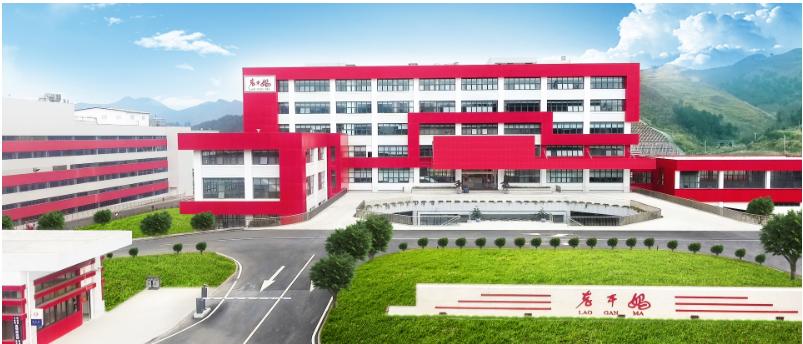
Core Insights - The article discusses the performance of three condiment companies: Lao Gan Ma, Lianhua Holdings, and Haitian Flavoring, highlighting their strategies and market positions in a challenging industry environment [1][29]. Group 1: Lao Gan Ma - Lao Gan Ma achieved a sales revenue of 5.391 billion yuan in 2024, nearing its historical peak of 5.403 billion yuan in 2020, with a continuous recovery in performance since 2022 [1][3]. - The company's founder, Tao Huabi, returned to management in 2019 and implemented key strategies such as product formula adjustments and a focus on core products and channels, leading to a "return to basics" approach [3][4]. - Lao Gan Ma has established a robust offline sales network across urban and rural areas, leveraging a "big regional general distribution + multi-level distribution" model, while also expanding its overseas market presence to 160 countries by 2024 [5][6]. Group 2: Lianhua Holdings - Lianhua Holdings expects a net profit of 290 million to 330 million yuan in 2025, representing a year-on-year growth of 43.15% to 62.90%, with a consistent upward trend in profits since 2021 [8][10]. - The company has shifted its focus from traditional monosodium glutamate to high-value-added compound seasonings, with significant revenue growth in these new product lines [10][12]. - Lianhua has embraced digital marketing and e-commerce, achieving a remarkable increase in online sales revenue, which grew from 11.17 million yuan in 2022 to 281 million yuan in the first three quarters of 2025 [13][14]. Group 3: Haitian Flavoring - Haitian Flavoring reported stable revenue growth, with revenues of 25.610 billion yuan in 2022 and 26.901 billion yuan in 2024, alongside a net profit margin of around 23% [17][21]. - The company has a strong commitment to shareholder returns, planning a total cash dividend of 3.273 billion yuan for 2025, which is 61.50% of its net profit for the first three quarters [18][20]. - Haitian's competitive advantage stems from its scale and cost efficiency, with production capacity exceeding that of its competitors, allowing for better control over raw material costs and a comprehensive distribution network [21][28].
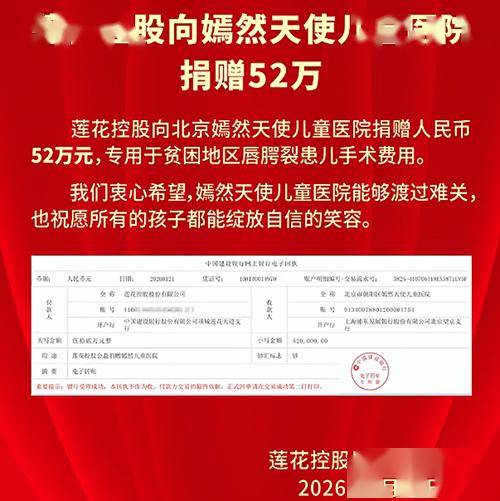
昔日“味精大王”莲花味精向嫣然天使儿童医院捐款52万元,直播间被“支持国货”刷屏
Sou Hu Cai Jing· 2026-01-26 07:58
Core Viewpoint - Lianhua Flavoring Co., Ltd. has made a donation of 520,000 yuan to support surgery for children with cleft lip and palate in impoverished areas, which has positively influenced consumer sentiment and brand support on social media platforms [1][3]. Group 1: Company Background and Recent Developments - Lianhua Flavoring, known for its seasoning products, has a history dating back to 1998 when it became the first publicly listed company in China's seasoning industry [6]. - The company experienced significant growth from 1983 to 1997, with annual production increasing from 400 tons to 80,000 tons, and revenue rising from 9.45 million yuan to 2.23 billion yuan, achieving a market share of 43.4% in China [6]. - After facing challenges in the 21st century, including intense price competition and negative rumors, the company underwent bankruptcy restructuring in 2019 and has since stabilized its operations [6][7]. Group 2: Financial Performance and Future Outlook - In 2023, Lianhua Flavoring reported a 181.26% year-on-year increase in net profit, driven by a resurgence in consumer interest in MSG and the trend of supporting domestic brands [7]. - The company has diversified into the technology sector, investing 693 million yuan in 330 NVIDIA H800 GPU servers to explore new growth avenues [7]. - For the first three quarters of 2025, the company achieved revenue of 343 million yuan from compound seasonings, a 38.13% increase, and 93 million yuan from liquid seasonings, a staggering 911.68% increase [7]. - The company's computing service business generated 97.67 million yuan, reflecting a 75.32% year-on-year growth [7]. - Lianhua Flavoring anticipates a net profit of between 290 million yuan and 330 million yuan for the full year of 2025, representing a growth of 43.15% to 62.90% [7].
芽菜炒饭做法
Zhong Guo Shi Pin Wang· 2026-01-19 07:04
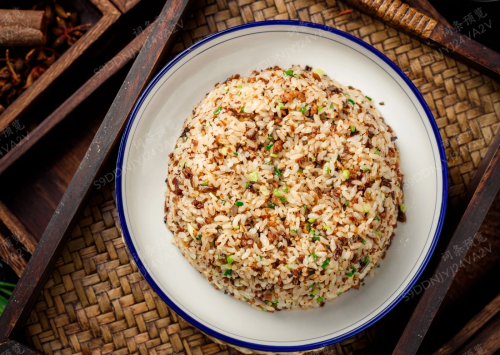
Group 1 - Key Point 1: Ingredients preparation includes 1 bowl of rice (preferably leftover rice for better texture), 30 grams of chopped Yibin bean sprouts, 1-2 beaten eggs, chopped green onions, 2-3 tablespoons of cooking oil, and a pinch of salt adjusted according to the saltiness of the bean sprouts [1] - Key Point 2: The first step involves frying the eggs in a hot pan with cold oil, quickly scrambling them into small pieces, and setting them aside [2] - Key Point 3: The next step is to add a little oil to the pan and stir-fry the bean sprouts for 1-2 minutes until fragrant [3] Group 2 - Key Point 1: For the fried rice, the leftover rice is added to the pan, and it is broken apart with a spatula, mixing thoroughly with the ingredients while stir-frying over medium heat until the rice grains are distinct [4] - Key Point 2: Seasoning includes adding the scrambled eggs back into the mixture, adjusting with a little salt (considering the inherent saltiness of the bean sprouts) and MSG, followed by adding chopped green onions and stir-frying briefly before serving [4]
江苏省泰州市海陵区市场监管局食品安全监督抽检结果公示(2025年11月)
Zhong Guo Zhi Liang Xin Wen Wang· 2026-01-12 08:32
Summary of Key Points Core Viewpoint The food safety supervision and sampling results from the Hai Ling District Market Supervision Bureau indicate that out of 93 batches of food tested in November 2025, 90 batches were found to be compliant, while 3 batches were deemed non-compliant, which have been processed according to regulations [3]. Group 1: Sampling Results - A total of 93 batches of food were sampled, covering 14 categories including restaurant food, nuts, starch products, and beverages [3]. - 90 batches were compliant with safety standards, resulting in a compliance rate of approximately 96.8% [3]. - 3 batches were identified as non-compliant and have undergone the necessary follow-up procedures [3]. Group 2: Non-compliant Items - The non-compliant items included the presence of substances such as Mefenamic acid and Mefenamic acid manganese salt, which are broad-spectrum bactericides with low acute toxicity [4]. - The presence of Thiamethoxam, a new class of insecticide, was also noted, which is used for pest control in various crops [4]. - Dehydroacetic acid and its sodium salt, a broad-spectrum food preservative, were found in excess, which can pose health risks with long-term consumption [4].
中盐股份IPO被抽中现场检查
Bei Jing Shang Bao· 2026-01-05 11:20
Group 1 - The China Securities Association announced the first batch of companies for on-site inspection in 2026, with China Salt Industry Corporation being the only main board IPO company selected for inspection [1] - China Salt Industry Corporation's main board IPO was accepted on December 30, 2025, and the company primarily produces various types of salt products, including edible salt, industrial salt, and other salt-related products [1] - The company aims to raise approximately 1.602 billion yuan through this IPO [1]