
国投瑞银产业趋势A

Search documents
“风格漂移”是否构成过错?投资者诉基金经理案开庭在即
Sou Hu Cai Jing· 2026-01-07 09:48
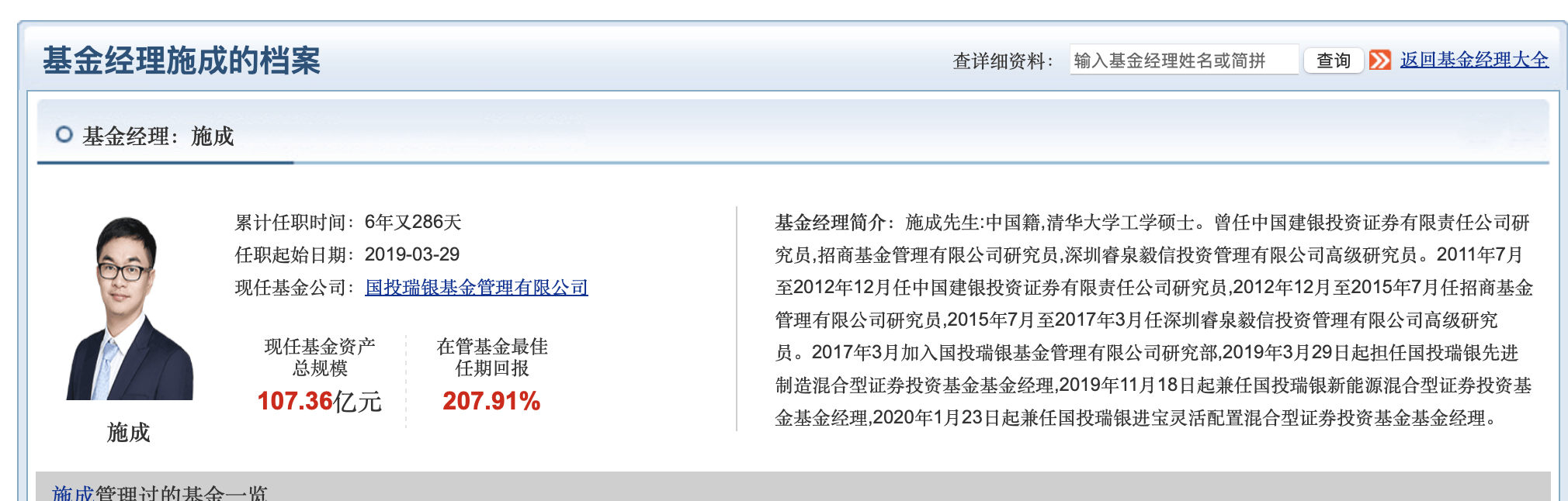
Core Viewpoint - The article discusses a legal dispute involving Guotou Ruijin Fund and its star fund manager Shi Cheng, focusing on the implications of investment style drift and potential breaches of contract in the context of financial advisory agreements [1][4]. Group 1: Legal Dispute Overview - Guotou Ruijin Fund is facing a lawsuit initiated by investor Li Zhihua over a financial advisory contract dispute, with the court date set for January 13 [1]. - The core issue revolves around whether Shi Cheng's shift in investment strategy constitutes a breach of contract or a legitimate market-driven adjustment [1][5]. Group 2: Investment Strategy and Performance - Shi Cheng initially gained significant returns by heavily investing in the renewable energy sector from 2020 to 2021, but faced substantial losses as the sector declined in 2022 due to oversupply and price wars [4]. - In response to losses, Shi Cheng shifted his focus to AI and robotics, which has reportedly yielded positive results for the funds under his management [4]. Group 3: Compliance and Contractual Obligations - There are concerns regarding Shi Cheng's adherence to the investment constraints outlined in the fund contracts, particularly regarding the proportion of investments in renewable energy [5][8]. - For instance, the Guotou Ruijin New Energy Mixed Fund was required to invest at least 80% of its non-cash assets in renewable energy-related securities, yet its reported holdings fell significantly below this threshold [5]. Group 4: Additional Controversies - The funds also faced scrutiny for exceeding the stipulated limits on Hong Kong Stock Connect investments, with reported holdings surpassing the 50% cap in several products [7]. - The legal complexities include determining the boundaries of "breach" and "fault," particularly in relation to how investment categories are defined and the impact of market risks on investor losses [8].

公募基金业薪酬风暴要来了?谁站在红线边缘?
Xin Lang Cai Jing· 2025-12-09 01:56
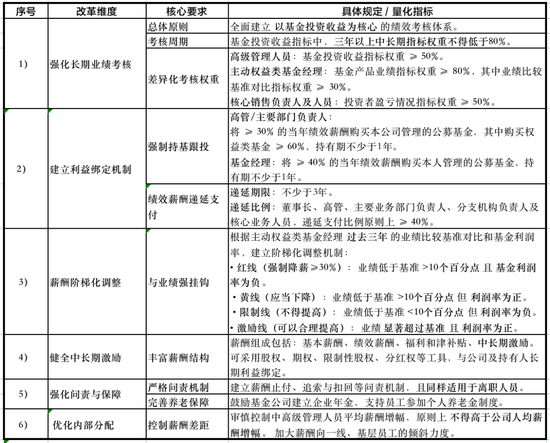
Core Viewpoint - The new performance assessment guidelines for fund management companies signify a major reform in the public fund industry, linking fund managers' compensation directly to the actual returns for investors, thereby emphasizing performance over mere management fees [1][2][31]. Group 1: Key Points of Compensation Reform - The core principle of the new guidelines is to establish a performance assessment system centered on fund investment returns, with a significant weight on long-term performance metrics [33]. - Fund managers of actively managed equity funds will face a 30% salary reduction if their performance lags the benchmark by more than 10% and the fund incurs losses over the past three years [2][32]. - The guidelines introduce quantifiable and rigid constraints to create a transparent incentive mechanism, aiming for long-term alignment of interests between fund managers and investors [2][32]. Group 2: Impact and Data Analysis - As of December 5, nearly 38.43% of 3,757 actively managed equity funds have underperformed their benchmarks by over 10% in the last three years, indicating significant challenges for fund managers [34]. - Approximately 996 fund managers are affected, managing over 1.1 trillion yuan in assets, with specific examples of funds like Guotou Ruijin's performance showing a cumulative return of -26.12%, lagging the benchmark by over 45 percentage points [35][40]. - Historical data from 2015 to 2024 shows that only 45 out of a large sample of equity funds managed to consistently outperform the benchmark by 10% over three years, suggesting that over 90% of fund managers may face salary reductions during their careers [39]. Group 3: Characteristics of Fund Managers at Risk - Fund managers at risk of salary reductions often exhibit extreme style dependence, focusing heavily on specific sectors like consumption or technology, which can lead to significant underperformance during market downturns [41][42]. - Rapid asset growth during peak performance periods has constrained the flexibility of these managers, making it difficult to adjust portfolios effectively in declining markets [43][44]. - The aggressive strategies employed by these managers conflict with the new guidelines that encourage closer tracking of benchmarks and controlled excess returns [46]. Group 4: Future Implications for Fund Managers - The new regulations are expected to shift fund managers' focus from seeking high returns to managing risks, potentially leading to a more conservative investment approach [52]. - The stringent accountability measures may result in a significant reduction in the number of top-performing fund managers remaining in the public fund sector, as many may transition to private equity or specialized accounts for better compensation opportunities [56][58]. - The industry may see an increase in trend-following strategies, which could exacerbate market volatility and lead to crowded trades, while less popular assets may receive even less attention [55].
基金管理新规落地,张坤、刘格菘、刘彦春近千名基金经理或因业绩不达标降薪30%?
Sou Hu Cai Jing· 2025-12-08 11:57
Core Viewpoint - The new regulatory guidelines aim to address the issue of fund managers profiting while investors do not, by linking their compensation to long-term performance and establishing a rigid reward and punishment mechanism [3] Group 1: Regulatory Changes - The recently issued "Performance Assessment Management Guidelines for Fund Management Companies (Draft for Comments)" mandates that the compensation of active equity fund managers be closely tied to long-term performance [3] - Nearly 1,000 fund managers are expected to face at least a 30% salary reduction due to underperformance, while high-performing managers may see salary increases [3] Group 2: Performance Metrics - A total of 3,757 active equity fund products were analyzed, with 1,444 (38.43%) underperforming their benchmarks by over 10 percentage points, affecting 996 fund managers [4] - Notable underperforming funds include those managed by well-known managers, such as Guotou Ruijin's fund with a cumulative return of -26.12%, lagging its benchmark by over 45 percentage points [4] Group 3: Incentive Alignment - The guidelines enhance the alignment of interests by increasing the proportion of fund managers' performance pay tied to their own investments in the funds they manage, from 30% to 40% [5] - Senior management and key business department heads are now required to invest at least 30% of their performance pay in public funds, with a minimum of 60% in equity funds [5] Group 4: Assessment Criteria - The assessment framework now includes metrics such as "fund profit margin" and "percentage of profitable investors," reflecting the actual gains and losses of investors [6] - This shift represents a move from evaluating "product net value" to focusing on "investor wallet" outcomes, deepening the assessment criteria [6]
近千名基金经理面临“降薪”
Di Yi Cai Jing Zi Xun· 2025-12-07 13:16
Core Viewpoint - The new regulatory guidelines for fund management companies are set to significantly reshape the compensation structure for fund managers, linking their pay to long-term performance and establishing a strict reward and punishment mechanism aimed at addressing the issue of fund managers profiting while investors incur losses [2][3][4]. Group 1: Regulatory Changes - The recently issued "Performance Assessment Management Guidelines for Fund Management Companies (Draft for Comments)" ties the compensation of active equity fund managers to their long-term performance, with a focus on a rigid reward and punishment system [2][3]. - Fund managers whose products underperform their benchmarks by more than 10 percentage points over three years and have negative profit margins will face a mandatory salary reduction of at least 30% [3][4]. - Conversely, fund managers whose products significantly outperform benchmarks and are profitable may receive reasonable salary increases [3][4]. Group 2: Industry Impact - As of December 5, over 1,400 active equity products have underperformed their benchmarks by more than 10 percentage points over the past three years, affecting nearly 1,000 fund managers, including well-known figures like Shi Cheng and Liu Yan Chun [2][4]. - Approximately 38.43% of the 3,757 active equity fund products analyzed have underperformed their benchmarks by over 10 percentage points, indicating a substantial number of fund managers may face salary cuts [4][5]. - In contrast, 982 active equity funds have outperformed their benchmarks by over 10 percentage points, with 146 of these funds exceeding their benchmarks by more than 50 percentage points, potentially leading to salary increases for their managers [5]. Group 3: Long-term Performance Focus - The new guidelines represent a fundamental shift from a focus on management scale and relative industry rankings to an emphasis on long-term absolute returns and the investor experience [4][6]. - The assessment framework now includes metrics such as "fund profit margin" and "percentage of profitable investors," which directly reflect the real gains and losses of investors, enhancing the accountability of fund managers [8][9]. - The guidelines also stipulate that the performance indicators for fund managers must account for at least 80% of their assessment, with benchmark comparison metrics making up no less than 30% [7][8]. Group 4: Implementation and Industry Response - The push for long-term performance assessment and compensation reform has been a focal point for regulators, with previous statements emphasizing the need for a long-term evaluation framework [6][9]. - Fund companies are beginning to implement long-term assessment practices, with some already categorizing performance evaluations into different time frames, emphasizing the importance of three-year performance metrics [9].

近千名基金经理面临“降薪”,你的基金经理也在里面吗?
Di Yi Cai Jing· 2025-12-07 10:51
Core Viewpoint - The new regulatory guidelines for fund management companies are set to significantly reshape the compensation structure for fund managers, linking their pay to long-term performance and establishing a strict reward and punishment mechanism aimed at addressing the issue of fund managers profiting despite poor performance [1][2]. Summary by Sections Performance-Based Compensation - The new guidelines stipulate that active equity fund managers will see their compensation closely tied to their long-term performance, with a mandatory reduction of at least 30% if their managed products underperform the benchmark by over 10 percentage points over three years and incur losses [1][2]. - As of December 5, over 1,400 active equity products have underperformed their benchmarks by more than 10 percentage points in the past three years, affecting nearly 1,000 fund managers, including well-known figures like Shi Cheng and Liu Yan Chun [1][2]. Shift from Scale to Performance - The guidelines introduce a tiered performance-based compensation adjustment mechanism, moving away from the previous focus on management scale and relative industry rankings to a model centered on absolute returns and investor experience [2][4]. - Approximately 38.43% of the 3,757 active equity fund products analyzed have underperformed their benchmarks by over 10 percentage points [2]. Detailed Assessment of Fund Managers - Among the underperforming products, 322 active equity funds have consistently failed to meet the benchmark, with notable examples including funds managed by Shi Cheng and Liu Yan Chun, which have significantly lagged behind their benchmarks [3]. - In contrast, 982 active equity funds have outperformed their benchmarks by over 10 percentage points, with 146 of these exceeding the benchmark by more than 50 percentage points, qualifying their managers for potential salary increases [4]. Regulatory Context and Long-term Incentives - The push for long-term performance evaluation and compensation reform has been a focus of regulatory bodies, with previous statements emphasizing the need for a robust long-term assessment framework [5][6]. - The new guidelines require that performance metrics account for at least 80% of fund manager evaluations, with specific weightings for benchmark comparisons and fund profitability [6]. Binding Interests of Fund Managers and Investors - The guidelines enhance the alignment of interests between fund managers and investors by increasing the required investment of fund managers in their own products, with a new minimum of 40% for fund managers and 60% for senior management [6][7]. - The industry is gradually implementing long-term assessment practices, with some firms already adopting multi-year performance metrics for evaluating fund managers [7].