大理啤酒

Search documents
重庆啤酒20260115
2026-01-16 02:53
Summary of Chongqing Beer Conference Call Industry Overview - The overall beer market in 2025 is expected to remain flat, with significant product innovations such as tea-flavored beer and one-liter packaging, and changes in distribution channels, particularly the rise of non-on-premise channels, which are growing rapidly. Online sales account for a low percentage of about 4-5% of total sales [2][6]. Company Performance and Strategy - Uusu beer has seen growth in both domestic and international sales, while Lebao has experienced three consecutive years of growth. However, the Chongqing and Dali brands are facing challenges. International brands like Carlsberg and local brands such as Fenghua Xueyue have achieved double-digit growth [2][4]. - The company plans to launch approximately 300 new products in 2024 to meet diverse consumer demands [2]. - The company emphasizes precise advertising spending and has increased the promotion of one-liter canned products, optimizing brand combinations and improving management efficiency to control costs [3][18]. - The dividend payout ratio is expected to remain around 90%-100% in the coming years, and the company is open to acquisitions that align with its industry chain [3][27]. Sales Channels and Consumer Trends - The beer market is currently in a mature state with no significant demand breakthroughs. The shift from on-premise to off-premise consumption is expected to continue, driven by technological advancements and changes in consumer habits [8][16]. - The company has observed a significant increase in canning rates, from approximately 18% in 2019 to nearly 29% by the third quarter of 2025, reflecting the growing importance of non-on-premise channels [16]. Product Innovation and Future Plans - The company is focused on continuous innovation in flavors, packaging, and sales models, with new products like tea-flavored beer and one-liter cans being introduced [9][10]. - The company has plans to launch non-alcoholic beer products and is exploring high-end products to increase unit prices, such as the one-liter can [10][11]. - Future product launches include Uusu brand's Jin Junmei tea beer and amber lager, as well as various regional products tailored to local market demands [10][11]. Cost Management and Raw Material Procurement - The company has locked in prices for major raw materials and packaging for the upcoming year, expecting cost savings on barley and other materials, with a slight increase in aluminum can prices having a minimal impact [13]. - The overall procurement cost savings are anticipated to positively contribute to gross margins [13]. Market Challenges and Opportunities - The company faces challenges in raising selling prices (SP) due to potential declines in overall demand, which is a significant concern for the industry [14]. - The high-end market is growing, with an increasing share of female consumers, leading to the introduction of products that cater to this demographic [15]. Long-term Strategy and Outlook - The company is focused on implementing the "Sail 27" strategy until 2027, aiming to develop the Chinese market while adjusting to the group's overall direction, including potential expansions into beverage categories following acquisitions [21][22]. - The company is also monitoring the impact of imported beers on the domestic market, although specific data on market share is not available [23]. Conclusion - Chongqing Beer is navigating a challenging market landscape with a focus on innovation, cost management, and strategic growth through new product launches and potential acquisitions, while adapting to changing consumer preferences and market dynamics [2][3][10][14].

啤酒五巨头,半年吸金840亿
36氪· 2025-09-22 10:37
Core Viewpoint - The Chinese beer market is experiencing a significant shift, with domestic giants gaining ground against foreign competitors, particularly in the context of the "takeout war" that has revitalized the industry [4][6][30]. Group 1: Market Dynamics - The competitive landscape of the Chinese beer market is changing, with domestic brands outperforming foreign giants in the first half of 2025 [4][6]. - In the first half of 2025, China’s beer market saw a decline in overall production by 0.3%, continuing a trend of stagnation [18]. - Despite the overall market decline, domestic giants like China Resources Beer, Qingdao Beer, and Yanjing Beer achieved over 2% growth in sales [19][20]. Group 2: Performance of Major Players - China Resources Beer surpassed Budweiser APAC to become the market leader, with a revenue of approximately 239.42 billion RMB, a 0.8% increase year-on-year [10][11]. - Budweiser APAC reported a revenue of 31.36 billion USD (approximately 224.5 billion RMB), a 5.6% decline year-on-year, marking the worst performance among the top five [9]. - Yanjing Beer and Chongqing Beer are in a tight race for the fourth position, with Yanjing Beer achieving a net profit growth of 45.45%, surpassing Chongqing Beer [13][14]. Group 3: Impact of Instant Retail - The "takeout war" has provided a new growth driver for the beer industry, with instant retail becoming a significant channel for sales [17][21]. - Qingdao Beer reported a nearly 60% increase in sales through instant retail platforms, significantly outperforming the industry average [26]. - China Resources Beer noted a nearly 40% growth in its online business and a 50% increase in its instant retail business [27]. Group 4: Foreign Brands' Struggles - Foreign brands, particularly Budweiser APAC and Chongqing Beer, are facing challenges, with Budweiser's sales in China declining by 8.2% [10][30]. - The high-end beer market, once dominated by Budweiser, is seeing its advantages eroded by the growth of domestic brands [30][33]. - Both Budweiser APAC and Chongqing Beer are shifting focus to non-immediate channels in response to declining performance in traditional immediate consumption venues [36][37].




重庆啤酒(600132):2025半年报点评:销量跑赢行业,成本优化对冲短期压力
Haitong Securities International· 2025-08-17 14:32
Investment Rating - The report maintains an "Outperform" rating for Chongqing Brewery with a target price of RMB 61.00, based on a current price of RMB 55.26 [2][6]. Core Insights - The company's revenue for the first half of 2025 was RMB 8.839 billion, showing a slight decline of 0.24% year-on-year, while net profit attributable to shareholders was RMB 865 million, down 4.03% year-on-year [3][11]. - The company demonstrated strong operational resilience despite facing pressure in Q2, where revenue was RMB 4.484 billion, down 1.84% year-on-year, and net profit was RMB 392 million, down 12.70% year-on-year [3][11]. - Regional performance varied, with the Northwest region showing growth, while the Southern region faced significant pressure [3][11]. Revenue and Profitability - Total sales volume in H1 reached 1.8008 million kiloliters, up 0.95% year-on-year, outperforming the industry average [4][12]. - The average ton price for H1 was RMB 4,779, down 1.14% year-on-year, with high-end products showing slight revenue growth [4][12]. - Gross margin improved to 49.83% in H1, up 0.61 percentage points year-on-year, primarily due to lower tonnage costs [5][13]. Cost Management and Tax Impact - Cost optimization efforts led to a gross margin increase, but a significant rise in the corporate income tax rate from 20% to 27.2% negatively impacted net profit [5][13]. - The net profit margin for H1 was 9.8%, down 0.4 percentage points year-on-year, with Q2 showing a further decline to 8.7% [5][13]. Investment Recommendations and Forecasts - The report suggests that despite short-term challenges, the company's fundamentals are expected to stabilize, with a high dividend payout ratio and steady expansion of the dealer network [6][14]. - EPS estimates for 2025-2027 are projected at RMB 2.42, RMB 2.56, and RMB 2.74, respectively, with a 25x PE multiple applied for 2025 [6][14].
大理举办啤酒嘉年华 点燃夏日文旅消费新热潮
Sou Hu Cai Jing· 2025-08-09 15:35
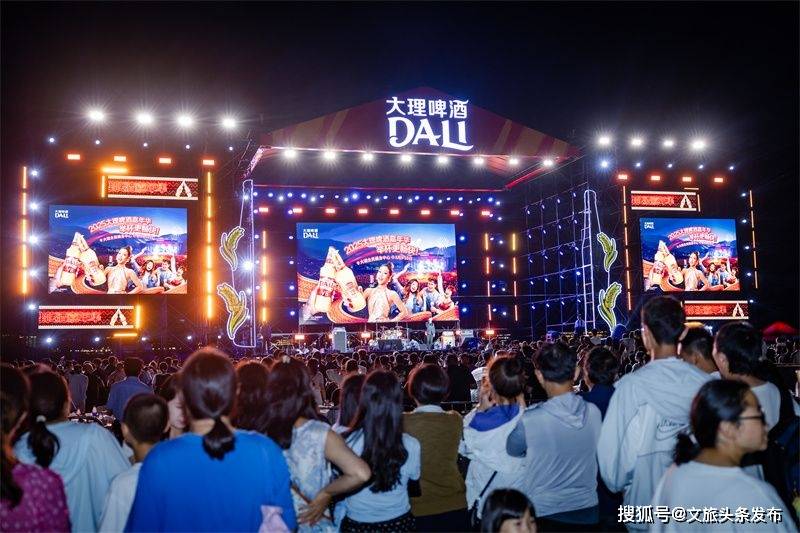
Group 1 - The "2025 Dali Beer Carnival and Dali Prefecture Consumption Promotion Event" was launched on August 8, aiming to activate Dali's cultural tourism consumption through a three-day celebration that integrates beer culture, intangible cultural heritage experiences, and nighttime economy [1] - The event featured various attractions, including a performance by a national music band, a drone show displaying "Wind, Flower, Snow, Moon" and Dali beer bottle designs, and hands-on experiences in traditional crafts like tie-dyeing [3][7] - The carnival is designed to be accessible to all, with no entry fee, allowing families and young people to participate in activities such as wood carving and drinking competitions, reflecting the local community's enthusiasm [10] Group 2 - Dali Beer, established in 1988, has evolved from a local brand to part of the Carlsberg global system, maintaining a commitment to quality while expanding its production capacity and market reach [11] - The company aims to promote local economic prosperity and cultural heritage through its products and events, encouraging more people to discover and appreciate Dali [13] - The carnival will continue to feature performances and cultural experiences, maintaining its philosophy of "zero threshold participation and full-scene carnival" to inject ongoing vitality into Dali's economy [15]