
小米人形机器人

Search documents
机械设备行业跟踪报告:松延动力宣布完成近10亿元B轮融资,小米人形机器人进入汽车工厂实习
Wanlian Securities· 2026-03-10 09:07
Investment Rating - The industry investment rating is "outperforming the market," indicating that the industry index is expected to rise more than 10% relative to the market in the next six months [32]. Core Insights - The humanoid robot industry is at a pivotal moment, transitioning from technological breakthroughs to large-scale commercialization. Factors driving demand include an aging population and rising labor costs, while supply-side advancements from companies like Tesla and Figure AI are becoming clearer [11][30]. - The humanoid robot index has shown a significant decline in valuation, with a PE(TTM) of 32.28 as of March 6, 2026, and a historical valuation percentile of around 8% over the past five years, indicating a low valuation level [21][23]. - Recent developments include Xiaomi's humanoid robot beginning practical applications in automotive factories, marking a significant step from laboratory testing to real-world deployment [5][27]. Summary by Sections Market Review - The humanoid robot index underperformed compared to the Shanghai Composite Index, CSI 300 Index, and the machinery equipment index, with a decline of 5.48% in the last week [15]. - Year-to-date, the humanoid robot index has decreased by 3.00%, while the Shanghai Composite Index increased by 3.91% [16]. Industry Dynamics - Songyan Power announced the completion of nearly 1 billion yuan in Series B financing, led by CATL's investment platform, which will enhance the integration of industrial resources and robotic technology [4][27]. - Xiaomi's humanoid robot has started working in automotive factories, achieving initial success in specific tasks, which is crucial for its future deployment in manufacturing [5][27]. Investment Recommendations - The report suggests focusing on key areas such as Tesla's advancements in humanoid robot production and the cost reduction strategies of domestic suppliers, which are expected to drive the commercialization of humanoid robots [11][30].
机器人行业周报:政府工作报告再提具身智能,机器人公司获批量投资
Southwest Securities· 2026-03-09 04:25
Investment Rating - The report maintains an "Outperform" rating for the robotics industry [1]. Core Insights - The robotics index underperformed the market, with a decline of 5.6%, lagging behind the Shanghai Composite Index by 4.7 percentage points and the CSI 300 Index by 4.5 percentage points [5][10]. - The government work report emphasizes embodied intelligence as a crucial component of future industries, promoting the growth of emerging sectors and innovation projects [15]. - Notable investments in the robotics sector include: - Songyan Power completed a Series B financing round of nearly 1 billion, led by a platform from CATL [15]. - Galaxy General Robotics announced a new financing round of 2.5 billion, with participation from various prominent investors [15]. - Parsini secured over 1 billion in financing, achieving a valuation exceeding 10 billion [18]. - Star Era completed a strategic financing round of 1 billion, with a valuation surpassing 10 billion [20]. - Xiaomi's robotics division has made progress in autonomous operations within automotive factories, showcasing advancements in key performance indicators [23]. Summary by Sections Market Review - The robotics index experienced a decline of 5.6% from March 2 to March 8, underperforming major indices [10]. Industry Dynamics - The government report highlights embodied intelligence as a key future industry, encouraging the development of new sectors and innovation initiatives [15]. - Significant financing activities in the robotics sector include: - Songyan Power's nearly 1 billion financing round [15]. - Galaxy General Robotics' 2.5 billion financing round [15]. - Parsini's over 1 billion financing round [18]. - Star Era's 1 billion strategic financing round [20]. - Xiaomi's robotics division is advancing in autonomous operations, with improvements in key metrics [23].
4月北京,场景-整机-零部件企业同台对话,直击落地先机!具身智能与人形机器人产业供需对接会报名启动
机器人大讲堂· 2026-03-06 00:00
Core Viewpoint - The embodied intelligence industry is entering an accelerated implementation phase by 2026, with humanoid robots transitioning from laboratory demonstrations to operational sites in factories, warehouses, energy, and services [2]. Group 1: Industry Dynamics - Major companies like Xiaomi and AEON are testing humanoid robots in real-world applications, such as autonomous operations in automotive factories [2]. - Despite advancements, many companies are still struggling to achieve mass production beyond a few hundred units [2]. Group 2: Supply-Demand Mismatch - The core obstacle lies in the supply-demand mismatch: supply capabilities exist, demand is present, but efficient connections are lacking [3]. - Technology companies need real-world scenario validation for their integrated systems, while industrial and commercial enterprises seek intelligent upgrades but struggle to assess technical capabilities and costs [3]. Group 3: Event Structure and Objectives - The third Embodied Intelligence and Humanoid Robot Industry Conference in April focused on facilitating connections between scene enterprises, integrated manufacturers, and component suppliers to break the deadlock [4]. - The event aims to create a platform for real-time dialogue among supply and demand entities, allowing for precise matching of technology and needs [5]. Group 4: Benefits of the Conference - The conference provides a low-cost opportunity for scene enterprises to identify suitable technology solutions and validate capabilities quickly [6]. - It allows robot companies to enter real scenarios, identify optimal testing environments, and secure stable supply chain partners for mass production [6]. Group 5: Accelerating Pilot Projects - The event facilitates rapid understanding of specific task indicators and application constraints across various sectors, enhancing product matching [7]. - It aims to shorten the cycle from intention to pilot verification by enabling simultaneous communication among scene enterprises and component suppliers [7]. Group 6: Strategic Insights for Component Suppliers - Component suppliers gain insights into real procurement needs and strategic layouts, allowing them to pinpoint collaboration opportunities [8]. Group 7: Conference Participation - The supply-demand matchmaking event is scheduled for April 28-29 in Beijing, inviting key partners from the industry chain and end-users to participate [9]. - The event aims to enhance efficiency and precision in matching technology solutions with real demands [9]. Group 8: Broader Industry Engagement - The conference will gather global experts, industry leaders, investors, and enterprises across the supply chain to foster a collaborative ecosystem for shared resources and mutual benefits [13].


如何看小米人形机器人的“进厂时刻”?
机器人大讲堂· 2026-03-04 09:13
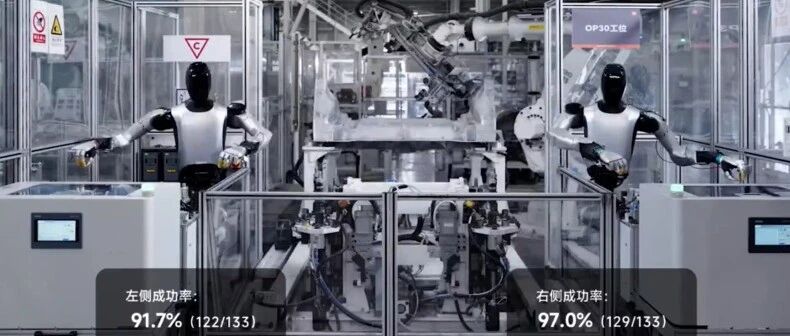
Core Viewpoint - The article discusses Xiaomi's humanoid robot's first successful operation in a real automotive production line, highlighting the challenges and implications of its 90.2% success rate in a complex assembly task [1][5][30]. Group 1: Robot Performance and Challenges - Xiaomi's humanoid robot achieved a 90.2% success rate in a task involving the installation of self-tapping nuts, which is a critical and complex operation in automotive manufacturing [5][6]. - The automotive industry typically requires a success rate of 99.5% or higher for assembly tasks, indicating that the current performance of the robot is below industry standards [6][8]. - The robot's operation involved multiple complex actions, including grabbing, aligning, and placing the nuts, which are complicated by factors such as random positioning and environmental disturbances [3][8]. Group 2: Technological Innovations - Xiaomi's approach utilizes a data-driven control system, moving away from traditional rule-based programming to a more autonomous model that allows the robot to learn and adapt in real-time [10][11]. - The robot employs a dual architecture with a "brain" for understanding tasks and a "small brain" for executing actions, which enhances its ability to respond to dynamic environments [13][14]. - The integration of tactile feedback allows the robot to adjust its actions based on touch, compensating for visual limitations caused by environmental factors [16]. Group 3: Future Directions and Recommendations - Xiaomi aims to improve the robot's performance from 90.2% to 99.5% by accumulating more operational data and addressing specific failure scenarios encountered during production [18][22]. - The company has proposed three recommendations to enhance the industrial application of humanoid robots, including improving operational stability, expanding usage scenarios, and establishing safety standards [30]. - The article emphasizes that the journey towards industrializing embodied intelligence is just beginning, requiring extensive real-world data collection and iterative improvements [27][29].

英伟达官宣CPO两大投资;iPhone 17e发布升杯没涨价
2 1 Shi Ji Jing Ji Bao Dao· 2026-03-03 02:55
Group 1: Nvidia Collaborations - Nvidia announced a strategic agreement with Coherent to advance optical technology, including a multi-billion dollar procurement commitment and a $2 billion investment to support R&D and manufacturing capabilities in the U.S. [2] - Nvidia also entered a multi-year strategic agreement with Lumentum to accelerate innovation in optical technology, with a similar investment of $2 billion to enhance manufacturing capacity [2] Group 2: Xiaomi Robotics - Xiaomi's humanoid robots have begun "internships" in automotive factories, achieving a 90.2% success rate in self-installing self-tapping nuts over a continuous 3-hour operation [3] Group 3: Apple Product Launch - Apple launched the iPhone 17e and iPad Air M4, with starting prices of 4499 yuan and 4799 yuan respectively, maintaining the same price for the 256GB version of iPhone 17e as the previous generation's 128GB version [4] Group 4: Meizu's Future Plans - Meizu's CMO revealed that the Meizu 22 and Note 16 series will continue to sell without price increases, while the Meizu 23 has been developed but will not be released to the market [5] Group 5: Douban Apology - Douban issued an apology for a system error that allowed users to claim a "200 off 200" coupon, leading to significant losses from abnormal orders [6] Group 6: Didi's New Lab - Didi Autonomous Driving established the DiDi Voyager Labs to collaborate with Tsinghua University on advanced multi-modal and reinforcement learning technologies for autonomous driving [7][8] Group 7: Alibaba's AI Brand - Alibaba unified its AI model brand under "Qwen," with significant user engagement, achieving a 940% increase in daily active users during the Spring Festival [9] Group 8: ZTE's Network Trial - ZTE and Turkey's telecommunications completed the world's first C+L integrated 1.6Tbps optical network trial, enhancing system capacity and supporting high-speed transmission [10] Group 9: Gree Electric's Dividend Policy - Gree Electric responded to rumors about discontinuing annual dividends, affirming its commitment to investor returns through cash dividends and share buybacks [11] Group 10: Renesas Leadership Change - Renesas Electronics appointed Yvonne Liu as the new President of Renesas Electronics China, effective March 1, 2026, to enhance operations and strategic execution in the Chinese market [12] Group 11: Qualcomm's Wearable Platform - Qualcomm launched a new flagship wearable chip platform with significant performance improvements, including up to 5 times higher CPU single-thread performance and enhanced AI capabilities [13] Group 12: Heda Microelectronics Price Increase - Heda Microelectronics announced a price increase for certain products due to cost pressures from supply-demand imbalances in the mature process sector [14] Group 13: Zhenbao Technology IPO - Zhenbao Technology is set to raise approximately 119.75 million yuan through its IPO to fund semiconductor production and R&D projects [16] Group 14: Sitan Technology Financing - Sitan Technology completed a B3 round financing, raising nearly 100 million yuan to accelerate commercialization in automotive projection and AR display technologies [17] Group 15: MiniMax Financial Performance - MiniMax reported a revenue of $79.04 million for the year ending December 31, 2025, with a 158.9% year-over-year increase, and a gross profit margin improvement to 25.4% [18]


