平价医疗法案

Search documents
美国2026年1月非农数据:教育医疗支撑美国就业市场保持强劲
Donghai Securities· 2026-02-12 05:34
Employment Data - In January 2026, the U.S. added 130,000 non-farm jobs, significantly exceeding the forecast of 70,000 jobs, with the previous month's figure revised down to 48,000 from 50,000[2] - The unemployment rate fell to 4.3%, better than the expected 4.4% and down from the previous 4.4%[2] - Private sector employment increased by 172,000 jobs, with the production sector adding 36,000 jobs and the service sector contributing 136,000 jobs[2] Wage Growth and Inflation Concerns - Average hourly earnings in the private sector rose by 0.4% month-over-month, up from 0.1% in the previous month, raising concerns about inflation driven by wage growth[2] - The significant increase in wages, particularly in cyclical industries like transportation and finance, is attributed to labor shortages caused by adverse weather conditions[2] Sector-Specific Insights - The construction sector saw a rebound with 33,000 new jobs, primarily due to preemptive hiring, although wage growth in this sector slowed from 0.4% to 0.2%[2] - The healthcare and education sectors added 137,000 jobs, largely influenced by the extension of the Affordable Care Act, while financial activities and leisure sectors faced declines[2] Government Employment Trends - Government employment decreased by 42,000 jobs, with federal jobs down by 34,000 and state jobs down by 18,000, likely due to a temporary government shutdown affecting payroll reporting[2] Market Reactions and Economic Outlook - Following the employment data release, markets expect the Federal Reserve to delay interest rate cuts until July, indicating a tightening labor market[2] - The U.S. economy is projected to continue its recovery, but inflation risks remain, particularly due to wage pressures in the labor market[3]
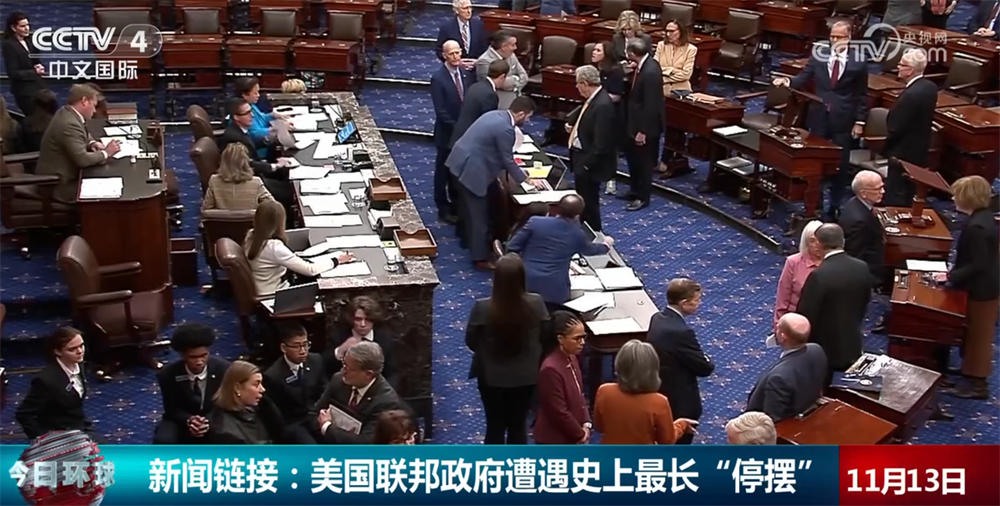
美国联邦政府遭遇史上最长“停摆” 民众不得不承担“否决政治”代价
Yang Shi Wang· 2025-11-13 03:51
Core Points - The current U.S. federal government shutdown has lasted over 6 weeks, breaking the previous record of 35 days [1] - The shutdown is a result of the inability of Congress to pass a new annual budget due to intense partisan conflicts, leading to attempts at temporary funding measures [1] - The House of Representatives, controlled by Republicans, passed a temporary funding bill, but it failed to pass in the Senate due to disagreements over healthcare provisions [3] - The Senate has held 14 votes on the temporary funding bill without success, leading to the government shutdown as of October 1 [5] - The shutdown has caused significant disruptions, including absenteeism among air traffic controllers and delays in food assistance programs affecting millions of Americans [7] - Only 3 out of the required 12 annual budget appropriations have been passed, indicating a potential for future shutdowns if negotiations do not progress [9]

美联邦政府最长“停摆”折射治理之失(环球热点)
Ren Min Ri Bao Hai Wai Ban· 2025-11-10 22:57
Core Points - The U.S. federal government is experiencing its longest shutdown in history, now entering its 40th day, with a temporary funding bill only providing resources until January 2026 [2][3] - The shutdown has significant impacts on the economy and public welfare, with millions affected as political disputes overshadow the needs of ordinary citizens [2][9] Political Dynamics - The shutdown began on October 1, following a failure to pass a temporary funding bill in the Senate, with both parties blaming each other for the impasse [2][4] - The Republican Party is using the shutdown to push for cuts to government employment and programs supported by Democrats, while Democrats are trying to maintain their political stance ahead of upcoming elections [4][5] Legislative Challenges - The current political polarization has made it increasingly difficult for Congress to complete budgetary processes, with no fiscal year starting without a completed budget since the 21st century [6][8] - The Senate's "filibuster" rules complicate the passage of funding bills, requiring a supermajority for closure on debates, which has become a significant hurdle [7][8] Economic Impact - The shutdown is projected to reduce the U.S. GDP growth rate by 1-2 percentage points in Q4, with estimates suggesting a loss of approximately $15 billion for each week the shutdown continues [11] - Essential services and welfare programs are being severely affected, including food assistance for 42 million people and heating subsidies for low-income families [9][10] Public Sentiment - Polls indicate that a majority of Americans feel disconnected from both political parties, with nearly 80% expressing dissatisfaction with Congress's performance [11]