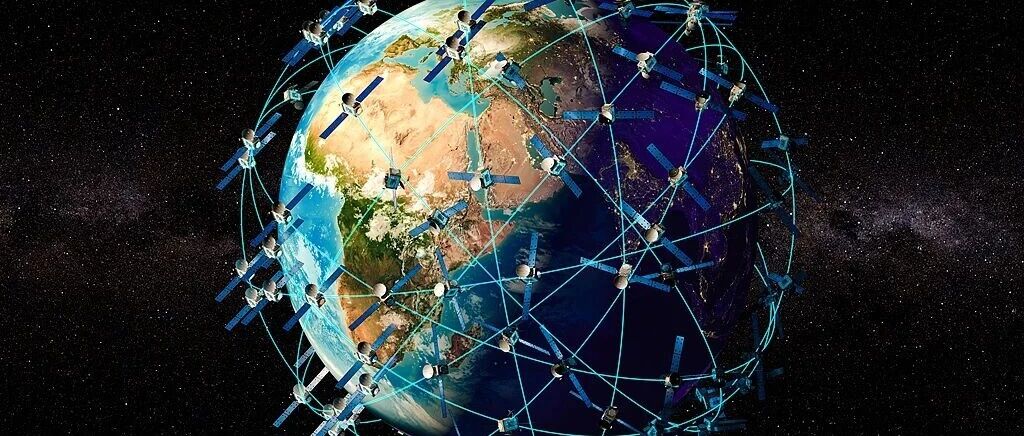
星链(Starlink)卫星

Search documents
马斯克的 SpaceX 正式收购马斯克的 xAI,计划在太空建造数据中心
Xin Lang Cai Jing· 2026-02-03 12:52
Core Viewpoint - SpaceX has acquired Elon Musk's AI startup xAI, making it the highest-valued private company globally, with a post-merger valuation of $1.25 trillion (approximately 8.7 trillion RMB) [4][11]. Group 1: Acquisition Details - The acquisition aims to create a space-based data center, addressing the high energy consumption and environmental impact of traditional ground-based data centers [3][9]. - xAI is currently facing financial pressure, with a monthly cash burn of approximately $1 billion [6][11]. - SpaceX generates about 80% of its revenue from its Starlink satellite launch business [6][11]. Group 2: Future Plans and Challenges - Musk has indicated that building the space-based data center will require the continuous launch of numerous satellites, which could provide a more stable and larger revenue stream for SpaceX [12]. - Despite the merger's focus on the space data center, SpaceX and xAI have different short-term goals; SpaceX is working on its Starship rocket for lunar and Martian missions, while xAI is competing with major AI firms like Google and OpenAI [12]. - xAI has faced significant competitive pressure, leading Musk to relax usage restrictions on its chatbot Grok, which has raised concerns regarding inappropriate content generation [12].

刚刚,马斯克收购了马斯克
Sou Hu Cai Jing· 2026-02-03 03:58
Core Viewpoint - SpaceX has officially announced the acquisition of xAI, aiming to create a vertically integrated innovation engine that combines artificial intelligence, rocket technology, satellite internet, and communication systems [2][5]. Group 1: Company Overview - The merged entity is expected to be priced at approximately $527 per share, with a total valuation of $1.25 trillion [4]. - The acquisition is seen as a new chapter for both SpaceX and xAI, focusing on the development of a "conscious sun" to understand the universe and extend consciousness beyond Earth [6]. Group 2: Technological Advancements - The integration of AI and space technology is positioned as a solution to the increasing energy demands of AI, which cannot be met solely by terrestrial data centers [6]. - The plan includes launching a constellation of satellites that will serve as space-based data centers, which is a step towards achieving a Type II Kardashev civilization capable of harnessing the full energy of the sun [6][9]. Group 3: Future Prospects - The company aims to launch one million tons of satellites annually, which could generate an additional 100 GW of AI computing power each year without ongoing operational costs [9]. - The Starship will enhance the capacity for satellite launches, significantly increasing the number of satellites deployed and supporting the development of a sustainable space economy [8][10]. Group 4: Long-term Vision - The initiative includes plans for establishing permanent bases on the Moon and Mars, utilizing local resources for manufacturing and deploying satellites deeper into space [10]. - The overarching goal is to create a self-sustaining base on the Moon and a complete civilization on Mars, ultimately facilitating human expansion throughout the universe [10].

重磅利好!20万颗卫星点燃市场!马斯克也获批第二代星链7500颗卫星!商业航天还能持续多久?
雪球· 2026-01-11 06:47
Group 1: Commercial Aerospace Developments - Chinese companies have submitted an application for 203,000 satellites to the International Telecommunication Union (ITU), focusing on 14 satellite constellations, with CTC-1 and CTC-2 being the main contributors, each applying for 96,714 satellites [4] - The application aims to support the satellite internet industry and enhance the utilization of spectrum resources, with a vision to create an innovation platform for radio frequency technology [4][5] - The ITU mandates that newly submitted satellite applications must launch their first satellite within seven years and complete deployment of the total number of satellites within 14 years, making satellite manufacturing and launching a critical focus for the industry [5] Group 2: SpaceX Developments - The U.S. Federal Communications Commission (FCC) has approved SpaceX's application to deploy an additional 7,500 second-generation Starlink satellites, bringing the total approved to 15,000 [7] - The approval allows for technical upgrades and operation across five frequency bands, removing previous restrictions on signal overlap and network capacity [7] - SpaceX is required to launch 50% of the authorized satellites by December 1, 2028, and complete the deployment of the remaining satellites by December 2031 [7] Group 3: AI Developments - DeepSeek is reportedly planning to release its V4 version around the Chinese New Year in 2025, which is expected to surpass current leading models in programming capabilities [9] - The previous release of DeepSeek's large model R1 generated significant attention in both the AI industry and capital markets, indicating high expectations for the upcoming V4 release [9] Group 4: App Development - The "Is It Dead?" app, designed for solitary individuals, has gained popularity, reaching the top of the paid app charts, and requires a subscription fee of 8 yuan [13][14] - The app was developed quickly with a minimal initial investment of around 1,000 yuan and has already achieved profitability [16] - The app's founders estimate its valuation at 10 million yuan based on a proposed sale of 10% equity for 1 million yuan [16]

全球“追星”!我国新增超20万颗申请,马斯克也有大消息
证券时报· 2026-01-10 14:15
Core Viewpoint - The global space race is intensifying, with significant satellite deployment plans from both China and SpaceX, highlighting the competitive landscape for satellite resources and technology advancements [1][10]. Group 1: China's Satellite Plans - China has applied to the International Telecommunication Union (ITU) for frequency and orbital resources for over 200,000 satellites, with more than 190,000 satellites coming from the Radio Innovation Institute [3][4]. - The application includes 14 satellite constellations, with the CTC-1 and CTC-2 constellations each applying for 96,714 satellites, making them the main contributors to this application [3]. - The Radio Innovation Institute aims to serve the satellite internet industry and develop electromagnetic space technology, focusing on spectrum resource value and innovation [4]. Group 2: SpaceX Developments - On January 9, 2023, the U.S. Federal Communications Commission (FCC) approved SpaceX's plan to deploy an additional 7,500 second-generation Starlink satellites, bringing the total approved number to over 15,000 [7][8]. - The FCC's decision supports SpaceX's expansion in global internet services and allows for significant technological upgrades, including operations across five frequency bands [9]. - The new satellites are expected to enhance network performance, potentially achieving internet speeds of up to 1 Gbps, and will provide direct-to-cell services outside the U.S. [9]. Group 3: Global Space Resource Competition - The allocation of satellite frequency and orbital resources follows a "first-come, first-served" principle, intensifying competition as countries rush to secure low Earth orbit resources [10]. - As of May 12, 2025, approximately 10,824 satellites are in low Earth orbit, with a utilization rate of about 18% of the theoretical capacity of 60,000 satellites [10]. - The U.S. currently leads in the number of operational spacecraft, holding 75.94% of the global share, while China accounts for approximately 9.43% [10]. Group 4: Future Projections for China's Satellite Deployment - China's satellite constellations have specific deployment deadlines, with the China Star Network needing to complete 1,300 satellites by September 2029, and other constellations following suit with their respective deadlines [11]. - The commercial space industry in China is expected to enter a high-intensity phase of satellite launches, with significant growth anticipated in the coming years [11]. - Analysts predict that advancements in reusable rockets and increased launch capacity will facilitate a breakthrough in satellite communication development in China [11].
全球“追星”!我国新增超20万颗申请,马斯克也有大消息
券商中国· 2026-01-10 12:06
Core Viewpoint - The global space race is intensifying, with significant developments in satellite deployment and frequency resource applications from both China and the United States [1][10]. Group 1: China's Satellite Plans - China has applied to the International Telecommunication Union (ITU) for frequency resources for over 200,000 satellites, with more than 190,000 satellites coming from the Radio Innovation Institute [2][3]. - The application includes 14 satellite constellations, with the CTC-1 and CTC-2 constellations each applying for 96,714 satellites, making them the main contributors to this application [3]. - The Radio Innovation Institute, established in Xiong'an New Area, aims to serve the satellite internet industry and focus on spectrum resource development and technological innovation [4]. Group 2: ITU Regulations - The ITU, responsible for managing global radio frequency and satellite orbit resources, mandates that new satellite applications must launch their first satellite within seven years and complete deployment within 14 years [5]. - Failure to meet these deployment milestones will result in a proportional reduction of frequency rights based on the actual number of satellites launched [5][6]. Group 3: SpaceX Developments - On January 9, 2023, the U.S. Federal Communications Commission (FCC) approved SpaceX's plan to deploy an additional 7,500 second-generation Starlink satellites, bringing the total approved number to over 15,000 [7][9]. - The FCC's decision supports SpaceX's expansion in the global internet service market and allows for significant technological upgrades, including operations across five frequency bands [8][9]. - The new satellites are expected to enhance network performance, potentially achieving internet speeds of up to 1 Gbps, and will provide direct-to-cell services outside the U.S. [9]. Group 4: Global Satellite Landscape - As of May 12, 2025, there are approximately 10,824 satellites in low Earth orbit, with a utilization rate of about 18% of the theoretical capacity of 60,000 satellites [10]. - The U.S. currently leads in the number of operational spacecraft, accounting for 75.94% of the global total, while China holds about 9.43% [10]. - China's commercial satellite constellations are taking shape, with significant deployment deadlines set for various projects, indicating a future surge in satellite launches [10]. Group 5: Future Industry Outlook - The commercial space industry is expected to experience multiple catalysts in 2026, particularly with the introduction of reusable and high-capacity rockets, which will alleviate previous bottlenecks in satellite communication development [11]. - With ongoing policy support and technological advancements, China's rocket launch capacity and frequency are projected to see significant growth, further accelerating the development of the satellite internet sector [11].

2026:中国商业航天的“诺曼底时刻”
华尔街见闻· 2026-01-10 10:48
Core Viewpoint - The successful launch of the "Qianfan Constellation" marks a significant milestone in China's commercial space industry, transitioning from plans to actual deployment of satellites, akin to a pivotal moment in history [2][3]. Group 1: Reasons for the Current Momentum - The alignment of policies, technology, resources, and competition has created a unique window of opportunity for China's commercial space sector from 2024 to 2026 [5]. - The urgency is driven by the impending 2027 deadline for satellite deployment and frequency activation, necessitating immediate action to secure orbital resources [15][17]. - The strategic focus has shifted from technology validation to "frequency preservation and orbital occupation," emphasizing the need to establish a presence in the increasingly competitive low Earth orbit [18][20]. Group 2: Technological Advancements - The transition from traditional satellite manufacturing to an industrialized approach has significantly reduced costs, with production capabilities reaching 1.5 satellites per day and costs dropping from hundreds of millions to tens of millions [31]. - The evolution of rocket technology, including advancements in liquid propulsion and reusable designs, is expected to lower launch costs to $3,000-$4,000 per kilogram by 2025-2026 [40]. - The emergence of private rocket companies is enhancing competition and innovation within the sector, moving away from reliance on traditional state-run entities [33][35]. Group 3: Changing Role of the State - The Chinese government is shifting from a regulatory role to becoming the largest client in the commercial space sector, facilitating a more supportive environment for private enterprises [41][50]. - New procurement models are being established, where the government purchases services rather than just funding projects, mirroring successful strategies used by SpaceX in the U.S. [47][49]. - Local governments are increasingly investing in commercial space initiatives, recognizing the sector as a vital component of economic development [48]. Group 4: Competitive Pressure from SpaceX - The rapid expansion of SpaceX's Starlink constellation, with over 6,000 satellites launched, creates a pressing need for China to accelerate its own satellite deployment to avoid being outpaced [54][62]. - The military applications of Starlink, demonstrated during conflicts, highlight the strategic importance of establishing a competitive low Earth orbit presence [57][60]. - The potential for SpaceX's Starship to revolutionize launch capabilities adds urgency for China to develop its own satellite infrastructure before facing overwhelming competition [64][66].

SpaceX 宣布卫星降轨行动,太空资源日趋紧张
Changjiang Securities· 2026-01-05 15:26
Investment Rating - The industry investment rating is "Positive" and maintained [7] Core Viewpoints - SpaceX announced a reduction in the orbital altitude of thousands of Starlink satellites to mitigate collision risks, highlighting the increasing competition for limited space resources [2][5] - The adjustment will involve approximately 4,400 Starlink satellites moving from an altitude of 550 kilometers to about 480 kilometers, aiming to reduce space debris and enhance safety [10] - The report emphasizes that the competition for low Earth orbit resources is intensifying, which may accelerate the development of China's commercial space industry, particularly with advancements in reusable rocket technology [10] Summary by Relevant Sections - **Event Description**: SpaceX's decision to lower the altitude of its Starlink satellites is a response to the growing congestion in low Earth orbit, which has become a focal point for international discussions on space resource allocation [5][10] - **Market Dynamics**: The report notes that the number of low Earth orbit satellites is expected to increase by 190% over the next decade, further complicating resource distribution [10] - **China's Commercial Space Development**: China's commercial space sector is projected to enter a rapid growth phase, driven by the competition for orbital resources and advancements in technology, with a focus on key suppliers in the industry [10]
利空!马斯克,突传重磅!
券商中国· 2026-01-02 10:46
Core Viewpoint - Tesla is facing significant downward revisions in its delivery forecasts for 2025 and 2026, indicating potential challenges in maintaining growth momentum in the coming years [1][2][5]. Group 1: Tesla Delivery Forecasts - Wall Street predicts Tesla will deliver approximately 440,900 vehicles in Q4 2025, a year-on-year decline of 11%, marking a continuous drop in deliveries for two consecutive years [1][2]. - The overall delivery forecast for Tesla in 2025 is estimated at 1.6408 million vehicles, down nearly 8% from 1.789 million in 2024, which would represent a significant decline after a slight decrease in 2024 [3][4]. - Analysts have drastically reduced their 2026 delivery expectations for Tesla from over 3 million to around 1.8 million vehicles, reflecting growing concerns about the company's short-term performance [5]. Group 2: Factors Influencing Tesla's Performance - The anticipated decline in Q4 2025 sales is attributed to the expiration of the U.S. federal electric vehicle tax credit in September, which previously incentivized purchases and led to a surge in Q3 sales, potentially depleting demand for Q4 [4]. - Tesla has publicly stated that it does not endorse any analyst information or conclusions, emphasizing the objective presentation of data [4]. Group 3: Tesla's Stock Performance - As of December 31, 2025, Tesla's stock has experienced a six-day consecutive decline, dropping over 1% on the last trading day, resulting in a cumulative retreat of approximately 8%, although the stock still saw an annual increase of about 11% [5]. - Tesla's current price-to-earnings ratio is nearing 300, which places significant pressure on the company to fulfill its promises regarding autonomous driving technology [5]. Group 4: SpaceX Developments - SpaceX announced plans to lower the operational altitude of approximately 4,400 Starlink satellites from about 550 kilometers to 480 kilometers to reduce collision risks and manage space debris [6][8]. - This adjustment is part of a major reorganization of the satellite constellation, aimed at creating a safer operational environment and is influenced by solar activity cycles that affect atmospheric density [8]. - The low Earth orbit is becoming increasingly congested, with projections indicating a 190% increase in the number of low Earth orbit satellites over the next decade [8].

利空!马斯克,突传重磅!
Xin Lang Cai Jing· 2026-01-02 10:44
Group 1: Tesla Delivery Forecasts - Tesla is expected to deliver approximately 440,900 vehicles in Q4 2025, representing an 11% year-over-year decline, marking a second consecutive year of declining deliveries [1][2][3] - The annual delivery forecast for Tesla in 2025 is projected at 1.6408 million vehicles, down nearly 8% from 1.789 million in 2024, which was the first annual decline in over a decade [3][10] - Analysts have significantly revised their delivery expectations for Tesla in 2026 from over 3 million vehicles to about 1.8 million [1][4] Group 2: Factors Affecting Tesla's Performance - The decline in Q4 2025 deliveries is attributed to the expiration of the U.S. federal electric vehicle tax credit in September, which previously provided up to $7,500 in incentives, leading to a surge in Q3 sales that depleted Q4 demand [4][11] - Analysts suggest that investors are focusing on Tesla's long-term potential while overlooking short-term financial fluctuations, which are now under pressure due to the cancellation of tax credits, increased global competition, and regulatory challenges in Europe [4][11] Group 3: Tesla's Stock Performance - As of December 31, 2025, Tesla's stock has experienced a six-day consecutive decline, closing down over 1% at $449.72 per share, resulting in an approximate 8% total pullback, although the stock is still up about 11% for the year [4][12] - Tesla's price-to-earnings ratio is nearing 300, which places significant pressure on the company to fulfill its autonomous driving commitments [4][12] Group 4: SpaceX Satellite Operations - SpaceX announced plans to lower the operational altitude of approximately 4,400 Starlink satellites from about 550 kilometers to 480 kilometers to reduce collision risks and space debris [5][6][13] - This adjustment is also linked to solar activity cycles, which affect atmospheric density, potentially extending the natural orbital decay time of satellites at higher altitudes [6][14] - The low Earth orbit is becoming increasingly congested, with SpaceX deploying over 3,000 satellites in 2025 alone, averaging nearly one new satellite launched every three days [6][14]

星链宣布:史上最大降轨行动
财联社· 2026-01-02 06:57
Core Viewpoint - The article discusses the increasing congestion in low Earth orbit due to the rapid growth of satellite numbers, highlighting SpaceX's initiative to lower the altitude of its Starlink satellites to mitigate collision risks and reduce space debris [4][5]. Group 1: SpaceX's Initiative - SpaceX plans to lower the altitude of approximately 4,400 Starlink satellites from about 550 kilometers to around 480 kilometers to create a safer operational environment [5]. - This altitude adjustment aims to facilitate quicker deorbiting of satellites in case of anomalies, thereby reducing the generation of space debris [4][5]. Group 2: Solar Activity and Orbital Decay - The altitude reduction is also linked to solar activity cycles, which affect the density of the upper atmosphere. The next solar minimum is expected in the early 2030s, leading to prolonged orbital decay times for satellites at higher altitudes [5]. - By lowering the altitude, the orbital decay time can be reduced from potentially over four years to just a few months, increasing the decay rate by over 80% [5]. Group 3: Risks of Space Congestion - The article notes that low Earth orbit is becoming increasingly crowded, with SpaceX adding over 3,000 satellites through 121 launches last year, averaging one new satellite every three days [6]. - The World Economic Forum predicts a 190% increase in the number of low Earth orbit satellites over the next decade [6]. Group 4: Collision Risks and Kessler Syndrome - The proliferation of satellites raises the risk of collisions, which can create debris that threatens both active satellites and future space missions, potentially triggering the Kessler Syndrome [7][8]. - Kessler Syndrome refers to a scenario where space debris reaches a critical mass, leading to cascading collisions and making certain orbits unusable [8].