
文化服务

Search documents
上海将强化高品质产品供给
Xin Lang Cai Jing· 2026-01-22 23:18
Core Viewpoint - The article discusses the Shanghai Municipal Party Committee's recommendations for the 15th Five-Year Plan, emphasizing the enhancement of high-quality tourism products, service optimization, and the development of inbound tourism and rural tourism [1][2]. Group 1: Tourism Development - The recommendations highlight the need to strengthen the supply of high-quality tourism products and innovate tourism formats [1]. - There is a focus on cultivating distinctive tourism experiences and optimizing ancient town and rural tourism [1]. Group 2: Economic Strategy - The plan emphasizes the implementation of a strategy to expand domestic demand, particularly in service consumption, including culture, tourism, sports, and health [1]. - It aims to enhance the integration of cultural, tourism, and commercial sectors, increasing the international influence of large consumer festivals and promoting night economy [1]. Group 3: Open Economy - The recommendations propose the construction of a new open economic system, supporting high-quality cooperation along the "Belt and Road" initiative [1]. - There is an emphasis on strengthening exchanges in technology, culture, and tourism with countries involved in the initiative [1]. Group 4: Sports and Culture - The recommendations call for the coordination of international top-tier events and the cultivation of domestic brand events, alongside the promotion of youth sports talent development [2]. - It also emphasizes the optimization of the cultural development ecosystem and the integration of cultural and commercial resources [2].
上海“十五五”规划建议:大力发展文化、旅游、体育、健康等改善型服务消费
Zheng Quan Shi Bao Wang· 2026-01-18 23:54
Core Viewpoint - The Shanghai Municipal Committee has released recommendations for the 15th Five-Year Plan, emphasizing the implementation of strategies to expand domestic demand and enhance consumption [1] Group 1: Consumption Strategies - The plan includes a continuation of special actions to boost consumption and the development of Shanghai as an international consumption center [1] - There is a focus on expanding service consumption, particularly in cultural, tourism, sports, and health sectors, to improve the quality of service supply [1] - The initiative promotes green and smart consumption, aiming to upgrade and expand product consumption [1] Group 2: Innovation and Integration - Encouragement for innovation in consumption models and formats, promoting the integration of online and offline consumption [1] - The plan supports the development of "AI + consumption," intellectual property derivative products, and interactive, immersive, and experiential consumption [1] - There is a push for the growth of the live-streaming economy and the deep integration of culture, tourism, commerce, and sports [1] Group 3: Economic Environment and Infrastructure - The recommendations include optimizing the consumption environment and advancing the construction of world-class business districts [1] - Development of distinctive commercial streets and enhancement of tax refund and cross-border payment convenience to increase inbound consumption [1] - The plan aims to create an all-age-friendly quality living circle to better match supply and demand in consumer goods, stimulating consumption potential among the elderly and youth [1]
中国建投与华夏银行签署战略合作协议
Xin Lang Cai Jing· 2025-12-17 14:23
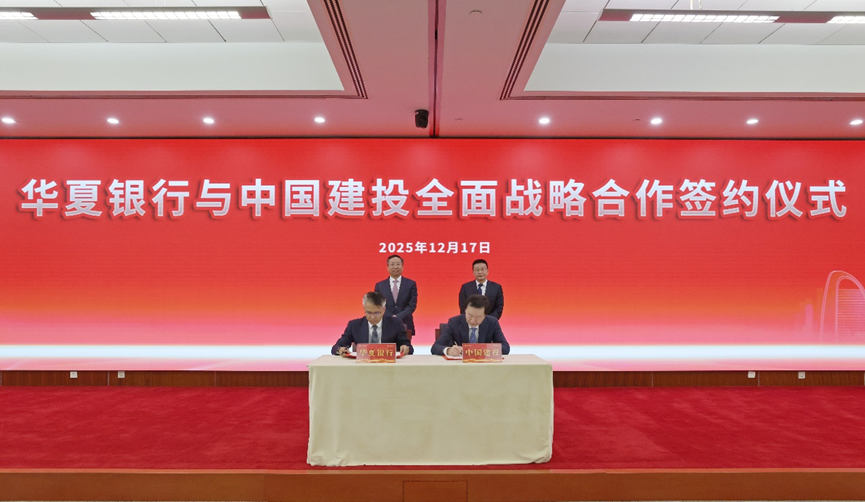
Core Viewpoint - China Jianyin Investment (China Jianyin) and Huaxia Bank signed a strategic cooperation agreement on December 17, 2023, in Beijing, aiming to deepen collaboration in various financial services and support national strategies for economic modernization [1][3][5]. Group 1: Strategic Cooperation Agreement - The strategic cooperation agreement was signed by Liu Zhihong, Chairman of China Jianyin, and Yang Shujian, Chairman of Huaxia Bank, with key executives from both organizations present [1][5]. - This agreement builds on previous collaborations in financial product investment, securities services, trust, fund distribution, and loan credit, establishing a solid foundation for future cooperation [3][7]. Group 2: Areas of Focus - The cooperation will focus on enhancing collaboration in public fund investment, service trusts, special asset disposal, investment-loan linkage, and cultural services [3][7]. - A regular communication mechanism will be established to promote the integration of cooperation from a business level to a strategic level [3][7]. Group 3: Significance and Goals - The signing of this strategic cooperation agreement is seen as a pivotal moment, aiming to expand the depth and breadth of collaboration [3][7]. - The partnership is intended to contribute to national strategies, support the real economy, build a strong financial nation, and assist in the modernization process of China [3][7].


王文涛:服务业是接下来开放的重点
Sou Hu Cai Jing· 2025-10-24 08:37
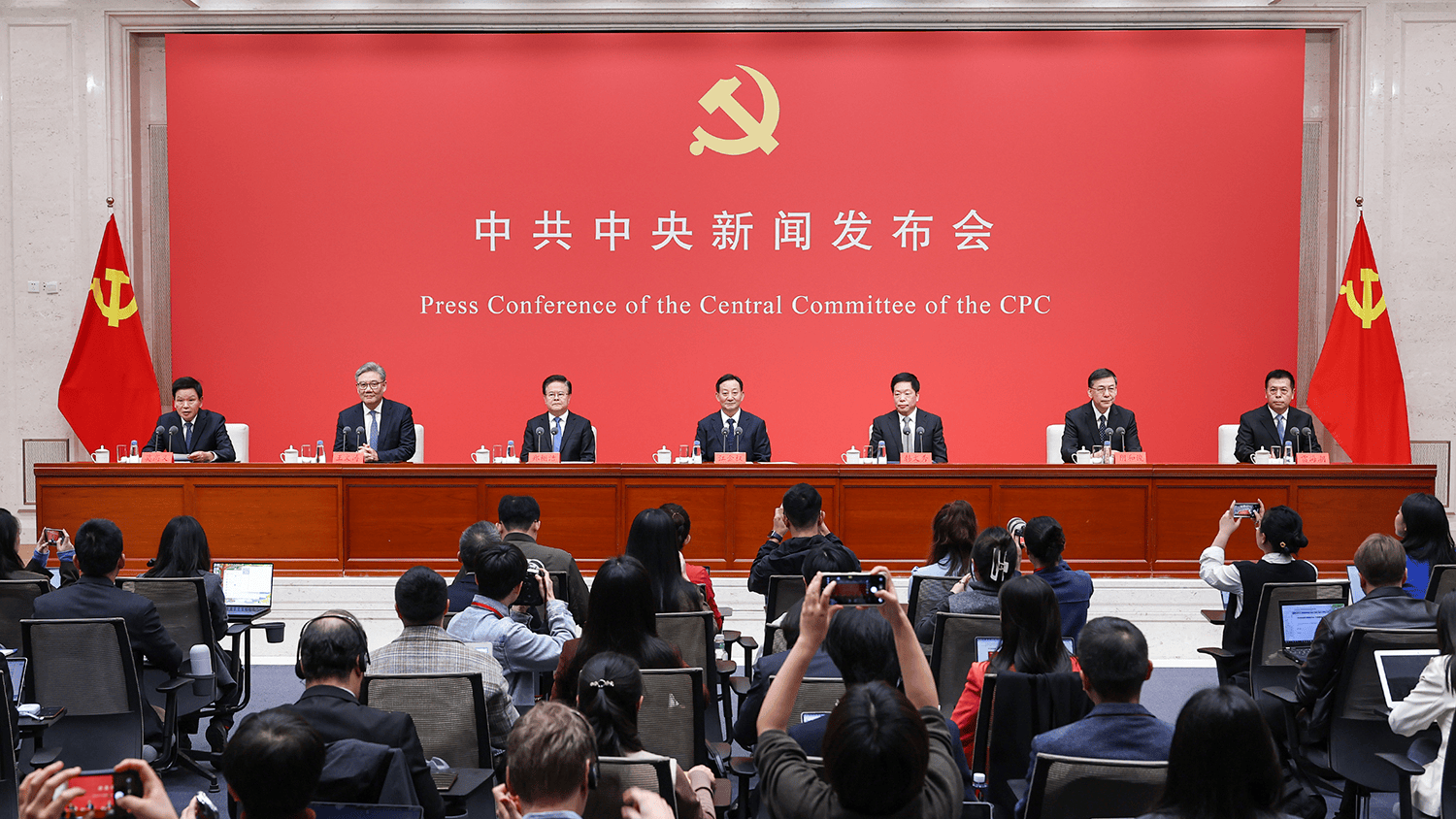
Core Viewpoint - The Chinese government aims to enhance its market attractiveness for foreign enterprises by lowering market access barriers and focusing on service sector openness [3]. Group 1: Market Opportunities - The Chinese market is positioned as a significant opportunity for global businesses, emphasizing that foreign companies are considered part of the family rather than outsiders [3]. - The Ministry of Commerce plans to implement measures that prioritize speed and efficiency in reducing market entry thresholds [3]. Group 2: Sector Focus - The service industry will be a key area for future openness, with plans to expand pilot programs in value-added telecommunications, biotechnology, and wholly foreign-owned hospitals [3]. - There will be a gradual expansion of self-directed openness in education and cultural sectors [3]. Group 3: Support for Foreign Enterprises - The Ministry of Commerce will continue to optimize services for foreign enterprises, including organizing roundtable meetings to transform companies' needs into actionable service plans [3]. - The initiative aims to enhance the "Invest in China" brand, ensuring that foreign businesses are willing to enter, stay, and thrive in the Chinese market [3].
支持消费品以旧换新,第四批690亿元资金近日已下达
Sou Hu Cai Jing· 2025-09-30 09:20
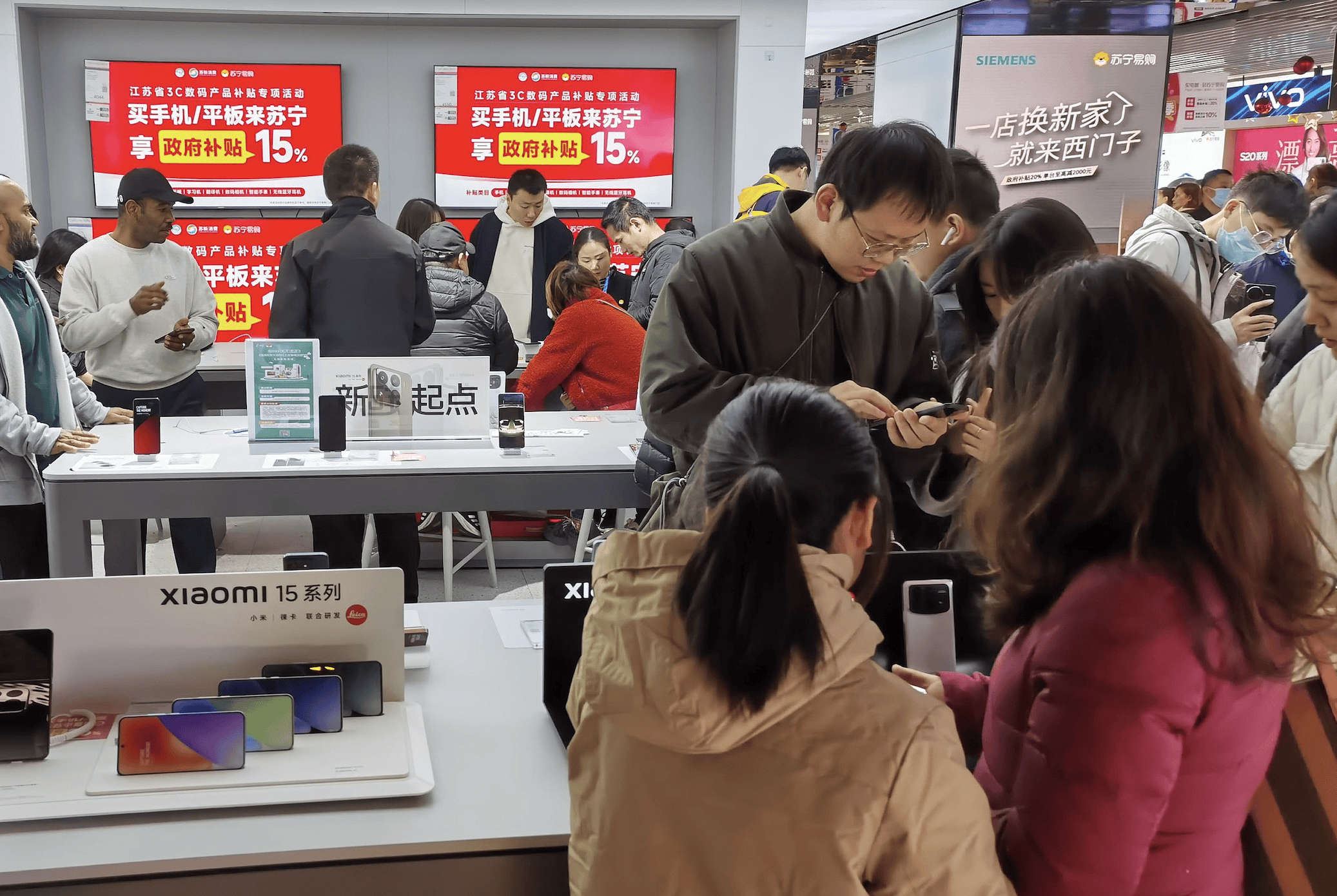
Group 1 - The National Development and Reform Commission (NDRC) has allocated a total of 300 billion yuan in special bonds to support the consumption upgrade policy, with the latest batch being 69 billion yuan [1][2] - The government aims to boost consumption as a primary task this year, with the "old-for-new" policy playing a significant role in this initiative [2][3] - From January to August, 330 million people have claimed subsidies under the "old-for-new" policy, leading to over 2 trillion yuan in related sales, contributing to a 4.6% year-on-year growth in total retail sales of consumer goods [5][6] Group 2 - Analysts suggest that future consumption policies may expand the scope of subsidies from durable goods to general consumer goods and services [5] - The government has also introduced new policies to support service consumption, with 19 measures aimed at enhancing service supply in various sectors [6] - The expected growth rate of retail sales is projected to reach 4.5% this year, reflecting a 1.0 percentage point acceleration compared to the previous year [6]
北京:将持续推进部分有条件的博物馆延时开放
Zhong Guo Chan Ye Jing Ji Xin Xi Wang· 2025-03-31 00:22
Core Insights - Beijing is developing into a "Museum City" with a focus on high-quality development of museums to serve as a national cultural center [1][2] Group 1: Museum Development Strategy - The Beijing Municipal Political Consultative Conference is conducting research and discussions to promote high-quality museum development [2] - Key areas of focus include institutional innovation, service categorization, cultural supply enhancement, and digital technology integration [2] - The strategy emphasizes extending museum hours, providing basic dining services, and supporting community-based museums [2] Group 2: Current Museum Landscape - As of the end of 2024, Beijing will have 241 registered museums, including 183 state-owned and 58 non-state-owned [3] - The total collection of museums in Beijing amounts to 14.66 million items, with 8.3 million being cultural relics [3] - The city hosts over 2,000 exhibitions annually and attracts more than 90 million visitors each year [3] Group 3: Future Plans - The city plans to optimize the structure and layout of museums, particularly in districts like Dongcheng, Xicheng, Chaoyang, Haidian, and Tongzhou [4] - There will be efforts to repurpose vacant spaces and integrate museum functions into urban development projects [4] - The initiative includes promoting museum functions in commercial areas, communities, and rural areas, along with extending operating hours for certain museums [4]