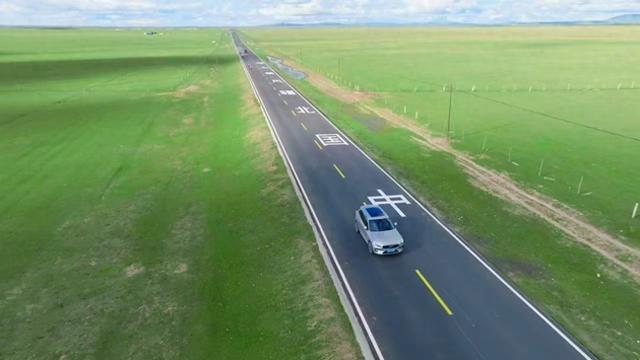
旅游公路

Search documents
今年内蒙古计划打造6条旅游公路
Xin Lang Cai Jing· 2026-01-19 21:14
Core Viewpoint - Inner Mongolia will deepen the integration of transportation and tourism by 2026, focusing on developing a network of scenic self-driving routes and enhancing travel services [1] Group 1: Transportation Development - Six tourist roads will be constructed, totaling 408 kilometers, including routes in Hohhot, Tongliao, Chifeng, Ulanqab, Bayannur, and Xilin Gol [1] - The transportation department aims to create high-quality self-driving routes that combine functionality and scenic value [1] Group 2: Tourism Services Enhancement - A "transportation + cultural tourism" supply-demand platform will be established, along with dedicated bus lines to key scenic spots [1] - Various travel services will be introduced, including tourist trains, senior citizen trains, air express lines, and charter flights to meet diverse travel needs [1] Group 3: Future Goals - By 2025, all 3A-level and above scenic spots in Inner Mongolia will be accessible via graded roads, with specific scenic routes becoming popular among self-driving enthusiasts [1] - The plan includes the development of 23 tourism service areas and 6 quality demonstration service areas, featuring unique themes such as volcanic geology and desert culture [1]
持续深化交旅融合发展 2026年内蒙古计划打造6条旅游公路
Xin Lang Cai Jing· 2026-01-19 12:02
Group 1 - The Inner Mongolia Autonomous Region will deepen the integration of transportation and tourism by 2026, creating six tourist highways totaling 408 kilometers to enhance the self-driving tourism traffic network [1][3] - A "transportation + cultural tourism" supply-demand platform will be established, including dedicated bus lines to key scenic spots and various travel services such as tourist special trains and charter flights to meet diverse travel needs [3][6] - By 2025, all 3A-level and above scenic spots in Inner Mongolia will be accessible via graded highways, with several unique tourist roads becoming popular choices for self-driving enthusiasts [6]

济南|济南全力打造全国综合交通枢纽
Da Zhong Ri Bao· 2026-01-15 01:29
Core Insights - Jinan aims to become a national comprehensive transportation hub by advancing key transportation projects during the 14th Five-Year Plan period [1][2] Group 1: Railway Development - Jinan is constructing a "米" shaped high-speed rail network, with 20 operational railway lines totaling 835 kilometers, including 12 high-speed rail lines covering 446 kilometers [1] - Approximately 660 high-speed trains operate daily, connecting Jinan to 366 cities nationwide [1] Group 2: Highway Network Enhancement - The Jinan metropolitan area has established a primary framework for the "二环一联十六射" highway network, with plans to reach 915.6 kilometers of operational highways by the end of 2025 [1] - The highway network density and the proportion of dual six-lane roads are the highest in the province [1] Group 3: Urban Road and Airport Expansion - A total of 902 kilometers of urban roads have been newly constructed or renovated, with 86 projects completed, including major roads like Aoti West Road and Longding Avenue [2] - The second phase of Jinan International Airport's expansion is underway, aiming to achieve a maximum flight level of 4F and facilitate seamless "air-rail" transfers [2] Group 4: Urban Rail Transit Projects - Nine urban rail transit projects are planned during the 14th Five-Year Plan, with several lines already completed, resulting in a total operational length of over 248 kilometers [2] Group 5: Inland Waterway Development - Jinan has developed inland waterway transport, completing the Xiaoqing River restoration and constructing Jinan Port and Zhangqiu Port, providing low-cost, high-capacity transport options for bulk goods [2] Group 6: National Recognition and Investment - Jinan was selected as one of the first national comprehensive freight hub cities, with 27 key projects underway and a total investment of 14.75 billion yuan planned for the implementation period from 2022 to 2024 [2] - The city has received A-level performance evaluations for three consecutive years and has secured 1.8 billion yuan in central and provincial funding, being the only city among the first 15 to receive full funding for three years [2]
淄博|淄博乡村路网优化提升工程完成率达111%
Da Zhong Ri Bao· 2025-12-23 02:13
Core Insights - The rural road network optimization project in Zibo has exceeded its annual target, achieving a completion rate of 111% by constructing 147 kilometers of roads against a planned 132 kilometers for 2025 [2][3] - The total length of rural roads in Zibo has reached 10,356 kilometers, with a density of 195.9 kilometers per 100 square kilometers, establishing a comprehensive and efficient rural transportation infrastructure [2][3] Group 1: Project Overview - The rural road network optimization project is one of Zibo's top ten livelihood initiatives, aimed at enhancing rural connectivity and supporting local industries such as tourism and agriculture [2] - The project has successfully created a provincial-level demonstration city for "Four Good Rural Roads," with several counties achieving national demonstration status [2] Group 2: Economic Impact - Upgraded rural roads have significantly improved villagers' daily lives, facilitating easier access to schools and healthcare services [3] - The completion of the Qichang Great Wall Scenic Corridor has boosted local tourism, generating over 15 million yuan in tourism revenue, a 50% increase since its opening [3][4] Group 3: Development Strategy - Zibo has adopted a development philosophy centered on enhancing economic growth through improved road infrastructure, encapsulated in the slogan "prosper through roads, beautify through roads, and enrich through roads" [4] - The city has developed a comprehensive tourism traffic plan, including a 2,150-kilometer scenic road system and investments in public transport to enhance visitor experience [4]
海南新基建:撬动开放的新支点
Hai Nan Ri Bao· 2025-12-14 01:40
Core Viewpoint - The construction of infrastructure in Hainan is accelerating, aiming to support the establishment of the Hainan Free Trade Port and enhance its role as a new pivot for opening up the economy [1][2]. Group 1: Infrastructure Development - Hainan's infrastructure is crucial for the Free Trade Port's construction, with a focus on major projects to improve network connectivity and smart capabilities [2][6]. - The port infrastructure features significant characteristics such as functional integration, with Haikou Port being a major hub capable of handling 35 million passengers and 5.6 million vehicles annually [3]. - The capacity of Yangpu International Container Hub Port has increased from 1.02 million TEUs to 3.1 million TEUs, marking a 204% growth [3]. Group 2: Transportation Network - A comprehensive "Five Ring" transportation network has been established, enhancing connectivity within the island and with international destinations [3][4]. - The completion of four highways and the "Two Ring" tourism road has facilitated smoother transportation, with 93 international routes now operational [3][4]. Group 3: Utility Infrastructure - The construction of the electricity, gas, and water networks is progressing alongside transportation infrastructure, creating a resilient support system for openness [4][5]. - Hainan has achieved "Gigabit City" status in three major cities, and the new power system in Boao has been recognized as a national demonstration zone [4][5]. Group 4: Future Development Plans - The "15th Five-Year Plan" emphasizes the need for proactive infrastructure development to enhance connectivity and stability [6][7]. - The focus is on achieving coordinated development across the island, improving logistics networks, and advancing "new infrastructure" initiatives [8][9]. - The aim is to elevate the capabilities of Hainan as a hub for international trade and transportation, ensuring efficient movement of people and goods [9].
五年来山西坚持修一条路、兴一片业、富一方人
Zhong Guo Xin Wen Wang· 2025-12-02 10:37
Core Viewpoint - Shanxi Province has successfully built a comprehensive tourism road network of 13,000 kilometers, significantly boosting local employment and income, embodying the principle of "building a road, promoting an industry, and enriching the people" [1][3]. Group 1: Infrastructure Development - Shanxi has completed a total transportation investment of 327.9 billion yuan during the "14th Five-Year Plan," which is 1.5 times that of the "13th Five-Year Plan," averaging an investment of 1.86 billion yuan per day [1]. - The province has newly constructed and renovated 24,800 kilometers of rural roads and upgraded 389 old bridges, ensuring all natural villages with over 30 households have access to paved roads [1]. Group 2: Tourism and Economic Impact - The tourism road network covers all 113 counties and districts in Shanxi, connecting 5,630 villages and 1,286 cultural heritage sites, transforming the tourism transportation landscape in the province [3]. - Shanxi has developed demonstration areas in Jincheng and Yonghe, creating 2,800 kilometers of high-quality tourism road segments, which have led to the emergence of several nationally recognized scenic routes [3]. Group 3: Rural Development and Industry Growth - The integration of roads with local agriculture, rural tourism, and e-commerce has led to the transformation of previously unknown villages into popular tourist destinations, enhancing local economies [3]. - The quality of rural roads has improved significantly, with an excellent road rate of 82.26%, contributing to safer and more convenient travel for residents [3].

推进交通运输高质量发展 服务中国式现代化黑龙江实践
Zhong Guo Fa Zhan Wang· 2025-11-28 05:13
Core Viewpoint - The Heilongjiang Provincial Transportation Department is making significant progress in building a comprehensive transportation network during the "14th Five-Year Plan" period, enhancing transportation capacity, improving international openness, and providing better services for people's livelihoods [3][4][6]. Group 1: Transportation Infrastructure Development - Heilongjiang has invested approximately 269 billion yuan in comprehensive transportation infrastructure construction during the "14th Five-Year Plan" period, with high-speed rail mileage reaching 1,374 kilometers and covering 80% of the province's population and 90% of its economic output [4]. - The province has initiated the construction of 11 highways totaling 1,636 kilometers, which is 2.2 times the mileage built during the "13th Five-Year Plan" [4]. - By the end of this year, the total length of highways is expected to reach 5,200 kilometers, ranking first among the three northeastern provinces [4]. Group 2: International Connectivity and Trade - Heilongjiang is enhancing its transportation hub for Northeast Asia, with the completion of the Heihe Highway Bridge and Tongjiang Railway Bridge, increasing international road transport capacity by 27 million tons [5]. - The province has opened 22 international passenger and cargo routes, leading the nation in the number of passenger routes to Russia's Far East [5]. - The Harbin International Land Port has officially commenced operations, facilitating cross-border cargo transport [5]. Group 3: Efficient Transportation Services - The province has effectively coordinated various transportation sectors to ensure smooth travel during peak periods, receiving multiple commendations from the Ministry of Transport [6]. - The transportation system has successfully supported the Asian Winter Games with zero complaints, showcasing its efficiency [6]. - Enhanced services include extended public transport hours during holidays and the introduction of customized bus services to meet diverse travel needs [6]. Group 4: Integration of Transportation and Tourism - Heilongjiang has launched 14 new domestic flight routes to promote tourism, connecting key regions [7]. - The province is developing tourism road brands and specialized tourist trains to boost year-round tourism [7]. - Efforts to combat illegal transportation services have strengthened the regulatory environment, supporting the growth of winter tourism [7]. Group 5: Focus on Livelihood Services - The province has constructed 16,000 kilometers of rural roads during the "14th Five-Year Plan" period, significantly improving rural connectivity [8]. - Urban public transport has expanded to 1,926 routes, with a total operating mileage of 46,400 kilometers, serving over 3.7 billion passengers [8]. - Initiatives to enhance logistics and delivery services have been implemented, ensuring efficient last-mile delivery in rural areas [8].

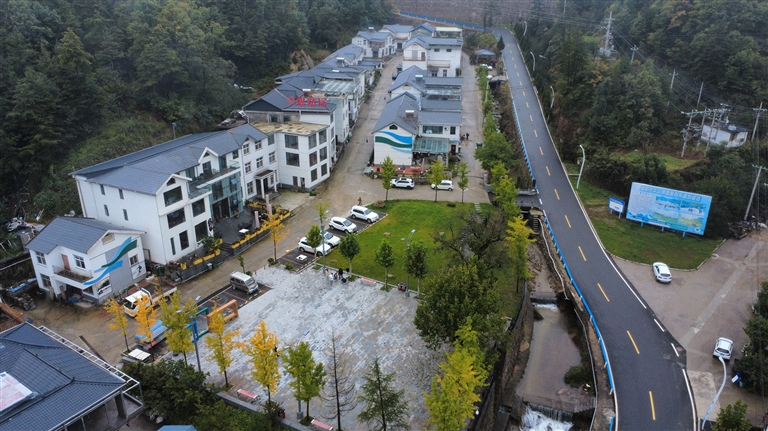
一条路如何带火云端村——河南省旅游公路助力乡村振兴样本观察
He Nan Ri Bao· 2025-10-13 23:03
Core Insights - The article highlights the transformative impact of the ecological Funiu No.1 tourism road on Yangshuping Village, which has shifted from a remote, impoverished area to a thriving tourist destination [1][2][3] Infrastructure Development - The construction of the 32.974-kilometer ecological Funiu No.1 tourism road has significantly improved access to Yangshuping Village, which was previously isolated and difficult to reach [1][3] - Historical context shows that prior to road improvements, travel from the village to the town took over four hours due to poor road conditions [3][4] Economic Impact - The new road has enabled local residents to engage in tourism-related businesses, leading to an increase in local income and a reversal of population decline as young people return to the village [6][7] - Since the road's completion, the village has seen an annual influx of over 400,000 tourists, generating nearly 300 million yuan in winter tourism revenue [7][8] Community Revitalization - The article describes how the road has facilitated the establishment of various tourism and hospitality businesses, including the first farmhouse inn in the village, which has evolved over time to meet increasing demand [6][7] - The population of Yangshuping Village has grown from 350 to over 400 residents, indicating a positive demographic shift due to improved economic opportunities [7] Recognition and Awards - The ecological Funiu No.1 tourism road has received accolades, including the 2025 Annual Traffic and Tourism Integration Innovation Project Award, highlighting its role in promoting tourism and local development [8][10] Broader Implications - The article emphasizes the importance of integrating transportation and tourism development, with the Funiu No.1 road serving as a model for similar initiatives across the province [14][15] - The ongoing development of rural roads in Henan province aims to enhance connectivity and support the broader goals of rural revitalization and economic growth [15][17]
预计达119亿人次!“火热”暑运彰显“流动中国”新活力
Yang Shi Xin Wen· 2025-09-01 02:01
Summary of Key Points Core Viewpoint - The transportation sector is experiencing a significant increase in passenger flow during the summer travel season, with a projected total of 11.9 billion trips, reflecting a year-on-year growth of 4.3% [1] Group 1: Passenger Flow and Travel Trends - The expected volume of inter-regional travel during the summer season is 11.9 billion trips, averaging 192 million trips per day [1] - Road travel is anticipated to account for 8.7 billion trips, representing 73% of total inter-regional travel, with rural self-driving tourism becoming increasingly popular [1] - Domestic tourism is projected to exceed 2.5 billion trips this summer, with high travel demand in northeastern, southwestern, northwestern regions, coastal cities, and popular tourist destinations [7] Group 2: Railway Transportation - The national railway system has sent approximately 940 million passengers during the summer travel period, marking a historical high [8] - Weekly passenger flow has consistently exceeded 100 million, with an average daily flow of about 15 million, which is 2.2 million higher than during the spring festival [8][10] - To accommodate the increased passenger flow, the railway has implemented a new train operation schedule, enhancing speed on key routes and increasing train frequency by nearly 10% [10] Group 3: Water Transportation - Over 66.94 million passengers are expected to be transported via water during the summer season, with an average of 1.1 million passengers per day, reflecting a 6.1% increase compared to the previous year [19][20] - Popular water travel activities include island tours, urban sightseeing, and educational trips, contributing to the growth in passenger numbers [19] Group 4: Tourism Infrastructure Development - Infrastructure improvements are underway in tourist areas, such as the expansion of roads around scenic spots to enhance accessibility and safety for self-driving tourists [5] - New tourism trains have been introduced, including special trains for senior travelers and educational trips, significantly increasing the number of direct tourism trains [14][18] - Local initiatives, such as combining boat tours with cultural experiences, are being developed to create new consumption scenarios for tourists [23]
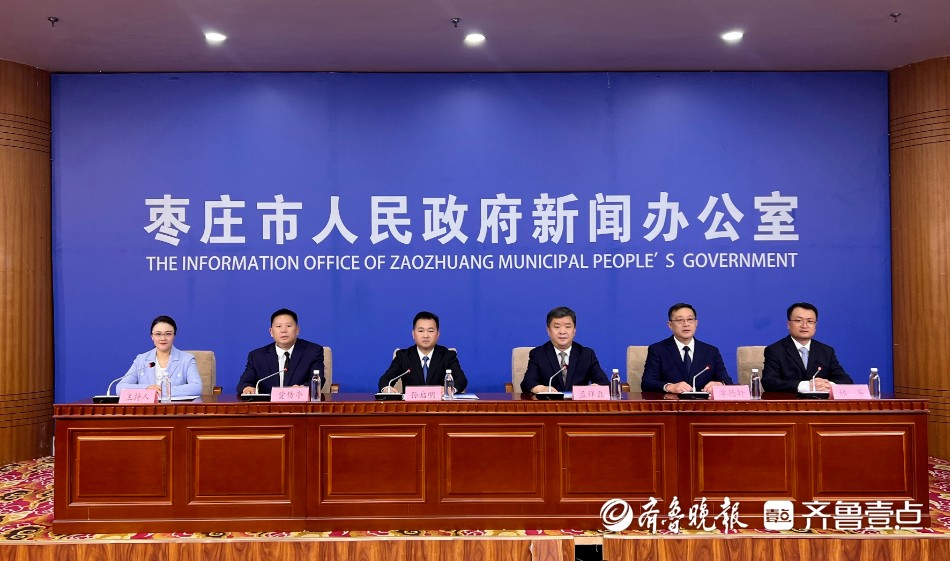
农村路变“致富路”,枣庄构建交旅融合新格局
Qi Lu Wan Bao Wang· 2025-06-18 07:33
Core Insights - The press conference highlighted the achievements in the construction of "Four Good Rural Roads" and tourism roads in Zaozhuang, with a total rural road mileage of 8,226.2 kilometers and a road network density of 180.24 kilometers per 100 square kilometers, ranking fifth in the province [1][3] - The city has invested a total of 10.3 billion yuan since 2024, with plans to further enhance rural road infrastructure and management systems [3][5] Group 1: Infrastructure Development - Zaozhuang has focused on five major projects: road network enhancement, accessibility, traffic safety assurance, integrated development models, and upgraded transportation services [3] - The city has achieved a 100% accessibility rate for administrative villages to asphalt or cement roads, with plans to construct an additional 265 kilometers of rural roads and upgrade 602 kilometers of access roads this year [3][6] Group 2: Maintenance and Management - The city has established a comprehensive management system for rural roads, with 2,679 road supervisors and 2,434 public signage installed to clarify responsibilities and objectives [3][5] - The rural road maintenance rate stands at 100%, with a good-to-moderate road rate of 90.6%, and efforts are ongoing to eliminate dangerous bridges [5][6] Group 3: Tourism Integration - Over the past three years, Zaozhuang has invested 372 million yuan to develop 293 kilometers of tourism roads, creating a transportation network that connects cultural and tourism resources [7] - The city plans to invest over 43 million yuan by 2025 to advance 60 kilometers of demonstration tourism roads, enhancing the connection between transportation networks and tourism resources [7][8] Group 4: Economic Impact - The integration of tourism roads with local industries and rural development has led to the establishment of diverse business models, such as agritourism and specialty product processing, contributing to local economic growth [8] - The "Meihao Mengzhuang Station" project exemplifies the successful integration of transportation, tourism, and local agricultural industries, boosting the brand recognition of Mengzhuang strawberries [8]