早春茶

Search documents
人勤春早 蒙顶山下茶市孕“鲜”机
Xin Lang Cai Jing· 2026-02-23 21:43
Core Viewpoint - The early spring tea market in Ya'an, particularly at the Shuanghe Tea Fresh Leaf Trading Market, is experiencing a lively start despite being in the pre-peak season, with local tea farmers and merchants actively participating in transactions [1][2]. Group 1: Market Activity - The Shuanghe Tea Fresh Leaf Trading Market is one of the largest fresh leaf trading markets in Southwest China, attracting tea farmers from surrounding towns and even from neighboring counties [1]. - The market opened on February 23, with tea merchants and farmers arriving early to engage in the buying and selling of fresh tea leaves, indicating a competitive atmosphere for early spring tea [1][2]. - The peak trading time occurs between noon and 1 PM, with an increasing number of tea farmers and merchants present, leading to a bustling environment filled with negotiation and transactions [2]. Group 2: Participant Insights - A new tea merchant, Liu Cheng, is actively learning the trade, recording each transaction meticulously, and has already purchased over a hundred pounds of fresh leaves within the first half hour of trading [2][3]. - Experienced tea merchant Zhong Zhenyu utilizes live streaming to attract customers and showcase the tea market, indicating a modern approach to marketing within the tea industry [3]. - The market is expected to reach its peak trading volume by early March, with daily transactions potentially reaching hundreds of thousands to over a million pounds as more merchants from various provinces converge [3].
立春过后抢采早春茶(侨乡新貌)
Ren Min Ri Bao Hai Wai Ban· 2026-02-11 00:51
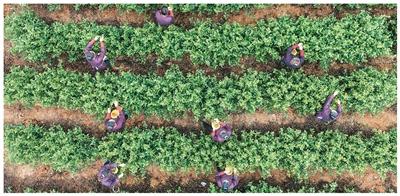
Group 1 - The core viewpoint of the article highlights the early harvesting of spring tea in Sanjiang Dong Autonomous County, Guangxi, where local Dong ethnic communities are actively picking tea leaves due to favorable climatic conditions [4][9]. - The tea trees in over 200,000 acres of tea gardens in Sanjiang have started to sprout new buds after the beginning of spring, allowing for an earlier harvest compared to other green tea producing regions, which is 7 to 20 days ahead of schedule [4][9]. - University students returning home are participating in the tea picking process alongside their parents, indicating a community effort in the tea harvesting activities [4].

梧州六堡茶年产量跃升至近4万吨
Zhong Guo Xin Wen Wang· 2025-11-15 16:43
Core Insights - The 2025 Black Tea Industry Upgrade Development Exchange Conference was held in Wuzhou, Guangxi, highlighting the growth and development of the Wuzhou Liubao tea industry [1] - Wuzhou has achieved significant increases in both production and value of Liubao tea, with annual production rising from 17,000 tons to nearly 40,000 tons and comprehensive output value increasing from 11 billion to nearly 30 billion [1] - Guangxi's tea garden area has exceeded 1.7 million acres, with tea production reaching nearly 130,000 tons, maintaining a position among the top ten in the country for six consecutive years [1] - The conference showcased the collaborative development of the black tea industry, with representatives from major black tea production areas and leading enterprises presenting their achievements [1] - The brand value of Wuzhou Liubao tea has reached 5.507 billion, supported by initiatives such as the China-Europe Railway Express and the "Tea and World" series of events to expand domestic and international markets [1] Group 1 - Wuzhou's Liubao tea production has significantly increased, with annual output reaching nearly 40,000 tons [1] - The comprehensive output value of Liubao tea has grown to nearly 30 billion, reflecting a strong economic impact [1] - Guangxi's tea production has consistently ranked among the top ten in the nation for six years, with a total production of nearly 130,000 tons [1] Group 2 - The conference highlighted the collaborative efforts of various black tea production areas and enterprises, showcasing a vibrant industry landscape [1] - The brand value of Wuzhou Liubao tea has been enhanced through strategic initiatives, reaching 5.507 billion [1] - The tea industry in Cangwu County is also thriving, with a production of 13,000 tons and a comprehensive output value exceeding 10 billion in 2024 [2]
广西茶产业加速从“大区”向“强区”跨越
Guang Xi Ri Bao· 2025-11-10 01:58
Core Insights - The conference titled "New Quality Productivity Empowering the High-Quality Development of Guangxi Tea Industry" was held in Nanning, focusing on advancing the tea industry in Guangxi towards high quality, branding, and intelligence [1] - The event highlighted the emergence of various aspects of the tea industry under the new quality productivity framework for the 2024-2025 period, including the deepening recognition of Liubao tea's quality and the continuous advantages of early spring tea [1][2] - Guangxi aims to leverage new quality productivity as a core driver for future growth, emphasizing technological breakthroughs, standard construction, and cultural empowerment [2] Industry Developments - The Guangxi tea industry is transitioning from a "large region" to a "strong region," injecting new momentum into its development [1] - Key highlights include the establishment of multiple group standards such as "Guangxi Early Spring Tea Standard" and active participation in revising the "Liubao Tea Full Industry Chain Standard System" [1] - Talent cultivation is being prioritized, with recognitions such as the "Guangxi Technical Expert" title awarded to three individuals and the establishment of the first "Guangxi Tea Industry Lifetime Achievement Award" [1] Future Strategies - Guangxi will focus on technological advancements, including tea tree variety improvement and green pest control, while accelerating the construction of smart tea gardens and digital tea enterprises [2] - The region plans to create a comprehensive tea standard system that emphasizes differentiated standards for key varieties like Liubao tea and early spring tea to enhance product quality and market expansion [2] - Cultural initiatives, such as the "Ten-Year Chen Yun" tea competition, will promote the integration of tea culture with other industries and enhance the global visibility of Guangxi tea [2]
走访现代口岸,感受古道驿站(边城见闻)
Ren Min Ri Bao· 2025-05-15 22:08
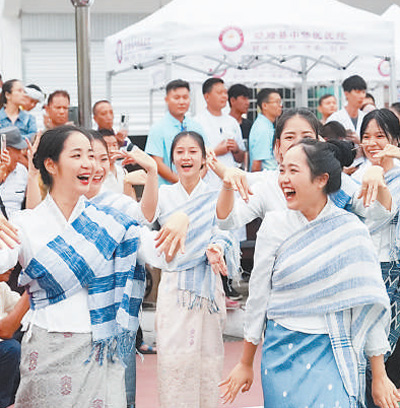
Core Points - The article highlights the historical and cultural significance of the border trade between China and Laos, particularly focusing on the tea and salt trade that has persisted for centuries [8][12][14] - It discusses the modern developments in transportation, specifically the China-Laos Railway, which has transformed trade and travel between the two countries, creating new economic opportunities and strengthening ties [16][17] - The article emphasizes the ongoing cultural exchanges and friendships formed through border markets and educational initiatives, showcasing the deep-rooted connections between the communities [14][16] Group 1: Historical Context - The region around the Mengla County is historically significant as a key point on the ancient Tea Horse Road, facilitating trade between China and Southeast Asia [8][12] - The names of the border towns, "Mohan" and "Modin," reflect their historical ties to tea and salt, indicating the long-standing trade relationships [8] - The traditional salt production methods in villages like Nantong preserve the cultural heritage of the area, linking past practices to current economic activities [9][11] Group 2: Modern Developments - The opening of the China-Laos Railway has created a new trade route, significantly reducing travel time and enhancing economic exchanges between the two nations [16][17] - The railway serves as a modern equivalent of the ancient trade routes, facilitating the movement of goods and people, and fostering a sense of community [16][17] - The Mengla County Vocational High School has become a hub for Lao students, with nearly 3,000 students enrolled over the past 20 years, promoting educational exchanges and cultural understanding [16][17] Group 3: Cultural Exchange and Community - The "International Lao Friends" market in Mengla County serves as a platform for cultural exchange, where local residents and Lao traders gather to share goods and strengthen friendships [14][15] - The initiative of "friendly family pairing" between Mengla County and Laos encourages deeper personal connections and mutual support among border residents [15] - The article illustrates how personal relationships have evolved from trade interactions to genuine friendships, highlighting the importance of cultural ties in border communities [14][15]
建圈强链 四川农业明确产业“路线图”
Si Chuan Ri Bao· 2025-05-14 00:25
Development Goals - The livestock industry aims to increase the total output value of the entire industry chain by 269 billion yuan within 3-5 years, reaching a new milestone of 1 trillion yuan [5][12] - The grain and oil industry targets a total grain output of over 73 billion jin by 2027, with a comprehensive output value exceeding 500 billion yuan [5] - The vegetable industry aims for a stable production of around 57 million tons by 2027, with a comprehensive output value surpassing 400 billion yuan [5] - The fruit industry plans to stabilize the total area at 13.3 million mu, achieving a total output of 15.43 million tons and a comprehensive output value of 254 billion yuan by 2027 [5] - The tea industry aims for a stable planting area of 5.9 million mu, with a gross tea output value of 45 billion yuan and a comprehensive output value of 130 billion yuan by 2027 [5] - The silkworm industry targets a stable mulberry garden area of 2.3 million mu, producing 110,000 tons of silkworm cocoons, with a comprehensive output value of 100 billion yuan [5] - The fishery industry aims for a total aquatic product output of 2.13 million tons and a comprehensive output value of 149 billion yuan by 2027 [5] - The food and medicine industry aims for a comprehensive output value of over 100 billion yuan for medicinal materials by 2027 [5] Current Situation - The current agricultural industry in Sichuan is characterized by a loose "circle" and a weak "chain," with many products still in the "raw material" selling stage [9][10] - Despite being a leading producer of various agricultural products, Sichuan's tea industry faces challenges, with over 70% of tea sold in raw or semi-processed forms [9][10] - The Sichuan tea industry has seen significant growth, with the total output value surpassing 100 billion yuan for the first time in 2021 [9] Planning - The "Thousand Billion Level Advantageous Characteristic Agriculture Industry Circle Strengthening Chain Cultivation Plan" outlines the overall strategy, development goals, regional layout, key tasks, and support measures for Sichuan's agricultural industry [6][11] - The plan emphasizes the importance of production, processing, branding, and service across the entire industry chain to enhance capacity and output value [11] - Specific targets are set for different agricultural sectors, with a focus on leveraging local climatic and geographical conditions for differentiated regional development [12] Key Focus - The plan highlights the role of enterprises as the main players in the "circle" and "chain," emphasizing the importance of chain-leading and chain-associated enterprises [13][14] - The plan encourages the establishment of agricultural industrialization unions to enhance collaboration among enterprises, cooperatives, and large-scale farmers [13] - Key projects will be implemented to strengthen the industry chain, with a focus on digital platforms covering the entire production process from breeding to consumption [14]