
智慧交通

Search documents
金观平:以人为本打造智慧城市
Jing Ji Ri Bao· 2026-02-10 03:08
Core Viewpoint - The construction of smart cities is essential for modernizing urban governance systems and capabilities, focusing on enhancing the efficiency and intelligence of urban management [1] Group 1: Smart City Development - Smart city development should align with the trend of digital intelligence, improving the precision and intelligence of urban governance [1] - Smart city initiatives are not merely hardware upgrades but should prioritize the sense of gain, happiness, and security of the people [1] - Successful examples include Beijing's "Immediate Response to Complaints" platform, Suzhou's smart elderly care services, and Chengdu's smart traffic systems, which effectively address public needs and improve livelihoods [1] Group 2: Challenges in Smart City Initiatives - Some regions have deviated from the original intent of serving the public, engaging in hardware procurement without practical application, leading to unused smart devices [2] - There is a tendency to create superficial "screen landscapes" that do not connect with public services, resulting in wasted resources and increased burdens on local governments [2] - The focus should be on integrating technology with public needs, ensuring that smart city initiatives are practical and beneficial to the community [2] Group 3: Building a Supportive Framework - A comprehensive support system is necessary for the sustainable operation of smart cities, including strengthening technical support and creating a unified digital infrastructure [3] - It is crucial to establish mechanisms for data security and personal information protection while promoting collaborative governance involving government, market, and social organizations [3] - Smart cities should enhance governance levels and optimize public services, ensuring that the benefits of digital advancements are shared by all citizens [3]
南京熊猫:公司聚焦智慧交通和平安城市、智能制造、电子制造服务三大主业
Zheng Quan Ri Bao Wang· 2026-02-02 12:13
Group 1 - The company, Nanjing Panda (600775), focuses on three main sectors: smart transportation, safe city initiatives, and intelligent manufacturing, along with electronic manufacturing services [1] - The company emphasizes a market and customer demand-oriented approach, adhering to innovation while maintaining core values [1] - The goal is to enhance core competitiveness through these strategic focuses [1]

易华录:预计2025年度净利润亏损约21.76亿元~27.91亿元
Mei Ri Jing Ji Xin Wen· 2026-01-30 10:54
Group 1 - The company expects a net loss attributable to shareholders of approximately 2.176 billion to 2.791 billion yuan for 2025, compared to a net loss of about 2.865 billion yuan in the same period last year [1] - The main reason for the performance change is the company's focus on expanding its smart transportation, data elements, and data operation service businesses, with new contracts signed increasing year-on-year [1] - The company has conducted impairment tests on assets related to its data lake business and certain equity investments due to changes in operational conditions, which is a significant factor contributing to the large loss [1]

地方交通会议密集召开 智慧交通建设成重点
Xin Lang Cai Jing· 2026-01-29 18:45
Core Insights - In 2026, local transportation investment growth is shifting from large-scale expansion to connotative development, with smart transportation becoming a key focus across various regions [1][2] Investment Trends - As of now, 11 provinces have announced their transportation investment plans for 2026, with six provinces including Fujian and Hebei planning investments exceeding 100 billion, while Shandong and Jiangsu's plans exceed 200 billion [1] - Compared to previous years, most provinces are experiencing a significant slowdown in investment growth, reflecting a profound shift in local transportation investment logic [1] Smart Transportation Initiatives - The "Outline for Building a Transportation Power" issued by the central government emphasizes the development of smart transportation, with the Ministry of Transport promoting the large-scale application of artificial intelligence in the sector [2] - Hunan province plans to accelerate smart transportation construction in 2026, including 11 digital transformation projects for infrastructure [2] - Jiangxi province aims to implement a digital transformation of transportation infrastructure and promote smart waterway construction [2][3] Regional Differentiation - Inner Mongolia plans to implement "Artificial Intelligence + Transportation" actions, focusing on automatic driving freight corridors and zero-carbon transport corridors [3] - The differentiation in smart transportation initiatives across regions reflects the principle of "adapting to local conditions," allowing provinces to leverage their geographical and industrial advantages [3] Future Outlook - Significant breakthroughs in smart transportation construction are anticipated, particularly in autonomous driving, intelligent networking, and digital transformation of transportation facilities [4]
赣粤高速(600269.SH):2025年度净利润13.20亿元,同比增长3.18%
Ge Long Hui A P P· 2026-01-16 07:52
Core Viewpoint - Gansu Expressway (600269.SH) reported a total operating revenue of 6.292 billion yuan for the year 2025, reflecting a year-on-year growth of 5.14%, primarily driven by its subsidiary Jiangxi Fangxing Technology Co., Ltd.'s focus on smart transportation and market expansion [1] Financial Performance - The company achieved a net profit attributable to shareholders of 1.32 billion yuan in 2025, representing a year-on-year increase of 3.18% [1] - The net profit attributable to shareholders after deducting non-recurring gains and losses was 1.089 billion yuan, showing a year-on-year growth of 0.67% [1] Revenue Drivers - The growth in operating revenue was supported by the continuous development of smart transportation solutions and increased market outreach by Jiangxi Fangxing Technology [1] - The company also benefited from enhanced traffic flow due to the synergistic effects of the highway network, which increased public travel demand and led to a rise in toll service revenue [1] Cost Management - The company effectively leveraged its financing brand advantage and accurately assessed interest rate trends, resulting in a reduction of financing costs, with financial expenses decreasing compared to the previous year [1]

以智慧城市建设推动加快形成新质生产力
Jin Rong Shi Bao· 2026-01-12 03:57
Core Viewpoint - The development of new quality productivity is an intrinsic requirement and important focus for promoting high-quality development in China, with smart city construction serving as a strategic pivot for this transformation [1]. Group 1: Smart City Construction as a Strategic Choice - Smart city construction is a practical carrier that adapts to the transformation of production methods, fundamentally reshaping urban governance through the integration of digital technologies [2]. - The Chinese government has been promoting smart city construction since 2016, emphasizing data-driven and people-centered approaches to optimize governance and resource integration [2]. - Smart cities enhance the efficiency of production factor allocation and are essential for optimizing urban functions and driving productivity growth [3]. Group 2: Goals of Smart City Construction - Smart cities represent a direct integration of advanced productivity, providing an environment for the reconfiguration of key production factors such as technology, capital, talent, and data [3]. - The urbanization rate in China has increased from 17.9% in 1978 to 66.2% in 2023, highlighting the need for smart city initiatives to address challenges like resource efficiency and environmental pressures [3]. - Empirical studies indicate that doubling urban scale can increase total factor productivity by 3.5% to 8%, with smart city initiatives potentially amplifying this effect [3]. Group 3: Government's Role in Smart City Development - Smart city construction is recognized globally as a core pathway for urban modernization, with various international initiatives emphasizing the importance of technology and management innovation [4][5]. - China has over 500 smart city pilot projects covering more than 95% of prefecture-level cities, indicating a strong governmental commitment to enhancing urban governance through digital platforms [5]. - The government plays a crucial role in guiding multi-stakeholder participation, ensuring effective alignment between technological innovation and urban needs [5]. Group 4: Value Orientation of Smart Cities - The concept of a "people's city" aligns with the people-centered philosophy of new quality productivity, emphasizing the active role of citizens in urban governance [6]. - Smart city initiatives have shifted from traditional monitoring models to collaborative governance, involving government, enterprises, and citizens in decision-making processes [6]. - The focus on human-centered values in smart city construction reflects the broader goal of meeting the growing needs of the population for a better quality of life [6]. Group 5: Key Focus Areas for Developing New Quality Productivity - Strengthening technological innovation is essential for enhancing the foundational capabilities of smart cities and fostering strategic emerging industries [7]. - Establishing a comprehensive digital transformation framework is necessary to support the development of smart cities, including investments in new infrastructure and optimizing regulatory arrangements [8]. - Improving urban governance through data-driven models and enhancing public service accessibility are critical for expanding the market for new quality productivity [9]. Group 6: Sustainable Development and Ecological Civilization - Promoting smart environmental practices and green industries is vital for effective resource management and environmental risk mitigation [10]. - Efficient utilization of resources and energy through smart technologies is essential for sustainable urban development [10]. - Encouraging eco-friendly lifestyles through smart city initiatives can enhance public engagement in sustainability efforts [10]. Group 7: Coordinating Development and Integration - Deepening the reform of smart city systems in alignment with national strategies is crucial for balancing new quality productivity and production relationships [11]. - Promoting regional integration and urban-rural development through smart city platforms can facilitate efficient resource allocation and governance [11]. - Establishing a long-term mechanism for public services and social security is necessary to address challenges such as population aging and economic restructuring [11].
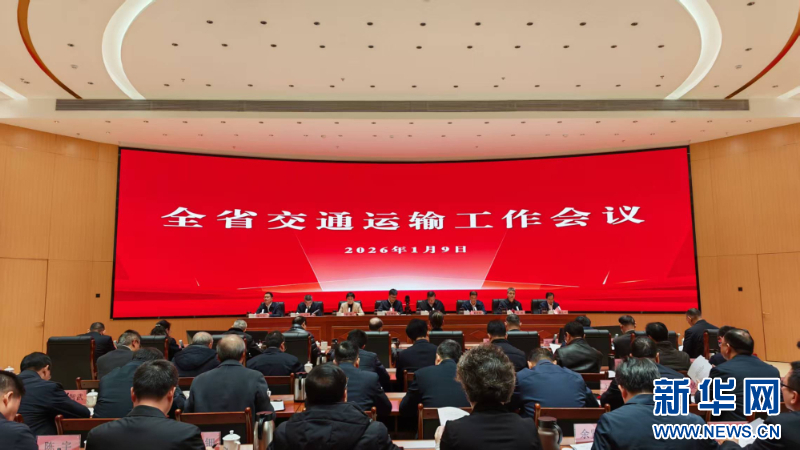
2026年福建计划完成公路水路投资900亿元
Xin Hua Wang· 2026-01-10 05:03
Group 1 - The core focus of the 2026 transportation work conference in Fujian is to complete over 400 billion yuan in transportation investments during the 14th Five-Year Plan, with a target of 900 billion yuan in road and waterway investments for 2026, striving to reach 1 trillion yuan [2] - Specific investment allocations for 2026 include 250 billion yuan for expressways, 330 billion yuan for regular roads, 80 billion yuan for port and shipping projects, and 240 billion yuan for transportation services and other investments [2] - Key projects for expressway construction will include the expansion of the Jing-Tai and Quan-Xia expressways, as well as the commencement of critical projects like the Quanzhou section of the Quan-Mei expressway and the Zheng-Yong expressway [2] Group 2 - The transportation work will prioritize public welfare, with initiatives such as adding 400 charging facilities and 6 service area entrances, alongside improvements for elderly accessibility and emergency response capabilities [3] - The "Hundred Towns, Thousand Villages, Ten Thousand Miles Road" project will focus on rural road upgrades, including the renovation of 500 kilometers of substandard roads and the implementation of safety projects over 600 kilometers [3] - Fujian aims to enhance port and shipping integration by implementing the "Port-Railway Connection" project, targeting a 10% increase in container rail-water transport volume and reducing logistics costs to 13.2% of GDP [3] Group 3 - Digital transformation is emphasized as a key driver for high-quality transportation development, with plans to advance smart traffic initiatives, including upgrades to smart highway stations and service areas [4] - The establishment of a comprehensive digital platform for port and shipping operations is planned, along with the creation of 1,140 kilometers of digital navigation channels [4] - The goal is to build a "Smart Transportation Corridor" to enhance overall transportation efficiency and service quality [4]

千方科技:聘任孔祥熙担任公司副总经理兼董事会秘书
Mei Ri Jing Ji Xin Wen· 2025-12-26 11:14
Group 1 - The core point of the article is the resignation of the Deputy General Manager and Board Secretary of Qianfang Technology, Mr. Shi Guangjian, due to personal reasons, and the appointment of Mr. Kong Xiangxi as his successor [1] - Qianfang Technology's revenue composition for the first half of 2025 shows that smart security accounts for 72.54%, smart transportation accounts for 27.29%, and other businesses account for 0.17% [1] - As of the report date, Qianfang Technology has a market capitalization of 18.9 billion yuan [1]

多伦科技跌2.05%,成交额2.32亿元,主力资金净流出674.04万元
Xin Lang Cai Jing· 2025-12-26 03:34
Core Viewpoint - Duolun Technology's stock has experienced fluctuations, with a year-to-date increase of 34.36% but a recent decline in the last five trading days. The company is facing challenges reflected in its financial performance, with a significant drop in revenue and net profit year-on-year [1][2]. Financial Performance - As of September 30, 2025, Duolun Technology reported a revenue of 312 million yuan, a year-on-year decrease of 26.17%. The net profit attributable to shareholders was -19.81 million yuan, representing a 147.17% decline compared to the previous year [2]. - The company has distributed a total of 330 million yuan in dividends since its A-share listing, with 78.74 million yuan distributed over the last three years [3]. Stock Market Activity - On December 26, Duolun Technology's stock price fell by 2.05%, trading at 10.52 yuan per share, with a total transaction volume of 232 million yuan and a turnover rate of 3.09%. The total market capitalization stood at 7.426 billion yuan [1]. - The stock has appeared on the "Dragon and Tiger List" once this year, with the most recent occurrence on December 16, where it saw a net purchase of 76.85 million yuan [1]. Shareholder Information - As of September 30, 2025, the number of shareholders increased by 6.42% to 57,400, while the average circulating shares per person decreased by 6.03% to 12,302 shares [2]. - Among the top ten circulating shareholders, Hong Kong Central Clearing Limited is the sixth largest, holding 3.363 million shares, a decrease of 87,500 shares from the previous period [3]. Business Overview - Duolun Technology, established on December 25, 1995, and listed on May 3, 2016, operates in various sectors including vehicle management, traffic services, driving training, and vehicle inspection. The main revenue sources are smart vehicle management (36.63%), smart vehicle inspection (30.64%), smart driving training (13.80%), and smart traffic (9.17%) [2]. - The company is categorized under the software development industry, focusing on vertical application software, and is involved in concepts such as satellite navigation, autonomous driving, and chip technology [2].

信息发展:12月25日召开董事会会议
Mei Ri Jing Ji Xin Wen· 2025-12-25 13:06
Group 1 - The company, Information Development, announced the convening of its 26th meeting of the 6th Board of Directors on December 25, 2025, in Shanghai, where it reviewed proposals including the revision of certain management systems [1] - For the first half of 2025, the revenue composition of Information Development was as follows: Smart Government accounted for 72.96%, Smart Transportation for 26.74%, and other businesses for 0.3% [1] - As of the time of reporting, the market capitalization of Information Development was 16 billion yuan [1]
