智能座椅

Search documents
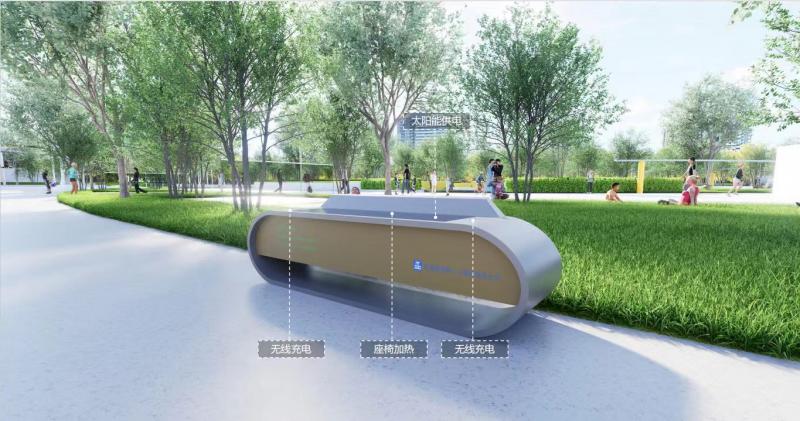
快来看!通州街头出现“会发热的椅子”
Xin Lang Cai Jing· 2026-02-16 14:09
Core Viewpoint - The introduction of solar-powered heated public seating in Tongzhou District represents an innovative approach to enhancing urban public spaces, providing comfort and warmth to citizens during cold weather [1][3][5]. Group 1: Project Implementation - A total of 30 solar-powered heated benches have been installed across six major commercial areas and parks in Tongzhou, including Wanxianghui and Wanda Plaza [1][3]. - The benches are designed to charge during the day using solar panels, allowing them to provide heating and lighting at night [3]. - The installation was completed by the China State Construction Engineering Corporation (CSCEC) team, who worked diligently over the New Year’s Eve to ensure the benches were ready for public use during the Spring Festival [3][5]. Group 2: Community Impact - The benches are strategically placed in high-traffic areas to meet the needs of citizens looking for comfortable resting spots [3]. - The initiative aims to enhance the quality of urban public spaces, reflecting a commitment to community care and warmth [3][5]. - The project is part of a broader effort to upgrade municipal infrastructure in older neighborhoods, addressing long-standing issues such as drainage and power supply [5]. Group 3: Future Developments - The ongoing municipal pipeline renovation project in Tongzhou is expected to benefit thousands of households, with completion anticipated by August 2026 [5]. - This project is part of a larger commitment by CSCEC to fulfill social responsibilities and improve living conditions for local residents [5].

“五分钟产业圈”赋能 浙江金华开发区跻身工业千亿俱乐部
Xin Lang Cai Jing· 2026-02-05 07:53
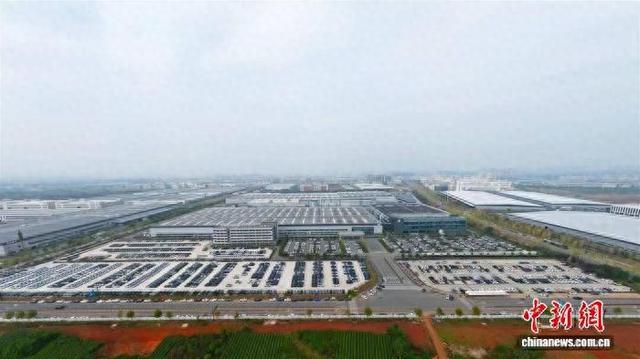
源及高端装备制造产业园。 金华开发区 供图 这是一个缩影。"五分钟",不仅是园区的生产节拍,更彰显着金华开发区强劲的产业脉搏。近年来,金 华开发区以新能源汽车产业为突破口,跑出了一条聚焦特色产业、链式发展的道路,成功培育出强劲的 增长极。 2025年,金华开发区规模以上工业总产值突破千亿元大关,达1019亿元,成为金华市本级首个迈入工 业"千亿俱乐部"的县(市、区);规上工业增加值160.81亿元,同比增长12%,增速位列该市第一。 在零跑汽车金华智能制造基地的总装车间,AGV智能搬运机器人沿着轨道无声穿梭,将电池包、座椅 等大型模块精准配送;空中,全自动输送链平稳移送车身骨架;机械臂挥舞着,完成一系列高精度作 业。从这里出发,一台台新能源汽车驶下生产线。 距离总装车间不到五分钟车程,金华零跑佛吉亚汽车零部件有限公司的生产线上,工人们正加紧组装最 新下线的智能座椅;与总装车间仅一街之隔,金华达亚汽车零部件有限公司的生产线24小时运作着...... 从电池、电驱到座椅、车灯,金华开发区围绕新能源汽车链主企业,绘制产业链图谱精准招商,集聚起 30余家配套企业,覆盖动力电池、驱动电机等关键领域,形成了高效协同的"五 ...
(投资中国)美国李尔公司在重庆设立研发中心
Zhong Guo Xin Wen Wang· 2025-12-09 13:39
Core Insights - Lear Corporation has established a new R&D center in Chongqing, China, to enhance its operational and innovation capabilities in the region [1][2] - The center will focus on smart cockpits, electronic systems for new energy vehicles, and lightweight materials, positioning itself as a technology hub for the Asia-Pacific region [1][2] Group 1 - The R&D center is the first independent facility established by Lear in Southwest China, aiming to foster collaborative innovation with local partners [1] - The center will house over 400 research talents and is expected to undertake core technology R&D tasks for the Asia-Pacific region [1] - Lear Corporation is a leading automotive parts supplier, serving over 480 automotive brands globally [1] Group 2 - The establishment of the R&D center marks a new phase in Lear's 25-year partnership with Chongqing, leveraging global advantages in product development and supply chain resources [2] - Since 2025, Chongqing has been actively promoting the integration of smart connected new energy vehicle industries, attracting 62 leading component enterprises [2] - Lear's smart seat production base in Chongqing became operational within six months of its establishment, contributing to the local automotive industry's complete ecosystem [2]

智能座舱竞争转向“数据质量、场景颗粒度与深度适配”之争
Xin Jing Bao· 2025-11-28 03:47
Core Insights - The automotive industry is experiencing a trend of functional homogenization due to the widespread adoption of large model capabilities, shifting competition from "model scale" to "data quality, scene granularity, and depth adaptation" [1] - Companies need to build an integrated closed-loop capability of "scene-data-model" to achieve "model as application," creating differentiated experiences in real-world usage scenarios [1] Industry Trends - There is an increasing willingness among users to pay for comfort hardware such as smart seats and smart audio systems, with experience depth becoming a key value anchor for future smart cockpits [1] - The interaction paradigm of smart vehicles is transitioning from "passive response tools" to "proactive cognitive partners," moving beyond user-triggered commands to proactively predicting and providing services based on integrated sensor data, user behavior, and contextual needs [1] Future Directions - By 2025, smart cockpits are expected to shift from "digital redundancy" to "pragmatism," with a rational transformation in smart cockpit interactions, leading to a "rebalancing" of touch controls and physical buttons [1] - The competitive focus of future smart cockpits will return from "breadth of functionality" to "depth of experience" [1]
智慧园林“美颜”城市生活
Jing Ji Ri Bao· 2025-11-16 22:10
Core Viewpoint - The article emphasizes the importance of building green, low-carbon cities through the integration of digital technology in urban landscaping, enhancing management efficiency and service quality while providing a new experience for citizens and tourists [1][5]. Group 1: Smart Landscaping Development - The integration of digital technologies such as AI and IoT in landscaping is leading to a new phase of smart landscaping in China, enhancing visitor experiences through personalized services and efficient resource management [1][5]. - Smart landscaping initiatives include intelligent navigation systems and AR interactive devices, which provide personalized route planning and immersive cultural experiences for visitors [2][5]. - The application of smart technologies in parks, such as solar-powered smart benches and health monitoring systems, enhances the recreational experience and safety for users [3][8]. Group 2: Policy and Technological Support - Recent policies from various government departments aim to accelerate the digital transformation of urban landscaping, promoting the integration of smart technologies in public facilities [3][4]. - The development of smart landscaping is supported by significant advancements in digital technology, allowing for comprehensive digital transformation in planning, design, construction, and management [5][10]. Group 3: Public Engagement and Experience - The shift in public demand for personalized and interactive experiences in parks is driving the adoption of smart landscaping solutions, which cater to diverse visitor needs [2][9]. - Smart landscaping not only improves service levels but also encourages public participation through digital platforms, allowing for feedback and optimization of facilities based on visitor preferences [9][10]. Group 4: Challenges and Future Directions - Despite the significant progress in smart landscaping, challenges such as high technology costs, public awareness, and interdisciplinary collaboration remain [10][12]. - Future development should focus on integrating smart city technologies, enhancing public engagement, and aligning with ecological strategies like "sponge cities" and "carbon neutrality" [12][13].
适老化需求潜力待释放 天坛家具探索多元路径
Bei Jing Shang Bao· 2025-09-18 08:41
Core Insights - The demand for age-friendly products is increasing due to the growing elderly population, with Beijing's elderly population projected to exceed 10 million by mid-century [1] - The design of age-friendly furniture should focus on safety, comfort, convenience, sustainability, and multifunctionality, rather than complete redesign [4][5] - The transition from "elderly furniture" to "age-friendly furniture" has improved consumer acceptance, particularly in the B2B market [5] Market Demand and Trends - As of 2024, Beijing has 5.14 million residents aged 60 and above, accounting for 23.5% of the total population, an increase of 192,000 from 2023 [1] - The market for age-friendly products is still underdeveloped, with only about 5% of households having completed age-friendly renovations [9] - There is a growing interest in multifunctional and aesthetically pleasing age-friendly products, driven by the active "60s generation" [9] Company Strategies - Tian Tan Furniture has been focusing on age-friendly products for over ten years, employing a dual strategy of new product development and the adaptation of existing furniture [4][5] - The company has served around 5,000 families in the past two years, with approximately 9% of these services addressing the needs of elderly consumers [5] - Future developments may incorporate smart technology to enhance the functionality of age-friendly furniture, such as self-adjusting seats and obstacle-sensing cabinets [9] Industry Innovations - The industry is moving towards integrating traditional craftsmanship with modern design, as seen in products showcased by Jin Yu Group at trade fairs [10] - The shift towards "de-labeling" age-friendly products is evident, with consumers preferring items that blend functionality with everyday aesthetics [9]

雄安新区首座“近零碳”变电站投运;亚马逊已部署机器人超百万台,AI赋能自动化加速升级丨智能制造日报
创业邦· 2025-07-02 03:12
Group 1 - Xiong'an New Area's first "near-zero carbon" substation has been put into operation, integrating eight green construction solutions and utilizing 15 low-carbon technologies to achieve near-zero carbon emissions throughout its lifecycle [1] - Shenzhen Snowfan Technology Co., Ltd. has signed an agreement to invest 500 million yuan in a smart seat R&D and production base in Wuhan Economic Development Zone, expected to be operational by 2025 [1] - Hong Kong's first 8-inch silicon carbide wafer factory has been approved with a total budget exceeding 700 million HKD, supported by the Innovation and Technology Fund to encourage R&D and the hiring of non-local talent [1] Group 2 - Amazon has deployed over one million robots in its facilities and trained over 700,000 employees in robot operation, marking a significant shift towards automation where robots outnumber human workers [1]