智能水杯

Search documents
为什么说GEO正在摧毁AI营销?
3 6 Ke· 2026-02-27 12:19
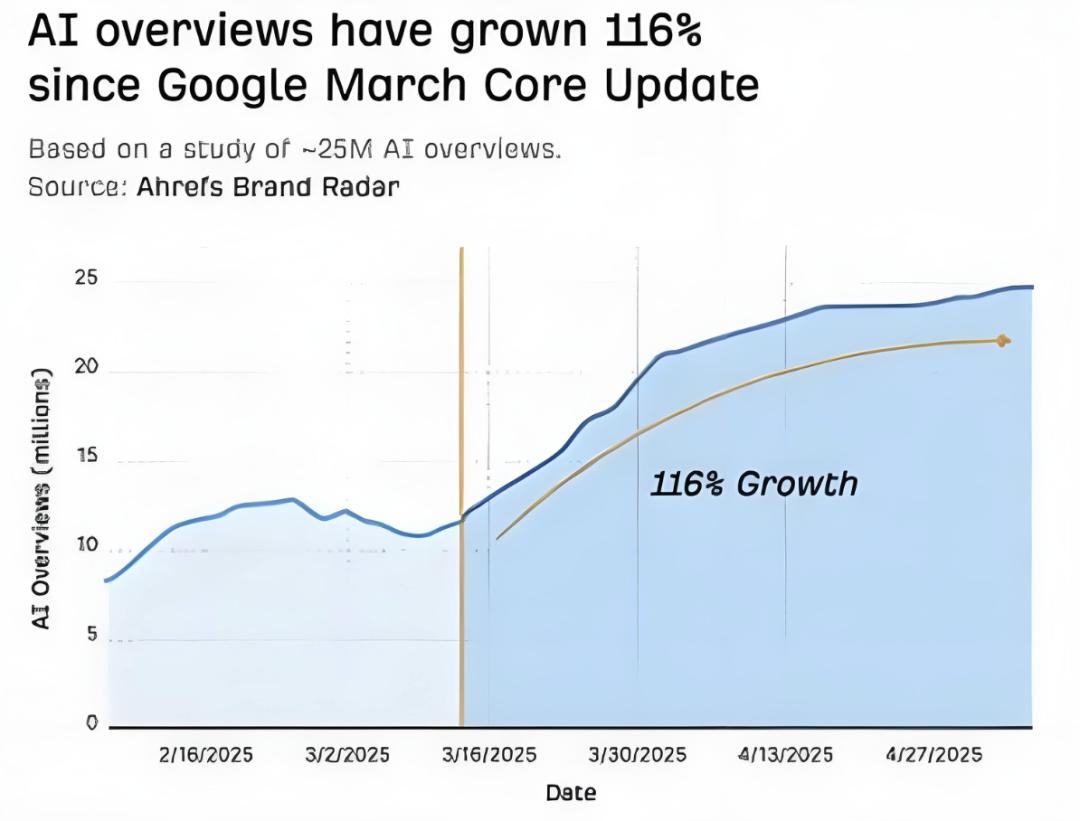
Core Insights - The central theme of the articles revolves around the emergence of Generative Engine Optimization (GEO) as a new marketing strategy in the AI era, which has led to significant stock price increases for companies associated with GEO, despite some companies clarifying they do not engage in GEO activities [1][4]. Group 1: Understanding GEO - GEO is defined as a technology that enhances a brand's presence in AI-generated content, contrasting with traditional SEO, which optimizes web pages [2][3]. - The fundamental difference between GEO and SEO is that GEO focuses on optimizing "answers" provided by AI, aiming to embed brand information directly into AI responses, thus changing user behavior from "browsing choices" to "receiving conclusions" [3][4]. Group 2: Market Dynamics and Predictions - Predictions indicate that by 2026, over 30% of search traffic will originate from generative AI platforms, with significant daily active users on platforms like DeepSeek and Doubao [4]. - A16Z's research shows that generative AI products handle over 10% of monthly queries compared to traditional search engines, with some specialized fields exceeding 50% [4]. Group 3: Risks and Challenges - Companies ignoring GEO may face risks such as inaccurate AI-generated descriptions and the potential for negative information to be amplified, while early adopters of GEO can establish themselves as "expert brands" [7][8]. - The rise of "black hat GEO" practices, where individuals manipulate AI to spread false information, poses a significant challenge to the integrity of AI recommendations [14][19]. Group 4: Industry Practices and Trends - The GEO market has seen a surge in demand, but many service providers rely on low barriers to entry and high premiums, often using outdated SEO tactics under the guise of GEO [10][18]. - Some companies are exploring advanced algorithms to better understand AI models and improve brand visibility, moving away from simplistic content generation methods [16][18]. Group 5: Future Outlook - The future of GEO will likely involve more sophisticated AI capable of cross-verifying information, which could eliminate the viability of current deceptive practices [19][20]. - Brands will need to focus on the veracity of their information rather than merely seeking AI recommendations, as the ability to withstand AI scrutiny will become a critical asset [20][21].

中国品牌出海,是降维打击还是能力过剩?
混沌学园· 2026-01-22 11:58
Core Viewpoint - The article discusses the challenges faced by Chinese brands when expanding overseas, emphasizing that their advanced capabilities in the domestic market may become obstacles in foreign markets. It argues that a different approach is necessary for success in global markets, rather than simply applying domestic strategies [1][5]. Group 1: Market Dynamics - Many Chinese brands fail overseas not due to lack of capability, but because of "overcapacity" in their strategies [6][21]. - The evolution of China's e-commerce ecosystem has outpaced global markets, leading to a disconnect in operational strategies [6][8]. - In China, the market has advanced to a stage of precise "information flow transactions," while overseas markets still rely on basic methods like email marketing [8][12]. Group 2: Content Production and Consumer Behavior - China has achieved "content engineering," producing thousands of high-conversion videos daily, while overseas influencers focus on unique creativity and aesthetics [9][10][11]. - The fast-paced live streaming culture in China contrasts with the slower adoption of similar practices in Western markets, where consumers are still adapting to mobile shopping [12][13]. Group 3: Strategic Frameworks - The article introduces the W.A.V.E.S model, which helps brands transition from random market entry to a systematic approach for overseas expansion [25][42]. - The model emphasizes self-positioning, market analysis, channel layout, execution, and scaling as critical components for successful international growth [26][27][37][44][49]. Group 4: Brand vs. Product Export - The distinction between "product export" (speculative logic) and "brand export" (investment logic) is crucial, with the latter focusing on building brand equity and trust [13][14][15]. - Successful brand export can withstand fluctuations in tariffs and geopolitical tensions due to established brand value [15]. Group 5: Future Trends and AI Integration - The article identifies three key elements for the next decade of brand export: the outflow of Chinese supply chain capabilities, the explosion of global content e-commerce, and the transformative role of AI [21][22]. - AI is positioned as a critical tool for enhancing operational efficiency, from strategy formulation to execution and iteration [58][59][60]. Group 6: Execution and Scaling - Effective execution requires an engineering mindset, with a focus on iterative processes and standardized operating procedures (SOPs) to maintain competitive advantage [44][49]. - Scaling involves replicating successful models across similar markets and expanding into offline channels to enhance brand credibility [53][54][55].

花钱就能推 AI不能成了虚假宣传引流器 | 新京报快评
Xin Jing Bao· 2026-01-19 06:41
Core Viewpoint - The rise of AI-generated product recommendations is leading to deceptive marketing practices, where businesses manipulate AI outputs to promote their products, potentially violating legal standards and eroding consumer trust in AI [1][2]. Group 1: AI Recommendation Practices - Consumers are increasingly relying on AI for product recommendations, with 81% likely to follow AI suggestions for purchases, raising concerns about the integrity of these recommendations [2]. - Businesses can pay as little as 299 yuan to influence AI recommendations, leading to issues such as ranking manipulation and information pollution [1][2]. Group 2: Legal and Ethical Concerns - The manipulation of AI recommendations may violate the Internet Advertising Management Measures, particularly regarding the principle of advertisement recognizability, which undermines consumer rights [2]. - If businesses provide false or exaggerated information to AI models, it constitutes false advertising, posing serious threats to market fairness and consumer safety [2]. Group 3: Regulatory and Platform Responsibilities - AI platforms must enhance algorithm auditing mechanisms to identify and block misleading marketing content, ensuring compliance with legal standards [3]. - Regulatory bodies need to keep pace with technological advancements, establishing clear boundaries for GEO services and holding violators accountable to maintain market integrity [3].
哈尔斯:海外产能卡位全球格局,自主品牌开辟价值新篇章
Xin Lang Cai Jing· 2025-12-15 13:35
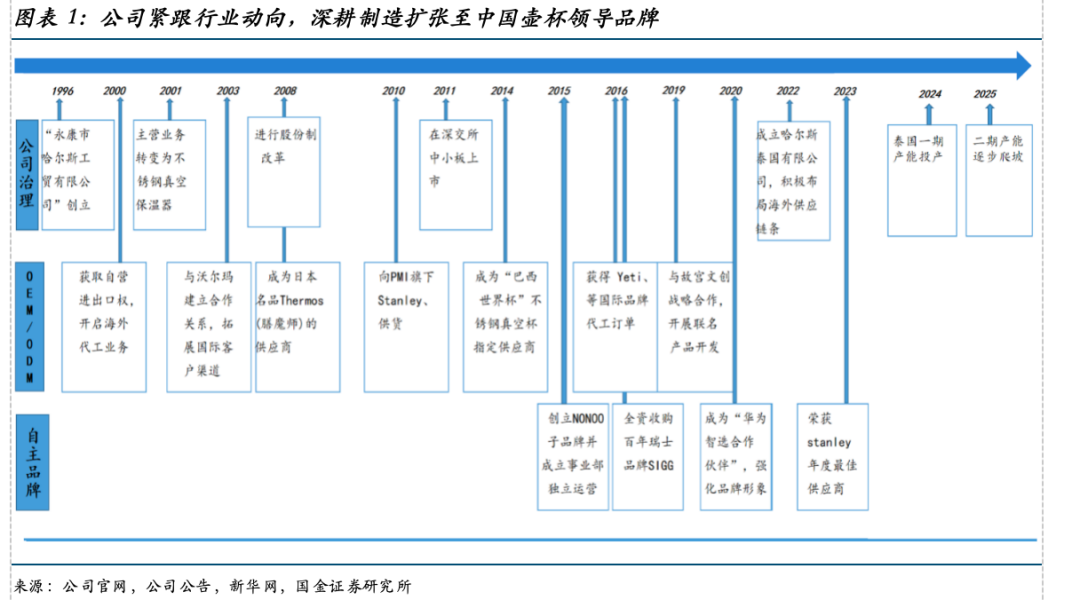
Investment View - The company is a leading manufacturer and brand operator of thermal cups in China, driving industry innovation and high-quality development through strong partnerships with key clients like Yeti, Stanley, and Owala, supported by continuous R&D investment and overseas production capacity [1][4] - The first phase of the Thailand production base was fully operational in 2023, with the second phase expected to reach production capacity by the first half of 2025, rapidly increasing output [1][42] - The company is actively investing in channel development, product innovation, and IP collaborations to enhance its own brand, Hars, and strengthen governance through employee stock ownership and share buybacks [1][12] Investment Logic - The company is solidifying overseas customer loyalty through efficient R&D and overseas production, with Yeti's stable growth and focus on high-margin new products, Stanley's transition to steady growth, and Owala's innovative designs driving high growth [2][9] - The company is expanding its customer matrix by actively seeking high-potential emerging brands like Brumate and Takeya, smoothing out fluctuations caused by brand rotation [2][41] - The company is entering a harvest period for its self-owned brand investments, focusing on channel expansion and product innovation to enhance brand recognition [2][10] Financial Performance - For the first three quarters of 2025, the company reported revenue of 2.437 billion yuan, a year-on-year increase of 2.94%, while net profit attributable to shareholders was 100 million yuan, down 55.49% due to short-term impacts from overseas capacity ramp-up and domestic brand investments [7] - Revenue from vacuum vessels, aluminum bottles, and other businesses in the first half of 2025 was 1.376 billion yuan, 165 million yuan, and 30 million yuan respectively, with year-on-year growth rates of 13.00%, 11.31%, and 13.54% [7] - The company's overseas revenue accounted for 86.91% of total revenue in the first half of 2025, with a year-on-year increase of 14.14% [7] Supply Chain and Production Capacity - The company is enhancing its supply chain advantages and production capacity, with the Thailand base's first phase producing approximately 5.5 million units annually and the second phase expected to reach 24.5 million units [42][43] - The company is implementing localized operations and optimizing logistics and procurement costs through a rapidly forming local supply chain in Thailand [42][43] - The company is advancing its smart manufacturing initiatives, aiming to replicate the lighthouse factory model to improve efficiency and reduce costs [46] Brand Development - The company is focusing on expanding its self-owned brand, Hars, and leveraging the Swiss brand SIGG to penetrate the European market [52][53] - The company is enhancing brand recognition through a multi-channel strategy, including online and offline retail, and has seen significant sales growth in platforms like Tmall and Douyin [55][57] - The company is integrating emotional value and product functionality into its branding strategy, collaborating with various IPs to attract younger consumers and enhance market penetration [59][63]

2026春夏淘宝天猫运动户外行业鞋服趋势白皮书
Sou Hu Cai Jing· 2025-10-14 10:17
Core Insights - The outdoor sports industry is undergoing a significant transformation driven by changes in consumer attitudes, technological advancements, and cultural trends, as highlighted in the "2025 Taobao Tmall Sports Outdoor Trend White Paper" [1][5][7] - The rise of family outdoor activities is becoming a new engine for consumption growth, with young parents favoring nature exploration over traditional weekend classes, leading to a notable increase in the youth raincoat market [1][2][7] - The evolution of raincoats from specialized outdoor gear to fashionable everyday wear is evident, with social media discussions shifting towards aesthetic pairing and color trends [2][20] Market Trends - The youth raincoat market has seen a significant increase in transaction contribution, rising by 2 percentage points compared to adult categories, indicating a shift in consumer preferences [1][2] - The demand for lightweight, high-functionality professional gear is growing, alongside a trend towards fashionable and social outdoor apparel [1][2][7] - The integration of advanced technologies, such as eVent waterproof materials and RECCO avalanche rescue systems, is creating professional barriers in the industry [2][20] Consumer Behavior - Young parents are increasingly prioritizing material safety, skin-friendliness, and durability when purchasing outdoor gear for their children, reflecting a shift in decision-making logic [1][2] - Social media platforms are amplifying discussions around children's raincoats, with vibrant colors and loose workwear styles becoming the aesthetic mainstream for the youth market [1][2] Technological Advancements - The industry is experiencing a dual-directional smart upgrade, with leading brands incorporating cutting-edge technologies into their products while also expanding into smart outdoor products like electric travel cases and smart water bottles [2][20] - The outdoor sports sector is becoming more integrated into daily life, driven by the ongoing popularity of cultural tourism and event economies [2][20] Emerging Opportunities - The youth segment (ages 18-39) is contributing significantly to market growth, with policies promoting youth sports development further enhancing demand for specialized sports apparel [25][26] - The rise of new outdoor activities, such as kayaking and urban cycling, is expanding the market landscape, with notable increases in participation rates [18][40] - The trend towards "4+2" travel modes is driving demand for folding bikes, as consumers seek more versatile outdoor experiences [49][51]

水杯饮具消费凸显个性化
Sou Hu Cai Jing· 2025-10-08 23:24
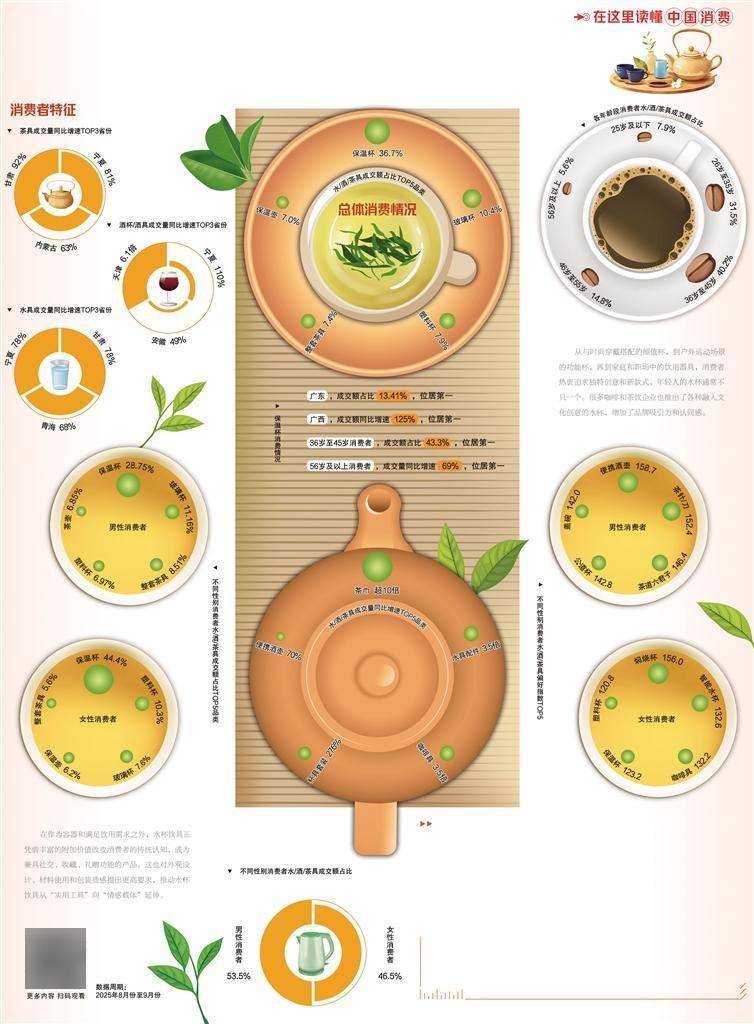
Core Insights - The water cup and drinking container market is evolving from a single functional attribute to a fashionable lifestyle product that reflects quality of life [3][4] - The market is expanding into various subcategories driven by the popularity of beverages like tea and coffee, as well as consumer demand for personalized health solutions [3] Market Trends - From August to September, the top five categories by transaction volume included thermos cups, glass cups, plastic cups, complete tea sets, and thermos flasks [3] - New scene-based products such as coffee cups, travel mugs, and mixing cups are emerging to meet diverse consumer drinking needs [3] Consumer Preferences - Female consumers show a preference for insulated cups, smart water bottles, and coffee accessories, while male consumers favor traditional items like fairness cups and covered bowls [3] - The strong influence of traditional tea culture has led to a rise in popularity for tea-related products, including tea towels and tea utensils [3] Health and Safety Considerations - Health and safety are the primary considerations for consumers when purchasing drinking containers, with a focus on materials like 304 and 316 food-grade stainless steel for thermos cups and high borosilicate glass for glass cups [3] - The integration of smart technology is enhancing the functionality of water cups, with features like real-time temperature display, hydration reminders via apps, and fingerprint unlocking to prevent mix-ups [3] Cultural Significance - Drinking containers are not just functional; they also carry cultural attributes, with items like co-branded mugs becoming souvenirs and landmark-themed coffee cups attracting tourists [4] - The variety of drinking vessels conveys health and wellness concepts while also reflecting unique cultural flavors, fulfilling both "utilitarian value" and "emotional value" for consumers [4] Future Innovations - The water cup and drinking container category is expected to continue innovating towards "functional diversification, scene customization, and intelligent experience" [4]