
本田P7

Search documents
今日新闻丨本田更换logo!特斯拉FSD从终身买断调整为月租模式!工信部部署2026新能源汽车重点任务!
电动车公社· 2026-01-14 16:00
Group 1 - Tesla is shifting its Full Self-Driving (FSD) sales model from a one-time purchase to a monthly subscription starting February 14, with current buyout prices at $8,000 in the U.S. and 64,000 RMB in China [2][3] - The Chinese version of FSD is classified as Level 2 driver assistance, and a monthly fee of 400-600 RMB may be reasonable for users who prefer short-term use, potentially lowering costs compared to the one-time purchase [3] Group 2 - Honda has announced a new logo design, which will be used for its next generation of electric and hybrid vehicles, as well as all models launched from 2027 onwards [5][6] - The new logo, which removes the border and adopts a flatter visual style, has already been applied to the Honda P7 electric model and is set to become the new emblem for the brand [8] Group 3 - The Ministry of Industry and Information Technology (MIIT) has outlined key tasks for the development of the new energy vehicle industry in 2026, marking a critical opportunity for the smart connected vehicle sector [9] - The five key tasks include: developing a high-quality industry plan, enhancing supply chain autonomy, expanding automotive consumption, regulating market competition, and deepening international cooperation [10][12] - These initiatives aim to support cutting-edge technology development, promote vehicle consumption, and ensure a more competitive automotive market, ultimately benefiting consumers with higher quality products [12]



中国保险汽车安全指数(C-IASI)2025年测评车型第一次结果发布
Zhong Guo Qi Che Bao Wang· 2025-11-28 04:24
Core Insights - The China Insurance Automotive Safety Index (C-IASI) evaluates three SUV models: Changan Deep Blue S09, Toyota bZ5, and Honda P7, all of which are electric vehicles. The results will be officially released on November 28, 2025 [1]. Group 1: Evaluation Results - Among the three models, one received a good rating (A), one received a moderate rating (M), and one received a poor rating (P) in crashworthiness and repair economy [2]. - The Toyota bZ5 received a good rating for structural crashworthiness, while the Changan Deep Blue S09 excelled in repair economy [2]. - In terms of collision compatibility, both Changan Deep Blue S09 and Toyota bZ5 received good ratings [2]. Group 2: Safety Ratings - All three models received an excellent+ (G+) rating for occupant safety, with no defects reported in various crash scenarios [3]. - The roof strength and seat/headrest evaluations also showed a 100% excellent rating across all models [3]. Group 3: Pedestrian and Auxiliary Safety - All three models received an excellent+ (G+) rating for pedestrian safety [4]. - In auxiliary safety features, all models achieved at least an excellent (G) rating, with two models rated excellent+ (G+). They all come standard with AEB and emergency rescue services, achieving a 100% installation rate [4]. Group 4: New Energy Vehicle Index - All three models received an excellent (G) rating in the New Energy Vehicle Special Index, with Changan Deep Blue S09 and Toyota bZ5 achieving excellent ratings in both repair economy and vehicle safety [5]. Group 5: Future Directions - C-IASI aims to continue monitoring vehicle performance and encourage manufacturers to develop safer and more competitive new models, focusing on reducing consumer costs and providing an objective vehicle selection guide [6].

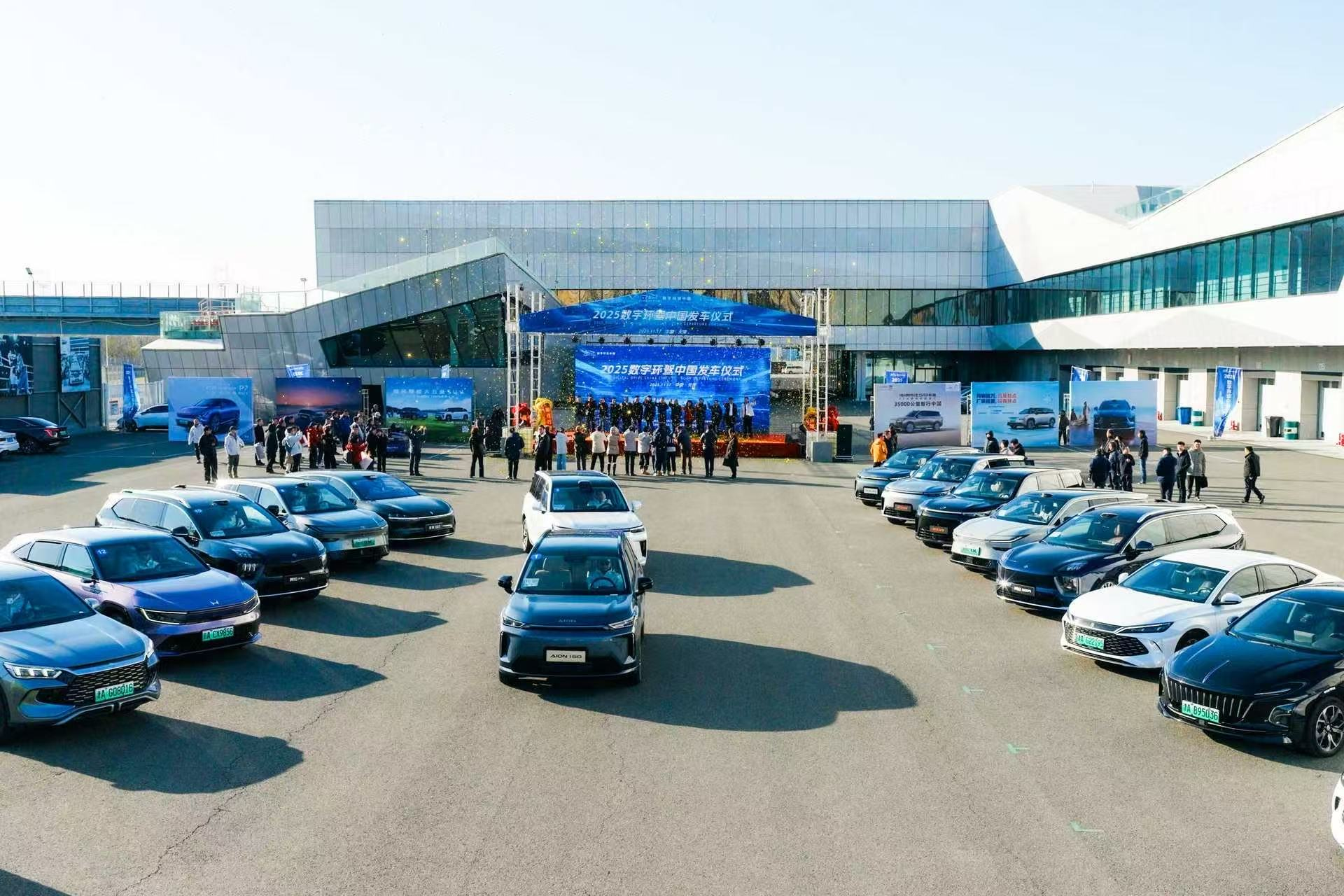
2025中国数字汽车大赛·数字环驾中国大赛隆重启幕
Zhong Guo Jin Rong Xin Xi Wang· 2025-11-18 07:45
Core Viewpoint - The "2025 China Digital Automotive Competition: Digital Driving China Competition" has commenced in Wuqing District, Tianjin, aiming to evaluate the performance of new energy vehicles under various real-world conditions through real-time data collection [1][4][17] Group 1: Event Overview - The event is co-hosted by the China Economic Information Agency, China Society of Automotive Engineers, Beijing Institute of Technology, and Beijing Yiwei New Energy Vehicle Big Data Application Technology Research Center [1] - The competition will last approximately 40 days, covering diverse environments including cold northern regions, humid southern areas, high-altitude zones, mountainous roads, and urban congestion [6] - Over 20 data collection nodes will be set up to monitor more than 120 key indicators in real-time, ensuring the evaluation is understandable and trustworthy for the public [6] Group 2: Objectives and Innovations - The competition aims to provide a rigorous assessment of new energy vehicles' performance in long-distance travel and extreme conditions, supporting the green and intelligent evolution of these vehicles [4][17] - It focuses on data mining, virtual validation, and intelligent algorithms, encouraging students to apply digital methods to solve real engineering problems, thus bridging the gap between academia and industry [4][6] - The event integrates innovative elements from the China Digital Automotive Competition's innovation and entrepreneurship tracks, fostering a collaborative ecosystem for industry-academia-research applications [17] Group 3: Participation and Support - Guangzhou Automobile Group has organized a joint team featuring five new energy vehicle models, aiming to showcase their high technology and quality to users nationwide [9] - Beijing New Energy Automobile Co., Ltd. is participating with its flagship model, the Xiangjie S9T, emphasizing safety, advanced technology, and user trust [10] - An expert team will provide professional data interpretation throughout the event, enhancing the credibility of the assessments [13]


日本车没打算退场
3 6 Ke· 2025-10-30 02:45
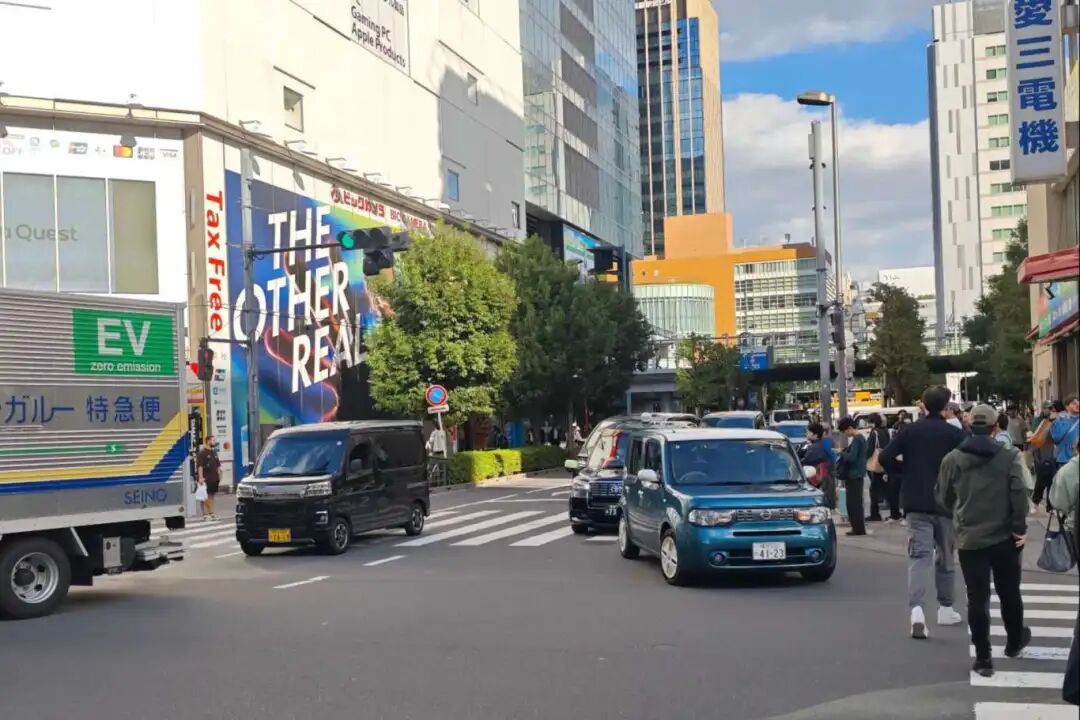
Core Viewpoint - The Japanese automotive industry is undergoing a significant transformation, driven by the rise of Chinese brands and the shift towards new mobility solutions, with the 2023 Tokyo Motor Show rebranded as the "Japan Mobility Show" reflecting this change [1][4][20]. Industry Transformation - The Japanese automotive sector is transitioning from traditional manufacturing to creating new lifestyles, with a focus on electric vehicles and mobility solutions [1][4]. - The Tokyo Motor Show has shifted its focus to local market needs, showcasing vehicles that may not resonate with international consumers but reflect Japanese consumer preferences [9][22]. Financial Performance - In the first fiscal quarter of 2025, major Japanese automakers reported varying degrees of profit decline, with Toyota's operating profit down 11% and net profit down 37%, while Honda and Nissan experienced both revenue and profit declines [13][15]. - Despite Toyota's strong revenue, the overall financial performance of Japanese automakers indicates a need for adaptation in a rapidly changing market [13][15]. Competitive Landscape - The presence of Chinese electric vehicle manufacturers, such as BYD, has intensified competition, prompting Japanese automakers to innovate and adapt their strategies [7][11]. - Japanese automakers are beginning to incorporate more local elements into their products to better compete in the Chinese market, indicating a shift in strategy [15][20]. Consumer Preferences - Japanese consumers exhibit a strong brand loyalty, which influences their purchasing decisions, contrasting with the more fickle nature of Chinese consumers [24][26]. - The success of Japanese brands in their domestic market is attributed to their deep-rooted brand recognition and customer service, which remains a competitive advantage [24][26]. Future Outlook - The year 2025 is seen as a pivotal point for Japanese automakers, as they must navigate the challenges posed by both domestic and international markets while embracing electric vehicle technology [20][22]. - Collaboration with Chinese partners may become essential for Japanese automakers to leverage local market insights and technological advancements [17][20].

合资新势力出牌:日产豁出去,丰田支棱起来
汽车商业评论· 2025-04-29 15:00
撰 文 / 周 洲 设 计 / 张 萌 2025上海车展,是公平和正常的一届车展。让流量的归流量,汽车的归汽车,业界的目光再次 聚焦到汽车本身。 两年前的2023上海车展,是三年大疫解封之后国内第一次召开A级车展,也是全球第一个A级车 展。 那一届车展是"含油量"最低的一届车展,首发的燃油车有58款,新能源汽车有76款。这也是新能源 汽车首次在A级车展上,数量超过燃油车。 各国同台竞技。中国的新能源汽车在疫情期间经历了几轮浮沉迭代,电动化已经领先,智能化作为 竞争新滩头势起,而合资和传统主机厂才刚刚下定决心All in新能源,亮出各自的概念车。 合资企业被中国的新能源速度震惊了。 回忆起两年前在上海车展,日产中国管理委员会主席、东风汽车有限公司总裁马智欣说:"我知道 中国速度比其他国家快,但没想到那么快,超乎我们想象。" 马自达展出了稳健中带少许激进的EZ-60,本田的S7降了6万元。 汽车商业评论观察到,严谨稳进的日系车企,开始采用中国团队设计研发、使用中国的平台架构, 选择中国第一梯队的组合辅助驾驶和智能座舱供应商,配上"沙发彩电大冰箱",让渡一定的品牌溢 价,制定符合国情的价格……合资学会了新势力的一切 ...