柜类

Search documents
江山欧派:预计2025年亏损1.8亿元-2.3亿元
Zhong Guo Zheng Quan Bao· 2026-01-23 11:58
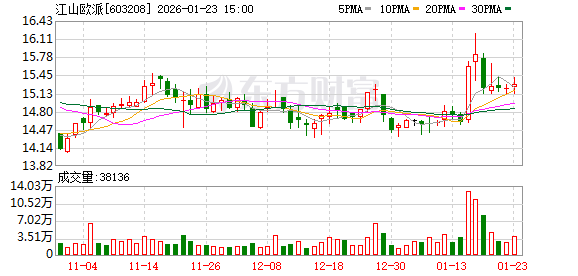
Core Viewpoint - The company Jiangshan Oupai (603208) has announced a significant decline in its financial performance for the year 2025, projecting a revenue of 1.6 billion yuan and a net loss of 180 million to 230 million yuan, compared to a profit of 109 million yuan in the previous year [2]. Financial Performance Summary - The projected revenue for 2025 is approximately 1.6 billion yuan [11]. - The expected net loss for 2025 ranges from 180 million to 230 million yuan, a stark contrast to the profit of 109 million yuan in the previous year [11]. - The projected non-recurring net loss for 2025 is estimated between 220 million to 270 million yuan, compared to a profit of 7.12 million yuan in the previous year [2][11]. - The company's price-to-book ratio (LF) is approximately 2.25 times, and the price-to-sales ratio (TTM) is about 1.69 times based on the latest closing price [2]. Reasons for Performance Decline - The overall market downturn and shrinking demand in the industry have led to a decrease in revenue, compounded by a reduction in direct sales receivables [11]. - Intense industry competition has resulted in price adjustments for some products, leading to a decline in gross margin [11]. - Fixed costs such as depreciation and personnel expenses have not decreased in line with the revenue drop, causing further financial strain [11]. - The company has conducted a comprehensive review of its assets and has made provisions for asset impairment totaling approximately 200 million yuan [11].


梦天家居2026年1月20日涨停分析:墙板产品增长+家装渠道拓展+现金流改善
Xin Lang Cai Jing· 2026-01-20 05:34
Core Viewpoint - Dream Home (sh603216) reached its daily limit up on January 20, 2026, with a price of 54.98 yuan, marking a 9.88% increase and a total market capitalization of 12.23 billion yuan [1] Group 1: Company Performance - Dream Home primarily engages in customized wooden furniture business, including wooden doors, wall panels, and cabinets, with significant revenue contributions from these categories in the first half of 2025 [2] - The revenue from high-margin wall panel products increased by 7.54%, with the gross margin rising to 41.02% [2] - Revenue from home decoration channels grew by 16.82%, with gross margin improving by 7.57 percentage points, indicating positive results from business expansion [2] Group 2: Financial Management - The company demonstrated good performance in fund management and cost control, with idle raised funds being managed in compliance with regulations [2] - Overall gross margin increased by 1.55%, and selling expenses decreased by 19.90 million yuan [2] - Operating cash flow surged by 29,138.89%, reflecting an improvement in the company's operational status [2] Group 3: Market Environment - Despite a complex overall market environment, the home furnishing industry may be experiencing a certain level of enthusiasm, as evidenced by the upward movement of some stocks in the sector on the same day [2] - Technical factors may have also contributed to the stock price increase, with potential positive signals in technical indicators attracting technical investors [2]

兔宝宝股价涨5.04%,摩根基金旗下1只基金重仓,持有50.29万股浮盈赚取34.2万元
Xin Lang Cai Jing· 2026-01-20 03:28
Group 1 - The stock of Rabbit Baby (兔宝宝) increased by 5.04%, reaching a price of 14.17 yuan per share, with a trading volume of 98.29 million yuan and a turnover rate of 0.96%, resulting in a total market capitalization of 11.758 billion yuan [1] - Rabbit Baby, officially known as 德华兔宝宝装饰新材股份有限公司, was established on December 27, 2001, and went public on May 10, 2005. The company specializes in the production and sales of decorative materials, including decorative panels, paints, wall coatings, adhesives, and various furniture products [1] - The main revenue composition of Rabbit Baby includes decorative materials at 77.04%, cabinet products at 12.15%, brand usage fees at 5.54%, flooring at 3.90%, other products at 0.79%, and wooden doors at 0.58% [1] Group 2 - Morgan Fund has a significant holding in Rabbit Baby, with the Morgan Large Cap Blue Chip Stock A Fund (376510) holding 502,900 shares, accounting for 3.39% of the fund's net value, making it the eighth largest holding [2] - The Morgan Large Cap Blue Chip Stock A Fund has a total size of 158 million yuan and has achieved a year-to-date return of 0.78%, ranking 4954 out of 5542 in its category, while its one-year return is 14.87%, ranking 3635 out of 4235 [2] - The fund manager of Morgan Large Cap Blue Chip Stock A is Li Heng, who has been in the position for 8 years and 362 days, with the fund's best return during his tenure being 215.79% and the worst being -31.9% [3]

兔宝宝跌2.01%,成交额8503.41万元,主力资金净流出335.42万元
Xin Lang Cai Jing· 2026-01-06 06:01
Group 1 - The core viewpoint of the news is that Tubaobao's stock has experienced fluctuations, with a recent decline in price and mixed performance over different time frames [1][2] - As of January 6, Tubaobao's stock price was 14.14 yuan per share, with a market capitalization of 11.733 billion yuan and a trading volume of 85.0341 million yuan [1] - Year-to-date, Tubaobao's stock has decreased by 1.87%, with a 5-day decline of 2.48%, a 20-day increase of 5.37%, and a 60-day increase of 25.35% [2] Group 2 - Tubaobao's main business includes the production and sales of decorative materials, accounting for 77.04% of revenue, with other segments such as cabinets (12.15%) and flooring (3.90%) [2] - As of September 30, Tubaobao had 34,300 shareholders, a decrease of 20.59%, with an average of 21,454 circulating shares per shareholder, an increase of 25.94% [2] - For the period from January to September 2025, Tubaobao reported revenue of 6.319 billion yuan, a year-on-year decrease of 2.25%, while net profit attributable to shareholders increased by 30.44% to 629 million yuan [2] Group 3 - Tubaobao has distributed a total of 2.942 billion yuan in dividends since its A-share listing, with 1.6 billion yuan distributed in the last three years [3] - As of September 30, 2025, the largest circulating shareholder is Hong Kong Central Clearing Limited, holding 7.6104 million shares, an increase of 1.2541 million shares from the previous period [3] - New institutional shareholders include Jiangyin Trend Mixed A, which holds 6.518 million shares, while some previous shareholders have exited the top ten list [3]
深度合作案例:货马达如何助力某电商品牌实现美国销量增长30%
Sou Hu Cai Jing· 2025-12-26 09:50
Core Insights - The article highlights the challenges faced by Chinese e-commerce brands in the U.S. market, particularly regarding complex and uncertain logistics, which directly impact consumer experience and brand loyalty [1][3] - A Chinese furniture brand overcame these logistics challenges through a partnership with Huomada, resulting in over 30% sales growth in the U.S. market within a year [1][7] Group 1: Logistics Challenges - The brand's rapid growth was hindered by traditional logistics issues, including high and opaque costs, poor end-user experience, and a lack of supply chain resilience [3][4] - High costs were attributed to traditional transportation methods, which included hidden fees that eroded profits, while poor delivery experiences led to increased complaint and return rates [3][4] - The supply chain's inflexibility resulted in stockouts during peak seasons, negatively affecting sales momentum and brand reputation [3][4] Group 2: Huomada's Solutions - Huomada provided a customized "end-to-end" logistics solution tailored to the brand's specific needs, rather than a standard transportation product [4][6] - The core of the solution involved cost restructuring and experience enhancement, achieving a 15-20% reduction in overall logistics costs through optimized transportation routes [4][6] - The introduction of Huomada's "white glove" delivery service addressed major customer pain points by ensuring professional handling from delivery to setup, significantly reducing complaint rates by over 70% [4][6] Group 3: Operational Improvements - Huomada's digital system enabled real-time tracking of shipments, enhancing transparency and allowing the brand to preemptively address issues, thereby improving customer service efficiency [6] - The partnership provided stable capacity and priority service during peak sales seasons, with a "freight locking" policy that secured pricing ahead of major promotional events [6][7] - The collaboration transformed logistics from a cost center into a growth engine, with operational cost savings being reinvested into marketing and a notable increase in customer satisfaction and repeat purchase rates [6][7] Group 4: Strategic Implications - The case illustrates that in the competitive landscape of cross-border e-commerce, logistics has evolved beyond mere transportation to become a critical component of customer experience and brand growth [7] - A logistics partner that offers customized solutions, digital management, and superior end-user experiences can significantly enhance a brand's customer journey and drive growth [7] - For Chinese brands aiming to expand globally, partnering with such logistics providers may be key to unlocking new growth opportunities [7]
透视A股并购新局 市场化交易占比提升,并购“卖方”变“买方”
2 1 Shi Ji Jing Ji Bao Dao· 2025-11-25 23:59
Core Insights - The A-share merger and acquisition (M&A) market has seen significant activity driven by policy changes, particularly following the introduction of the "Six M&A Guidelines" on September 24, 2024, leading to a total of 5,868 disclosed M&A events by November 24, 2025, with 2,745 transactions involving equity purchases by listed companies and their subsidiaries [1][2] - The total transaction value of these M&A activities reached 7.49 trillion yuan, indicating a substantial increase in both scale and number compared to previous years [1] - A notable trend is the shift from being frequent targets of acquisitions to becoming buyers in the M&A market, particularly among star enterprises from the primary market [1][6] Market Trends - The proportion of market-driven transactions has significantly increased, with non-related party transactions accounting for over 70% of the 2,745 equity transactions since the "Six M&A Guidelines" were released [2] - In major restructuring transactions, while related party transactions still dominate in terms of value, the share of non-related party transactions has risen markedly compared to the previous year [2] Transaction Challenges - Market-driven transactions generally face higher difficulties, with a termination rate of nearly 60% for non-related party major restructuring transactions last year, compared to a termination rate of about 30% for related transactions [3] - This year, 24% of disclosed non-related party major restructuring transactions have been terminated, indicating ongoing challenges in successfully completing these deals [3] Notable Cases - Specific cases illustrate the challenges faced in market-driven M&A, such as the failed acquisition of Huimang Micro by Yingjixin, which was terminated less than two weeks after the announcement due to disagreements on core terms [4][5] - The trend of primary market star enterprises transitioning to buyers is exemplified by Zhiyuan Robotics' acquisition of Shangwei New Materials, marking a significant shift in strategy [6][7] Valuation Discrepancies - There exists a significant valuation gap between assets in the M&A market and those in the IPO market, complicating negotiations and increasing the difficulty of transactions [8] - Acquiring small-cap listed companies allows primary market enterprises to leverage capital market platforms for smoother financing and capital operations, enhancing the quality of existing listed companies [9]
透视A股并购新局
2 1 Shi Ji Jing Ji Bao Dao· 2025-11-25 23:29
Core Insights - The M&A restructuring market has been significantly boosted by policy initiatives, particularly the introduction of the "Six M&A Guidelines," leading to a notable increase in market activity and a strong demand for industry chain optimization [1][2] Group 1: M&A Activity and Trends - Since the release of the "Six M&A Guidelines" on September 24, 2024, there have been 5,868 disclosed M&A events in the A-share market, with 2,745 transactions involving equity purchases by listed companies or their subsidiaries [1] - The total transaction value of disclosed M&A deals reached 7.49 trillion yuan, marking a substantial increase in both scale and quantity compared to previous years [1] - A new trend has emerged where, despite industrial M&A remaining dominant, companies are increasingly favoring new productive capacity targets [1][2] Group 2: Market Dynamics - The proportion of market-based transactions has risen significantly, with non-related transactions accounting for over 70% of the 2,745 equity transactions since the "Six M&A Guidelines" were published [2] - In major restructuring transactions, while related transactions still dominate in terms of value, the share of non-related transactions has increased compared to the previous year [2] Group 3: Challenges in Market Transactions - Market-based transactions generally face higher difficulties, with a termination rate of nearly 60% for non-related major restructuring transactions last year, compared to a termination rate of about 30% for related transactions [3] - In 2025, 24% of disclosed non-related major restructuring transactions have already been terminated, indicating a higher failure rate compared to related transactions [3] Group 4: Shift in Market Participants - There is a noticeable trend of star companies from the primary market transitioning from IPOs to becoming acquirers in the M&A market, driven by stricter IPO reviews and ongoing policy optimization [6] - Notable cases include Zhiyuan Robotics acquiring a controlling stake in Shangwei New Materials, marking a significant shift in the behavior of primary market companies [6][7] Group 5: Valuation Discrepancies - There exists a significant valuation gap between assets in the M&A market and those in the IPO market, complicating negotiations and increasing the difficulty of transactions [8] - Acquiring small-cap listed companies allows primary market firms to leverage capital market platforms for smoother financing and capital operations, enhancing the quality of existing listed companies [9]


兔宝宝股价涨5.36%,工银瑞信基金旗下1只基金重仓,持有100.16万股浮盈赚取72.12万元
Xin Lang Cai Jing· 2025-11-20 05:40
Group 1 - The stock of Rabbit Baby (兔宝宝) increased by 5.36%, reaching a price of 14.15 CNY per share, with a trading volume of 1.09 billion CNY and a turnover rate of 1.08%, resulting in a total market capitalization of 11.741 billion CNY [1] - Rabbit Baby, officially known as 德华兔宝宝装饰新材股份有限公司, was established on December 27, 2001, and went public on May 10, 2005. The company specializes in the production and sales of decorative materials, including decorative panels, paints, wall coatings, adhesives, and various furniture products [1] - The main revenue composition of Rabbit Baby includes decorative materials (77.04%), cabinet products (12.15%), brand usage fees (5.54%), flooring (3.90%), and other products (0.79%), with wooden doors contributing 0.58% [1] Group 2 - From the perspective of major fund holdings, one fund under ICBC Credit Suisse holds a significant position in Rabbit Baby. The ICBC Beautiful Town Stock A Fund (001043) held 1.0016 million shares in the third quarter, accounting for 4.7% of the fund's net value, making it the fifth-largest holding [2] - The ICBC Beautiful Town Stock A Fund (001043) was established on March 26, 2015, with a current scale of 225 million CNY. Year-to-date returns are at 23.37%, ranking 2174 out of 4208 in its category, while the one-year return is 23.83%, ranking 1769 out of 3971 [2]
兔宝宝涨2.01%,成交额4319.26万元,主力资金净流出17.88万元
Xin Lang Cai Jing· 2025-11-20 03:49
Core Viewpoint - The stock of Rabbit Baby (兔宝宝) has shown a mixed performance in recent trading, with a year-to-date increase of 21.37% but a slight decline in the last five trading days [1][2]. Group 1: Stock Performance - As of November 20, Rabbit Baby's stock price increased by 2.01%, reaching 13.70 CNY per share, with a total market capitalization of 11.368 billion CNY [1]. - The stock has experienced a net outflow of 178,800 CNY in main funds, with large orders buying 3.0254 million CNY (7.00%) and selling 3.2042 million CNY (7.42%) [1]. - The stock has fluctuated with a 10.13% increase over the last 20 days and a 33.61% increase over the last 60 days [1]. Group 2: Financial Performance - For the period from January to September 2025, Rabbit Baby reported a revenue of 6.319 billion CNY, a year-on-year decrease of 2.25%, while the net profit attributable to shareholders increased by 30.44% to 629 million CNY [2]. - The company has distributed a total of 2.942 billion CNY in dividends since its A-share listing, with 1.6 billion CNY distributed in the last three years [3]. Group 3: Shareholder Information - As of September 30, 2025, the number of shareholders for Rabbit Baby decreased by 20.59% to 34,300, while the average circulating shares per person increased by 25.94% to 21,454 shares [2]. - Among the top ten circulating shareholders, Hong Kong Central Clearing Limited holds 7th place with 7.6104 million shares, an increase of 1.2541 million shares from the previous period [3].
木门龙头跨界芯片领域,实控人却欲退场,梦天家居打算转型?
Hua Xia Shi Bao· 2025-11-13 17:51
Core Viewpoint - Mengtian Home Group is planning two significant actions: acquiring a chip company and a change in control, with both disclosed in the same announcement, raising questions about the company's strategic direction [2][4]. Group 1: Acquisition Plans - Mengtian Home is preparing to acquire control of Shanghai Chuantou Microelectronics Co., Ltd. through a combination of issuing shares and cash payments, with the valuation of Chuantou Micro not yet finalized [2][3]. - Chuantou Micro, established in 2016, specializes in integrated circuit design and high-end analog chip development, with applications in various industries including industrial control and automotive electronics [3]. - This is not Mengtian Home's first venture into the chip industry, as it previously invested 70 million yuan in Chongqing Lingxin Microelectronics, becoming its second-largest shareholder [3]. Group 2: Control Change - The company's actual controller, Yu Jingyuan, is planning to transfer control, which is stated to be independent of the acquisition plans [4][6]. - Mengtian Home primarily engages in the design, production, and sales of customized wooden furniture, including doors and panels, and has not previously indicated intentions to shift its core business focus [4][5]. Group 3: Industry Context - The home furnishing industry is facing challenges due to a downturn in real estate and consumer spending, leading to revenue declines among major competitors [4][7]. - In contrast, Mengtian Home's performance has been relatively stable, with a revenue of 773 million yuan in the first three quarters of the year, down 2.93%, while net profit increased by 37.60% to 56.3 million yuan [5]. - The competitive landscape in the customized home furnishing sector is intensifying, with traditional furniture manufacturers increasingly entering the market, leading to a shift from price competition to a more complex competitive environment [7].