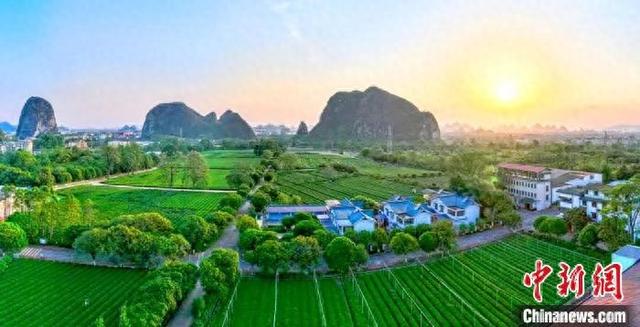
横州茉莉花茶

Search documents
民生直通车丨带动就业数千万人 全国近2500个劳务品牌持续擦亮“金名片”
Xin Hua Wang· 2025-11-20 07:29
Core Insights - The development of labor brands in China has significantly boosted employment, with nearly 2,500 labor brands currently active, creating jobs for tens of millions of people [1][2] - Labor brands are increasingly recognized as comprehensive vehicles for promoting employment, economic development, and improving livelihoods, showcasing regional characteristics and industry-specific skills [1][2] Group 1: Employment and Skills Development - Labor brands have strong employment-driving capabilities, with examples like the "Lüliang Mountain Caregivers" brand, which has trained over 90,000 caregivers, generating a total annual income exceeding 1.6 billion yuan [1] - Various regions are enhancing employment skills training through labor brands, such as Jiangxi's "Gan Brand" labor brand, which has established 31 training bases and 33 employment service centers [2] - In Guangxi, the "Eight桂 Series" labor brands have conducted skills training for 710,000 people, leading to over 1 million job opportunities [2] Group 2: Economic Impact and Industry Integration - Labor brands are contributing to significant economic impacts, with Zhejiang's labor brands linked to the digital economy generating over 500 billion yuan in income [3] - The "Enshi Red and Green Tea Master" labor brand in Hubei has helped small enterprises increase their output value by 40% through technical upgrades [3] - The "Chuan Zhong Lithium Workers" labor brand in Sichuan is focusing on training technical talent for the lithium battery industry, supplying over 60,000 workers to local companies [3] Group 3: Collaborative Mechanisms and Future Development - China is enhancing labor collaboration mechanisms, expanding from traditional labor input-output to comprehensive cooperation in skills training, job matching, and social security [4] - The Ministry of Human Resources and Social Security plans to accelerate the growth of labor brands by improving participation mechanisms and focusing on skill enhancement and market demand [4][5] - The aim is to foster a cluster development of labor brands by establishing leading enterprises and industry alliances [5]
全国近2500个劳务品牌持续擦亮“金名片”
Ren Min Ri Bao Hai Wai Ban· 2025-11-20 00:41
Core Insights - The development of labor brands in China is becoming a comprehensive vehicle for promoting employment, economic development, and improving people's livelihoods, with nearly 2,500 labor brands currently in operation, creating millions of jobs [1][2] Group 1: Labor Brand Development - Labor brands are characterized by regional, industry, and skill features, significantly enhancing employment capabilities [1] - The "Lüliang Mountain Caregivers" labor brand has trained over 90,000 caregivers, generating a total annual income exceeding 1.6 billion yuan [1] - The "Wuqing Silk Flower Craft" labor brand emphasizes the importance of training in skill development, showcasing the intricate processes involved in creating silk flowers [1] Group 2: Employment Skills Training - Various regions are enhancing employment skills training through labor brands, such as Jiangxi's "Gan Brand" labor brand, which has established 31 training bases and 33 employment service centers [2] - In Guangxi, over 710,000 people have been trained under the "Eight桂系列" labor brand, leading to more than 1 million employment opportunities [2] - The integration of labor brands with local industries, such as rice noodles and home services, is creating strong employment effects [2] Group 3: Economic Impact - In Zhejiang, labor brands have contributed to an increase in income exceeding 500 billion yuan through deep integration with the digital economy [3] - The "Enshi Red and Green Tea Master" labor brand has helped 12 tea companies enhance their technology, resulting in a 40% increase in output value for small enterprises [3] - The "Chuan Zhong Lithium Workers" labor brand has trained over 60,000 individuals for the lithium battery industry, facilitating a shift from manual labor to technology-driven roles [3] Group 4: Collaborative Mechanisms - China is enhancing labor cooperation mechanisms, expanding from traditional labor input-output to comprehensive collaboration including skills training and job matching [4] - The Ministry of Human Resources and Social Security aims to accelerate the growth of labor brands by establishing a multi-party participation mechanism and promoting the development of leading labor brand enterprises [4]
广西“三茶”统筹推动茶产业高质量发展
Zhong Guo Jing Ji Wang· 2025-11-05 05:46
Core Insights - The tea industry in Guangxi is a traditional and distinctive sector, with a focus on technological empowerment, standard guidance, and brand enhancement to develop its advantageous tea varieties [1][2] Group 1: Production and Growth - Guangxi's tea production is approximately 130,000 tons, consistently ranking among the top ten in the country for six consecutive years [1] - The early spring tea, a premium specialty, has a cultivation area of about 565,000 acres and a production of around 11,000 tons, with an average growth rate of 13.8% over the past three years [1] - Green tea constitutes the largest share of early spring tea production, accounting for about 70% [1] Group 2: Technological and Cultural Development - A national technical team has been established to enhance production guidance and address challenges in the tea industry, focusing on high-value ecological planting and new variety breeding [1] - The collaboration with ASEAN countries has led to the establishment of the "Liubao Tea Competition Rules," enhancing the scientific evaluation and credibility of Liubao tea [2] - The 2025 China Black Tea Conference will further promote Liubao tea's international recognition and industry influence [2] Group 3: Export and Economic Impact - In 2024, Liubao tea exports from Guangxi are expected to account for 20% of the national black tea exports, with a year-on-year growth of 7.5% [2] - The total production of Liubao tea is about 43,000 tons, representing one-third of Guangxi's total tea production, with a comprehensive output value of 30 billion yuan [2] Group 4: Cultural and Consumer Engagement - The "Yongchun" early spring tea series event showcased not only Guangxi's unique teas but also other local agricultural products, highlighting the potential for collaborative development [3] - The Guangxi Tea Science Institute's exhibition center offers immersive experiences and interactive displays to promote tea culture and industry development [3] - Upcoming events such as the 2025 Smart Agriculture Expo and the Guangxi International Agricultural Expo will feature tea-related activities, fostering industry connections and cultural experiences [3]
深耕供与销 服务千万家
Guang Xi Ri Bao· 2025-08-27 02:04
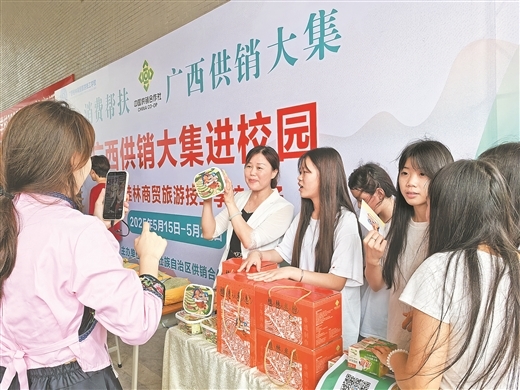
Group 1 - The core viewpoint of the articles highlights the significant progress made by the Guangxi supply and marketing cooperatives in enhancing their service capabilities for agriculture, contributing to rural revitalization [2][10] - In the first seven months of this year, the total sales of the supply and marketing system reached 145.44 billion yuan, marking an 8.91% year-on-year increase [2] - The number of grassroots supply and marketing cooperatives has expanded, with 14 city-level, 91 county-level, and 10,532 rural comprehensive service cooperatives currently in operation [2] Group 2 - The implementation of the "breakthrough year" action for demonstration grassroots cooperatives has led to the establishment of 90 demonstration cooperatives across 68 agricultural counties, achieving full coverage [3] - The total operating income of grassroots supply and marketing cooperatives reached 7.81 billion yuan in the first seven months, reflecting a 7.44% year-on-year growth [3] - The cooperation between grassroots cooperatives and local farmers has improved, providing comprehensive services from agricultural input supply to product sales [3] Group 3 - The Guangxi supply and marketing cooperatives are focusing on the reform of their enterprises, with 498 social enterprises established, achieving total assets of 2.193 billion yuan and an annual revenue of 28.8 billion yuan [6] - The "Sanhe" Liubao tea brand has gained recognition, with its brand value expected to reach 978 million yuan by the end of 2024, ranking among the top 14 tea brands in China [6] - The introduction of advanced production technology and market expansion strategies has significantly improved the quality and sales of agricultural products [6] Group 4 - The Guangxi supply and marketing cooperatives have organized 1,981 supply and marketing fairs in the first seven months of this year, generating a transaction amount of 171 million yuan [8] - The establishment of a comprehensive logistics distribution system has been prioritized, with 104 county-level logistics centers and over 14,000 village-level service stations built to facilitate agricultural product sales [9] - The "832 platform" has successfully sold agricultural products worth 3.384 billion yuan from 33 poverty alleviation counties, supporting the integration of poverty alleviation and rural revitalization efforts [8][9]

科技赋能广西茶产业“持续领鲜” 八桂茶香沁人心
Zhong Guo Xin Wen Wang· 2025-05-30 08:39
Core Insights - The tea industry in Guangxi is undergoing transformation through technological empowerment, leading to high-quality development and a shift from "first-mover advantage" to "sustained leadership" [1][3] Group 1: Technological Empowerment - Guangxi Tea Research Institute is focusing on high-value ecological planting, new variety breeding, and production processing, aiming for a tea output of approximately 130,000 tons and a total value exceeding 60 billion RMB in 2024 [3] - Guangxi tea has received numerous awards in national and international competitions, showcasing its quality and innovation [3] - An innovation team has been established to guide production in tea gardens, enhancing the "ecological premium" capability of early spring tea [3] Group 2: Brand Development - Guangxi has developed a brand-building system, creating 19 regional public brands and nearly 500 registered trademarks in the tea sector [7] - The region is expanding its domestic and international markets through participation in trade fairs and establishing a comprehensive marketing system [7] - Guangxi Liubao tea has achieved a production of over 40,000 tons and a total value exceeding 28 billion RMB in 2024, with a public brand value of 5.808 billion RMB [7] Group 3: Rural Revitalization - The tea industry is becoming a significant contributor to rural revitalization, with increasing participation from enterprises and cooperatives [10] - In Sanjiang County, the tea planting area has reached 215,000 acres, generating an annual output value of 8.6 billion RMB [10] - Resource County has established an organic tea industry demonstration zone, enhancing local economic development and increasing collective income [10]