油莎豆

Search documents
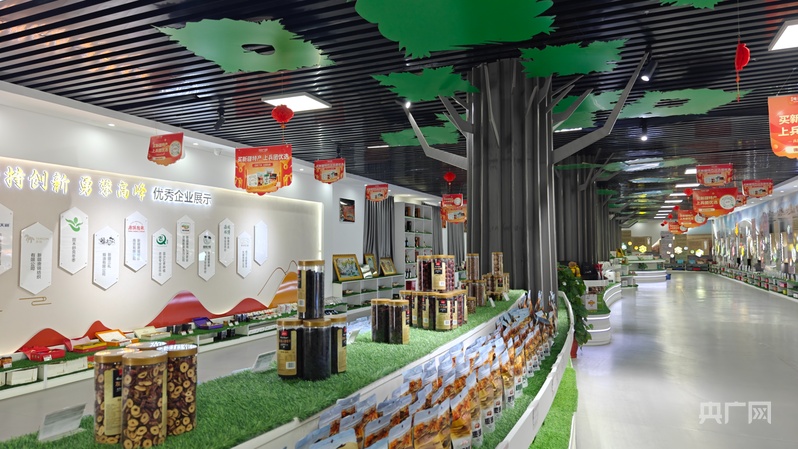
多元场景加速向“新”
Xin Lang Cai Jing· 2026-02-10 20:03
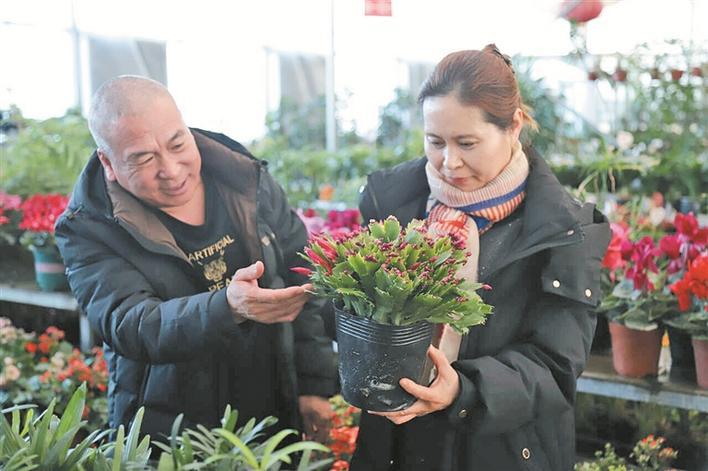
Group 1 - The core viewpoint of the articles emphasizes the development of a "beautiful economy" through enhanced consumer experiences and diversified consumption in various regions, particularly focusing on the flower market and local specialties [2][3][6] - The 187th Regiment's You Sheng Feng Qing Flower Base is highlighted as a key player in the local flower supply chain, with an annual production capacity of 24,000 potted plants and a revenue exceeding 2 million yuan by 2025 [3][5] - The shift from traditional purchasing to experiential consumption, such as flower arrangement training, is noted as a significant trend, enhancing consumer engagement and creating new employment opportunities [5][6] Group 2 - In the 3rd Division of Tumushuke City, local brands are becoming crucial in driving market consumption, with notable sales figures such as 250,000 yuan from local products at the New Year Bazaar [7][8] - The integration of e-commerce into local markets is facilitating broader distribution of local specialties, with significant sales figures reported, including 2.57 billion yuan in cotton oil and 8.39 billion yuan in red dates by 2025 [8][9] - The diverse consumption landscape in the 12th Division's New Tianrun Food Street showcases a variety of dining and retail options, with a reported retail sales total of 732 million yuan, reflecting a 9.7% year-on-year growth [10][11]

粤新两地双向赋能,绘就富民兴疆新图景丨我们的2025
Nan Fang Nong Cun Bao· 2026-02-04 12:06
Core Viewpoint - The collaboration between Guangdong and Xinjiang is fostering economic development and creating a new model for mutual empowerment, focusing on job creation and sustainable growth in the region [4][10][100]. Group 1: Project Developments - The first integrated demonstration project in Kashgar, supported by Guangdong, combines photovoltaic power generation, hydrogen production, storage, and refueling [2][3]. - The 5 MW distributed photovoltaic hydrogen production and storage project in Bachu County has been officially launched and is successfully producing hydrogen [7][3]. - Guangdong's investment in Xinjiang has exceeded 50 billion yuan, creating stable employment for 20,000 people and indirectly benefiting around 200,000 individuals [10][11]. Group 2: Economic Initiatives - The "Xinjiang products going south, Guangdong products going north" initiative has activated a market worth billions, enhancing trade between the two regions [12][20]. - The establishment of a sales cooperation platform has facilitated the circulation of products between Guangdong and Xinjiang, promoting sustainable economic connections [22][20]. - The bilateral trade of specialty products has reached 18.2 billion yuan, with Guangdong's exports to Central Asia growing by 26% in the first 11 months of 2025 [33][35]. Group 3: Employment and Community Impact - The introduction of Guangdong enterprises in Xinjiang has led to significant job creation and increased local incomes, with farmers reporting higher profits from their produce [15][11]. - The establishment of modern logistics facilities has improved delivery times, addressing local residents' needs for efficient e-commerce services [40][41]. Group 4: Agricultural and Industrial Development - The oilseed industry in Xinjiang has seen substantial growth, with the area under cultivation expanding from 3,000 mu to 60,000 mu by 2025, creating over 200 jobs [66][68]. - The introduction of new agricultural practices and crops, such as sea buckthorn, has led to increased yields and economic benefits for local farmers [90][89]. Group 5: Cultural and Technological Exchange - The collaboration has also fostered cultural exchanges, with local artisans producing traditional crafts that reflect regional heritage [73][76]. - Guangdong's support has included technical training and resource exploration, enhancing local capabilities in various industries [74][88].

兵团推动农业产业化联农带农促增收
Xin Lang Cai Jing· 2026-01-02 18:29
Core Insights - The article highlights the significant development of the oilseed industry in the Xinjiang Production and Construction Corps, emphasizing the role of systematic policy support in driving high-quality industrial growth and employment increase [1][2] Group 1: Policy Support - The Corps has implemented 25 financial policies aimed at supporting agriculture, which have created over 100,000 job opportunities closely linked to agricultural industries in southern Xinjiang [1] - The establishment of a three-tiered cultivation system has led to the creation of six national-level advantageous specialty industry clusters and five national-level modern agricultural parks [1] Group 2: Financial Subsidies - Financial subsidies include 230 yuan per mu for wheat and 300 yuan per mu for soybean planting, along with a target price subsidy of 18,600 yuan per ton for seed cotton [2] - A total of 360 million yuan has been allocated for livestock industry subsidies, and facility agriculture has been included in the national loan interest subsidy pilot program [2] Group 3: Training and Risk Management - The Corps is actively organizing training programs focused on agricultural machinery operation and digital planting to help traditional farmers transition to skilled technicians [2] - Agricultural insurance covers seven types of crops and sheep, with a 92% coverage rate for specialty fruit and nut insurance in southern Xinjiang, along with small loan interest subsidies for impoverished populations [2]
兵团用好援疆力量推动南疆师市农业产业集群发展
Xin Lang Cai Jing· 2025-12-20 19:01
Group 1 - The core focus of the Xinjiang Production and Construction Corps (XPCC) is on high-quality agricultural development, emphasizing resource endowment and deepening industrial assistance to promote agricultural industry clusters in southern Xinjiang [1] - The agricultural industry cluster development has led to the production of over 2 million tons of fruit annually in the Tarim Basin, providing stable employment and income for over 30,000 workers [1] - The first division of Aral City has implemented a model combining research institutions, cooperatives, and workers, resulting in an annual output value exceeding 1 billion yuan from 70,000 acres of high-standard apple orchards, benefiting over 20,000 workers [1] Group 2 - The third division of Tumushuke City has established an 180,000-acre high-quality jujube base, with sales revenue of approximately 400 million yuan, enabling over 5,000 workers to achieve stable income through various stages of production [2] - The 54th regiment has become the largest single-scale oilseed production demonstration base in the country, with its standardized production case selected as a typical example in national agricultural production [2] - The 14th division of Kunyu City is enhancing the "Hetian jade jujube" brand and leveraging e-commerce platforms, achieving over 300 million yuan in sales through live streaming in 2024, with over 600 workers benefiting from online sales [2]
扎根、奉献、远行,一颗“全能豆”的新征程
Zhong Guo Shi Pin Wang· 2025-11-27 13:38
Core Insights - The oil safflower bean industry in Xinjiang has experienced significant growth, transforming from a struggling agricultural sector to a thriving market with strong consumer demand in the Greater Bay Area [3][20] - The "Xinjiang products southbound, Guangdong products northbound" initiative has facilitated direct sales channels for oil safflower beans, enhancing employment and promoting cultural exchange among various ethnic groups [3][20] Industry Development - The introduction of oil safflower beans, a drought-resistant and salt-tolerant crop, has led to a remarkable increase in agricultural productivity in the region, with yields rising from 200 kg per mu to 530 kg, and the planting area expanding from 20,000 mu to 50,000 mu [6][8] - The ecological benefits of oil safflower bean cultivation include a reduction in strong wind days from 27 to 9 annually and an increase in soil organic matter content to 1.4 g/kg [8] Economic Impact - The establishment of a modern agricultural industrial park for oil safflower beans has attracted investments of 40 million yuan, generating an estimated annual output value of 150 million yuan and creating over 200 new jobs [11] - The number of market entities in the region has surged from 4 to 411, with total production value increasing from 10.93 million yuan to 289 million yuan, representing a growth of over 26 times [17] Market Expansion - Oil safflower bean products have gained popularity in the Greater Bay Area, with significant sales growth, including over 10 million yuan in annual sales for products developed by Xinjiang Sanli Technology Group [12][18] - The brand-building efforts have resulted in the registration of 13 trademarks and participation in various national exhibitions, enhancing the market influence of oil safflower bean products [14][15] Cultural Exchange - The collaboration between Xinjiang and Guangdong has fostered deeper cultural ties, with consumers expressing interest in the unique agricultural practices of Xinjiang after tasting oil safflower bean products [22] - The initiative has not only improved economic conditions but also strengthened the sense of community among different ethnic groups through shared agricultural and cultural experiences [20][22]
棉棉情意暖羊城,第三师图木舒克市名优产品精彩亮相
Nan Fang Nong Cun Bao· 2025-11-27 10:04
Core Viewpoint - The "Xinjiang Products Southward, Guangdong Products Northward" promotional event showcased high-quality cotton products from the Third Division of Tumushuke City in Guangzhou, highlighting the successful integration of Xinjiang's products into the Guangdong market [2][20]. Group 1: Event Overview - The promotional event took place in Guangzhou, focusing on high-quality products from the Third Division of Tumushuke City [2][3]. - The event featured a variety of products, including cotton socks, dried fruits, and other local specialties, attracting significant consumer interest [23][24]. Group 2: Product Highlights - The cotton socks made from Xinjiang long-staple cotton were particularly popular, praised for their softness, sheen, and skin-friendliness, with some products incorporating lavender essential oil and 7A-grade antibacterial technology [9][10][11]. - All showcased cotton socks sold out during the event, with many customers expressing interest in future purchases [12]. Group 3: Agricultural Practices - The Third Division of Tumushuke City is recognized as a key production base for high-quality cotton in Xinjiang, benefiting from favorable climatic conditions and advanced agricultural technologies [14][15][16]. - The use of drones, satellite remote sensing, and integrated water and fertilizer systems has significantly improved management efficiency and cotton quality [17][18]. Group 4: Economic Impact - The event not only promoted the sale of cotton products but also facilitated economic integration between Guangdong and Xinjiang, serving as a model for industrial assistance [20][21]. - The establishment of offline experience centers in major cities of the Greater Bay Area allows consumers to purchase and experience Xinjiang products directly [25][26].
织就营销网,共筑同心圆,一批“湾区大巴扎”的粤疆情
Zhong Guo Shi Pin Wang· 2025-11-26 13:50
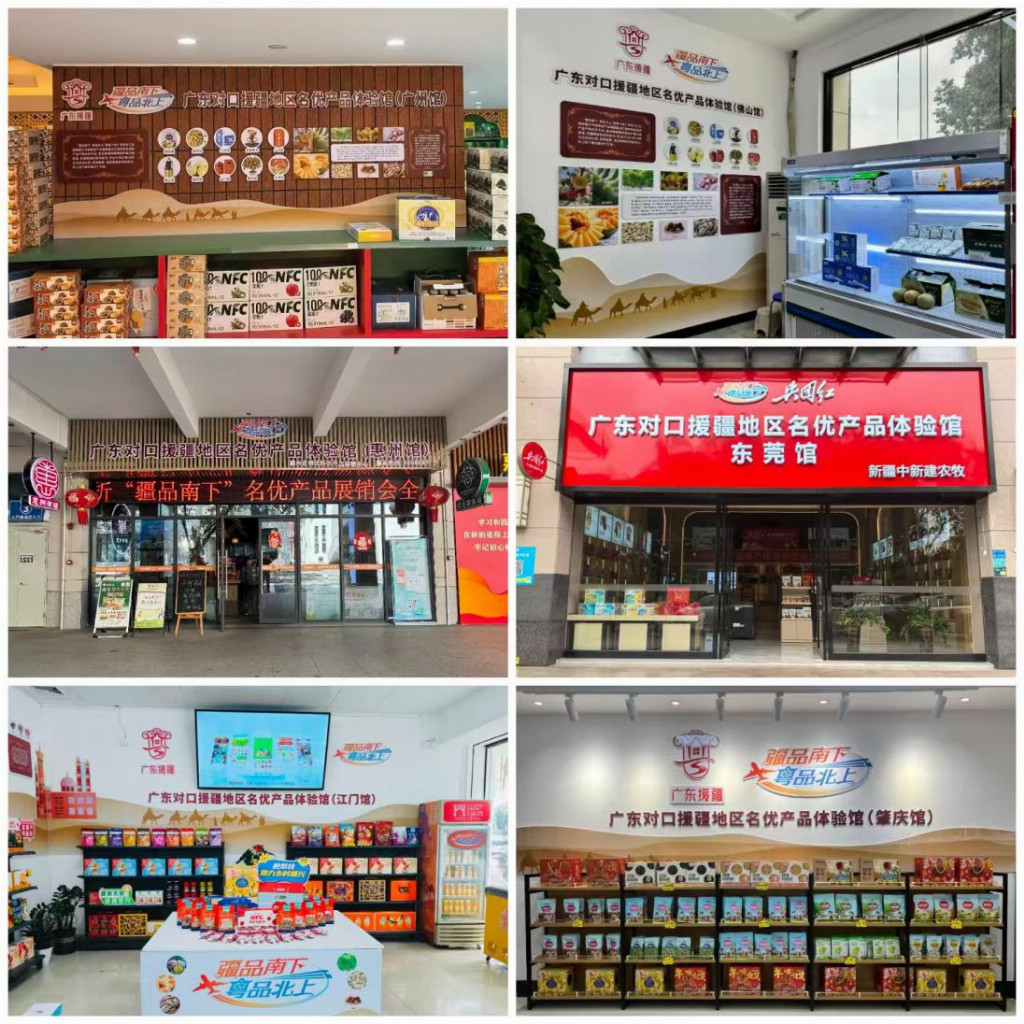
Core Insights - The article highlights the successful introduction of Xinjiang products, particularly Tangwang Gugu, into the Guangdong market, driven by the "Xinjiang products southward, Guangdong products northward" initiative [1][4][20] - The establishment of experience centers in various cities within the Guangdong-Hong Kong-Macao Greater Bay Area has significantly enhanced the visibility and sales of Xinjiang products [3][9][20] Group 1: Market Dynamics - Tangwang Gugu has quickly become a hot-selling item in the Zhaoqing experience center, with over 100 boxes sold out shortly after launch, indicating strong consumer demand [1] - The experience centers serve as a crucial platform to bridge the gap between Xinjiang producers and consumers in the Greater Bay Area, addressing logistical challenges and enhancing product accessibility [4][9] Group 2: Sales and Marketing Strategies - The marketing strategy includes a combination of online and offline efforts, utilizing live streaming and promotional events to drive sales [10][13] - The online platform has successfully listed 1,412 products and generated over 1 million in sales, showcasing the effectiveness of the integrated marketing approach [13][20] Group 3: Cultural Exchange and Community Engagement - The experience centers not only promote product sales but also facilitate cultural exchanges, enhancing consumer understanding of Xinjiang's diverse heritage [20][23] - Events in the experience centers have fostered community engagement, allowing consumers to connect with the stories behind the products, thereby deepening emotional ties between the regions [20][23] Group 4: Future Prospects - The initiative aims to continue leveraging experience centers to promote mutual economic benefits and cultural exchanges between Guangdong and Xinjiang, reinforcing national unity [23]
河南如何点“豆”成金 科技支撑油莎豆产业高质量发展
He Nan Ri Bao· 2025-11-06 23:32
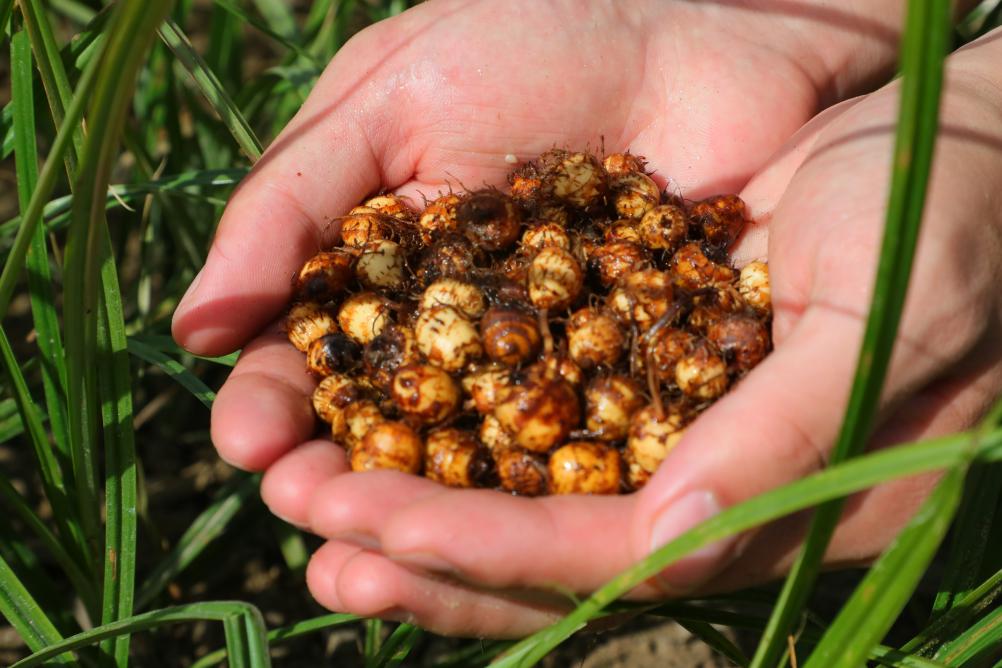
Core Insights - The article highlights the development and potential of the oilseed industry, particularly focusing on the oilseed plant "Youshadou" (油莎豆), which is being promoted for its high oil content and adaptability to marginal lands [6][8][15] Industry Overview - The oilseed plant Youshadou is a perennial herb with a high oil content (20%-32%) and is suitable for various uses, including direct consumption, oil extraction, and as animal feed [7][8] - The demand for edible vegetable oil and protein feed in China is significant, with a reliance on imports as high as 70%, making the development of Youshadou crucial for improving self-sufficiency [8] Technological Advancements - The Henan Academy of Agricultural Sciences has made significant technological breakthroughs in Youshadou cultivation, including the development of high-yield varieties and mechanized harvesting techniques [9][10] - The average yield of the new variety "Yuyoushadou 2" reached 1493.34 kg per mu (approximately 0.067 hectares), with an oil content exceeding 25% [6][10] Production and Processing - The establishment of specialized processing lines for Youshadou has improved efficiency, with a production line capable of processing 15 tons per hour [12] - The integration of various processing technologies has enabled the production of diverse products, including low-GI flour and functional foods, enhancing the market potential of Youshadou [12][13] Market Development - There is a growing consumer demand for high-quality fats and low-sugar foods, positioning Youshadou as an ideal ingredient [14] - The industry faces challenges such as low market recognition and the need for enhanced promotional efforts to increase awareness among producers and consumers [14][15] Future Prospects - The article emphasizes the importance of continued research and development in breeding, mechanization, and food processing to fully realize the potential of the Youshadou industry [14][15] - The collaboration between research institutions, enterprises, and government is crucial for establishing a comprehensive industry chain and ensuring the sustainable development of Youshadou [9][10][15]
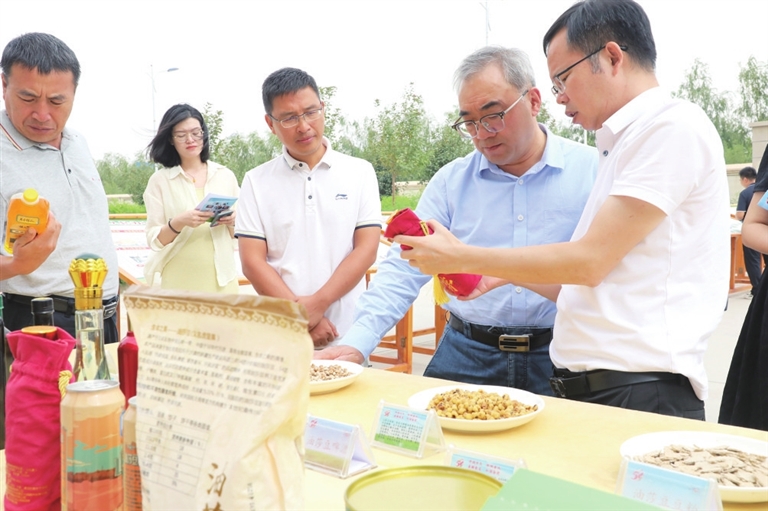
重点聚焦!新质新造·兵团丨图木舒克高质量发展步履坚实
Yang Guang Wang· 2025-11-04 09:17
Core Viewpoint - The oil safflower bean industry in Xinjiang's Tumushuke City is transforming desert land into arable land, creating a green miracle and contributing to local economic development through a comprehensive industrial chain [1][10]. Group 1: Agricultural Development - The oil safflower bean has been recognized as the "king of desert crops," with its entire plant being utilized for various products such as oil, flour, and high-quality animal feed [3]. - The introduction of advanced agricultural techniques has significantly increased the yield of oil safflower beans from 100 kg per mu in 2017 to over 600 kg per mu in 2024, with a record yield of 886 kg [3][8]. Group 2: Economic Impact - The automation in processing has improved efficiency, with a production line capable of processing oil safflower beans from raw material to finished product in just 7 minutes [5]. - The local processing company has shifted from selling raw materials to producing finished products, achieving a monthly sales revenue of 1.5 million yuan [6]. Group 3: Environmental Benefits - The cultivation of oil safflower beans has led to a significant increase in annual rainfall from less than 30 mm to 130 mm, and the number of days with winds above level 7 has decreased by one-third [8]. - Soil organic matter content has improved from 0 to between 1.3 and 1.4, and the greening coverage rate has risen to 50% [8]. Group 4: Infrastructure and Investment - The establishment of an e-commerce incubation park aims to promote the scale, branding, and industrialization of the local e-commerce sector, facilitating the distribution of agricultural products [7]. - A complete industrial chain has been developed, including an oil safflower research institute, initial processing plants, deep processing facilities, and a brewery [9].

新质新造·兵团丨图木舒克高质量发展步履坚实
Yang Guang Wang· 2025-11-04 08:44
Core Viewpoint - The oil sand bean industry in Xinjiang's Tumushuke City is transforming the desert into arable land, creating a sustainable green circular economy that benefits local farmers and contributes to ecological restoration [2][8]. Group 1: Agricultural Development - The oil sand bean, known as the "king of desert crops," is being cultivated on 54,000 acres in Xinjiang, with advanced harvesting technology leading to increased efficiency and productivity [1][2]. - The yield of oil sand beans has significantly improved from 100 kg per acre in 2017 to over 600 kg per acre in 2024, with a record yield of 886 kg [2]. Group 2: Economic Impact - The oil sand bean industry has created a comprehensive value chain that includes planting, processing, and ecological restoration, providing a stable income for local farmers [2][8]. - The processing company in Tumushuke has upgraded its equipment, allowing for a production capacity of 10 tons per day and monthly sales reaching 1.5 million yuan [5]. Group 3: Environmental Benefits - The introduction of oil sand beans has led to an increase in annual rainfall from less than 30 mm to 130 mm, a reduction in strong wind days by one-third, and an increase in soil organic matter content from 0 to 1.3-1.4 [8]. - Continuous cultivation of oil sand beans has transformed sandy land into fertile fields, with wheat yields exceeding 400 kg per acre [10]. Group 4: Industry Infrastructure - The establishment of an e-commerce incubation park aims to scale and brand the local agricultural products, facilitating the last mile of e-commerce for local farmers [8]. - A series of projects related to the oil sand bean industry, including research institutes and processing facilities, have been developed, enhancing the overall industry ecosystem [10].