
泳池清洁机

Search documents
新宝股份:公司已有部分产品推出海外市场,但目前销售规模还很小
Zheng Quan Ri Bao Wang· 2026-01-09 14:15
Core Viewpoint - The company is exploring diversification in its product offerings, particularly with its pool cleaning machines, which have seen limited sales in overseas markets [1] Group 1: Product Development - The company has launched some products in overseas markets, although the current sales scale is still small [1] - Future plans include increasing investment in research and development to expand core research areas [1] - The company aims to diversify into high-tech garden tools and other product categories [1]

新宝股份:公司的泳池清洁机展现了公司多元化产品的探索,已有部分产品推出海外市场,但目前销售规模还很小
Mei Ri Jing Ji Xin Wen· 2026-01-09 09:29
Core Viewpoint - The company is exploring diversification in its product offerings, particularly in the field of pool cleaning machines, and is looking to expand into high-tech gardening tools in the future [1]. Group 1: Product Development - The company has introduced pool cleaning machines as part of its diversified product exploration [1]. - Some of the company's products have already been launched in overseas markets, although the current sales scale is still small [1]. Group 2: Future Plans - The company plans to continue increasing its investment in research and development [1]. - There is an intention to expand into the category of high-tech gardening tools [1].
创新动能持续迸发,出海路径多元拓展!盘点2025外贸新机遇
Sou Hu Cai Jing· 2025-12-31 16:34
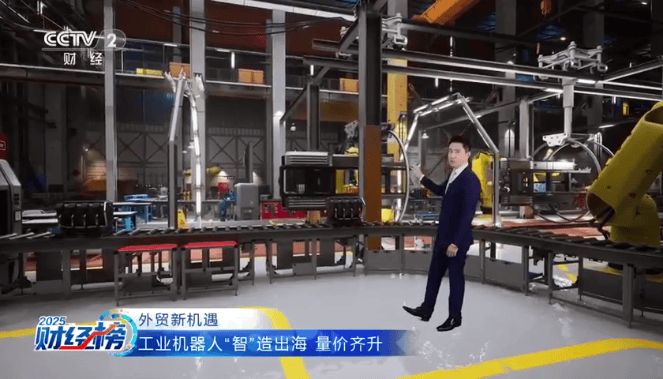
Group 1: Economic Outlook - China's foreign trade is showing resilience and growth, with a focus on key sectors and expanding trade partnerships, including free trade zones and ports, providing a "Chinese solution" to global economic changes [1] Group 2: Industrial Robotics - China's industrial robot exports have seen significant growth, with a 54.9% increase in export value and a 29.2% increase in export volume in the first three quarters of the year. The average export price rose from $7,916 per unit in 2024 to $10,025.66 in the first half of 2025, marking a 26.66% year-on-year increase [3] Group 3: Innovative Small Products - Chinese small products, such as a portable electric screwdriver priced at $70, are gaining popularity in overseas markets, achieving significant sales figures, including approximately 250 million RMB on a single e-commerce platform in the U.S. These products are characterized by innovative designs and patents, addressing specific user needs [5] Group 4: Cultural and Creative Exports - The Chinese潮玩 (trendy toys) market is expanding globally, with brands like Bubble Mart opening 154 stores in 18 countries. In the first three quarters of 2025, exports of trendy toys exceeded 50 billion RMB, reaching over 200 countries, enhancing China's cultural soft power and foreign trade competitiveness [8] Group 5: Brand Collective Stores - Yiwu Selection's first overseas store opened in Nairobi, Kenya, featuring over 20 local brands and achieving sales of over 1.2 million RMB on the first day. This model of "brand authorization + localized operation + digital management" is being replicated in multiple countries, promoting a shift from "dispersed exports" to "brand cluster exports" [10] Group 6: Service Exports Growth - China's inbound tourism is being leveraged for service exports, with visa-free policies leading to 20.886 million foreign visitors in the first three quarters. The optimization of tax refund policies has boosted "China shopping," with a 285% increase in travelers utilizing tax refunds. Travel service exports grew by 54.4% [12]

2025新消费大会:寻找新增量 从“中国消费”到“消费中国”
Xin Lang Cai Jing· 2025-12-19 23:35
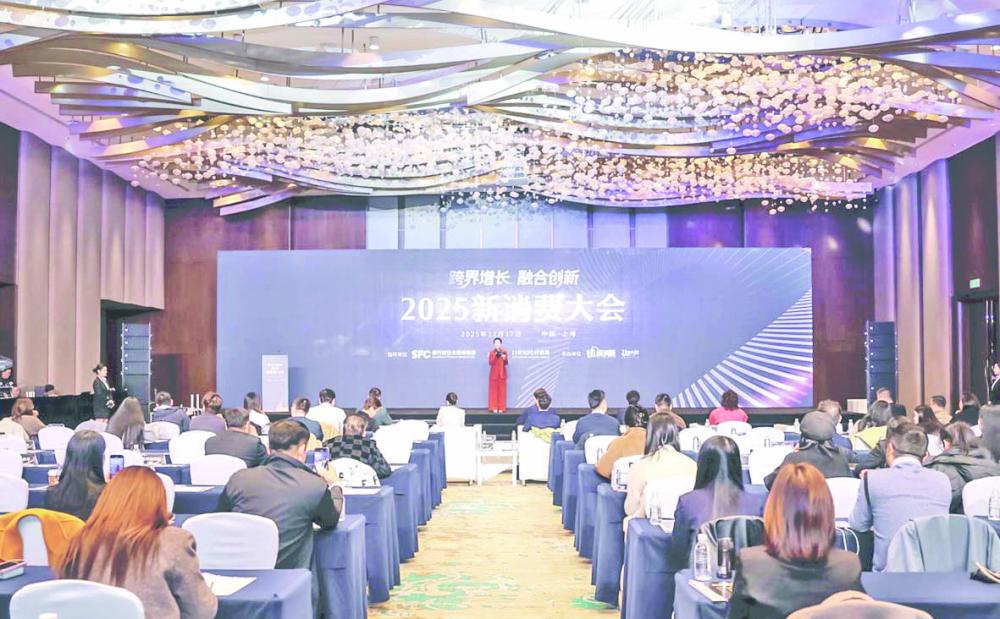
Core Insights - The "New Consumption Conference" held in Shanghai focused on the theme of "Cross-Border Growth and Integrated Innovation," discussing industry trends, business models, and strategies for rapid brand growth and innovation [2] - The consumer market is undergoing significant changes, driven by the emergence of the younger generation, particularly Generation Z, who are reshaping consumption demands and preferences [3][4] - The conference highlighted the importance of brands evolving from mere sellers to experience co-creators, emphasizing the need for deeper connections with consumers [5] Industry Trends - The consumption sector is witnessing a shift towards health-oriented and experiential consumption, moving from merely purchasing products to a holistic approach to self-care [4] - The Hong Kong stock market has become a primary venue for consumer companies to go public, with over 23 IPOs in the retail and consumption sector by the end of November [6][7] - The demand for new consumer brands is high, with a significant number of companies applying for listings, particularly in the consumer sector, indicating a robust supply-demand dynamic [7] Brand Strategies - Brands are increasingly focusing on international expansion as a core strategy, with successful domestic models serving as a foundation for global competition [8] - Emotional value is becoming a key decision-making factor in consumer choices, leading to the emergence of new consumption scenarios and demands [9] - Collaborative marketing and cross-industry partnerships are seen as effective strategies for brands to refresh their image and reach new consumer segments [9] Future Outlook - The 2025 consumer market in China is expected to explore new balances amid structural changes, with a focus on both short-term pressures and long-term confidence [10] - The conference underscored the ongoing transformation of consumption as a driving force for global economic growth, entering a phase rich with opportunities [10]
消费出海下半场:从“中国供给”到“全球品牌”|直击新消费大会
2 1 Shi Ji Jing Ji Bao Dao· 2025-12-19 12:12
Core Insights - The "New Consumption Conference" highlighted the trend of Chinese brands expanding internationally, with a focus on brand and cultural globalization as a core strategy for growth [1][2] - The conference discussed whether going global is a necessary path for companies or a strategic choice that requires careful consideration [1] - The growth opportunities presented by international markets are a significant attraction for companies looking to expand [2] Group 1: Reasons for Going Global - Chinese brands are increasingly seeking to expand internationally as their domestic market capabilities reach saturation, transitioning from seeking initial profits to leveraging their established competencies [1][2] - The need for Chinese brands in the global market is evident, as international consumers are increasingly recognizing and requiring Chinese products [2] - Companies like MOVA have set global market entry as a strategic goal from their inception, indicating a shift towards long-term global competitiveness [3] Group 2: Challenges and Strategies - Establishing a global brand is challenging, with the primary hurdle being consumer understanding and acceptance of "Brand from China" [3][4] - Companies must adapt their products and branding strategies to local markets, as relying solely on product offerings can lead to vulnerability in competitive pricing environments [4] - The lifecycle of international expansion involves initial market intelligence gathering, followed by operational integration with local suppliers and customers [4] Group 3: Market Trends and Future Outlook - Southeast Asia is becoming a key market for Chinese brands, with Malaysia and Vietnam identified as primary targets for expansion [4] - The trend of Chinese brands going global is evolving from an optional strategy to a necessary capability, emphasizing the importance of product localization and operational depth [4] - The future of international expansion will require companies to build local supply chains and adapt to regional consumer preferences to ensure sustainable growth [4]
2025新消费大会:寻找新增量,从“中国消费”到“消费中国”
2 1 Shi Ji Jing Ji Bao Dao· 2025-12-19 02:28
Core Insights - The 2025 New Consumption Conference highlighted the transformation of the consumption industry, emphasizing the shift from "Chinese consumption" to "consumption China" and the importance of cross-industry growth and innovation [1][10] Industry Trends - The consumption sector is undergoing significant changes, driven by the emergence of a new generation of consumers, particularly the Z generation, who are reshaping demand and preferences [2][3] - Investment institutions continue to seek opportunities in the consumption sector, indicating strong investment demand despite competitive pressures [2] Brand Evolution - Brands are transitioning from being mere sellers to becoming experience co-creators, integrating more deeply into consumers' lives [4] - The relationship between brands and consumers is evolving from a one-way transaction to a two-way nurturing and growth dynamic [4] Market Dynamics - The Hong Kong stock market has become a primary venue for consumer companies to go public, with over 23 IPOs in the retail and consumption sector by the end of November [5][6] - The influx of capital into new stock offerings reflects a market response to trends and confidence in the consumption sector [6] International Expansion - Many consumer brands are prioritizing international expansion as a core strategy, viewing it as a natural choice for growth rather than a desperate measure [7] - Successful domestic models are seen as essential for competitive international ventures, with brands needing to establish a strong presence in global markets [7][8] Consumer Insights - Emotional value is becoming a key decision-making factor in consumer behavior, influencing product innovation and market strategies [8] - Brands are encouraged to create products and services that translate abstract emotions into tangible consumer experiences [8][9] Conclusion - The 2025 New Consumption Conference underscored the complex dynamics of the consumption market, highlighting the balance between short-term pressures and long-term confidence, as well as the interplay between local focus and international outreach [10]

中信重工三连板!低开高走,机器人指数ETF(560770)涨超1%
2 1 Shi Ji Jing Ji Bao Dao· 2025-10-22 02:57
Group 1 - The core viewpoint of the news highlights the strong performance of the Robot Index ETF (560770), which has seen a net subscription of over 500 million yuan since October, reaching a new high of 1.92 billion yuan in total assets [1] - The Robot Index ETF tracks the CSI Robot Index, which includes companies involved in system solutions, digital workshops, automation equipment manufacturing, and other robot-related sectors, reflecting the overall performance of these securities [1] - The top ten constituent stocks of the Robot Index ETF include companies like Huichuan Technology, iFlytek, Stone Technology, and others, indicating a concentrated investment in the robotics sector [1] Group 2 - According to recent reports, the machinery and computer equipment sectors have seen significant upward revisions in profit expectations since September, with the machinery equipment sector making up 55.89% of the CSI Robot Index [2] - The global market for cleaning robots has shown strong growth, with a total shipment of 11.263 million units in the first half of the year, representing a year-on-year increase of 16.5%, with major players like Stone Technology and Ecovacs capturing 57% of the market share [2] - Recent external disturbances are not expected to end the upward trend in the robotics and semiconductor sectors, suggesting that market focus will remain on industrial development and innovation [2]


