
洪灏的知识星球

Search documents
金融圈都在搞知识付费
投资界· 2026-01-16 03:39
Core Viewpoint - The article discusses the rising trend of knowledge payment in the financial industry, highlighting how financial professionals are leveraging their expertise to create new revenue streams through subscription services and online courses, despite the traditional media business being considered poor-performing [3][4][16]. Group 1: Knowledge Payment Trends - Hong Hao's knowledge platform recently increased its annual fee to 1,499 yuan, generating a GMV of 12.586 million yuan within two months from 14,000 subscribers [3]. - Li Bei, a friend of Hong Hao, sold a course priced at 12,888 yuan in just two days, earning 257,000 yuan [3]. - The article notes that the media sector is generally underperforming, yet knowledge payment models are attracting significant interest from financial professionals [3][4]. Group 2: Leveraging Different Types of Leverage - Silicon Valley investor Naval emphasizes three types of leverage for wealth creation: labor leverage, capital leverage, and the most crucial, the ability to replicate products with zero marginal cost, such as code and media [5]. - Hong Hao and Li Bei effectively utilize all three types of leverage, with Li Bei's company, Banxia, surpassing 10 billion yuan in scale by 2022 [6]. - The article highlights that Hong Hao's recent fund performance has been inconsistent, but he claims a cumulative investment return of 718.77% over 20 years [6][9]. Group 3: Market Positioning and Audience Engagement - Hong Hao and Li Bei's focus on macroeconomic topics allows them to reach a broader audience, as many people are interested in general market trends rather than niche financial models [9][10]. - Their engaging presentation styles, which mix serious analysis with relatable content, help attract and retain followers [9][10]. - The article suggests that their ability to blend macroeconomic analysis with personal narratives enhances their appeal and marketability [9][10]. Group 4: Challenges and Strategies - Fund managers are often cautious about entering the knowledge payment space due to concerns about being perceived as neglecting their core investment responsibilities [11][12]. - Hong Hao and Li Bei's ventures into knowledge payment are not merely about transitioning to media but are strategic moves to enhance their market presence and client engagement [12][16]. - Li Bei's strategy includes offering free online courses to existing investors to retain them and prevent redemptions, especially as her firm faces increased competition [12][14][15]. Group 5: Future of Knowledge Payment in Finance - The article posits that the trend of knowledge payment in finance is driven by both the pressure of declining salaries in the industry and the dual needs of investors for reliable information and managers for long-term clients [16][17]. - As traditional channels become less effective, fund managers are increasingly turning to private domains and courses to connect with more targeted client bases [17]. - The ability to provide valuable insights and maintain trust is becoming essential in a noisy information environment, making knowledge payment a viable business model for financial professionals [16][17].


金融圈都在搞知识付费
Xin Lang Cai Jing· 2026-01-13 07:14
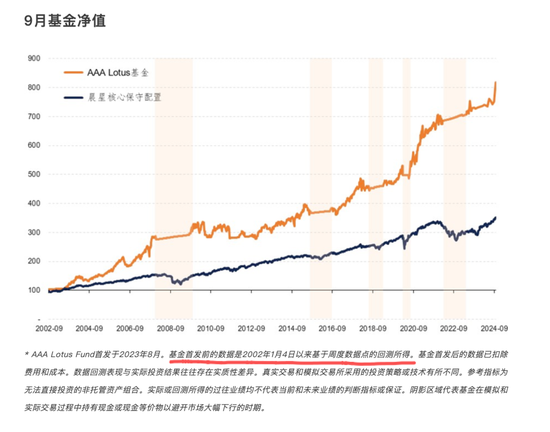
Core Insights - The rise of knowledge payment platforms among financial professionals indicates a shift in the industry, where subscription numbers are becoming more important than investment ideas [2][20] - The trend reflects a broader need for reliable information sources among investors, while financial managers seek long-term clients [34][35] Group 1: Knowledge Payment Trends - Hong Hao's knowledge platform has increased its annual fee to 1499 yuan, generating a GMV of 12.586 million yuan within two months from 14,000 subscribers [1][19] - Li Bei's course, priced at 12,888 yuan, sold out in two days, earning 2.57 million yuan [1][19] - The media industry is generally considered a poor business, yet knowledge payment and private domain marketing are exceptions attracting many financial professionals [1][19] Group 2: Leveraging Strategies - Three types of leverage are essential for wealth creation: labor leverage, capital leverage, and the most crucial, the ability to replicate products with zero marginal cost, such as media [2][20] - New wealth is increasingly generated through media and digital platforms, allowing for significant income with minimal costs [21][22] Group 3: Individual Case Studies - Hong Hao and Li Bei effectively utilize all three types of leverage, with Li Bei's firm surpassing 10 billion yuan in scale by 2022 [22][24] - Hong Hao's recent fund performance has been inconsistent, but he claims a cumulative return of 718.77% over 20 years [24][27] - Both individuals excel in creating engaging content that attracts a large audience, enhancing their ability to monetize knowledge [27][28] Group 4: Market Dynamics - The financial industry is experiencing pressure due to salary reductions, prompting professionals to seek alternative income sources through knowledge payment [34] - The shift towards media and knowledge sharing is seen as a way to maintain relevance and attract clients in a competitive market [34][35] - Financial managers are increasingly targeting high-level executives and industry experts as clients, enhancing their market positioning [35][36]
金融圈都在搞知识付费
远川投资评论· 2026-01-13 07:04
Core Viewpoint - The article discusses the rising trend of knowledge monetization in the financial industry, highlighting how prominent figures like Hong Hao and Li Bei are leveraging their expertise to generate significant income through paid courses and subscription services, despite the overall poor performance of the media sector [3][4]. Group 1: Knowledge Monetization - Hong Hao's knowledge platform has increased its annual fee to 1499 yuan, achieving a GMV of 12.586 million yuan within two months with 14,000 subscribers [3]. - Li Bei sold a course worth 12,888 yuan in just two days, generating 2.57 million yuan in revenue [3]. - The article notes that the media sector is generally considered a poor business, yet knowledge monetization through private domains and courses stands out as a lucrative opportunity [3]. Group 2: Leveraging Different Types of Capital - According to investor Naval, wealth freedom can be achieved through three types of leverage: labor leverage, capital leverage, and the most crucial, the ability to replicate products with zero marginal cost, such as media and code [5]. - Hong Hao and Li Bei effectively utilize all three types of leverage, with Li Bei already achieving wealth freedom through her business, while Hong Hao is still establishing his presence in the knowledge monetization space [5][6]. Group 3: Market Positioning and Strategy - Hong Hao's past experience as a chief strategist at major financial institutions adds credibility to his current endeavors, although his recent fund performance has been inconsistent [6][7]. - Both Hong Hao and Li Bei have successfully created strong personal brands, allowing them to attract a larger audience and monetize their insights more effectively than their peers [9][11]. - The article emphasizes that the macroeconomic topics they cover resonate with a broader audience, making their knowledge monetization efforts more appealing [9]. Group 4: Challenges and Market Dynamics - Fund managers are often cautious about transitioning to media roles due to concerns about losing professional credibility and focus [12]. - Despite skepticism about their actual investment performance, Hong Hao and Li Bei's ability to market themselves and their predictions has garnered significant attention and a loyal following [12][17]. - The article suggests that as traditional investment avenues become more challenging, financial professionals are increasingly turning to knowledge monetization as a viable alternative income source [17][18].

关于私募“魔女”李蓓教小白做投资引发的争议,谈几点看法
Sou Hu Cai Jing· 2025-12-29 03:42
Core Viewpoint - The controversy surrounding Li Bei's offline investment course priced at 12,888 yuan reflects broader industry skepticism about fund managers crossing into educational roles, with some accusing her of exploiting the knowledge payment sector for profit [1][5]. Group 1: Course Motivation and Design - Li Bei claims her course is not intended for profit, stating that knowledge payment typically generates a maximum of 10 million yuan annually, which she does not need [3][4]. - The course is designed to address common concerns of novice investors, focusing on long-term investment methodologies and avoiding short-term market speculation [4][8]. - The course aims to provide practical guidance on identifying scams and understanding financial tools, which resonates with the needs of inexperienced investors [4][8]. Group 2: Industry Skepticism and Challenges - There are three main areas of skepticism regarding Li Bei's course: the profitability of selling courses compared to investment, the alignment of her professional qualifications with teaching, and the balance between personal branding and professional credibility [5][6][7]. - Critics question whether Li Bei's past investment performance, which includes underperforming funds, undermines her ability to teach novice investors effectively [6][9]. - The rise of knowledge payment in finance indicates a growing demand for reliable investment education among novice investors, yet the market lacks quality offerings [8][9]. Group 3: Implications for the Industry - Li Bei's initiative highlights a common challenge in the asset management industry regarding the boundaries of fund managers' roles in education [7][8]. - The industry must navigate the tension between generating returns for investors and engaging in educational endeavors, with knowledge payment being a secondary focus [8][9]. - Effective education for novice investors should emphasize independent thinking and critical analysis, rather than blind adherence to the instructor's past judgments [8][9].

10天狂揽超760万,前券商大佬转战知识付费
2 1 Shi Ji Jing Ji Bao Dao· 2025-11-03 14:40
Core Insights - Renowned economist Hong Hao launched a paid knowledge platform on October 25, attracting over 8,500 members within 10 days, generating an estimated revenue exceeding 7.64 million yuan [1] - The platform offers real-time market observations and investment-related information, distinguishing itself from traditional research reports [7] Group 1: Hong Hao's Knowledge Platform - Hong Hao's knowledge platform charges an annual subscription fee of 899 yuan, leading to significant revenue generation that surpasses many chief analysts' annual salaries [1] - The platform is designed for quick sharing of market insights and investment opportunities, differing from the more detailed reports shared on his other platforms [7] Group 2: Previous Experience and Transition - Hong Hao has a diverse career background, having held positions at Morgan Stanley, Citigroup, and other financial institutions before becoming a partner and CIO at Lianhua Asset Management [8] - His previous ventures into paid content include articles on his WeChat public account, which have also generated substantial income [7] Group 3: Industry Trends - The trend of financial analysts transitioning to knowledge monetization through platforms like knowledge spheres is growing, with several analysts successfully attracting large subscriber bases [10][11] - The shift is partly driven by pressures on traditional brokerage revenue streams, prompting analysts to seek alternative income sources through direct engagement with audiences [12] Group 4: Challenges and Risks - The knowledge monetization model is currently reliant on personal branding, making it challenging for less-known analysts to succeed [13] - Legal risks and compliance issues are emerging as more analysts enter the knowledge payment market, highlighting the need for clearer regulations regarding content ownership and copyright [18]

10天狂揽超760万,前券商大佬转战知识付费
21世纪经济报道· 2025-11-03 14:29
Core Viewpoint - The article discusses the rise of knowledge monetization among financial analysts, highlighting the success of economist Hong Hao's personal knowledge platform, which generated over 7.64 million yuan in just 10 days, indicating a trend where former brokerage analysts are transitioning to become influential figures in the finance media space [1][4]. Group 1: Hong Hao's Knowledge Platform - Hong Hao launched his personal knowledge platform on October 25, with over 8,500 members joining within 10 days, generating an estimated gross income exceeding 7.64 million yuan [1]. - The subscription fee for Hong Hao's knowledge platform is set at 899 yuan per year, and the content focuses on real-time market observations and investment-related information [1][4]. - Hong Hao's previous experience includes roles at major financial institutions, and he aims to differentiate his knowledge platform from traditional paid content on Weibo and WeChat [5]. Group 2: Industry Trends - Many former brokerage analysts are transitioning to become "finance influencers," leveraging platforms like knowledge stars to monetize their expertise [6][7]. - Liu Yuhui, an early practitioner in this field, has attracted over 9,900 paid users to his knowledge platform, with a current subscription price of 488 yuan per year [7]. - The shift towards knowledge monetization is partly driven by pressures on brokerage firms' commission income, prompting analysts to seek alternative revenue streams [14]. Group 3: User Perspective and Compliance Risks - Users may find value in the insights provided by former analysts, but the effectiveness of such content can vary based on individual preferences and needs [16]. - The rise of knowledge monetization has raised concerns about compliance risks and copyright issues, as seen in a recent infringement notice involving Liu Xiang [20]. - As more analysts enter the knowledge payment market, the need for clear regulations regarding content publication and copyright ownership becomes increasingly important [20].

前券商“大佬”进军知识付费,10天吸金超760万
2 1 Shi Ji Jing Ji Bao Dao· 2025-11-03 13:28
Core Insights - The article discusses the rise of knowledge monetization among financial analysts, particularly focusing on economist Hong Hao's successful launch of a paid knowledge platform that generated over 7.64 million yuan in just 10 days [1][4]. Group 1: Hong Hao's Knowledge Monetization - Hong Hao's personal knowledge platform attracted over 8,500 members within 10 days, with an estimated gross income exceeding 7.64 million yuan based on a subscription price of 899 yuan per year [1]. - The platform offers value-added services through paid research reports, focusing on real-time market observations and investment-related information [1][4]. - Hong Hao previously explored paid content through his WeChat public account, generating over 1.6 million yuan from paid articles and collections [4]. Group 2: Industry Trends - Many financial analysts are transitioning to become "financial influencers," leveraging platforms like knowledge circles to monetize their expertise [6]. - Notable figures in this trend include Liu Yuhui and Liu Xiang, who have also successfully launched their own paid knowledge platforms, attracting thousands of subscribers and generating significant income [6]. - The shift towards knowledge monetization is partly driven by pressures on traditional brokerage revenue streams, prompting analysts to seek alternative income sources [9]. Group 3: User Perspective and Risks - Users may find value in the insights provided by these financial influencers, but the effectiveness of the content can vary based on individual preferences and needs [10]. - The rise of knowledge monetization also raises concerns about compliance risks and copyright issues, as seen in a recent infringement case involving Liu Xiang [14].
