海南鸡饭

Search documents
解锁烟火人间的美食密码
Xin Lang Cai Jing· 2026-02-06 21:01
Core Perspective - The article emphasizes the significance of food in life, highlighting its cultural, historical, and culinary aspects through the exploration of various dining experiences and the stories behind them [3][5][6] Group 1: Culinary Exploration - The book "Seeking Flavor" serves as a guide for food enthusiasts, detailing visits to renowned restaurants and local eateries across different countries, including Singapore, Japan, the United States, and Macau [3] - It showcases a variety of dining experiences, from street food to Michelin-starred restaurants, encouraging readers to appreciate the diversity of culinary offerings [3][4] Group 2: Culinary Techniques and Innovations - High-end restaurants like Tengyue Restaurant in Guangzhou focus on sourcing quality ingredients, exemplified by their meticulous selection of wild grouper for steaming [4] - The article highlights innovative dining concepts, such as the seasonal offerings at restaurants that combine local seafood with traditional cooking techniques, showcasing the chefs' confidence and skills [4] Group 3: Cultural and Historical Context - The author connects food with historical figures and literature, illustrating how culinary practices reflect cultural heritage and personal stories, such as Su Dongpo's creation of Dongpo pork during his exile [5] - The exploration of ancient texts reveals the relationship between humans and nature through food, emphasizing the evolution and adaptation of culinary practices over time [5][6]

以新场景释放消费新动能
Hai Nan Ri Bao· 2025-12-10 01:15
Core Viewpoint - The Hainan Provincial Committee emphasizes the development of various economic models, including night economy, instant economy, first-release economy, and "Guzi economy," to enhance the international tourism consumption center's capabilities and promote new consumption scenarios [1][6][11][14]. Night Economy - Hainan has significant advantages for developing the night economy, including a favorable climate, a large tourist market, rich culinary resources, a strong commercial atmosphere, and mature coastal landscapes [3][4]. - The province received 84.93 million tourists from January to October 2025, marking an 8.3% year-on-year increase, providing a robust market flow for the night economy [3]. - The government has introduced supportive policies, such as the "Hainan Free Trade Port Tourism Regulations," to enhance the night economy's development [4]. Instant Economy - Instant economy is characterized by meeting consumer demands in real-time through digital platforms, enhancing user experience and efficiency in tourism consumption [6][7]. - The instant retail market in China reached 650 billion yuan in 2023, with a projected growth to over 2 trillion yuan by 2030, indicating a significant market opportunity [7]. - Hainan aims to leverage its policy advantages to foster the instant economy, enhancing the overall competitiveness of its tourism sector [8][10]. First-Release Economy - The first-release economy is identified as a key strategy for Hainan to enhance its international tourism consumption center, capitalizing on unique local advantages [11][12]. - The fifth Consumer Expo showcased nearly 100 new products, demonstrating the potential of the first-release economy to stimulate market engagement and consumer interest [11]. - A comprehensive policy support system is essential for the first-release economy, including streamlined customs processes and intellectual property protections [12][13]. Guzi Economy - The "Guzi economy," derived from the English word "goods," focuses on emotional consumption linked to cultural IPs, with a market size projected to reach 168.9 billion yuan in 2024 [14][15]. - Hainan's free trade policies provide a conducive environment for developing the Guzi economy, attracting top-tier IP companies and fostering local cultural integration [14][15]. - The province aims to create immersive consumer experiences by leveraging its unique tourism resources and developing original IPs that resonate with local culture [15][16].
小贩中心缭绕城市烟火气
Jing Ji Ri Bao· 2025-11-23 00:59
Core Insights - Singapore's hawker culture is recognized as an essential part of daily life and was added to UNESCO's list of intangible cultural heritage in 2020, highlighting its significance in the multicultural society and community life of Singapore [1][2] Group 1: Historical Context - The origins of Singapore's hawker culture date back to the early 19th century, with immigrants selling familiar hometown dishes to make a living [1] - The government began to address urban management issues by establishing hawker centers in 1968, providing better facilities and affordable rent to vendors [1][2] Group 2: Cultural Significance - Hawker centers reflect Singapore's multicultural society, offering a variety of dishes from different ethnic backgrounds, which have evolved into a unique "Singaporean cuisine" [2] - In 2023, 53 out of 79 Michelin-recommended establishments in Singapore originated from hawker centers, showcasing the quality and recognition of hawker food [2] Group 3: Economic Aspects - Despite recent price increases due to supply chain issues, most meals in hawker centers remain affordable, ranging from 4 to 7 Singapore dollars [3] - Government policies, such as no minimum bid for rent and prohibiting subletting, help maintain low prices and support social enterprises [3] Group 4: Social Impact - Hawker centers serve as vital public spaces, fostering community interaction among diverse groups of people, enhancing social harmony and cultural exchange [3] - They hold sentimental value for many Singaporeans, acting as gathering places for families and friends, and contributing to national identity [3] Group 5: Challenges and Initiatives - The aging workforce poses a challenge for the hawker industry, with many vendors nearing 60 years of age, leading to difficulties in passing down skills to younger generations [4] - The government has initiated programs like the "Incubation Stall Scheme" and training courses to revitalize hawker culture and support new entrants [4] Group 6: Current Landscape - Over 110 hawker centers in Singapore serve approximately 3 million meals daily, becoming central to the community's daily life and cultural identity [5]
品异国风味 逛区域首店 观音桥商圈假期打造多元消费盛宴
Sou Hu Cai Jing· 2025-10-03 09:25
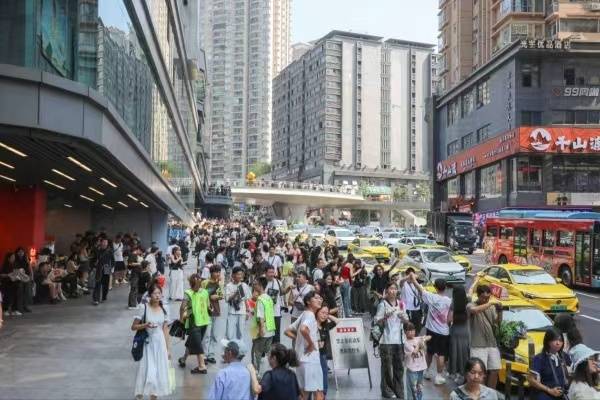
Core Insights - The "2025 Chongqing·Singapore Experience Week" was held during the National Day and Mid-Autumn Festival holiday, marking the 10th anniversary of the China-Singapore connectivity project [1] Group 1: Event Highlights - The event attracted large crowds, showcasing Singaporean cuisine such as Hainanese chicken rice, laksa, satay, and kaya toast, creating an immersive cultural experience [3] - Various interactive zones were set up, including a brand exhibition area, cultural travel interaction zone, and entertainment performances, featuring well-known Singaporean brands like Singapore Airlines and CapitaLand [3] Group 2: Cultural Exchange and Activities - The first "Taiwan Culture Week" was also launched during the holiday, featuring over 40 Taiwanese food vendors offering traditional dishes like braised pork rice and salt and pepper chicken [5] - The event included a music section with performances and workshops, promoting cultural exchange through traditional games and activities [5] Group 3: Consumer Engagement and New Openings - The Chongqing shopping district saw the opening of several flagship stores, enhancing consumer attraction with new shopping experiences [5] - New urban scenes like Xinggui Square and "I Am in Chongqing" district drew significant foot traffic, integrating trendy landmarks and cultural projects to enrich the consumer experience [5]
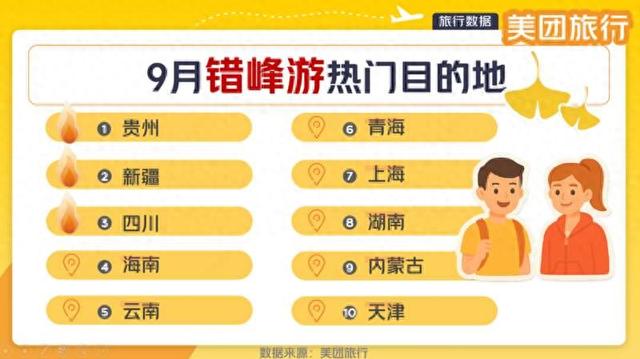
9月“错峰游”十大热门目的地:贵州、新疆、四川列前三
Zhong Guo Qing Nian Bao· 2025-09-05 04:00
Group 1 - The core viewpoint of the article highlights the increasing trend of off-peak travel in China, particularly to destinations like Hainan, driven by rising ticket prices during peak seasons [1][3]. - Data from Meituan Travel indicates that the search volume for "Hainan cuisine" has increased by 33% and "Zhaocai vinegar hot pot" by 30% since September 1, with a 56% increase in bookings for five-star hotels in Hainan [3][5]. - The demographic of travelers is shifting, with a notable increase in post-00s visitors from regions like Jiangsu, Zhejiang, and Shanghai, who are willing to pay for deep experiences and engage with local culture [3][5][7]. Group 2 - The hospitality industry in Hainan is adapting to the changing customer base, with younger tourists and families becoming the main demographic, moving away from traditional corporate events [5][7]. - Hotels are enhancing their offerings with personalized and interactive experiences, such as sunset dinners and wellness activities, to cater to the preferences of younger travelers [5][7]. - The three-month period leading up to July saw a 207% year-on-year increase in overnight stays at the Sanya Coral Bay Mandarin Oriental Hotel, indicating a strong demand for unique and engaging experiences [7].