清洁燃料

Search documents
【环球热评局】以对话促合作,CMP二十年见证中美工商界“双向奔赴”
Sou Hu Cai Jing· 2026-02-15 05:56
Core Insights - GE Aviation's business trajectory in China over the past two decades reflects the evolution of Sino-U.S. economic and industrial cooperation, transitioning from engine and maintenance services to involvement in domestic aircraft projects like ARJ21 and C919, and establishing joint ventures with local partners [1] - The 20th anniversary of the China-U.S. Enterprise Cooperation Project (CMP) serves as a platform for enhancing dialogue and collaboration between the two countries, with high expectations expressed by business leaders for strengthened cooperation this year [1] - The CMP has facilitated over 3000 companies from both nations through numerous events, highlighting the rapid development and upgrading of Sino-U.S. economic and trade relations over the past two decades [1] Trade Growth - The total trade volume between China and the U.S. increased from $211.6 billion in 2005 to $688.3 billion in 2024, marking significant growth [2] - U.S. exports to China reached $143.55 billion in 2024, a 648.4% increase from $19.18 billion in 2001, significantly outpacing the overall U.S. export growth of 183.1% during the same period [2] - Service trade between the two countries expanded from $8.95 billion in 2001 to $66.86 billion in 2023, reflecting a sixfold increase [2] Emerging Cooperation Areas - The CMP is focusing on expanding cooperation in emerging fields such as green technology, low-carbon initiatives, rail transportation, and financial investment [5] - Chinese companies are actively exploring global opportunities in clean fuel and green technology, indicating a shift towards international promotion of these sectors [3] Foundation of Cooperation - The foundation of Sino-U.S. relations is rooted in strong grassroots exchanges, with the CMP serving as a significant platform for enhancing cooperation between businesses [6] - The American Chamber of Commerce in China reports that 52% of surveyed companies still view China as one of the top three investment destinations globally, indicating continued interest in the Chinese market [7] Future Directions - Looking ahead, the CMP aims to enhance service efficiency and facilitate deeper cooperation in industrial and supply chains, with plans for high-profile economic activities and events [10] - The fourth Chain Expo in Beijing is set to further strengthen Sino-U.S. collaboration through this platform [10]

物流脱碳,货主企业应该怎么做?
Jing Ji Guan Cha Wang· 2025-12-31 10:12
Core Viewpoint - The transportation sector accounts for 15% of global greenhouse gas emissions in 2024, making it a major source of carbon dioxide. Despite some high-energy industries in China nearing peak emissions or showing a downward trend, emissions from the transportation sector continue to rise due to increasing demand [1]. Group 1: Industry Actions and Trends - Leading freight companies have initiated decarbonization actions, with 63% using new energy vehicles, 41% experimenting with clean fuels in shipping or air transport, and 77% focusing on improving transport efficiency [2]. - Companies like Decathlon and Geely are increasing the application and range of new energy trucks, supported by the development of an integrated infrastructure network for rail, sea, and inland shipping [2]. - Over 90% of freight companies disclose their logistics carbon emissions, and 41% collect data on logistics suppliers' activities or emissions [2]. Group 2: Challenges in Decarbonization - The logistics industry faces significant challenges in decarbonization, as most efforts are still in the early stages, limited to specific routes or areas, lacking large-scale application [2]. - Current climate-related disclosure regulations do not provide clear requirements for reporting greenhouse gas emissions from logistics activities, leading to limited information disclosure from leading companies in green freight [2]. Group 3: Recommendations for Improvement - Companies are encouraged to reach a consensus on low-carbon logistics, translating commitments and strategies into actionable steps, and requiring low-carbon transport from logistics providers [3]. - Establishing a green logistics system is essential for companies to achieve net-zero emissions by reducing emissions from logistics activities and collaborating with logistics suppliers [3]. - The report suggests that companies should adopt measured data from logistics service providers to improve the accuracy of carbon accounting and set quantifiable decarbonization targets for logistics activities [4]. Group 4: Collaborative Efforts - To transition from strategic planning to actual emission reductions, collaboration among companies, logistics partners, policymakers, industry organizations, and society is necessary [5]. - Five recommendations are proposed: actively disclose best practices in green logistics, enhance carbon accounting and disclosure in supply chain logistics, set decarbonization targets covering the entire value chain, incorporate green performance into logistics service provider management, and expand the scale of green freight projects to reduce the green premium of low-carbon transport tools and technologies [5].
物流脱碳机遇可观 龙头引领亟待扩展
Zhong Guo Fa Zhan Wang· 2025-12-31 08:03
Core Insights - The report highlights that leading cargo companies are leveraging China's advancements in renewable energy technology and infrastructure to implement logistics carbon accounting, switch to electric trucks, and adopt multimodal transport models [1][2] Group 1: Green Logistics Initiatives - 63% of evaluated companies have adopted new energy vehicles for logistics, while 41% are experimenting with clean fuels in shipping or air transport [2] - 77% of companies are focused on improving transportation efficiency, with firms like Decathlon and Geely increasing the application and range of new energy trucks [2] - Over half of the companies are also paying attention to emissions reduction in warehousing [2] Group 2: Emission Data Disclosure - More than 90% of cargo companies disclose their logistics-related carbon emissions, with 35% of companies like VF and Inditex using ISO14083 or GLEC frameworks for more accurate carbon accounting [2] - 41% of companies collect data on logistics suppliers' activities or emissions, with firms such as Puma and Lenovo encouraging suppliers to disclose climate information [2] Group 3: Recommendations for Scaling Decarbonization Efforts - The report suggests creating a supportive external environment to help leading companies scale their decarbonization pilot projects [3] - It recommends sharing best practices from leading companies to encourage more firms to adopt similar strategies [3] - Companies are advised to establish quantifiable decarbonization targets for logistics activities and incorporate carbon intensity metrics into supplier evaluations and procurement decisions [3]






我国在全球率先实现全品类清洁燃料加注使用
Ren Min Ri Bao· 2025-12-24 09:41
Core Viewpoint - The shipping industry is making significant strides in green and intelligent transformation, with advancements in clean fuel usage and the implementation of AI applications in maritime systems [1][2] Group 1: Green Transformation - The industry has released technical specifications for pure battery-powered vessels and methanol fuel bunkering vessels, achieving the world's first comprehensive use of clean fuels [1] - A five-year action plan for the construction of a green intelligent ship technology specification system will be implemented, including the revision of specifications for methanol bunkering facilities [2] Group 2: Intelligent Transformation - An AI application platform for maritime systems has been developed, integrating 55 intelligent agents and 79 intelligent applications into business practices [1] - The maritime system has efficiently supported 34.647 million vessel entries and exits, 20.09 billion tons of cargo, and 31 million standard containers, with year-on-year growth of 9.4%, 6.2%, and 8.4% respectively [1] Group 3: Safety and Regulation - The number of waterborne accidents and fatalities has decreased by 36.7% and 13.8% year-on-year, respectively, due to risk assessment and the implementation of intelligent monitoring systems for passenger vessels [1] - A new regulatory mechanism based on credit will be established, incorporating models like "maritime credit + shipping finance" and "maritime credit + shipping insurance" [1]
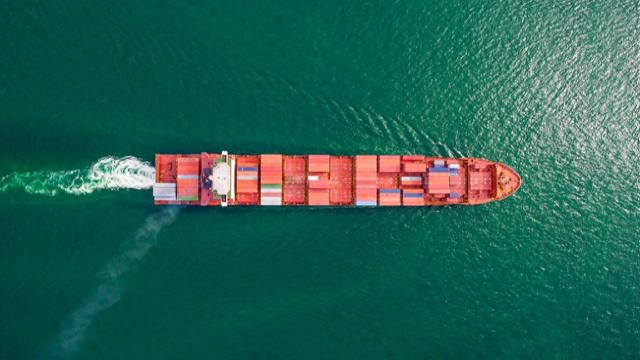
可持续方法论|以《国际绿色航运走廊合作倡议》为契机,加速航运脱碳
Xin Lang Cai Jing· 2025-11-27 06:19
Core Viewpoint - The global shipping industry, responsible for over 80% of goods transport, faces significant challenges in reducing greenhouse gas emissions, which currently account for about 2%-3% of global emissions. The International Maritime Organization warns that emissions could rise to 1.5-3.5 times the 2008 levels by 2050, necessitating a systemic transformation in fuel alternatives, energy efficiency, and infrastructure connectivity [1][3]. International Progress and Policy Landscape - The EU has introduced the FuelEU Maritime initiative under the "Fit for 55" framework, aiming to progressively tighten greenhouse gas intensity limits for marine fuels, targeting a 2% reduction by 2025 and an 80% reduction by 2050 compared to 2020 levels. This encourages investments in renewable fuels and low-carbon technologies [3]. - The EU Emissions Trading System (EU ETS) includes shipping, providing a carbon price signal to enhance marginal abatement costs, prompting companies to balance energy efficiency improvements, fuel alternatives, and operational optimizations [3]. - Over 60 green shipping corridor projects have been announced or planned globally, although only one-third have progressed to feasibility studies or pilot phases due to high initial investment costs and lack of standardization [3]. China's Policy and Engineering Practices - Since the 14th Five-Year Plan, China has been enhancing its top-level design for green and low-carbon transformation in transportation, with a focus on the shipping industry's green and digital development [4]. - Approximately 60 automated terminals have been established, with significant advancements in shore power usage, reaching nearly 200 million kilowatt-hours. Shanghai is a leader in LNG and methanol dual-fuel refueling [4]. - The "Green Development Action Plan for Shipbuilding Industry (2024-2030)" aims to integrate green and low-carbon improvements across the entire lifecycle of ships, promoting collaboration across the industry [4]. Insights from the International Green Shipping Corridor Cooperation Initiative - The initiative emphasizes voluntary and open collaboration among governments, ports, shipping companies, and fuel suppliers, proposing seven measures to enhance clean fuel application and infrastructure development [5][6]. - It aims to create a closed-loop mechanism linking policy, technology, infrastructure, and market dynamics to facilitate the transition from demonstration projects to large-scale implementation [6]. - The initiative advocates for a collaborative supply chain for clean fuels, addressing the current fragmentation and promoting long-term contracts and joint investments [6]. Technological and Standardization Collaboration - The initiative highlights the need for technological and standardization collaboration to reduce systemic costs and support large-scale replication of clean fuel technologies [7]. - It calls for the establishment of a mutual recognition certification system for sustainable shipping fuels, which would streamline regulatory processes and reduce compliance costs [7]. Fair Transition and Global Cooperation - The initiative stresses the importance of equitable transition principles, supporting developing countries in upgrading port infrastructure and localizing green fuel production [8]. - It suggests exploring demonstration projects in emerging shipping routes and enhancing multilateral financing and technical cooperation to ensure broader participation in the global corridor network [8]. - By operationalizing fairness through funding, technology, and institutional arrangements, the initiative aims to ensure that the benefits of green transformation are widely distributed, promoting sustainable and equitable progress in the global shipping industry [8].