热法磷酸

Search documents
全球磷矿磷肥2026展望
2026-03-12 09:08
Summary of Phosphate Fertilizer Industry Conference Call Industry Overview - The conference call focuses on the phosphate fertilizer industry, particularly in China, with insights into export policies, production costs, and market dynamics [1][3][5]. Key Points Export Control and Policy Changes - The National Development and Reform Commission (NDRC) has announced a ban on phosphate fertilizer exports from the end of 2025 until August 2026, aiming to stabilize domestic demand and prices [1][3]. - In 2025, the total fertilizer export volume was over 46 million tons, with a 44% increase year-on-year. However, exports of monoammonium phosphate (MAP) and diammonium phosphate (DAP) decreased by 6% and 24%, respectively [3][4]. - The expected reduction in MAP and DAP exports for 2026 is between 300,000 to 500,000 tons each, with potential for a rebound if policies are relaxed in the latter half of the year [4]. Cost Pressures and Production Rates - Sulfur prices remain high at approximately 4,000 CNY/ton, leading to a reduction in industry operating rates to 50%-55%. Large state-owned enterprises maintain higher rates of 55%-60% due to supply responsibilities [1][4][6]. - The high sulfur prices are expected to keep phosphate fertilizer production below 2025 levels, compounded by environmental regulations and the dual carbon policy [4][12]. Price Disparities - There is a significant price difference between domestic and international markets, with MAP prices approximately 50% higher overseas and DAP prices about 40% higher [1][5]. - If export restrictions are lifted post-August 2026, leading companies like Yuntianhua could benefit from these price differentials [1][5]. Capacity and Production Trends - Actual effective capacity is projected to increase by about 10 million tons annually from 2026 to 2027, primarily in Yunnan, Guizhou, and Hubei provinces [1][10]. - The industry is transitioning towards high-end, intelligent, and green development, with a focus on integrated processes [5][9]. Supply Chain and Geopolitical Factors - The supply of sulfur is currently stable, and while costs are high, there is no immediate concern over sulfur shortages affecting production [6][7]. - Geopolitical tensions, particularly the US-Iran conflict, may impact sulfur transportation and prices but are not expected to significantly disrupt phosphate supply chains [7][8]. Strategic Resource Management - Phosphate rock is classified as a strategic resource in China, with no explicit national production cap, but local regulations may restrict mining activities [13][14]. - The "mining ticket" system is in place to control extraction and ensure local processing of phosphate resources [13][14]. Future Outlook - The phosphate fertilizer industry is expected to face ongoing challenges from high raw material costs and regulatory pressures, but companies with integrated operations and resource control may find growth opportunities, especially in the context of the expanding renewable energy sector [5][9]. Additional Insights - The industry is navigating a complex landscape of cost management, regulatory compliance, and market dynamics, with a focus on sustainability and efficiency in production processes [12][14].
重磅专家-磷矿供需梳理及产业链更新
2026-03-01 17:23
Summary of Key Points from the Conference Call on Phosphate Industry Industry Overview - The phosphate rock industry is characterized by high dependence on imports for key agricultural herbicides like glyphosate, with domestic phosphate resources facing depletion, highlighting strategic value [1][3] - Global phosphate rock reserves are concentrated in Morocco, with China holding only 5% of the total reserves, but China accounts for nearly half of the global production in 2024 [1][5][6] Core Insights and Arguments - **Supply and Demand Dynamics**: - China's phosphate rock production is expected to grow to approximately 130 million tons in 2025, driven mainly by the southwestern regions, particularly Hubei and Yunnan [1][7] - The domestic phosphate rock price is projected to remain high due to tight supply, increased downstream demand, and reluctance from leading companies to sell [1][10] - The phosphate fertilizer sector remains stable, but there are concerns about overcapacity and reduced export quotas [1][11] - **Strategic Importance of Phosphate**: - The U.S. has classified phosphate and glyphosate as critical strategic materials due to its weak domestic supply chain and the essential role of phosphate in agriculture and defense [3] - The U.S. phosphate self-sufficiency is below 5%, with over 90% of its glyphosate needs met through imports, primarily from China [3] - **Market Trends**: - The phosphate chemical industry is seeing a shift towards integrated supply chains, with new energy companies beginning to invest in mineral resources [1][8] - The demand for phosphate from the new energy sector, particularly for iron phosphate and lithium iron phosphate, is growing rapidly, although production capacity is expanding faster than demand, leading to fluctuations in operating rates [2][13] Additional Important Insights - **Regional Production Characteristics**: - The main production areas in China are Yunnan, Hubei, Sichuan, and Guizhou, which together account for over 92% of the total reserves [5][7] - The production capacity in 2025 is expected to be significantly lower than planned due to regulatory and environmental constraints [8][17] - **Price Trends**: - The average market price for phosphate rock is expected to stabilize at high levels, with the price for 30% grade phosphate rock rising from 350 RMB to around 1,000 RMB from 2021 to 2025 [10][20] - The price dynamics are influenced by the scarcity of high-grade phosphate rock and the strategic control exercised by leading companies [20][23] - **Future Projections**: - The phosphate market is expected to maintain a tight balance between supply and demand, with significant growth in demand from the new energy sector [16][30] - The integration of resources and production capabilities among leading companies is likely to enhance their competitive advantage in the global market [15][16] - **Environmental and Regulatory Factors**: - Stricter environmental regulations and resource protection measures are expected to impact the pace of new capacity additions in the phosphate industry [17][19] - **Import Dynamics**: - While domestic phosphate rock imports have increased, they still account for less than 2% of total production, with primary sources being Egypt, Jordan, and Pakistan [9][31] This summary encapsulates the critical insights and trends discussed in the conference call regarding the phosphate industry, highlighting the strategic importance, supply-demand dynamics, and future outlook.
国金证券:黄磷供需格局有望逐步向好 硫磺价格高企或将助推景气上行
智通财经网· 2026-02-13 03:26
Core Viewpoint - The report from Guojin Securities highlights the supply-side constraints and demand-side dynamics of yellow phosphorus, indicating potential investment opportunities in companies with significant yellow phosphorus production capacity and performance elasticity. Supply Side - Yellow phosphorus supply is concentrated in regions such as Yunnan, Sichuan, Guizhou, and Hubei, with a significant portion of small production capacities. By 2025, Yunnan is expected to account for 46% of the total domestic yellow phosphorus production [2] - The competitive landscape shows that production capacities below 50,000 tons account for approximately 47%, while those below 30,000 tons and 20,000 tons account for 27% and 14%, respectively [2] Policy Environment - Since the "14th Five-Year Plan," policies have focused on strict control of new production capacities, elimination of outdated capacities, and energy conservation and carbon reduction. The "14th Five-Year Industrial Green Development Plan" emphasizes the need to control new capacities in industries including yellow phosphorus [3] - The "2024 Industrial Structure Adjustment Guidance Catalog" categorizes yellow phosphorus production units with capacities below 5,000 tons/year as obsolete, while energy consumption standards aim for 30% of yellow phosphorus production to meet benchmark efficiency levels by 2025 [3] Demand Side - The primary applications of yellow phosphorus are in thermal phosphoric acid (33%), glyphosate (27%), and trichlorophosphate (24%). The apparent consumption of yellow phosphorus has shown a fluctuating upward trend, with an expected consumption of approximately 1,001,900 tons by 2025, representing an 18% year-on-year increase [4] - Traditional sectors like glyphosate have seen stable demand, while the demand for lithium hexafluorophosphate, representing new energy applications, has been growing rapidly [4] Cost Dynamics - The rising price of sulfur has increased the production costs of wet-process phosphoric acid, potentially providing price support for thermal phosphoric acid and yellow phosphorus. As of February 4, 2026, the domestic sulfur price reached 4,065 yuan/ton, with a cumulative increase of 2,569 yuan/ton, or approximately 172% [5] - Since May 2025, the price of thermal phosphoric acid has been lower than that of wet-process phosphoric acid, with the price gap widening. The higher purity of thermal phosphoric acid enhances its cost-effectiveness amid rising sulfur prices [5] - SMM forecasts that sulfur supply growth will not meet demand growth in 2026, leading to sustained high prices, which could further elevate the costs of wet-process phosphoric acid and indirectly support price increases for thermal phosphoric acid and yellow phosphorus [5]

化工ETF(159870)盘中净申购近3亿份,黄磷价格有望上涨
Xin Lang Cai Jing· 2026-02-04 07:18
Group 1 - The chemical sector is experiencing strong capital inflow, with the chemical ETF (159870) seeing a net subscription of 299 million units [1] - High prices of sulfuric acid and sulfur are impacting the cost of wet-process phosphoric acid, leading some wet-process phosphoric acid producers to potentially switch to lower-cost thermal phosphoric acid, which may increase the usage of yellow phosphorus [1] - The demand for phosphoric acid is expected to surge after the Spring Festival, but the production of yellow phosphorus may not keep pace with the increased demand, resulting in a supply-demand mismatch [1] Group 2 - Due to limited supply and a slight increase in demand, yellow phosphorus prices are likely to rise after the Spring Festival [2] - As of February 4, 2026, the CSI Sub-Industry Chemical Theme Index (000813) increased by 0.25%, with notable gains from companies such as Sankeshu (3.07%) and Hongda Co. (2.57%) [2] - The top ten weighted stocks in the CSI Sub-Industry Chemical Theme Index account for 44.82% of the index, including major companies like Wanhua Chemical and Yilong Co. [2]
未知机构:华源化工强推黄磷板块主要逻辑①当前硫酸硫磺价格高-20260204
未知机构· 2026-02-04 02:10
Summary of Key Points from the Conference Call Industry: Yellow Phosphorus Sector Core Insights and Arguments 1. Current high prices of sulfur/sulfuric acid are impacting the cost of wet-process phosphoric acid, leading to wet-process phosphoric acid costs exceeding those of thermal phosphoric acid. This may result in some wet-process phosphoric acid companies temporarily shifting to the lower-cost thermal phosphoric acid, thereby increasing the usage of yellow phosphorus [1][3] 2. Following the Spring Festival, the demand for phosphoric acid is expected to surge due to the seasonal peak, but the production of yellow phosphorus may not keep pace with the increased demand, leading to a supply-demand mismatch [2][4] 3. The supply of yellow phosphorus has been constrained in recent years due to high energy consumption and safety concerns, making significant capacity expansion difficult in the short term [5] 4. The combination of a slight increase in demand and limited supply may lead to a price increase for yellow phosphorus after the Spring Festival [6] Notable Companies in the Yellow Phosphorus Sector 1. Recommended companies include: - Chengxing Co., Ltd. (the purest yellow phosphorus stock) - Yuntu Holdings - Yuntianhua - Xingfa Group [7]


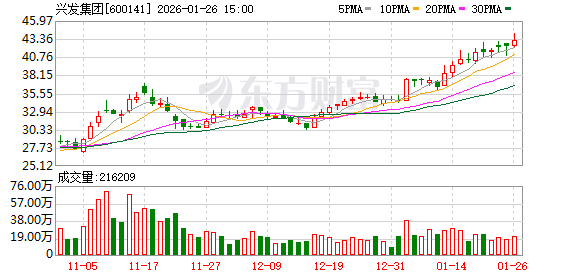
兴发集团:现有热法磷酸产能15万吨/年,计划2026年提升至22.5万吨/年
Zheng Quan Ri Bao· 2026-01-26 13:44
Group 1 - The company currently has a thermal phosphoric acid production capacity of 150,000 tons per year, with plans to increase it to 225,000 tons per year by 2026 [2] - The company expects a production capacity utilization rate of over 70% in 2025 [2] - The rising sulfur prices make thermal phosphoric acid more cost-effective compared to wet phosphoric acid, leading the company to adjust production based on market conditions [2] Group 2 - The increase in thermal phosphoric acid production is expected to positively impact the market price of raw material yellow phosphorus [2]

云天化:拟3688.58万元收购天耀化工100%股权
Zheng Quan Shi Bao Wang· 2025-12-10 11:17
Core Viewpoint - The company, Yuntianhua, plans to acquire a 100% stake in Tianyao Chemical by purchasing shares from its controlling shareholder and another investor for a total valuation of 36.8858 million yuan, enhancing its position in the fine phosphorus chemical industry [1] Group 1: Acquisition Details - The company intends to acquire 61.13% of Tianyao Chemical from its controlling shareholder, Yuntianhua Group, and 38.87% from Yunnan Xinhang Investment Development Co., Ltd. [1] - The total assessed price for the acquisition is 36.8858 million yuan [1] Group 2: Strategic Implications - Upon completion of the acquisition, Tianyao Chemical will become a wholly-owned subsidiary of the company [1] - The acquisition is expected to create synergies with the company's existing fine phosphorus chemical products, forming a complete industrial chain from yellow phosphorus and thermal phosphoric acid to polyphosphate, ammonium polyphosphate, and phosphorus-based flame retardants [1] - This strategic move aims to enhance the scale effect and completeness of the company's fine phosphorus chemical industry, expand product sales and market share, and improve phosphorus resource utilization efficiency and overall competitiveness [1]
磷酸铁锂产业链近况解读
2025-11-11 01:01
Summary of Lithium Iron Phosphate Industry Conference Call Industry Overview - The lithium iron phosphate (LFP) industry has seen a significant increase in operating rates, with leading companies operating at full or even over capacity. The average operating rate for the year is expected to reach 80% due to a substantial increase in demand for energy storage batteries, resulting in a supply-demand imbalance, indicating strong market demand for LFP [1][2][3] Key Points Production Capacity and Output - By the end of 2025, the effective production capacity of LFP is projected to be between 5.3 million to 5.5 million tons, with actual shipments expected to exceed 4 million tons, a significant increase from 2.5 million tons in 2024 [3][4] - An additional capacity of at least 1 million tons is expected to be added by the end of 2026, with approximately 1 million tons added annually in the following years. Despite 20% of outdated capacity, these lines have recently restarted, indicating optimistic market demand for the upcoming year [5][6] Cost and Pricing Dynamics - New production lines have a significant cost advantage over older lines, reducing costs by at least 2,000 yuan per ton due to improvements in energy consumption, natural gas, water usage, and automation [6] - Prices for key raw materials such as thermal phosphoric acid and ferrous sulfate have risen since August, leading to mainstream prices for LFP exceeding 10,000 yuan per ton, with high-quality products reaching around 11,000 yuan per ton, increasing cost pressures [8][9] Profitability Outlook - LFP prices are expected to rise to between 11,000 and 12,000 yuan per ton by 2026, with profits for high-quality manufacturers reaching 500 to 1,500 yuan per ton. Weaker manufacturers may only break even or reduce losses, indicating an improvement in industry profitability [4][11] - The last price increase occurred after the National Day holiday, with a minimum increase of 300 yuan per ton, reflecting strong market demand and manufacturers' pricing power [12][15] Market Demand and Future Projections - The demand for LFP is expected to exceed 4 million tons in 2025, with projections for 2026 indicating an increase to 5 million tons, necessitating corresponding increases in LFP production [24] - The energy storage sector prioritizes price over performance, with significant growth observed in Q4 2025, driven by the adoption of LFP batteries in hybrid vehicles [25] Competitive Landscape - Major chemical companies have entered the LFP sector, with optimistic market outlooks and plans for capacity expansion. Companies like China Nuclear Titanium Dioxide and Guizhou Phosphate have achieved full production and are looking to scale further [7] - Battery manufacturers acquiring or controlling cathode material companies is a strategic move to ensure stable raw material supply and mitigate price pressures, although it may not significantly alter the overall supply-demand dynamics [27] Additional Insights - The production methods for LFP primarily include solid-phase and liquid-phase methods, with solid-phase methods accounting for 90% of production. The cost differences among these methods are minimal, ranging from 300 to 600 yuan [16][19] - The industry association's guidance on cost pricing is not strictly adhered to, as prices are determined by individual manufacturers based on their operational efficiencies and regional advantages [23]
2025年中国热法磷酸行业产量约68.8万吨 高端市场突破与工艺替代压力并存[图]
Sou Hu Cai Jing· 2025-08-18 08:16
Core Insights - The report titled "2025-2031 China Thermal Phosphoric Acid Industry Panorama Research and Market Demand Forecast" provides essential reference for decision-makers and investors in the thermal phosphoric acid sector [1] Group 1: Industry Overview - Thermal phosphoric acid is produced from yellow phosphorus through high-temperature oxidation, resulting in phosphorus pentoxide gas, which is then hydrated to form phosphoric acid. The main product is orthophosphoric acid, known for its high purity compared to wet-process phosphoric acid, although it has higher energy consumption [6][7] - The industrial applications of thermal phosphoric acid include high-end fields such as electronic-grade phosphoric acid and food additive phosphates [6] Group 2: Market Dynamics - The production of electronic-grade phosphoric acid heavily relies on thermal processes, which have purity requirements that are difficult to replace in the short term. The thermal process can utilize low-grade phosphate ore, offering cost advantages in regions with abundant but low-grade phosphate resources [7] - By 2029, China's thermal phosphoric acid production is expected to reach approximately 283,000 tons, with the market size projected to reach 14.8 billion yuan [8] Group 3: Environmental and Regulatory Factors - The Chinese government is increasing environmental regulations in the phosphoric acid sector, promoting the elimination of outdated production capacity and encouraging the adoption of green production processes. This shift may raise production costs but also accelerate industry consolidation [8] Group 4: Regional Insights - Regions rich in phosphate resources, such as Yunnan and Guizhou, are integrating the "phosphate-mining-thermal acid-phosphate" industrial chain to reduce logistics costs and enhance regional competitiveness. For instance, a company in Yunnan has managed to compress inventory turnover to 7 days, 40% shorter than the industry average [11] Group 5: Research Methodology - The report's data accuracy and reference value are ensured through multiple channels, including annual reports from listed companies, manufacturer surveys, dealer discussions, and expert validations. The analysis reflects the current market status, trends, and future outlook of the thermal phosphoric acid industry [3]