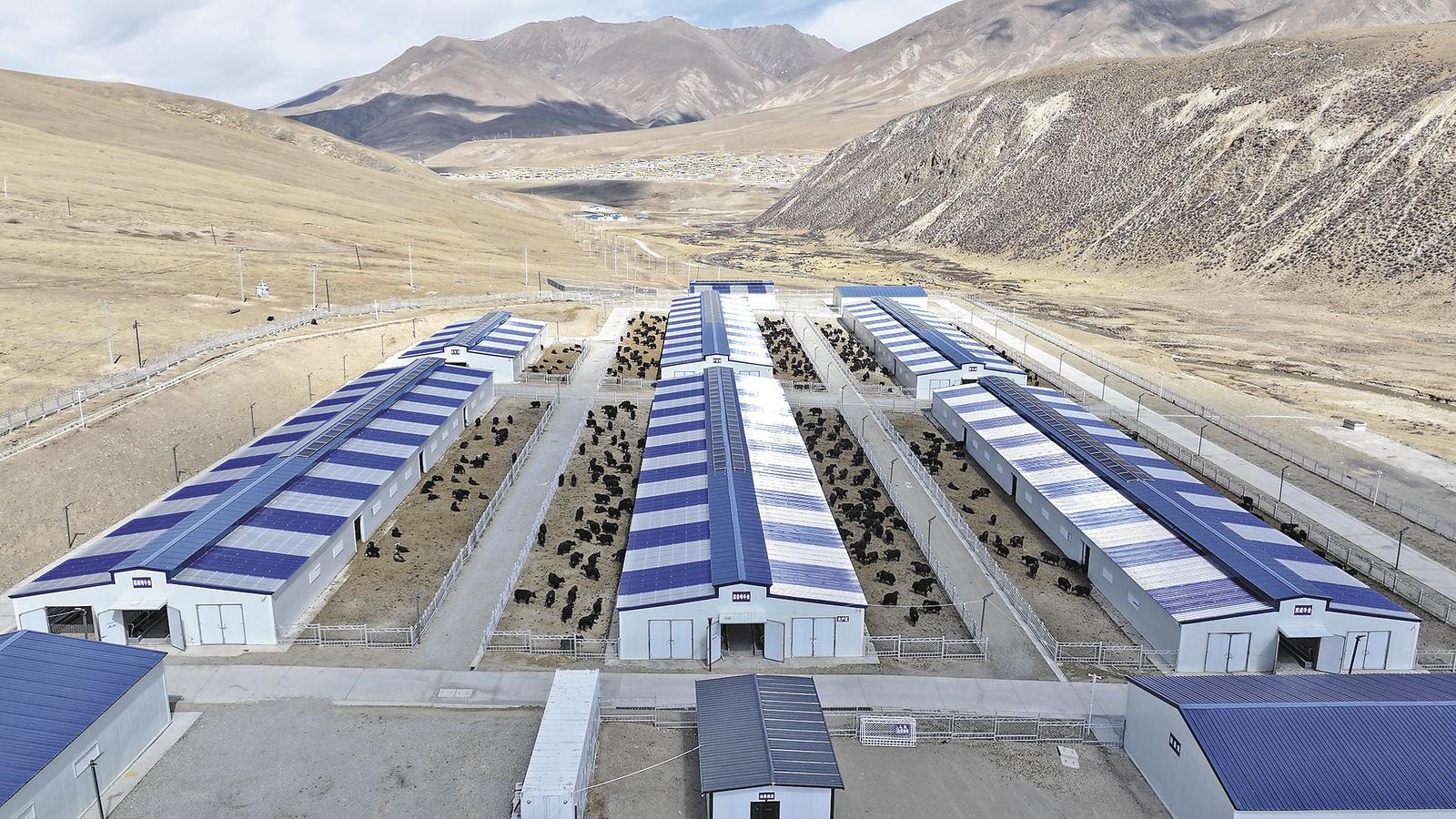
玉树牦牛

Search documents
攻坚克难齐奋进 幸福花开新玉树
Xin Lang Cai Jing· 2026-01-25 20:19
Core Insights - The article highlights the significant progress made by Yushu Tibetan Autonomous Prefecture during the 14th Five-Year Plan period, focusing on various sectors including culture, tourism, agriculture, and healthcare [1][9]. Group 1: Cultural and Tourism Development - Yushu has positioned itself as a preferred international ecological tourism destination, enhancing its cultural tourism service system and integrating local cuisine and hospitality [2][3]. - The region has received 6.4185 million tourists, generating a total tourism expenditure of 4.175 billion yuan, which has created nearly 20,000 jobs [3]. - The establishment of a digital archive for intangible cultural heritage has led to the systematic protection of 834 representative projects, showcasing the region's cultural richness [3]. Group 2: Agricultural Advancements - Yushu's agricultural sector is anchored by yak and Tibetan sheep industries, creating a comprehensive supply chain from breeding to sales [4]. - The region boasts 120 million acres of organic certified grasslands and five geographical indication products, enhancing the quality and safety of agricultural products [4]. - The yak wool sales reached 50 tons annually, supported by modern processing facilities and established quality standards [3][4]. Group 3: Ecological Improvements - Yushu has seen a significant increase in flagship species, with the black-necked crane population rising from 22 to over 220, and the Tibetan antelope population increasing from under 20,000 to 70,000 [5][6]. - The region's water quality has improved, with 99.6% of surface water meeting excellent standards, and air quality showing 99.97% of days classified as good [6]. - Yushu has been recognized as a national ecological civilization demonstration zone, with ongoing initiatives for waste management and ecological protection [6]. Group 4: Healthcare Enhancements - The establishment of the provincial-level medical center in Yushu has alleviated healthcare access issues, with a 28.53% increase in advanced surgical procedures [8]. - A comprehensive telemedicine system has been implemented, allowing residents to access expert medical services remotely [8]. - The region has focused on improving healthcare quality and expanding resources, contributing to the overall well-being of the population [7][8]. Group 5: Infrastructure and Transportation - The completion of the G0613 highway segment has improved connectivity, facilitating travel and enhancing the transportation network [8]. - The integration of transportation infrastructure supports the overall development of the region, contributing to economic growth and accessibility [8]. Group 6: Future Outlook - Yushu aims to continue its development trajectory towards 2035, with goals for significant economic growth, increased per capita GDP, and improved living standards for residents [9].
牦牛“诺布”养成记
Xin Lang Cai Jing· 2026-01-18 18:29
Core Viewpoint - The article highlights the transformation of the Yushu yak industry through modernization, technological advancements, and strategic initiatives, leading to improved living conditions for local herders and enhanced product value. Group 1: Industry Transformation - The Yushu yak high-tech breeding demonstration base has been established, covering an area of 1.2573 million hectares, contributing to the ecological agricultural development of Yushu City [5][6]. - Significant investments exceeding 100 million yuan have been made to address issues in the traditional breeding industry, enhancing market participation and improving the breeding chain [6][7]. - The introduction of a "Doctor Expert Service Station" in the breeding sector has brought scientific expertise to the industry, revitalizing the old pastures and improving the livelihoods of herders [6][7]. Group 2: Technological Advancements - The construction of standardized livestock shelters with insulation, ventilation systems, and automatic water supply has improved the living conditions for yaks, ensuring their well-being even in harsh winter conditions [7][8]. - Scientific feeding practices have led to yaks gaining an additional 30 kilograms compared to traditionally raised counterparts, resulting in higher meat quality and market prices [8][11]. Group 3: Economic Development - The establishment of 32 specialized breeding cooperatives and 22 standardized ecological animal husbandry cooperatives has doubled the number of new operating entities in the region over three years [8][9]. - The total investment in the comprehensive industrial entrepreneurship logistics park is 238 million yuan, serving as a key component in the development of Yushu's specialty industries [9][10]. Group 4: Market Expansion - The logistics park has created a unified brand for Yushu yaks, enhancing traceability and consumer confidence through electronic ear tags that document the yaks' life history [12][13]. - A logistics system has been developed to reduce transportation costs by 20%, enabling fresh yak meat to reach major cities across China within 48 hours [13][14]. - The collaboration with e-commerce platforms and local influencers has turned Yushu yak products into popular items, increasing their visibility and sales [14][15].

玉树牦牛的“新生”
Xin Lang Cai Jing· 2026-01-18 18:29
Core Insights - The transformation of yak farming in Yushu City exemplifies the high-quality development of the county economy, showcasing a blend of traditional practices and modern technology [1] - The rise of industrial clusters is crucial for enhancing the value of Yushu yaks, shifting from raw meat sales to high-value processed products [1][2] Group 1: Technological Advancements - The introduction of standardized warm shelters with smart temperature control and automatic drinking systems has improved yak living conditions, increasing their weight by 30 kilograms compared to traditional farming [1] - The establishment of expert service stations has infused technological support into traditional farming practices, leading to a significant transformation in yak husbandry [1] Group 2: Economic Development - The "company + base + farmer" model has integrated thousands of herders into the industrial system, allowing them to share in the economic benefits of yak farming [1] - The government has played a vital role in building platforms and implementing policies that support the development of the yak industry, facilitating a shift from isolated efforts to collaborative growth [1] Group 3: Market Expansion - The implementation of an electronic ear tag system has created a traceability framework for yaks, enhancing consumer confidence and product quality [2] - A logistics network led by postal services enables Yushu yaks to reach over 20 provinces within 48 hours, significantly expanding market access [2] - The regional public brand "Yushu Yak" has gained recognition, highlighting both the ecological and brand value of Yushu products [2]
三江源的答卷:好生态如何变成好日子?
Ren Min Ri Bao· 2025-11-13 07:20
Core Viewpoint - The article emphasizes the importance of ecological protection in the Sanjiangyuan region, highlighting initiatives to enhance ecological barriers and promote sustainable development in the area [2][5]. Group 1: Ecological Protection Initiatives - The Sanjiangyuan National Park, covering over 190,000 square kilometers, is a pilot for the national park system, focusing on ecological barrier construction in the Qinghai-Tibet Plateau [2]. - A comprehensive waste management system is being developed, including source classification, efficient transportation, and green processing, to address waste issues in remote villages [5]. - The region has seen an increase in wetland area to nearly 50,000 square kilometers, with water quality in major rivers rated at Class II or above [5]. Group 2: Community Engagement and Economic Benefits - A points-based system for waste classification encourages local participation, allowing residents to exchange points for essential goods in "green supermarkets" [4][5]. - The local economy is benefiting from ecological tourism and sustainable livestock farming, with the "Yushu Yak" recognized as a geographical indication product [6][7]. - The community has received significant financial support, including 590,000 yuan for medical and pension insurance and over 1,600 yuan in dividends per villager [7]. Group 3: Government Commitment - Local government officials express a commitment to continue strengthening ecological barriers and achieving a balance between economic, social, and ecological benefits [7].
青海玉树:护好三江源,“一处美”带动“一片富”
Ren Min Ri Bao· 2025-11-13 05:53
Core Viewpoint - The article emphasizes the importance of ecological protection in the Sanjiangyuan region, highlighting initiatives for waste management and ecological restoration as part of China's broader environmental goals [2][4]. Group 1: Ecological Initiatives - The Sanjiangyuan National Park, covering over 190,000 square kilometers, is a pilot for the national park system, focusing on ecological barrier construction in the Qinghai-Tibet Plateau [2]. - A closed-loop system for waste management is being established, which includes source classification, efficient transportation, and green processing [4]. - The introduction of a points system in "green supermarkets" incentivizes local residents to participate in waste sorting, allowing them to exchange points for essential goods [3][4]. Group 2: Economic and Social Benefits - The ecological improvements have led to increased wetland areas, now nearly 50,000 square kilometers, and improved water quality in major rivers [4]. - The local economy is benefiting from eco-tourism and sustainable livestock farming, with the "Yushu Yak" gaining recognition as a geographical indication product [6]. - Financial support for villagers includes medical and pension insurance payments totaling 590,000 yuan, with individual dividends exceeding 1,600 yuan [6]. Group 3: Policy and Governance - The local government is committed to enhancing ecological protection as part of the 14th Five-Year Plan, aiming for a balance between economic, social, and ecological benefits [5][6].
护好三江源,“一处美”带动“一片富”(贯彻四中全会精神一线见闻)
Ren Min Ri Bao· 2025-11-12 23:10
Core Viewpoint - The article emphasizes the importance of ecological protection in the Sanjiangyuan region, highlighting initiatives for waste management and ecological restoration as part of China's broader environmental goals [2][5]. Group 1: Ecological Protection Initiatives - The Sanjiangyuan National Park, covering over 190,000 square kilometers, is a pilot for national park systems in China, focusing on ecological barrier construction in the Qinghai-Tibet Plateau [2]. - A closed-loop system for waste management is being established, which includes source classification, efficient transportation, and green processing [5]. - The implementation of a "green supermarket" points system encourages local participation in waste sorting, allowing residents to exchange points for daily necessities [4][5]. Group 2: Economic and Social Benefits - The ecological improvements have led to increased wetland areas, now nearly 50,000 square kilometers, and improved water quality in major rivers [5]. - The local economy is benefiting from eco-tourism and sustainable livestock farming, with the "Yushu Yak" gaining recognition as a geographical indication product [7]. - Financial support for residents includes medical and pension insurance payments, totaling 590,000 yuan, and individual dividends exceeding 1,600 yuan [7]. Group 3: Policy and Future Directions - The local government is committed to enhancing ecological barriers and achieving a balance between economic, social, and ecological benefits [8]. - The integration of ecological health with economic prosperity is seen as essential, with local leaders advocating for continued efforts in environmental protection [6][8].
青海玉树加强生态屏障建设 护好三江源 “一处美”带动“一片富”(贯彻四中全会精神一线见闻)
Ren Min Ri Bao· 2025-11-12 22:58
Core Viewpoint - The article emphasizes the importance of ecological protection in the Sanjiangyuan region, highlighting initiatives for waste management and ecological restoration as part of China's broader environmental goals [2][5]. Group 1: Ecological Initiatives - The Sanjiangyuan National Park, covering over 190,000 square kilometers, is a pilot for national park systems, focusing on ecological barrier construction in the Qinghai-Tibet Plateau [2]. - A closed-loop system for waste management is being established, which includes source classification, efficient transportation, and green processing [5]. - The region has seen an increase in wetland area to nearly 50,000 square kilometers, with water quality in major rivers rated at Class II or above [5]. Group 2: Community Engagement and Benefits - A points system for waste classification allows villagers to exchange points for daily necessities, promoting community participation in ecological initiatives [4][5]. - The local economy is benefiting from ecological tourism and sustainable livestock farming, with significant financial support for villagers, including medical and pension insurance payments totaling 590,000 yuan [7]. - The integration of ecological health and economic prosperity is highlighted, with local leaders emphasizing the connection between a good environment and improved living standards [6][7].
北京援青助推牦牛产业“牛”起来
Jing Ji Ri Bao· 2025-08-03 22:00
Group 1 - The core viewpoint of the article highlights the transformation of the yak farming industry in Yushu, Qinghai Province, through modernized facilities and support from Beijing, leading to improved livestock management and economic benefits for local herders [1][2][3] - A modern yak breeding demonstration base has been established with an investment of 18 million yuan, featuring advanced feeding and watering systems, which has significantly increased calf survival rates and reduced the time to market [1][2] - The integration of standardized facilities and a complete industrial chain from breeding to sales is expected to enhance the efficiency and profitability of yak farming in the region, with an annual slaughter capacity projected at 10,000 heads [2][3] Group 2 - The establishment of over 90 modern agricultural enterprises and training bases in Yushu has created job opportunities for 15,000 people and increased income for 54,000 herders, showcasing the positive impact of the yak industry on local livelihoods [3] - The "Yushu Yak" brand has been recognized as an excellent case in brand building and has been included in national rural revitalization initiatives, indicating its growing market presence and potential for further development [3] - Beijing's support over the past 15 years, amounting to 6.65 billion yuan, has facilitated the implementation of over 1,200 projects, contributing to the revitalization of the local economy and the popularity of Yushu yak products [3]
直面镜头的企业家,书写中国品牌崛起新叙事
Sou Hu Cai Jing· 2025-06-19 07:26
Group 1 - The role of entrepreneurs is transforming from behind-the-scenes decision-makers to front-facing brand ambassadors, highlighting the importance of visibility in building trust and marketing in the current consumer environment [1][6] - During the 618 shopping festival, notable entrepreneurs like Zhou Hongyi and Liu Qiangdong actively participated in promotional activities, showcasing a trend where business leaders engage directly with consumers to enhance brand recognition and trust [1][2] - The phenomenon of entrepreneurs acting as brand representatives reflects a shift in marketing strategies from focusing solely on product features to emphasizing quality and brand values, aligning with consumer demands for quality living [5][6] Group 2 - Entrepreneurs are increasingly stepping into cross-industry roles, as seen with Yu Minhong's ventures into agriculture and cultural tourism, demonstrating the potential for personal influence to drive industry upgrades and consumer trust [5][6] - High-frequency appearances by entrepreneurs in live-streaming events, such as Dong Mingzhu's collaborations, illustrate a commitment to showcasing confidence in Chinese manufacturing and establishing a model for corporate responsibility [6] - The trend of entrepreneur representation signifies a broader transition in the Chinese manufacturing sector from scale-driven to value-driven growth, with entrepreneurs leveraging their influence to communicate innovation and quality to consumers [7]