
瑞波币

Search documents
比特币一度跳涨至6.6万美元 市场紧盯特朗普国情咨文演讲
Zhi Tong Cai Jing· 2026-02-25 04:10
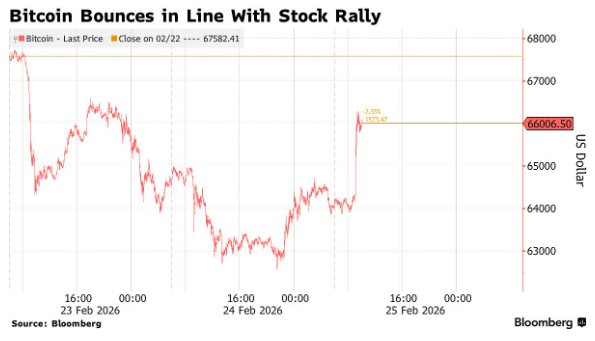
Group 1 - The cryptocurrency market experienced a rebound after a significant drop earlier in the week, with Bitcoin and Ethereum both rising over 3% during early Asian trading on Wednesday [1] - Bitcoin reached a peak increase of 3.52% to $66,300, marking its largest intraday gain since February 13, while Ethereum rose by 4.84% to $1,994 [1] - Smaller tokens also saw gains, with Solana increasing approximately 5.7% and Ripple rising by 1.35% [1] Group 2 - The recent surge in cryptocurrency prices coincided with a rise in the stock market ahead of President Trump's State of the Union address [3] - Following a Supreme Court ruling that limited Trump's ability to implement his proposed "reciprocal tariffs," cryptocurrency prices initially fell, but Trump later announced a 15% global tariff [3] - The increase in Bitcoin's price may be attributed to short covering and speculative long positions being established before the State of the Union address, according to Apollo Crypto's research head [3]

比特币一度跳涨至6.6万美元 市场紧盯特朗普国情咨文演讲
智通财经网· 2026-02-25 04:06
Group 1 - The largest cryptocurrencies, Bitcoin and Ethereum, saw significant price increases, with Bitcoin rising by 3.52% to $66,300 and Ethereum by 4.84% to $1,994, marking the largest intraday gains since February 13 [1] - As of the report, Bitcoin had a slight pullback, increasing by 2.39% to $65,500, while Ethereum rose by 3.10% to $1,905 [1] - Smaller tokens also experienced gains, with Solana increasing by approximately 5.7% and Ripple rising by 1.35% [2] Group 2 - The recent price surge coincided with a rise in the stock market ahead of President Trump's State of the Union address, following a Supreme Court ruling that limited Trump's ability to implement his proposed "reciprocal tariffs" [4] - Digital asset hedge fund Apollo Crypto's research head, Pratik Kar, suggested that Bitcoin's rise may be attributed to short covering and speculative long positions being established ahead of the State of the Union address [4] - President Trump addressed various topics including border security, immigration, economy, and crime during his State of the Union speech on February 24 [4]
比特币受挫于亚洲交易周开局 关税不确定性重挫加密货币市场
Xin Lang Cai Jing· 2026-02-23 08:01
Group 1 - Bitcoin experienced a decline, dropping to a low of $64,338 amid rising uncertainty regarding tariffs [1][2] - The recent downturn in Bitcoin reflects a cautious sentiment in the risk asset market, influenced by the court's rejection of Trump's tariff measures and the announcement of new global tariffs [1][2] - Policy uncertainty tends to trigger short-term "safe-haven" sentiments for Bitcoin, leading investors to prefer cash and bonds over high-volatility assets [1][2] Group 2 - A significant factor contributing to the decline in Bitcoin is the noticeable decrease in ETF inflows, which directly impacts market demand and diminishes expectations for a sustainable bull market cycle [1][2] - According to LSEG data, Bitcoin is currently down 3.4%, trading at $65,351 [1][2]
比特币跌破65000美元,全网超31亿元资金爆仓
Bei Jing Shang Bao· 2026-02-23 02:45
Group 1 - The overall cryptocurrency market has experienced a significant decline, with major cryptocurrencies such as Bitcoin, Ethereum, and Ripple showing substantial drops in value [1] - As of February 23, Bitcoin has fallen below $65,000, trading at $64,672.71, reflecting a 24-hour decrease of 5.2% [1] - Ethereum is reported at $1,859.18, with a 24-hour decline of 5.9% [1] Group 2 - Data from CoinGlass indicates that in the last 24 hours, a total of 135,152 individuals have been liquidated, resulting in a total liquidation amount of $455 million, approximately 3.143 billion yuan [1]
华尔街推进“合规化”购置加密货币! 高盛借道ETF加码布局 瑞波币与Solana首次入列
智通财经网· 2026-02-11 07:25
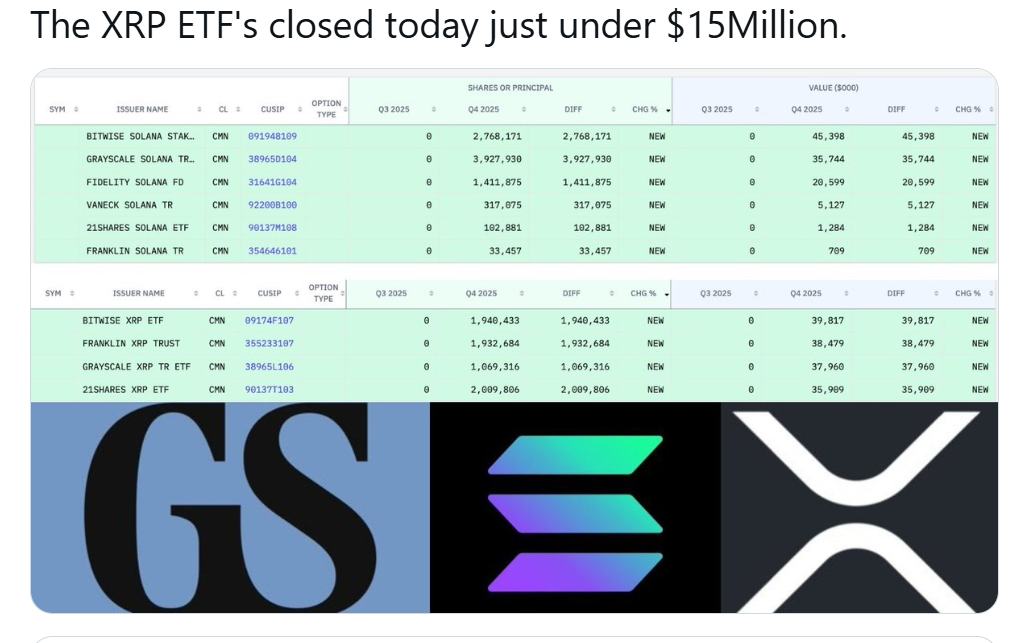
Core Viewpoint - Goldman Sachs has significantly increased its cryptocurrency asset allocation, with holdings exceeding $2.36 billion as of Q4 2025, up from approximately $2.05 billion in Q4 2024, indicating a growing interest in digital assets among major financial institutions [1][2]. Group 1: Cryptocurrency Holdings - Goldman Sachs holds approximately $1.1 billion in Bitcoin, $1 billion in Ethereum, $153 million in Ripple (XRP), and about $108 million in Solana, representing about 0.33% of its total investment portfolio [1]. - The firm’s cryptocurrency asset allocation reflects a shift towards not only Bitcoin and Ethereum but also increased exposure to Ripple and Solana, suggesting a diversification strategy within its crypto investments [2]. Group 2: ETF and Market Sentiment - The exposure to cryptocurrencies is primarily through U.S. stock market-listed crypto-related ETFs/ETPs rather than direct holdings, as the 13F filings reflect positions in "13(f) securities" defined by the SEC [1]. - The recent disclosure by Goldman Sachs may bolster bullish sentiment in the struggling cryptocurrency market, reinforcing the narrative that traditional financial institutions are still participating in digital asset investments [4]. Group 3: Institutional Influence - Goldman Sachs is now one of the largest institutions among major U.S. commercial banks in terms of cryptocurrency asset exposure, despite the small percentage of its total holdings [4][6]. - The firm’s investment strategies and disclosures are likely to have a significant impact on global financial markets, as they reflect broader institutional investor sentiment [6]. Group 4: Historical Context and Caution - Historically, Goldman Sachs has maintained a cautious stance towards Bitcoin, often describing it as a speculative asset with limited utility as a currency [7][8]. - The firm has softened its position in recent years, reopening its cryptocurrency trading desk and expanding its derivatives trading channels, acknowledging Bitcoin's potential as an inflation hedge [8][9]. Group 5: Market Dynamics and Future Outlook - The 13F disclosures are retrospective and may not accurately reflect current market positions, especially following significant market volatility [10][11]. - While the increase in ETF allocations by Goldman Sachs is seen as a positive narrative for the institutionalization of cryptocurrencies, the actual market rebound will depend on broader factors such as new capital inflows and macroeconomic conditions [12].

AI分析瑞波币ETF市场的能力与局限性
Sou Hu Cai Jing· 2026-02-10 14:15
Core Insights - The cryptocurrency market has shifted from rapid price movements to a slower, more complex environment influenced by capital allocation, ETF mechanisms, and macro positioning [2][4] - Ripple's price reflects not just trading activity but also the decisions of institutions, fund managers, and regulators, indicating a unique market position [6][11] - AI tools are increasingly used to track these factors, but they cannot predict outcomes, only organize complexity [2][5] Market Dynamics - Recent data shows that altcoin ETFs have recorded over $2 billion in net inflows, with Ripple and Solana leading this activity, while Bitcoin and Ethereum spot ETFs have seen continuous outflows since October [4][14] - The current market environment is characterized as selective, cautious, and unbalanced, rather than typical risk-on behavior [4][14] - AI models excel at identifying shifts in capital allocation, even when prices remain stagnant, highlighting underlying market dynamics [4][10] Ripple's Unique Position - Ripple often reacts to changes in access, regulation, and liquidity before market sentiment catches up, making it less synchronized with other cryptocurrencies [6][11] - The liquidity return expected in early 2026 may occur without a clear return to risk-taking, indicating a cautious market environment [6] AI Limitations - AI has blind spots, particularly regarding regulatory decisions, which rarely follow historical patterns, making it challenging to quantify their impact before they occur [8][12] - AI can measure capital flows but struggles to explain investor intentions, such as why they may choose to be cautious or restrained [8][12] Integration of AI and Human Judgment - AI can support market analysis but cannot replace the need for human interpretation, especially in understanding market conditions and potential catalysts [9][10] - The current market is described as a liquidity preservation phase, awaiting clearer macro data and policy signals [9][10]

全球数字资产:市场回调,监管博弈
Di Yi Cai Jing· 2026-02-10 11:02
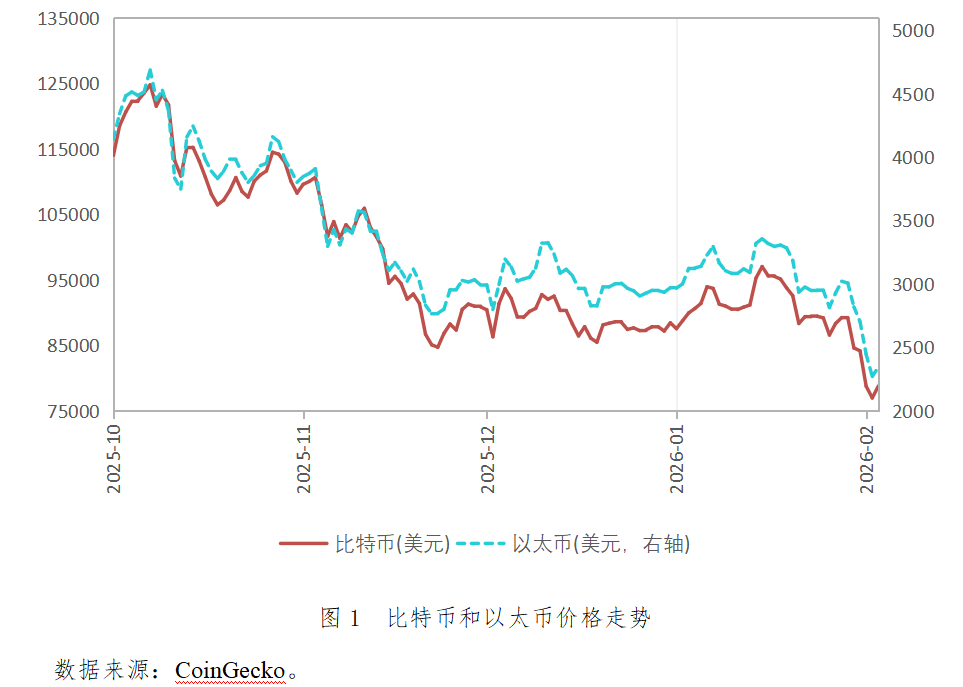
Market Overview - The digital asset market experienced a significant downturn in Q4 2025, with the total market capitalization dropping approximately 27.1% to $2.93 trillion by January 31, 2026 [1][3] - Bitcoin's closing price was $84,100, reflecting a decline of about 26.4%, while Ethereum fell to approximately $2,702, down 35.9% [1][3] - The contraction in the market was influenced by changes in liquidity expectations, delays in key regulatory legislation in the U.S., and a cautious shift in market sentiment [1][3] Stablecoin Market - The stablecoin market saw a slowdown in growth, with total market capitalization increasing only 2.3% to $293.29 billion by January 31, 2026 [1][5] - USDT and USDC continue to dominate the market, with USDT's market cap at approximately $184.8 billion, accounting for about 59.7% of the total [1][5] Regulatory Developments - Global regulatory frameworks are evolving to integrate digital assets while simultaneously addressing risk prevention [1][8] - The U.S. legislative process for the Digital Asset Market Structure Bill (CLARITY Act) has been stalled due to industry conflicts, highlighting the struggle for control over market infrastructure between new crypto entities and traditional financial capital [1][10] - The U.K. has proposed new regulations to align digital assets with traditional securities, indicating a move towards stricter compliance for crypto service providers [1][9] Real World Assets (RWA) - The market for Real World Assets (RWA) has seen a substantial increase, with a 41.1% growth to approximately $23.7 billion from Q3 2025 to January 31, 2026 [2][17] - U.S. Treasury securities represent the largest segment of RWA, accounting for 40% of the total [2][17] Digital Currency Developments in China - The People's Bank of China has initiated a new generation of the digital yuan, transitioning from digital cash to digital deposit currency, marking a significant development in its operational framework [1][15] - The new system emphasizes a dual-layer operational structure involving central banks and commercial institutions, enhancing the integration of digital currency into the existing financial system [1][15][16]
比特币马年首遇急跌,XBIT美欧关税战挫市场信心加密流动性仍显不足
Sou Hu Cai Jing· 2026-01-19 12:32
Core Viewpoint - The ongoing trade dispute between the US and Europe over Greenland has led to significant volatility in global risk asset markets, particularly impacting the cryptocurrency market, with Bitcoin experiencing a sharp decline and liquidity issues becoming apparent [1][3]. Group 1: Market Impact - The US proposal to impose new tariffs on Denmark and seven other European countries has escalated tensions in transatlantic trade relations, prompting the EU to consider retaliatory tariffs on US goods valued at €93 billion [3]. - Following the announcement, Bitcoin's price dropped by 3% on January 18, breaking its upward momentum, while Ethereum and other major cryptocurrencies also saw declines of over 2% [3][5]. - The cryptocurrency market's recovery momentum was interrupted, with Bitcoin previously nearing $98,000, which was seen as a potential signal of market recovery [3][5]. Group 2: Market Sentiment and Analysis - The cryptocurrency market experienced over $680 million in liquidations within 24 hours, with nearly 90% of this being long positions, indicating vulnerability due to overcrowding in the previous rally [5]. - Analysts suggest that the recent sell-off is more a result of macroeconomic disturbances rather than issues with the intrinsic value of cryptocurrencies [5]. - XBIT's report indicates that Bitcoin's current price remains below the 365-day moving average of around $101,000, a critical threshold for market sentiment, with ongoing concerns about declining spot demand and weak inflows into US spot ETFs [5][6]. Group 3: Future Outlook and Recommendations - XBIT's research suggests that the ongoing US-EU trade dispute will increase volatility in global financial markets, making it difficult for cryptocurrencies to escape a range-bound trading environment in the short term [6]. - The platform provides tailored solutions for different risk profiles, including enhanced multi-signature management for institutional users and real-time liquidity monitoring tools for retail investors [6][8]. - Looking ahead, XBIT anticipates that developments in US-EU trade relations and global liquidity conditions will be key variables affecting the cryptocurrency market, with Bitcoin likely to remain within the $90,000 to $95,000 range [8].

受投资者乐观情绪提振 比特币突破 95000 美元关口 以太坊、索拉纳、卡尔达诺同步大涨8%
Jin Rong Jie· 2026-01-14 07:43
Group 1 - The cryptocurrency market experienced a significant surge, with Bitcoin (BTC) rising over 4% and surpassing the $95,000 mark for the first time in a week, while Ethereum (ETH) increased by over 7% to around $3,330 [1] - The rise in cryptocurrency prices is attributed to unexpectedly low U.S. inflation data, which has strengthened market expectations for continued interest rate cuts by the Federal Reserve this year [1] - Political tensions, including a subpoena from the U.S. Department of Justice to the Federal Reserve, have contributed to a weaker dollar, enhancing the appeal of non-sovereign assets perceived as hedges against central bank policy risks [1] Group 2 - A massive liquidation in the futures market accompanied the recent price surge, with over $688 million in liquidations occurring in the past 24 hours, predominantly from short positions [2] - Approximately 122,000 traders were liquidated, with Binance's Ethereum to Tether (ETHUSDT) contracts accounting for $12.9 million of the total liquidation, indicating a significant shift in market sentiment [2] - The imbalance in liquidation structure highlights that traders had heavily bet on a market downturn prior to the inflation data release, which rapidly reversed [2] Group 3 - Traditional stock markets also saw gains, reinforcing the risk appetite in the cryptocurrency market [3] - Asian stock markets reached historical highs, with silver prices breaking $90 per ounce for the first time, while gold remained just below historical peaks [4] - These market movements indicate that investors are increasingly favoring assets that can benefit from a loose financial environment and monetary system turmoil [5]
受投资者乐观情绪提振 比特币突破 95000 美元关口 以太坊、索拉纳、卡尔达诺同步大涨 8%
Xin Lang Cai Jing· 2026-01-14 07:25
Group 1 - The cryptocurrency market experienced a significant surge, with Bitcoin (BTC) rising over 4% and surpassing the $95,000 mark for the first time in a week, while Ethereum (ETH) increased by over 7% to around $3,330 [1][6][7] - The rise in cryptocurrency prices is attributed to unexpectedly low U.S. inflation data, which has strengthened market expectations for continued interest rate cuts by the Federal Reserve this year [7][8] - Political tensions, including a subpoena sent to the Federal Reserve by the U.S. Department of Justice, have further fueled market sentiment, leading to a weaker dollar and increased attractiveness of non-sovereign assets [7][8] Group 2 - A large-scale liquidation occurred in the futures market, with over $688 million in liquidations reported in the past 24 hours, primarily from short positions [2][8] - Approximately 122,000 traders were liquidated, with Binance's Ethereum to Tether (ETHUSDT) contracts accounting for $12.9 million of the liquidation, indicating a significant shift in market sentiment [2][8] - The imbalance in liquidation structure highlights that traders had heavily bet on a market downturn prior to the inflation data release, which rapidly reversed [8] Group 3 - Traditional stock markets also saw gains, reinforcing the risk appetite in the cryptocurrency market [3][9] - Asian stock markets reached historical highs, with silver prices breaking $90 per ounce for the first time, while gold remained below historical peaks [4][10] - These market movements suggest that investors are increasingly inclined to allocate assets that can benefit from a loose financial environment and monetary system turmoil [10]