
生意参谋

Search documents
第17个“双11”,依然是中国消费市场的试金石
Guan Cha Zhe Wang· 2025-11-13 06:32
Core Insights - The "Double 11" shopping festival continues to be a significant indicator of consumer sentiment and market dynamics in China, despite facing challenges such as slowing growth and increased competition from other platforms [4][15] - Taobao and Tmall have maintained their market leadership, capturing 50.1% of total transaction volume during the festival period, with a year-on-year growth rate of 9.3% [2][4] - The festival's success is attributed to strategic initiatives including the introduction of "Flash Sale" and the integration of AI technology to enhance user experience and operational efficiency [5][8][12] Group 1: Market Performance - National express delivery volume reached 20.3 billion during the "Double 11" period, marking a year-on-year increase of 1.2 billion packages [1] - The peak delivery period coincided with the official start of Tmall's sales on October 20, indicating that Tmall remains a central player in the festival despite early promotions from competitors [1] - The Consumer Price Index (CPI) rose by 0.2% in October, reaching its highest level in eight months, reflecting a broader context of consumer spending [2] Group 2: Strategic Initiatives - Taobao and Tmall have adopted a "three-line battle" strategy focusing on consolidating high-value products, expanding into instant retail, and leveraging AI for future growth [4][12] - The "Flash Sale" initiative has successfully increased user engagement, with a 20% rise in daily active users in August, and significant sales growth for participating brands during the festival [6][12] - AI technology has been integrated into various aspects of the shopping experience, enhancing personalized recommendations and improving customer service efficiency [8][10] Group 3: Consumer Engagement - The introduction of simplified promotional strategies, such as eliminating complex discount rules, has lowered decision-making costs for consumers and encouraged participation from previously disengaged shoppers [12][14] - The focus on high-frequency consumption categories like food delivery and daily necessities aims to redefine the shopping experience and encourage habitual use of the platform [6][15] - The shift from price competition to value competition is evident, as brands are encouraged to innovate and differentiate their offerings, supported by Taobao's strategic initiatives [12][14]


3000万元判赔,划定数据权益保护边界
Xin Hua Ri Bao· 2025-11-12 00:29
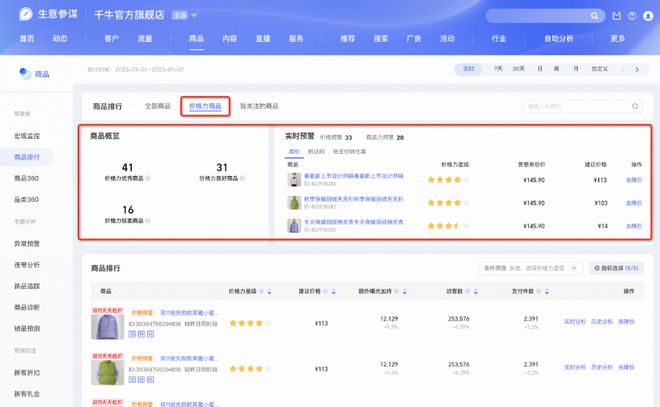
Core Points - The case involving the software "Xiao Wang Shen" highlights the issue of unfair competition in the e-commerce sector, leading to a court ruling that ordered the defendants to pay 30 million yuan for their actions [1][4][6] - The ruling clarifies the legal boundaries of data rights protection in the digital economy, addressing the gray area of data scraping and its implications for data security and privacy [1][7] Group 1: Case Background - "Xiao Wang Shen" software gained popularity for its features that allowed users to easily access competitors' sales data and download product images, which were deemed as unfair competitive practices [1][3] - The software operated by reverse-engineering the data protection algorithms of a legitimate e-commerce analytics tool, "Shengyi Canmou," effectively restoring sensitive data that should have been protected [3][4] Group 2: Legal Proceedings - The e-commerce platform filed a lawsuit against the developers of "Xiao Wang Shen" in November 2023, focusing on whether the platform had rights to its commercial secrets and data, and if the defendants engaged in unfair competition [4][5] - The court determined that while some data could be classified as commercial secrets, the broader collection of data created through user authorization also warranted protection under unfair competition laws [5][6] Group 3: Court Ruling and Implications - The court ruled that "Xiao Wang Shen" violated data rights by undermining the competitive advantage of the legitimate analytics tool, leading to a significant loss of revenue for the e-commerce platform [5][6] - The ruling established a layered protection system for data rights, distinguishing between commercial secrets, competitive rights over public data, and the original data based on collection legality [7][8] Group 4: Industry Impact - Following the ruling, the companies involved in "Xiao Wang Shen" began to dissolve operations and delete data, indicating a significant shift in the operational landscape of data scraping in e-commerce [7] - The case aligns with national policies aimed at enhancing data rights protection, as new amendments to the Anti-Unfair Competition Law were introduced to prohibit the improper acquisition and use of legitimate data [8]
独家|对话淘天凯夫:淘宝AI升级,2025年做了三件事
Hu Xiu· 2025-10-17 23:03
Core Insights - The article discusses the AI upgrade strategy of Taobao, which aims to enhance operational efficiency while maintaining user experience during the transition [1][4][11] - The strategy focuses on three key areas: improving traffic matching efficiency, reducing costs for merchants, and developing new AI shopping products [1][4][5] Group 1: AI Upgrade Strategy - Taobao's decision-making process for the AI upgrade began in December 2024, with a focus on three main initiatives that were launched in March 2025 [1][5] - The AI upgrade process involves careful testing, starting with 2% of users, and gradually increasing to 50% based on positive feedback [2][3] Group 2: Key Projects and Innovations - A significant project is the "Product Library," which aims to bridge the gap between existing product information and the capabilities of generative AI models [2][10] - The AI upgrade has led to notable improvements, including a 20% increase in search relevance and a 12% increase in merchant advertising ROI [3] Group 3: Implementation and Testing - The implementation of AI features is done through methods like A/B testing and gradual rollout to ensure minimal disruption to users [1][11] - The AI tools developed include six innovative products aimed at enhancing user experience and merchant efficiency [3][4] Group 4: Leadership Insights - Insights from the leadership indicate that the AI upgrade is seen as a foundational infrastructure for Taobao's future development [12][13] - The approach emphasizes integrating AI capabilities into existing systems rather than completely overhauling them, ensuring a balance between innovation and user experience [7][9][11]

超大互联网平台数据被“寄生”,法院判定不正当竞争
2 1 Shi Ji Jing Ji Bao Dao· 2025-07-02 08:45
Core Viewpoint - The case of "Xiao Wang Shen" infringement has been ruled by the Nanjing Intermediate People's Court, affirming that Taobao Tmall holds data rights over its platform's operational data and derived data products, marking a significant legal precedent in the protection of data rights for large internet platforms [1][3]. Group 1: Legal Context - The ruling is recognized as a landmark case in the realm of data resource law, often referred to as the "first case of data resource law enforcement in the country" [1]. - The court determined that Taobao Tmall possesses commercial secrets and data rights over three categories of data: raw information, processed operational data, and derived data products [3]. Group 2: Infringement Details - The "Xiao Wang Shen" software was found to have illegally accessed and sold Taobao Tmall's operational data, generating an estimated illegal income of approximately 22.96 million yuan [3]. - The court ordered the defendants to cease their infringing activities and pay punitive damages of 30 million yuan to Taobao Tmall, along with reasonable expenses of 100,000 yuan [3]. Group 3: Data Rights and Protection - The ruling reinforces the concept of "data three rights," which includes holding, using, and processing rights over data, thereby clarifying the ownership and protection of data rights in the digital economy [3]. - The "Xiao Wang Shen" software's official channels still display links to plugins with infringing functionalities, indicating ongoing challenges in enforcing the ruling [4].
企业数据权益纠纷趋势研究报告
北京瀛和律师事务所· 2025-05-09 14:05
Investment Rating - The report does not explicitly provide an investment rating for the industry Core Insights - The report highlights the increasing importance of data as a fundamental resource and key production factor in the digital economy, emphasizing its role in market competition and production processes [14][15] - It discusses the growing trend of data rights disputes among enterprises, driven by the expansion of data usage and the increasing awareness of data rights protection [16][17] - The report identifies various trends in data rights disputes, including the extension of cases from the internet sector to traditional industries, the diversification of data infringement methods, and the emergence of issues related to data transactions [39][40][44] Summary by Sections Recent Characteristics of Enterprise Data Rights Disputes - The report analyzes 89 effective civil cases related to enterprise data rights from 2016 to 2023, showing an overall increasing trend in such cases, particularly after 2019 [22][23] - The geographical distribution of cases is concentrated in economically developed regions with specialized data courts, with Beijing, Zhejiang, and Guangdong being the top three areas [26] - The industry distribution indicates that most disputes arise in social communication, e-commerce, multimedia video, and financial sectors, with social communication and e-commerce leading the way [31] - Compensation amounts in these cases are generally modest, with most falling within the range of 0 to 1 million yuan, highlighting the cautious approach of courts in awarding damages [33] - The primary cause of action in these disputes is identified as unfair competition, accounting for 74% of the cases analyzed [38] Trends in Recent Enterprise Data Rights Disputes - The report outlines several key trends, including the shift of involved enterprises from the internet sector to traditional industries such as transportation and healthcare, driven by policy encouragement [40] - It notes the increasing variety of data infringement methods, including unauthorized data scraping and API abuse, which complicate the legal landscape [44][46] - The report highlights the emergence of disputes related to data transactions, emphasizing the need for clearer regulations and compliance measures in the data trading market [51][52] - It discusses the recognition of the overall value of data resources, moving beyond the protection of raw data to encompass the rights associated with derived data [56][57] Judicial Protection Paths and Trends - The report examines various judicial protection paths for enterprise data rights, including copyright, trade secret, and competition law protections, and provides recommendations for enterprises to safeguard their data rights [21][4] - It emphasizes the importance of establishing robust internal mechanisms for data rights confirmation to effectively protect against infringement [33]