
能源开发

Search documents
高市早苗在日美会谈后的发言全文
日经中文网· 2026-03-20 02:24
Group 1 - The core viewpoint of the article emphasizes the importance of stabilizing the situation in Iran and ensuring energy supply security, with Japan and the U.S. committed to expanding U.S. energy production [2][4] - Japan and the U.S. confirmed their ongoing close communication to achieve peace and stability in the Middle East, particularly regarding the safety of navigation in the Strait of Hormuz [4][5] - Japan expressed a desire to initiate joint projects with the U.S. for oil procurement, highlighting the need for diversification of energy sources to ensure stability for Japan and Asia [4][5] Group 2 - The article discusses strategic investment initiatives in the energy sector, including the construction of small modular reactors (SMRs), in response to the rapid growth in international electricity demand [5] - Japan and the U.S. agreed to collaborate closely on various issues related to China and North Korea, with Trump expressing full support for resolving the abduction issue concerning North Korea [5][6] - The article highlights the importance of the Japan-U.S. alliance in maximizing Japan's national interests amid increasing global uncertainties, with a focus on enhancing cooperation in economic security and defense [5][6]


浙江:加快构建新型能源体系 建设更高水平生态省
Zhong Guo Huan Jing Bao· 2026-02-05 03:35
Core Viewpoint - The Zhejiang Provincial Party Committee and Government emphasize the importance of a "dual carbon" strategy to drive comprehensive green transformation and establish a new energy system, supporting high-quality development and common prosperity [1] Group 1: Goals and Objectives - By 2030, Zhejiang aims to establish a distinctive new energy system, a modern industrial system, and a modern logistics system, significantly enhancing its dual carbon governance capabilities [2] - The focus will be on "three optimizations and one enhancement," leading the green transformation through dual carbon initiatives [2] Group 2: Key Initiatives - Implementation of green low-carbon development and energy supply stability projects, promoting green power, a robust and secure power grid, and a technology-driven new energy storage system [2] - Development of a modern transportation system, leveraging world-class ports and a strong transportation province, with an emphasis on optimizing logistics networks and promoting the use of new energy vehicles [2][3] Group 3: Environmental and Economic Strategies - Accelerating the upgrade of traditional industries and promoting green low-carbon industries, while enhancing the capacity for carbon sinks through pollution prevention and forest management [3] - Advocating for green buildings and comprehensive energy-saving strategies to foster a culture of low-carbon living and drive the transformation towards a greener economy [3]
访华期间,英方人士驳斥特朗普言论
Xin Lang Cai Jing· 2026-01-31 15:24
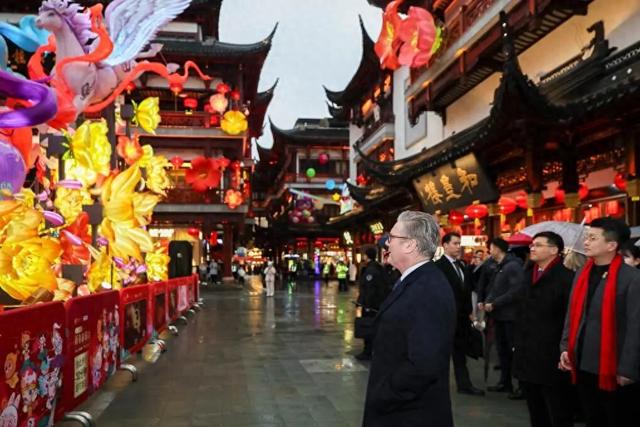
Group 1 - UK Prime Minister Starmer emphasizes the importance of seizing business opportunities with China, highlighting it as the world's second-largest economy [1][3] - British business representatives express optimism about UK-China relations, stating there are no reasons to avoid mutually beneficial cooperation outside of national security concerns [3][6] - A recent UK-China business forum saw over 300 participants, with significant interest from British representatives in sectors like new energy, automotive, and pharmaceuticals [3][4] Group 2 - Liverpool City Council's CEO Andrew Lewis announces a partnership with Chinese automotive company Chery Commercial Vehicles, which will establish its European headquarters in Liverpool, marking a significant step in local economic development [4][5] - The collaboration in new energy and advanced manufacturing is expected to create job growth and enhance Liverpool's position in the European automotive industry [4][5] - UK clean energy company Ceres Power's chairman indicates that the visit signals a more stable and pragmatic phase in UK-China relations, which is crucial for business confidence [5][6] Group 3 - AstraZeneca plans to invest $15 billion (approximately 104.3 billion RMB) in China over the next four years, marking its largest single investment in the country to date [7] - Octopus Energy will enter the Chinese market for the first time, collaborating with Chinese company PCG Power to develop a digital platform for electricity trading [7]
关于金融服务数据开放、人工智能,国资委最新表态|宏观经济
清华金融评论· 2026-01-28 09:10
Core Viewpoint - The State-owned Assets Supervision and Administration Commission (SASAC) of the State Council emphasizes the high-quality development of state-owned enterprises (SOEs) by 2025, focusing on restructuring, innovation, and the cultivation of emerging industries to support China's economic goals [2][3][4]. Group 1: Financial Performance and Growth - By the end of 2025, the total assets of central enterprises are expected to exceed 95 trillion yuan, with a profit of 2.5 trillion yuan and fixed asset investment of 5.1 trillion yuan [3][4]. - The average annual growth rate of central enterprises' total assets during the 14th Five-Year Plan period is 6.9%, with a 44.6% increase in value added compared to the previous five years [4]. - The total profit of central enterprises reached 12.7 trillion yuan, marking a 56.2% increase from the 13th Five-Year Plan period [4]. Group 2: Strategic Initiatives and Restructuring - SASAC plans to solidify the formation of new central enterprises and strategic restructuring, focusing on professional integration and high-quality mergers and acquisitions [3][5]. - The restructuring of central enterprises aims to enhance their roles in strategic security, industry leadership, and public service [6][7]. - The SASAC is also working on a document to promote the cultivation of emerging pillar industries, guiding central enterprises towards significant project investments and breakthroughs in key areas [9][8]. Group 3: Innovation and Emerging Industries - By 2025, revenue from strategic emerging industries of central enterprises is projected to exceed 12 trillion yuan, with an investment of 2.5 trillion yuan, accounting for 41.8% of total investments [9][8]. - The SASAC is focusing on a systematic layout and leapfrog development of emerging industries, with differentiated core tasks for various industry categories [9][8]. - The central enterprises are expected to enhance their investment in artificial intelligence (AI) and related technologies, with a strategic plan for the 15th Five-Year Plan period [11][10]. Group 4: Data Resource Development - There is a commitment to accelerate the opening and development of data resources in key areas such as transportation logistics and financial services [10][11]. - The SASAC aims to create a collaborative ecosystem that integrates industry and technology, enhancing the overall efficiency and competitiveness of central enterprises [11][10].
事关央企重组整合、“AI+”,国务院国资委最新发声
证券时报· 2026-01-28 04:43
Core Viewpoint - The article discusses the high-quality development of state-owned enterprises (SOEs) in China by 2025, highlighting significant growth in assets, profits, and investments, as well as advancements in technology and industry restructuring [1][3]. Group 1: Financial Performance - By the end of 2025, the total assets of central enterprises are expected to exceed 95 trillion yuan, with a profit of 2.5 trillion yuan and fixed asset investments of 5.1 trillion yuan [1]. - The average annual growth rate of central enterprises' total assets during the 14th Five-Year Plan period is projected to be 6.9% [3]. - The value added by central enterprises reached 51.3 trillion yuan, a 44.6% increase compared to the previous five-year period, while total profits increased by 56.2% to 12.7 trillion yuan [3]. Group 2: Productivity and Efficiency - Labor productivity for central enterprises increased from 594,000 yuan per person to 836,000 yuan, with an annual growth rate of 7.1% [3]. - The operating income profit margin improved from 6.2% to 6.7%, indicating enhanced efficiency and competitiveness [3]. - Over the past five years, R&D investment exceeded 5 trillion yuan, with a 0.27 percentage point increase in R&D intensity and a nearly 50% rise in the number of technology talents [3]. Group 3: Strategic Restructuring and Integration - The article emphasizes the importance of restructuring and integrating central enterprises, focusing on energy security and green development, with notable examples including the formation of China Yajiang Group and the restructuring of China Chang'an Automobile Group [5]. - The State-owned Assets Supervision and Administration Commission (SASAC) plans to optimize the layout and structure of state-owned capital through strategic mergers and acquisitions [5][6]. - SASAC aims to enhance the core functions and competitiveness of central enterprises by promoting professional integration and high-quality mergers [6]. Group 4: Emerging Industries and Innovation - By 2025, revenue from strategic emerging industries is expected to exceed 12 trillion yuan, with an investment of 2.5 trillion yuan, accounting for 41.8% of total investments [8]. - SASAC is drafting a document to guide central enterprises in cultivating new pillar industries, focusing on systematic layout and leapfrog development [9]. - The article highlights the importance of artificial intelligence (AI) as a driving force for technological revolution, with SASAC promoting the "AI+" initiative to enhance capabilities in various sectors [11].

传统能源巨头逐梦“人造太阳”
Zhong Guo Hua Gong Bao· 2026-01-27 02:07
Core Viewpoint - China is accelerating its investment in controlled nuclear fusion, recognized as the "ultimate energy," with significant participation from traditional energy companies like New Hope Group, which has invested over 4 billion yuan in this field [1][2]. Group 1: Investment and Market Dynamics - The global commercial fusion industry has attracted $9.7 billion in investment by July 2025, a 414% increase compared to the same period in 2021, outpacing traditional and new energy sectors [2]. - New Hope Group has shifted its strategic focus to controlled nuclear fusion since 2017 after exploring various renewable energy sources [2][3]. Group 2: Technological Challenges and Pathways - The majority of commercial fusion companies (72%) are pursuing the deuterium-tritium path, while private enterprises like New Hope Group are exploring alternative technologies such as hydrogen-boron and deuterium-helium-3 [5]. - Hydrogen-boron fusion is seen as a pragmatic choice due to its safety, environmental benefits, and lower costs compared to deuterium-tritium fusion, despite its higher technical challenges [5][6]. Group 3: Future Energy Supply and Economic Potential - Future energy supply must increase by an order of magnitude to meet the exponential growth in energy demand driven by AI and industrial upgrades, with current global data center electricity consumption projected to rise from 415 terawatt-hours to approximately 945 terawatt-hours by 2030 [3]. - The theoretical cost of electricity from hydrogen-boron fusion could drop below 0.1 yuan per kilowatt-hour, making energy as accessible as air and water, which would enable various previously constrained developments [6][8]. Group 4: Milestones and Future Goals - New Hope Group's "Xuanlong-50" fusion experiment achieved significant milestones, including the world's first megampere-level hydrogen-boron fusion discharge, with plans to achieve hydrogen-boron fusion reaction by 2026 and commercial fusion power generation by 2030 [6][8]. - The global nuclear fusion market is projected to reach $496.55 billion by 2030, potentially leading to a trillion-dollar industry cluster by 2050 [8].
五家企业分享“获得感”:“海南自贸港为我们提供了广阔舞台”
Zhong Guo Xin Wen Wang· 2026-01-22 03:56
Core Viewpoint - The Hainan Free Trade Port has significantly enhanced the operational capabilities and market reach of various companies, leading to substantial growth and development opportunities in the region [1]. Group 1: Policy Benefits and Market Expansion - Under the tariff exemption policy for value-added processing, Oscar Grain and Oil has saved approximately 300 million yuan in tariff costs, alongside a reduction in overall operational costs due to a 15% corporate and personal income tax rate [2]. - Oscar Grain and Oil has adopted a "two ends outside" strategy, successfully entering over ten international markets, with an annual foreign trade import and export volume reaching 825 million USD [2]. - The Hainan Free Trade Port has provided a broad platform for companies, with Oscar Grain and Oil's output value expected to increase from 10 billion yuan to between 20 billion and 25 billion yuan during the 14th Five-Year Plan period [2]. Group 2: Industry Development and Innovation - The one-stop aircraft maintenance industrial base in Haikou has completed over 2,400 aircraft maintenance tasks and over 300 complete aircraft paint jobs, serving more than 20 foreign airlines [2]. - The base aims to develop an aircraft dismantling industry chain and expand high-value-added maintenance services, enhancing cooperation with Southeast Asia and Oceania [2]. - The establishment of a healthy chocolate brand by Qiaozhi Enterprise has been facilitated by easier raw material imports and reduced costs, leading to a strong market response with orders exceeding 30 million yuan [3]. Group 3: Transformation and Growth - The energy sector, represented by Datang Hainan Energy Development, has expanded from a single power generation focus to a comprehensive energy service model, with installed capacity growing from zero to over 3 million kilowatts [4]. - The company has integrated advanced technologies such as AI monitoring and drone inspections, transforming its power plants into intelligent entities [4]. - Hainan Flyer Technology has evolved from a three-person team to a technology enterprise with over 80 patents, benefiting from zero-tariff policies that lower R&D equipment import costs [6].
政策落地见实效 企业分享获得感
Xin Lang Cai Jing· 2026-01-21 17:29
Group 1 - The Hainan Free Trade Port enterprise experience sharing conference was held to showcase the effectiveness of policy implementation and to foster consensus for high-quality development post-closure [1][6] - The conference featured nearly 300 representatives from domestic and international enterprises, industry experts, and government officials, focusing on the theme of "Policy Implementation Strengthens Confidence, Government and Enterprises Work Together to Promote Development" [1][6] - The event aimed to bridge communication between government and enterprises, addressing the "last mile" issue of policy implementation and converting policy benefits into tangible results for business development [1][2] Group 2 - Key enterprises shared their experiences, including Hainan Auscar International Grain and Oil Co., which benefited from the "30% value-added processing duty exemption" policy, leading to a 12% reduction in internal sales costs and a 35% increase in new orders [2][3] - Datang Hainan Energy highlighted the "double 15%" tax incentive, saving over 23 million yuan in tax burdens in the second half of 2025, which was reinvested into offshore wind power projects [3] - Hainan Airport Industry Group utilized the "zero tariff" policy to enhance its logistics infrastructure, achieving a 48% increase in cargo throughput by 2025 [3][4] Group 3 - The cross-border e-commerce sector saw significant growth, with a 62% increase in transaction volume, reaching 800 million yuan, and local product exports rising from 15% to 30% [4][5] - The conference included a policy interpretation area and a government-enterprise negotiation zone, addressing over 200 inquiries from businesses and establishing 17 preliminary cooperation intentions [4][6] - The first month of operation post-closure saw "zero tariff" imports valued at 750 million yuan, a 48% year-on-year increase, and over 5,132 new foreign trade enterprises registered [5][6]
贵银输活水,“废热”变暖流
Zheng Quan Shi Bao Wang· 2026-01-19 07:48
Core Viewpoint - The article highlights the successful collaboration between Guizhou Bank and local government to finance the Fuling City Urban Central Heating Project, emphasizing the importance of timely financial support for enhancing residents' quality of life and promoting green development [2][4]. Group 1: Project Overview - The Fuling City Urban Central Heating Project has a total investment of approximately 404 million yuan, aiming to utilize industrial waste heat from a nearby power plant to create a clean centralized heating network [2]. - The project is part of Guizhou Province's major engineering projects and is recognized as one of the "Ten Major Livelihood Projects" by the Fuling City government [2][4]. Group 2: Financial Support - Guizhou Bank provided a first tranche loan of 120 million yuan to the project, which was crucial for ensuring heating services before the winter season [1][3]. - The bank's rapid response included the establishment of a special service team to assess the project and expedite the loan approval process, completing it in just over two months [3]. Group 3: Impact and Future Prospects - The project is expected to significantly improve air quality by replacing inefficient coal-fired heating systems, thereby enhancing residents' living conditions [2][4]. - Guizhou Bank aims to continue its collaboration with local governments and quality enterprises to support sustainable development and improve public welfare in the region [4].
2025年全球企业净零行动在曲折中继续前行
Xin Lang Cai Jing· 2026-01-16 02:10
Core Viewpoint - The article discusses the ongoing challenges and progress in global corporate net-zero actions, highlighting the importance of integrating net-zero commitments into core business strategies to achieve necessary decarbonization goals by 2025 and beyond [1][2][3]. Group 1: Global Corporate Net-Zero Actions - In 2025, major banks like Goldman Sachs and Citigroup withdrew from the UN-supported Net-Zero Banking Alliance, leading to its cessation and reflecting setbacks in sustainable development efforts [2][3]. - Some large companies, such as Morrisons and Equinor, have postponed or weakened their climate targets, indicating challenges in maintaining firm commitments amid geopolitical and economic uncertainties [2][3]. - Despite setbacks, 41% of the world's largest 2000 companies have set net-zero targets covering their entire value chain, up from 27% in 2021, with European companies showing the most significant growth [3][15]. Group 2: Trends in Corporate Sustainability Practices - A notable trend is the rise of "greenhushing," where companies focus on actual emissions reductions while minimizing public disclosures to avoid scrutiny [4][5][16]. - The number of companies with verified near-term reduction targets has increased by 97% compared to the end of 2023, with those setting both near-term and net-zero targets rising by 227% [3][15]. Group 3: China's Corporate Net-Zero Actions - Chinese companies exhibit strong momentum in net-zero transitions, driven by improved policies and disclosure systems, making China a vibrant market for corporate net-zero actions [6][17]. - The Chinese government has been enhancing its sustainability and disclosure frameworks, aligning with international standards, which helps reduce compliance costs for companies [6][17][19]. - The number of Chinese companies with science-based targets grew by 228% from the end of 2023 to mid-2025, the highest increase globally [7][18]. Group 4: Future Outlook for Corporate Net-Zero Actions - The corporate net-zero actions are expected to accelerate and deepen due to evolving regulatory frameworks, advancements in digital technologies, and clearer business return logic [9][20]. - The shift from viewing net-zero actions as a cost to recognizing them as strategic choices with tangible returns is becoming evident, as companies enhance energy efficiency and reduce operational costs [10][21].