磨豆机

Search documents
本土咖啡机制造商格米莱申请港交所IPO:中国市占率第二,自有品牌收入占比达83.3%
Sou Hu Cai Jing· 2026-02-20 08:16
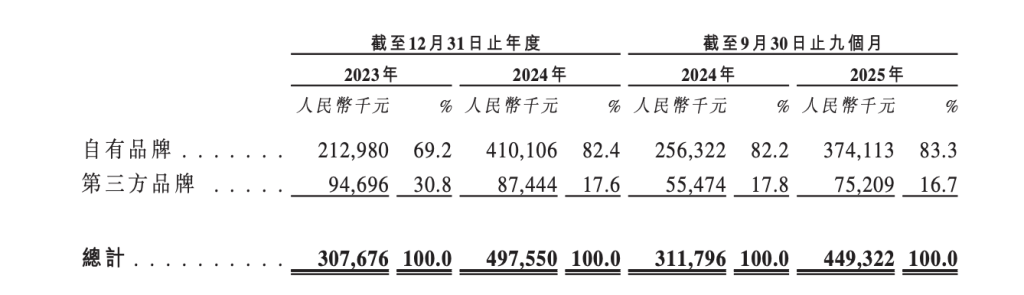
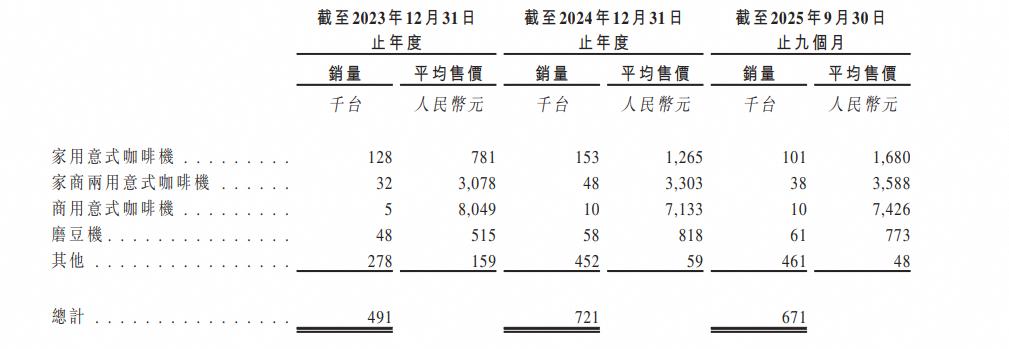
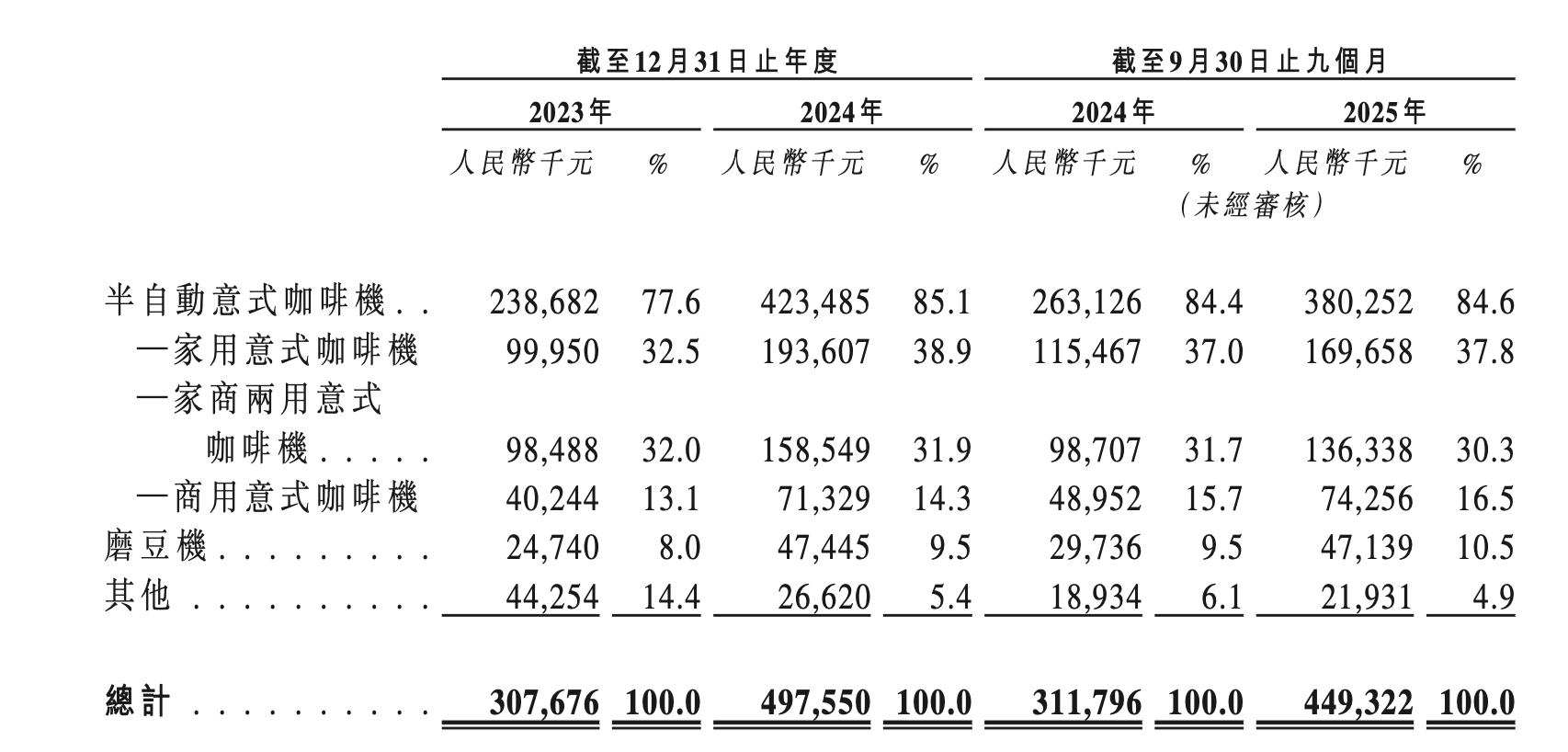
Core Viewpoint - Gemilai Holdings Limited, a domestic coffee machine manufacturer, has submitted its main board listing application to the Hong Kong Stock Exchange, with CITIC Securities as the sole sponsor [1] Company Overview - Founded in Shunde, Guangdong, Gemilai has evolved through three stages: OEM, trade, and brand, establishing a comprehensive business model that includes product design, manufacturing, sales, and after-sales service [1] - The company is the second-largest brand in China's coffee machine industry by revenue and the largest domestic brand, with an estimated market share of approximately 7.5% in 2024 [1][5] Financial Performance - Gemilai's revenue has shown significant growth, increasing from 307.7 million RMB in 2023 to 497.6 million RMB in 2024, representing a year-on-year growth of about 61.7% [1] - For the first three quarters of 2025, revenue reached 449.3 million RMB, a year-on-year increase of 44.1% [1] - Net profit is projected to rise from 22 million RMB in 2023 to 40 million RMB in 2024, with the first three quarters of 2025 showing a net profit of 54 million RMB, a substantial increase of 365.2% compared to 2024 [1] Revenue Breakdown - The revenue from self-owned brands increased from 213 million RMB in 2023 to 410 million RMB in 2024, with the revenue share rising from 69.2% to 82.4% [2][3] - For the first three quarters of 2025, the self-owned brand revenue share further increased to 83.3% [3] Product Categories and Pricing - Gemilai's product range includes home, commercial, and dual-use espresso machines, as well as grinders [4] - As of September 30, 2025, the average selling prices are 1,680 RMB for home espresso machines, 3,588 RMB for dual-use machines, and 7,426 RMB for commercial machines [4] Market Growth and Competition - The Chinese coffee machine market is experiencing rapid growth, with the market size projected to increase from 2 billion RMB in 2019 to 5.3 billion RMB in 2024, reflecting a compound annual growth rate of 21.5% [5] - By 2029, the market is expected to reach 12.5 billion RMB, with a projected compound growth rate of 18.7% from 2024 to 2029 [5] - Despite being the second-largest player, Gemilai's market share of 7.5% is significantly lower than the leading international brand's 20.4% [6] Future Plans - The funds raised from the listing will primarily be used for production base expansion, digital upgrades, brand marketing, service system development, R&D enhancement, and general corporate purposes [6]

小镇飘出咖啡香(新春走基层)
Ren Min Ri Bao· 2026-02-11 11:29
Core Viewpoint - The article highlights the growth and development of the coffee equipment manufacturing industry in Suqian, Jiangsu Province, particularly focusing on Jiangsu Amafi Machinery Equipment Co., Ltd, which has successfully established itself in the market through innovation and local industry collaboration [1]. Group 1: Company Overview - Jiangsu Amafi Machinery Equipment Co., Ltd has over 150 patents and can produce 20,000 coffee machines and 100,000 coffee grinders annually [1]. - More than 80% of the components in their coffee machines are self-developed, allowing for faster and better customization to meet customer needs [1]. - The company's products are not only sold domestically but also exported to over 50 countries and regions [1]. Group 2: Industry Development - Tu Yuan Town has focused on the development of the coffee industry, successfully attracting five upstream and downstream enterprises, achieving a total output value exceeding 100 million yuan [1]. - The local government is exploring various models such as village-enterprise cooperation, land equity participation, and factory rental dividends to enhance rural income, contributing an additional 1 million yuan annually to village collectives [1]. - The district is actively recruiting leading agricultural enterprises and enhancing talent training in rural areas to promote sustainable rural development [1].
本土咖啡机老大冲击港股IPO,格米莱净利暴增、毛利率超44%
Sou Hu Cai Jing· 2026-02-11 09:00
Core Viewpoint - Gemilai Holdings Limited has officially submitted its IPO application to the Hong Kong Stock Exchange, with CITIC Securities as the sole sponsor. The company, founded in 2011, is a leading domestic brand of semi-automatic espresso machines in China, and plans to start production in its self-built factory in 2024 [3]. Company Overview - Founded in 2011, Gemilai is recognized as the second-largest coffee machine brand in the Chinese market and the largest domestic brand, holding approximately 7.5% market share in 2024 [4]. - The company launched its first home espresso machine in 2012 and entered the overseas market in 2013, followed by the introduction of its first commercial espresso machine in 2015 [3]. Financial Performance - For the fiscal year ending December 31, 2023, Gemilai reported revenues of RMB 307.68 million and a net profit of RMB 19.93 million. In 2024, revenues are projected to increase to RMB 497.55 million with a net profit of RMB 39.96 million [9]. - In the first three quarters of 2025, the company achieved revenues of RMB 449.32 million, reflecting a year-on-year growth of 44.1%, with net profit soaring by 365.2% to RMB 53.97 million [9]. - The gross profit margins for 2023, 2024, and the first three quarters of 2025 were 41.9%, 40.5%, and 44.1%, respectively, while net profit margins were 7.2%, 8.0%, and 12.0% [9]. Product Pricing - The average selling prices for Gemilai's products are as follows: home espresso machines at RMB 1,680, dual-use espresso machines at RMB 3,588, and commercial espresso machines at RMB 7,426 [5]. Market Segmentation - In 2023, the revenue from the Chinese market was RMB 214.58 million, which is expected to grow to RMB 393.15 million in 2024. By the first three quarters of 2025, it is projected to reach RMB 363.33 million [11]. - The revenue from the U.S. market significantly declined from RMB 31.17 million in 2023 to RMB 10.65 million in 2024, a drop of 79.3%, primarily due to a major client reducing orders [11].
顺德70后女帅做“中产大玩具”,年入近5亿,冲刺第一股
3 6 Ke· 2026-02-11 01:59
Core Viewpoint - Gemi Lai Holdings Limited is set to become the first domestic coffee machine stock in China, with a focus on the growing coffee consumption market driven by increased demand for home and office coffee machines [1][5]. Industry Overview - The Chinese coffee machine market is projected to grow from approximately 2 billion RMB in 2019 to about 5.3 billion RMB in 2024, and is expected to reach around 12.5 billion RMB by 2029, with home machines growing even faster [2]. - The average annual coffee consumption per capita in China is expected to be about 14.3 cups in 2024, significantly lower than in mature markets like Europe and North America, indicating substantial growth potential [3][4]. Company Performance - Gemi Lai's revenue is forecasted to increase from approximately 308 million RMB in 2023 to about 498 million RMB in 2024, with net profit rising from around 22 million RMB to 40 million RMB in the same period [5]. - The company has reported a significant increase in average selling prices for its home espresso machines, from 781 RMB in 2023 to 1,680 RMB by September 2025, reflecting a shift towards higher-value products [6][9]. Product and Market Strategy - Gemi Lai's product matrix includes a range of home and commercial coffee machines, with a notable increase in the proportion of higher-priced models, which supports the company's strategy of optimizing product categories [6][11]. - The company has emphasized the importance of its own brand, which has seen revenue growth from approximately 213 million RMB in 2023 to about 410 million RMB in 2024, increasing its share of total revenue from 69% to 82% [11][14]. Distribution and Sales Channels - The online sales channel has become increasingly important, with its share of total revenue rising from approximately 41.4% in 2023 to 58.3% by September 2025, indicating a shift in consumer purchasing behavior [13][14]. - Gemi Lai's products are distributed in over 60 countries, but the company faces challenges in maintaining growth in international markets compared to its domestic performance [15][16]. Competitive Landscape - Gemi Lai is positioned as the second-largest brand in the Chinese coffee machine market, with a market share of about 7.5%, and holds the top position in the semi-automatic espresso machine segment with a 16% market share [11][12]. - The company is navigating a competitive landscape where international brands still dominate the high-end market, necessitating ongoing investment in technology and product reliability to compete effectively [15][16].
新股前瞻|国内称王、海外承压,国产咖啡机格米莱赴港寻解药?
智通财经网· 2026-02-06 02:22
Core Insights - The article highlights the significant transformation of the Chinese coffee machine industry, driven by the global coffee culture and consumption upgrades in China, with Gemi Lai Holdings Limited (Gemi Lai) emerging as a key player in this shift [1][11]. Company Overview - Gemi Lai is positioned as the second-largest coffee machine brand in China by revenue and the largest domestic brand, with a projected market share of approximately 7.5% in 2024 [2]. - The company has established a comprehensive business model covering product design, R&D, manufacturing, sales, and after-sales service, distributing products to over 60 countries and regions [1]. Financial Performance - Gemi Lai's revenue has shown consistent growth, with reported revenues of approximately 308 million RMB in 2023, 498 million RMB in 2024, and 449 million RMB in the first nine months of 2025 [3]. - The company’s net profit increased significantly from 22.01 million RMB in 2023 to 40.01 million RMB in 2024, marking an 81.8% growth [8]. Product Segmentation - The revenue from semi-automatic espresso machines has been the primary driver, accounting for 77.6% of total revenue in 2023 and increasing to 84.6% by the first nine months of 2025 [4][5]. - The home espresso machine segment also showed robust growth, with revenues rising from 100 million RMB in 2023 to 194 million RMB in 2024, reflecting a growing consumer trend [5]. Strategic Focus - Gemi Lai has shifted its strategic focus towards its own brand, with the proportion of revenue from self-owned brands increasing from 69.2% in 2023 to 83.3% in the first nine months of 2025 [7][8]. - The company has adopted a dual-track business model of "own brand + third-party ODM," with a clear emphasis on brand-led growth [6]. Market Dynamics - The global coffee machine market is experiencing strong growth, with the market size expected to increase from $15.3 billion in 2019 to $30.6 billion in 2024, reflecting a compound annual growth rate (CAGR) of 14.9% [9]. - The Chinese coffee machine market is growing even faster, with a projected market size increase from 2 billion RMB in 2019 to 5.3 billion RMB in 2024, representing a CAGR of 21.5% [9]. Challenges and Opportunities - Despite strong domestic performance, Gemi Lai faces challenges in overseas markets, particularly in the U.S., where revenue dropped significantly from 31.2 million RMB in 2023 to 10.7 million RMB in 2024, a decline of 79.3% [10]. - The company’s reliance on the domestic market has increased, with revenue from China rising from 69.7% in 2023 to 80.9% in the first nine months of 2025, indicating potential risks in market diversification [10]. Future Outlook - The upcoming IPO in Hong Kong is seen as a crucial step for Gemi Lai to expand its financing channels, enhance R&D and production capacity, and optimize its business structure for global brand development [11]. - The ability to maintain domestic advantages while effectively penetrating overseas markets will be critical for Gemi Lai's long-term growth and investor interest [11].
47岁顺德女老板卖咖啡机,年入5亿,冲刺IPO
创业邦· 2026-02-05 03:08
Core Viewpoint - Gemilai has transformed from an OEM manufacturer to a leading domestic coffee machine brand in China, capturing significant market share and demonstrating strong growth potential in the coffee machine industry [3][10][20]. Company Overview - Gemilai has become the second-largest coffee machine brand in China by revenue, with a market share of 7.5% in 2024, and leads the domestic brands with a 27.9% share in the higher-end semi-automatic espresso machine segment [3][10]. - The company has expanded its distribution to over 60 countries and regions, with cumulative sales reaching 2 million units [3]. Historical Development - The company was founded in 2011, evolving from a contract manufacturer to a brand focused on home coffee machines, with its first product featuring a commercial extraction system [5][6]. - Gemilai's growth reflects the broader trend of domestic coffee machine brands rising against European competitors, particularly in the context of increasing local manufacturing capabilities [5][20]. Financial Performance - Gemilai's revenue surged from 307.68 million RMB in 2023 to 497.55 million RMB in 2024, marking a year-on-year increase of 61.7% [10][12]. - The company's net profit has also increased, reaching 22 million RMB in 2023, 40 million RMB in 2024, and 54 million RMB in the first nine months of 2025 [15]. Revenue Structure - The self-owned brand business has become the core growth engine, with revenue rising from 213 million RMB in 2023 to 410 million RMB in 2024, accounting for 82.4% of total revenue [12]. - The product mix includes home espresso machines, dual-use machines, commercial machines, and grinders, with home machines contributing the largest share of revenue [7][12]. Market Positioning - Gemilai targets the mid-range to high-end market, competing against both domestic and European brands, with a focus on quality and performance [17][18]. - The company faces competition from brands like De'Longhi, which holds a 28.9% market share, and other domestic brands that target lower price segments [17][18]. Industry Growth Potential - China's coffee machine market is expected to grow at an annual rate of 18.7% from 2024 to 2029, driven by low per capita coffee consumption compared to Europe and Korea [19]. - The domestic market remains the primary focus for Gemilai, contributing approximately 80% of its revenue [19]. Future Outlook - The company plans to use funds from its potential IPO for digital upgrades, R&D investments, global marketing, and channel expansion, which will further solidify its market position [20].
咖啡机第一股,来了
Xin Lang Cai Jing· 2026-02-04 00:10
Core Insights - Gemilai, a domestic coffee machine brand, has submitted an IPO application to list on the Hong Kong Stock Exchange, aiming to capitalize on the booming coffee market in China [2] - The Chinese coffee market is projected to grow from approximately 39 billion yuan in 2018 to about 188 billion yuan by 2025, with a compound annual growth rate (CAGR) of nearly 20% [3] - The demand for commercial coffee machines is being driven by the expansion of fresh coffee brands and stores, which is also boosting the home coffee machine market [3] Company Overview - Gemilai was founded in 2011 by Yuan Bin, who has since exited the company, which is now controlled by Xie Jianping [2] - The company launched its first home espresso machine in 2012 and expanded into overseas markets in 2013, becoming a full industry chain brand covering design, R&D, manufacturing, sales, and service [2] - Gemilai has grown rapidly, transitioning from an export-oriented business to focusing on the domestic market and establishing its brand with products like the Owl, Cloud Elephant, and White Whale [5] Market Position - Gemilai is the second-largest coffee machine brand in China by revenue, with a market share of approximately 7.5% in 2024, trailing only Italy's De'Longhi [5] - In the semi-automatic espresso machine segment, Gemilai holds the top position with a market share of about 16.0%, and in the split-type semi-automatic espresso machine segment, it commands a market share of approximately 27.9% [5] Financial Performance - Gemilai's revenue for 2023 and 2024 is projected to be 308 million yuan and 498 million yuan, respectively, with net profits of 19.93 million yuan and 39.96 million yuan [6] - For the first three quarters of 2025, the company reported revenue of 449 million yuan, a year-on-year increase of 44.1%, and net profit surged by 365.2% to 53.97 million yuan [6] - The gross margin for 2023, 2024, and the first nine months of 2025 is reported at 41.9%, 40.5%, and 44.1%, respectively, while net margins are 7.2%, 8.0%, and 12.0% [6] Market Challenges - The growth of the coffee market in China may face challenges due to the relatively low penetration of coffee culture and the presence of strong substitutes like tea [8] - Recent price increases by major coffee brands may slow down the growth of coffee consumption [8] - The coffee machine market, while growing, remains a niche within the broader small appliance market, indicating limited core category significance [8] Strategic Expansion - Gemilai is focusing on expanding its product line to include coffee grinders and other accessories to enhance its presence in the fresh coffee scene [8] - The company is emphasizing the home coffee machine market, which has lower prices but higher sales volume and growth potential, aligning with trends towards smart and automated appliances [12] - If coffee machines become as common in Chinese households as in Western countries, Gemilai stands to significantly increase its growth potential [12]
“发现宿城美”: 咖啡机全链发展,乡村振兴“啡”比寻常
Yang Zi Wan Bao Wang· 2025-11-22 12:12
Core Insights - The "Discover Suqian Beauty" online media event highlights the vibrant development of the coffee technology and culture industry park in Suqian City, showcasing the charm of technological innovation and the promising prospects of rural revitalization [1] Group 1: Industry Development - The coffee technology culture industry park has seen significant growth, with the first quarter of 2023 achieving an output value close to 100 million yuan, matching the total output of the previous year [3] - The park is set to officially start construction in 2024, with four standardized factories covering a total area of 22,000 square meters completed and operational by June 2023 [5] - The park has successfully nurtured six coffee-related enterprises, including two national high-tech enterprises, and has over 100 approved patents [5] Group 2: Production Capacity and Product Range - The industry park is expected to produce 1,000 tons of premium coffee beans, 100,000 coffee grinders, 20,000 coffee machines, and 20,000 ice machines annually [7] - The park features a complete and self-controlled industrial chain, with 100% of core components produced in-house, enhancing the overall production capabilities [7] Group 3: Economic Impact and Employment - The park is projected to generate over 300 million yuan in annual output value after the partial operation in 2024, with two new enterprises expected to be added this year [7] - The integration of various funding sources is anticipated to generate an additional 1 million yuan for local village collectives annually, while also creating job opportunities for over 200 local residents [7]
宿迁造小镇咖啡机全球抢“咖”位
Xin Hua Ri Bao· 2025-10-12 23:23
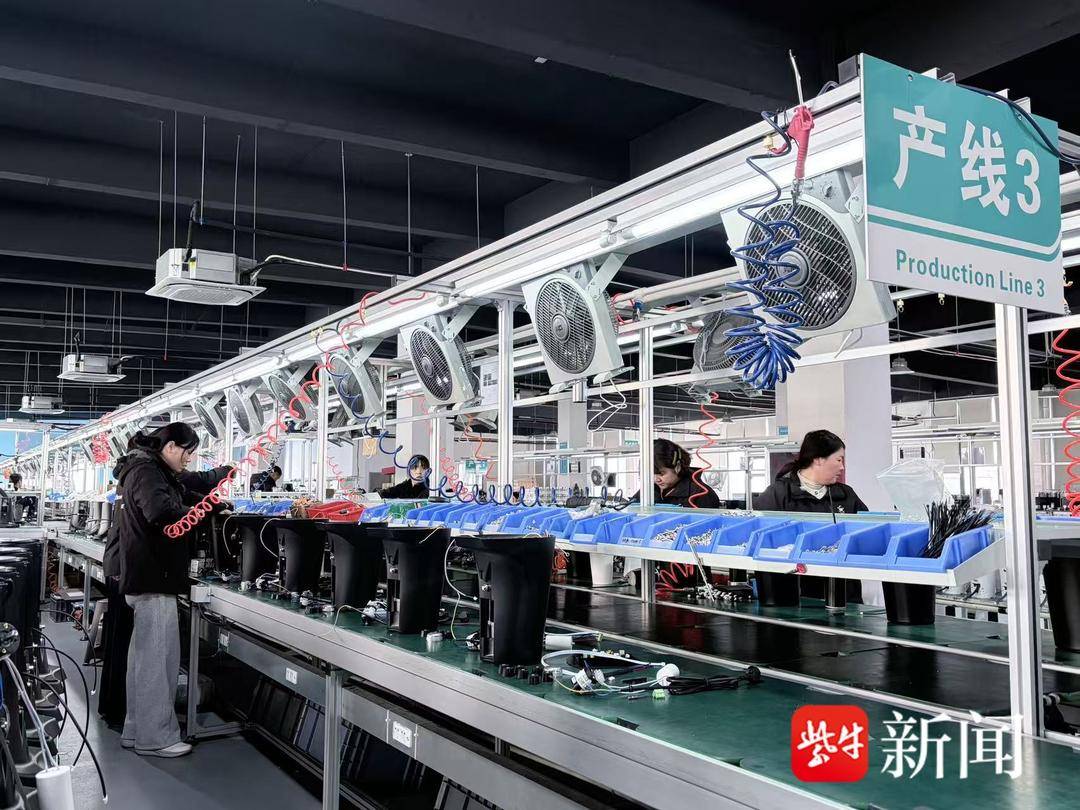
Core Insights - The company, Jiangsu Amafi Machinery Equipment Co., Ltd., has achieved significant growth, with its first-quarter output reaching nearly 100 million yuan, equivalent to the total output of the previous year [1] - The company focuses on self-research and production, with over 80% of the components in its coffee machines developed in-house, allowing for better customization to meet client needs [1] - Amafi has expanded its production capacity by moving to a new facility and adding six new production lines, increasing annual output to 100,000 units [2] Group 1 - The company has established a strong presence in both domestic and international markets, exporting to over 50 countries and regions [1] - Amafi's commitment to quality is evident in its rigorous production processes and material selection, which are aimed at enhancing brand reputation [1] - The company has invested in a "coffee equipment innovation laboratory" to explore cutting-edge technologies and drive industry innovation [2] Group 2 - The company plans to create a "full coffee industry chain" by introducing new products such as coffee bean roasting and ice-making machines, aiming to provide a comprehensive solution for overseas customers [3] - Local government support has been crucial for Amafi's growth, providing services such as international certification assistance and overseas warehouse connections [3] - The modernized industrial park includes dedicated areas for product display, customer experience, and research and testing, enhancing the company's operational capabilities [3]
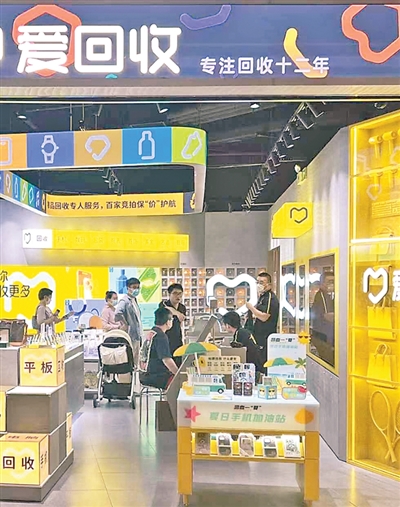
线上品牌发力线下开店(大数据观察·实体店里探消费)
Ren Min Ri Bao· 2025-09-17 22:22
Core Insights - Many online brands are expanding into offline retail by opening physical stores to enhance consumer experience and meet demand [4][5][8] - JD MALL has opened 24 large experience centers across various cities, providing immersive shopping experiences and addressing consumer pain points [5][6] - Aihuishou, a second-hand electronics recycling company, has over 2000 stores nationwide, focusing on transparency and face-to-face transactions to build consumer trust [6][7] - Apparel brands like Bianai are leveraging offline stores to strengthen brand image and enhance customer engagement, with a focus on experiential shopping [8][9] Group 1: JD MALL - JD MALL has launched 24 large experience centers in cities like Beijing and Shenzhen, attracting significant foot traffic, with over 100,000 visitors in the first two days of the Beijing store opening [5] - The experience centers feature diverse themes, including gaming and beauty, aiming to create a technology showcase and customer service hub [5][6] - The initiative is part of JD's strategy to address consumer needs and enhance the shopping experience through physical presence [5][6] Group 2: Aihuishou - Aihuishou has expanded its offline presence to 2092 stores across 291 cities, focusing on transparent transactions for second-hand electronics [6][7] - The company reported a 137% year-on-year increase in trade-in orders, indicating growing consumer participation in the second-hand market [7] - Aihuishou's offline strategy includes a comprehensive recycling process, enhancing customer trust and experience [6][7] Group 3: Apparel Brands - Bianai has opened over 60 stores in key cities, emphasizing the importance of physical presence for customer trust and product experience [8] - The brand's strategy includes using online data to select store locations and enhance community engagement [8] - Other fashion brands, like ANNAKIKI, are also establishing flagship stores to create immersive shopping experiences and maintain customer connections [8][9]