
磷化铟(InP)

Search documents
光模块的第二轮牛市:从配套环节到算力核心
美股研究社· 2026-03-20 11:09
Core Viewpoint - The article emphasizes that as AI computing power transitions from being limited by chips to being constrained by interconnectivity, optical modules are becoming the core infrastructure in the next phase of the computing power war [1][4]. Group 1: Transition in AI Infrastructure - The past two years have seen a focus on GPU performance, with Nvidia's stock serving as a barometer for AI investment sentiment [1]. - As the scale of AI clusters expands exponentially, the demand for transmission bandwidth has become increasingly critical [1][2]. - The optical communication industry is at a historical turning point, evolving from a mere accessory in communication networks to a vital component determining AI cluster efficiency [2][4]. Group 2: Bottlenecks and Technological Divergence - The traditional architecture based on electrical interconnects faces multiple bottlenecks in power consumption, bandwidth, and latency [8]. - The industry is witnessing a divergence in two technological paths: Co-Packaged Optics (CPO) and pluggable optical modules, with both expected to coexist rather than one replacing the other [9]. - CPO offers advantages in power consumption but poses challenges in maintenance and supply chain flexibility, indicating a gradual upgrade phase rather than a revolutionary shift [9][10]. Group 3: Market Dynamics and Investment Opportunities - Lumentum's stock reaching historical highs reflects a supply-demand logic rather than mere market sentiment, indicating a structural shortage in key optical communication components [12][14]. - By 2026, EML production capacity is expected to increase by over 50%, and demand for InP is projected to grow at a compound annual growth rate of 85% by 2030 [13][14]. - The current demand surge is driven by AI data centers rather than traditional telecom capital expenditures, providing a more stable and predictable growth trajectory [14][15]. Group 4: Reevaluation of Optical Modules - The perception of optical modules is shifting from being seen as mere accessories to being recognized as core assets in computing power [17][18]. - As data center communication volumes increase, the efficiency of optical interconnects becomes a critical variable in overall system performance [18]. - The competition among data centers will increasingly focus on the combined efficiency of computing, networking, and scheduling, positioning optical modules at the center of this ecosystem [18][22]. Group 5: Future Outlook - The article concludes that the next keyword in AI investment will be "efficiency," with a focus on connectivity rather than just computing power [20][21]. - The revaluation of the optical module industry is expected to unlock significant value, as the ability to efficiently connect and utilize computing power becomes paramount [22].



Lumentum
2026-03-20 02:27
Summary of Lumentum Conference Call Company Overview - **Company**: Lumentum - **Industry**: Photonics and Optical Communication Key Points Industry Dynamics - **Indium Phosphide (InP) Supply-Demand Gap**: The supply-demand gap for InP is currently at 25%-30%, with expectations for significant growth due to high-performance laser demand in optical interconnect applications [2][4] - **AI Impact**: The rapid development of generative AI is driving explosive growth in demand for optical devices, with some customers' annual laser demand increasing from millions to billions [9][10] Financial and Operational Goals - **Revenue Targets**: Short-term quarterly revenue target set at $1.25 billion with a profit margin of 35%, and a mid-term target of $2 billion with a profit margin of 40% [2][22] - **Investment from NVIDIA**: Received a $2 billion investment from NVIDIA, with $1 billion allocated for capacity expansion [2][20] Production and Capacity Expansion - **Capacity Expansion Plans**: - Plans to increase InP production by 50% by Q4 2026, following an 8-fold increase since FY 2023 [4][5] - Acquisition of the Corvo factory in Greensboro, North Carolina, expected to significantly enhance production capacity by 2028 [6][19] - **Product Launches**: The first batch of 1.6T optical modules is set to ship in summer 2026, with expectations of improved gross margins through vertical integration [2][7] Business Segments and Growth Drivers - **Key Business Segments**: Growth driven by cloud optical modules, optical cross-connects (OCS), and both horizontal (scale-out) and vertical (scale-up) expansions [7][8] - **OCS Agreements**: Secured multi-billion dollar long-term agreements, with expected revenue of $400 million in H2 2026 and over $1 billion in 2027 [2][7] Technological Advancements - **EML Laser Technology**: EML lasers are favored for their reliability and ease of deployment, expected to lead the market in new speed optical modules [15][16] - **OCS Technology**: OCS offers low loss, low latency, and low power consumption, with Lumentum holding a strong market position due to over 25 years of technology development [16][17] Market Trends and Future Outlook - **AI-Driven Market Growth**: The AI-related optical communication market is projected to grow from approximately $18 billion in 2026 to over $90 billion in five years, driven by scale-out and scale-up business segments [18][22] - **Copper vs. Optical Devices**: As data rates increase, the demand for optical devices is expected to grow, with a clear trend towards optical interconnects in data centers [13][14] Challenges and Risks - **Supply Chain Constraints**: Supply chain limitations are a significant concern, particularly for OCS and cloud optical module businesses, which may impact revenue targets [22][23] - **Material Competition**: Lumentum believes InP has significant potential as the preferred material for photonic chips, despite competition from other materials [23] Customer Relationships and Market Position - **Non-Exclusive Partnerships**: The partnership with NVIDIA has raised awareness among other customers regarding capacity constraints, leading to competitive negotiations [27] - **Order Visibility**: The company currently has a strong backlog of orders, providing confidence for future capital expenditure decisions [21] Conclusion Lumentum is positioned for significant growth driven by AI demand, strategic investments, and capacity expansions. The company is navigating supply chain challenges while leveraging its technological advantages in the photonics industry.
化合物半导体,日益重要
半导体行业观察· 2026-02-19 02:46
Core Insights - The article emphasizes the growing prominence of compound semiconductors as industries shift towards alternative materials that offer superior power, speed, and efficiency compared to silicon [2][3][4]. Market Growth and Projections - The compound semiconductor market is projected to grow from $1.3 billion in 2025 to $2.8 billion by 2031, reflecting a compound annual growth rate (CAGR) of 14% [2]. - The substrate market is expected to grow from $1.1 billion in 2025 to $2.4 billion by 2031, also at a CAGR of 14% [2][3]. Key Materials and Applications - Silicon carbide (SiC) and gallium nitride (GaN) are leading in power electronics, while gallium arsenide (GaAs) and GaN are widely used in RF systems [2]. - SiC is crucial for electric vehicle (EV) electrification and is expected to drive growth in power applications despite short-term price pressures [3][4]. - GaN's applications are expanding from consumer fast charging to automotive and data centers, although its substrate market remains smaller than that of SiC [4]. Emerging Technologies and Trends - The photonics market is experiencing strong growth, driven by AI data centers and bandwidth upgrades, accelerating the adoption of indium phosphide (InP) [4][5]. - MicroLED technology is beginning to commercialize, with the first commercial microLED smartwatch using GaN and GaAs expected to launch in 2025 [9]. Supply Chain Dynamics - The transition from 6-inch to 8-inch substrates for SiC and from 4-inch to 6-inch for InP is indicative of scalability and cost-effectiveness in meeting market demands [13]. - The competition in the compound semiconductor ecosystem is intensifying, particularly with China's advancements in SiC substrate technology [16]. Strategic Developments - The industry is witnessing a shift towards hybrid IDM and foundry models for GaN, with new entrants leveraging internal epitaxy technology [15]. - The demand for larger substrates is increasing, enhancing the competitiveness of both pure compound semiconductor manufacturers and silicon wafer foundries [15].
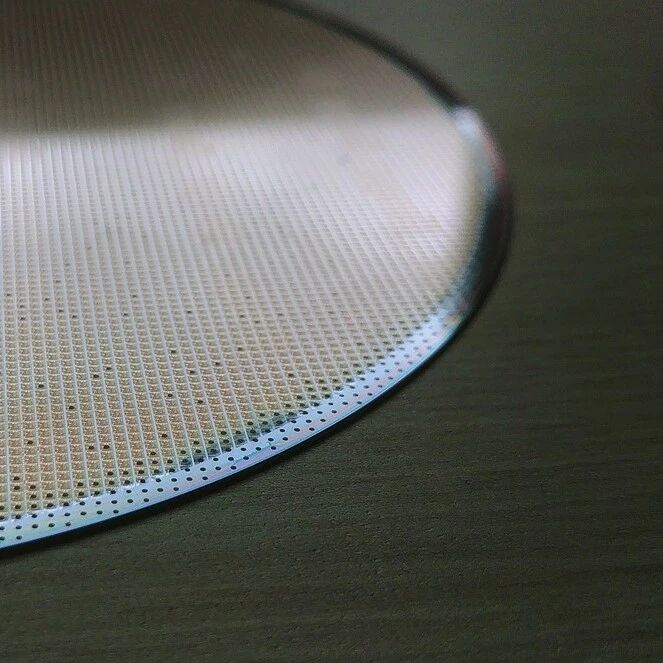
磷化铟,异军突起
半导体行业观察· 2026-01-19 01:54
Group 1 - The core viewpoint of the article emphasizes the rising importance of Indium Phosphide (InP) in the AI market due to its unique properties, which include direct bandgap, high electron mobility, and excellent thermal and radiation resistance [1] - InP is more suitable for optical communication in AI servers compared to traditional materials like silicon or gallium arsenide, as it can efficiently convert electrical energy into optical energy, thus reducing power consumption in AI data centers [1] - The high electron mobility of InP allows for rapid data transmission at speeds such as 800G and 1.6T, enhancing the efficiency of AI data centers in processing and responding to information [1] Group 2 - InP-based high-speed electronic components are currently at the pinnacle of human engineering, primarily used in sub-mm wave applications, but have historically been a niche market [3] - The demand for higher frequency operations in 5G and low Earth orbit satellite communications highlights the growing significance of InP in the future [3] - InP Heterojunction Bipolar Transistors (HBT) are considered superior to Gallium Arsenide (GaAs) HBTs, potentially overcoming efficiency limitations in millimeter-wave power amplifiers [3] Group 3 - InP plays a crucial role in semiconductor lasers required for optical communication, particularly at a wavelength of 1.55 micrometers, which minimizes energy loss in fiber optics [4] - The growth of cloud data centers is driving an increased demand for InP-based semiconductor lasers, which can handle data rates of up to 100 Gbit per second [4] - Despite its historical association with niche markets and high costs, advancements in InP technology present significant opportunities for future applications [4]

磷化铟重大突破催化国产光芯片成本下降,科创半导体ETF(588170)跌幅收窄,蓄势上攻
Mei Ri Jing Ji Xin Wen· 2025-08-20 04:51
Group 1 - The core index of the semiconductor materials and equipment theme on the STAR Market has shown a slight increase of 0.08% as of August 20, 2025, with notable gains from stocks such as Xinyi Chang (up 6.53%) and Shanghai Hejing (up 3.81%) [1] - The STAR Semiconductor ETF (588170) has experienced a weekly increase of 3.18% as of August 19, 2025, with a trading volume of 32.98 million yuan and a turnover rate of 7.17% [1] - The latest scale of the STAR Semiconductor ETF (588170) has reached 462 million yuan, marking a three-month high, with the latest share count at 419 million shares [1] Group 2 - Jiufeng Mountain Laboratory has achieved a significant technological breakthrough in the field of indium phosphide (InP) materials, successfully developing a 6-inch InP-based PIN structure detector and FP structure laser with internationally leading performance indicators [2] - The industrial application of InP has been limited by the technical bottleneck of large-size preparation, with the industry primarily using 3-inch processes, which has constrained the scale of downstream applications [2] - Open Source Securities highlights that optical modules and PCBs are crucial components of the AI computing power chain, experiencing substantial growth in both shipment volume and value, which supports the strong performance of these sectors [2] Group 3 - The STAR Semiconductor ETF (588170) and its linked funds track the STAR Market semiconductor materials and equipment theme index, focusing on semiconductor equipment (59%) and materials (25%) [3] - The semiconductor materials ETF (562590) also emphasizes semiconductor equipment (59%) and materials (24%), targeting the upstream semiconductor sector [3]