
化合物半导体

Search documents
2026全国“两会”中关于半导体、AI的提案
仪器信息网· 2026-03-11 03:55
Group 1: Semiconductor Industry - The focus of discussions during the 2026 National Two Sessions was on semiconductor, chip, and artificial intelligence, emphasizing the need for domestic chip production and AI empowerment in industries [2][3] - National Committee member Zhou Hongyi highlighted the exponential growth in inference computing power demand, predicting that by 2027, inference computing power will account for over 70% of total computing power in China, advocating for national policies to guide this layout [3] - Suggestions were made to transition domestic chips from "usable" to "user-friendly," with a call for systematic breakthroughs and integration across the entire supply chain [4] - The importance of rare resources, such as gallium, was emphasized, with recommendations to leverage these for scaling up industries like compound semiconductors and photonic chips [4] - Recommendations included establishing a world-class optoelectronic information industry cluster and focusing on core technology breakthroughs in light chips and compound semiconductors [5] Group 2: Artificial Intelligence - The 2026 Government Work Report marked the first inclusion of "intelligent economy" and "intelligent agents," aiming to promote the commercialization of AI across key industries [6] - Suggestions were made to empower the semiconductor industry with AI, including legislative measures for data rights and establishing a fault-tolerant mechanism to encourage innovation [6][7] - Emphasis was placed on the need for talent cultivation in AI governance, focusing on creativity and critical thinking skills that AI cannot replicate [7] - Proposals included the establishment of a national AI project and collaboration among national laboratories, leading enterprises, and research institutions to tackle AI challenges [6][7] Group 3: Data Governance - Recommendations were made to construct a national industrial data governance framework and establish a national industrial data service platform [8] - Suggestions included creating AI demonstration factories and industry clusters to promote the application of large models and intelligent systems [9] - Proposals aimed at encouraging financial institutions to innovate in data asset financing and establishing special development funds to address financing challenges for innovative data companies [9][10] Group 4: Capital Support - Proposals were made to establish special financing channels for high-tech industries like integrated circuits and semiconductors, with differentiated financing rules [11] - Recommendations included optimizing capital market refinancing rules to improve funding efficiency for enterprises [11] - Suggestions were made to adjust funding ratios for key technology projects to alleviate financial pressures on companies engaged in critical technology development [11]

多位在鄂全国人大代表:在武汉创建世界级光电子信息产业群
第一财经· 2026-03-05 13:07
Core Viewpoint - Hubei is striving to establish a globally influential "World Optics Valley," with calls from national representatives to create a world-class optoelectronic information industry cluster in Wuhan [3][4]. Industry Overview - The global optoelectronic information industry is entering a critical phase of accelerated technological iteration and deep restructuring, driven by explosive growth in artificial intelligence computing power demand [3]. - By 2025, the scale of Hubei's optoelectronic information industry is projected to reach 1.13 trillion yuan, representing a year-on-year growth of 12.76% [3]. Current Achievements - Hubei has established the world's largest research and manufacturing base for optical fibers and cables, as well as the largest domestic base for small and medium-sized display panels, advanced storage, and optical device R&D and production [3]. Challenges - Hubei faces significant gaps in achieving the goal of a world-class optoelectronic information industry cluster, including insufficient breakthroughs in core technologies, lack of tight coordination along the industrial chain, low efficiency in the industrialization of innovative results, and a mismatch between talent supply and high-quality development needs [3][6]. Recommendations from Industry Leaders - National representatives suggest prioritizing Hubei's optoelectronic information industry cluster as a key focus for national-level advanced manufacturing cluster cultivation, with special policies and resource support [4][5]. - Recommendations include establishing more national key laboratories, large scientific facilities, and national manufacturing innovation centers in Hubei to overcome key core technologies [6]. - The establishment of a national optoelectronic industry innovation consortium led by Hubei is proposed to enhance the self-controllability and international competitiveness of the industrial chain [6].

日本将设3大支援基地提升AI半导体产业实力
日经中文网· 2026-03-01 00:33
Core Viewpoint - Japan is aiming to revitalize its AI semiconductor industry by establishing three bases to nurture companies in design, production equipment, and materials, in response to the late start in AI semiconductor design and the shrinking market share due to the rise of Chinese companies [1][5]. Group 1: Government Initiatives - The Japanese government plans to set up three bases by 2026 to support semiconductor design, focusing on advanced tools and computing servers for startups and universities [1]. - A base for equipment and materials will be established near the Rapidus factory in Chitose, Hokkaido, with a target launch in 2029, featuring the latest EUV lithography equipment from ASML [3]. - The government has allocated 130.6 billion yen from its budget and additional funds from the National Institute of Advanced Industrial Science and Technology to support these initiatives, allowing companies and research institutions to access equipment at lower costs [5]. Group 2: Industry Challenges and Opportunities - The high costs of cutting-edge semiconductor design tools, ranging from tens of billions to hundreds of billions of yen, make it difficult for companies to bear the investment alone [4][5]. - Japan's semiconductor industry has seen a decline in market share, primarily due to the late entry into AI semiconductor design and increased competition from Chinese firms [5][6]. - The government is actively subsidizing efforts to attract TSMC and support Rapidus, aiming to enhance domestic production capabilities for advanced semiconductors [5]. Group 3: Future Prospects - By establishing these bases, Japan hopes to cultivate local companies that can design AI semiconductors, potentially becoming valuable clients for Rapidus [6]. - The focus on collaboration beyond national borders is seen as essential for enhancing international competitiveness, moving away from the previous self-sufficiency approach that contributed to the industry's decline [6].

日本继续豪赌芯片
半导体芯闻· 2026-02-26 10:22
Core Viewpoint - The Japanese government is focusing on developing a cutting-edge semiconductor industry cluster by establishing three bases for design, production equipment, and materials, aiming to enhance competitiveness through collaboration with overseas companies and research institutions [1][2]. Group 1: Government Initiatives - The Japanese government plans to set up three bases by 2026, equipped with advanced design software and development equipment for startups and universities, with TSMC and Rapidus as core partners [1]. - A semiconductor design base will be established in Tokyo, focusing on "physical AI" applications, with support from specialized technicians [1]. - A facility for equipment and materials will be built near the Rapidus factory in Chitose, Hokkaido, aiming to start operations by 2029, featuring the latest EUV lithography equipment from ASML [1][2]. Group 2: Financial Support and Investment - The construction of these bases will utilize a budget of 130.6 billion yen and funding from the National Institute of Advanced Industrial Science and Technology, allowing companies and research institutions to access equipment at low costs [2]. - The Japanese government is committed to covering substantial costs associated with semiconductor research and development, which can reach billions of yen, to foster private sector innovation [2]. Group 3: Industry Challenges and Opportunities - Japan's semiconductor industry has been declining due to an overemphasis on self-sufficiency, necessitating international collaboration to enhance competitiveness [3]. - The domestic production of cutting-edge semiconductors primarily serves overseas clients, highlighting the need for Japan to cultivate local companies capable of designing AI semiconductors to become reliable partners for Rapidus [2][3].
化合物半导体,最新预测
半导体行业观察· 2026-02-24 01:23
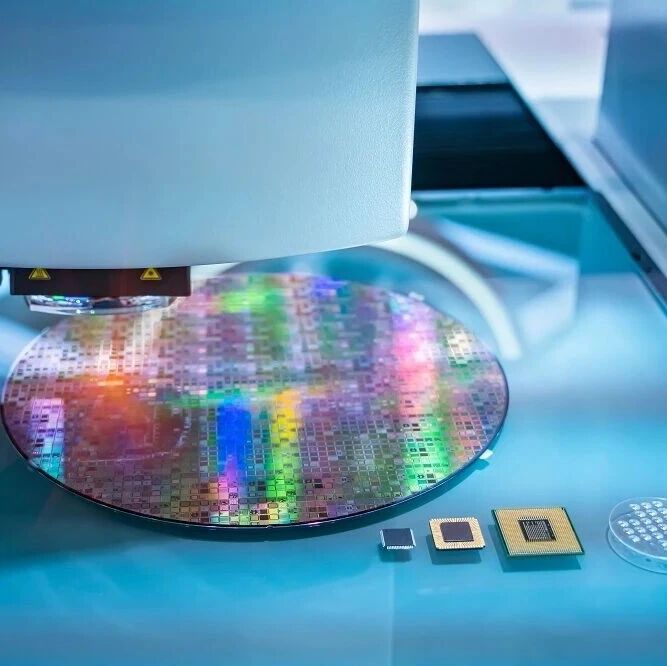
Core Viewpoint - The compound semiconductor industry is experiencing strong growth driven by performance advantages in power, RF, and photonics applications, with significant long-term market potential for n-type SiC and InP despite short-term price pressures and application timing adjustments [2][3][6]. Group 1: Market Growth Projections - The CS substrate market is projected to grow from $1.29 billion in 2025 to $2.79 billion by 2031, reflecting a compound annual growth rate (CAGR) of 14% [2]. - The open epitaxial wafer market is expected to increase from $1 billion to $2.39 billion during the same period, also with a CAGR of 14% [2]. Group 2: Power Applications - Power applications dominate the market, with n-type SiC growth driven by the electrification of electric vehicles, 800V architectures, and the accelerated adoption of 8-inch wafers, although short-term price pressures may arise from overcapacity and slowing automotive industry growth [2][6]. - Power GaN applications have expanded from consumer fast charging to automotive and data centers, but its epitaxial wafer market remains smaller than that of SiC [2]. Group 3: RF and Photonics Markets - The RF market remains stable, primarily led by GaAs in mobile applications and GaN in telecommunications and defense, with limited short-term growth potential as the industry transitions towards 6G [3][6]. - The photonics market is experiencing the strongest growth, driven by AI data centers and bandwidth upgrades, accelerating the adoption of InP, 6-inch platforms, and high-speed lasers [3][6]. Group 4: Technology and Supply Chain Developments - The compound semiconductor supply chain is being reshaped by significant investments in power SiC and recent strategic moves in power GaN, with a focus on scalable platforms and applications [6][10]. - The transition from 6-inch to 8-inch wafers in SiC is enhancing cost competitiveness, while new Chinese suppliers are entering the market to meet demand [6][10]. - GaN is evolving towards a hybrid IDM and foundry model, with some foundries exiting the market while new entrants leverage internal epitaxial technology [6][10]. Group 5: LED and MicroLED Technologies - LED technology is mature and of lower value, while the adoption of MicroLED is expected to resume later in the century, initially targeting wearable devices and AR applications [3][7]. - Vertical integration is crucial for MicroLED as it enters high-end wearable markets, intensifying competition between pure compound semiconductor manufacturers and silicon wafer producers [7].

化合物半导体,日益重要
半导体行业观察· 2026-02-19 02:46
Core Insights - The article emphasizes the growing prominence of compound semiconductors as industries shift towards alternative materials that offer superior power, speed, and efficiency compared to silicon [2][3][4]. Market Growth and Projections - The compound semiconductor market is projected to grow from $1.3 billion in 2025 to $2.8 billion by 2031, reflecting a compound annual growth rate (CAGR) of 14% [2]. - The substrate market is expected to grow from $1.1 billion in 2025 to $2.4 billion by 2031, also at a CAGR of 14% [2][3]. Key Materials and Applications - Silicon carbide (SiC) and gallium nitride (GaN) are leading in power electronics, while gallium arsenide (GaAs) and GaN are widely used in RF systems [2]. - SiC is crucial for electric vehicle (EV) electrification and is expected to drive growth in power applications despite short-term price pressures [3][4]. - GaN's applications are expanding from consumer fast charging to automotive and data centers, although its substrate market remains smaller than that of SiC [4]. Emerging Technologies and Trends - The photonics market is experiencing strong growth, driven by AI data centers and bandwidth upgrades, accelerating the adoption of indium phosphide (InP) [4][5]. - MicroLED technology is beginning to commercialize, with the first commercial microLED smartwatch using GaN and GaAs expected to launch in 2025 [9]. Supply Chain Dynamics - The transition from 6-inch to 8-inch substrates for SiC and from 4-inch to 6-inch for InP is indicative of scalability and cost-effectiveness in meeting market demands [13]. - The competition in the compound semiconductor ecosystem is intensifying, particularly with China's advancements in SiC substrate technology [16]. Strategic Developments - The industry is witnessing a shift towards hybrid IDM and foundry models for GaN, with new entrants leveraging internal epitaxy technology [15]. - The demand for larger substrates is increasing, enhancing the competitiveness of both pure compound semiconductor manufacturers and silicon wafer foundries [15].
爱尔兰将批准廷德尔研究所1亿欧元扩建计划
Shang Wu Bu Wang Zhan· 2026-01-23 04:14
Core Viewpoint - Ireland is set to approve a €100 million expansion plan for the Tyndall National Institute, which will establish a 17,500 square meter advanced research facility at University College Cork, marking a significant step in Ireland's ambition to become a "Silicon Island" [1] Group 1: Investment and Funding - The project will receive substantial national funding from the Department of Further and Higher Education, Research, Innovation and Science, with additional support from the Departments of Enterprise, Trade and Employment, Public Expenditure, and University College Cork's own funds [1] - In May of the previous year, over €70 million was allocated from national and EU funds to support Tyndall's involvement in three EU pilot projects, including one aimed at accelerating advanced semiconductor technology development [1] Group 2: Research Focus - The Tyndall National Institute, established through collaboration between University College Cork, the Irish Science Foundation, and the Department of Enterprise, focuses on research areas such as compound semiconductors, wafer-level and chip technology, communications, packaging and integration, environmental sensing, and energy [1]
韩国豪赌半导体:一口气建10做晶圆厂,加码Fabless
半导体行业观察· 2025-12-11 01:23
Core Viewpoint - The South Korean government aims to expand its non-foundry semiconductor industry by tenfold to enhance its global competitiveness and become the world's second-largest semiconductor power, focusing on system semiconductors and advanced technologies [2][4]. Group 1: Investment and Infrastructure - The government plans to invest over 700 trillion KRW by 2047 to establish 10 new semiconductor fabs, creating the largest and most advanced semiconductor industry cluster globally [2]. - Specific investments include 215.9 billion KRW for next-generation memory by 2032, 12.676 trillion KRW for AI-specific semiconductors by 2030, 260.1 billion KRW for compound semiconductors by 2031, and 360.6 billion KRW for advanced packaging by 2031 [3]. Group 2: Ecosystem Development - A core strategy involves strengthening the system semiconductor ecosystem, which has been identified as a weak link, by expanding non-foundry companies to a global level through collaborative structures [3]. - The government plans to establish a 4.5 trillion KRW investment in a 12-inch 40nm foundry to allocate dedicated capacity for domestic non-foundry companies and support prototype production [3]. Group 3: Technological Advancements - The government aims to achieve technological independence in the defense semiconductor sector, which currently relies 99% on imports, by developing comprehensive technologies from materials to design and process systems [4]. - Plans include creating a semiconductor research graduate school to train 300 master's and doctoral students annually, directly involving companies in its establishment and operation [5]. Group 4: Regional Development - The government will designate specialized industrial parks for advanced industries, including semiconductors, in non-metropolitan areas, providing incentives such as flexible working hours and expanded investment subsidies [5]. - A "Southern Semiconductor Innovation Belt" will connect Gwangju (advanced packaging), Busan (power semiconductors), and Gumi (materials and components) to enhance regional capabilities [4].
1200+ 全球头部企业齐聚上海!激光光学 × 半导体全链路协同的顶级峰会仅剩最后三席
半导体行业观察· 2025-11-29 02:49
Core Insights - The article highlights the significance of the Munich Shanghai Optical Expo as a pivotal event for the global optoelectronics and semiconductor industry, featuring over 1,200 leading companies and attracting hundreds of thousands of professional attendees, emphasizing the theme of "technological iteration + ecological integration" [2] Group 1: Policy Alignment - The forum aligns closely with the "14th Five-Year Plan," focusing on the critical role of laser technology in supporting 6G/5G-A, targeting key areas such as compound semiconductors, EDA tools, and optical communication chips, and aims to create a collaborative ecosystem through "policy - technology - capital" synergy [2][4] Group 2: Technical Focus - The forum emphasizes a comprehensive technology logic covering the entire supply chain from "materials - tools - chips - devices - components - applications," showcasing hard-core achievements from leading companies in critical areas like compound semiconductor mass production processes and AI-enabled optical chip design [3] Group 3: Demand-Supply Coupling - The forum effectively links the supply side, represented by leading technology firms like Silan Micro and Xizhi Technology, with the demand side, including major telecom operators and cloud service providers, creating a high-efficiency closed loop of "technology output - demand feedback - cooperation landing" [4] Group 4: Key Participants - Major telecom operators such as China Mobile, China Unicom, and China Telecom are participating to address 6G network architecture and 5G-A deployment needs, while leading cloud service providers like Alibaba Cloud and Tencent Cloud are seeking solutions for high-speed data transmission and green data center construction [6] Group 5: Final Opportunities - The article emphasizes the urgency of securing the last three sponsorship seats for the forum, highlighting the scarcity of resources and the potential for significant market engagement, with a focus on connecting with decision-makers from major telecom and cloud service companies [7][9]




湖北新质生产力驱动高质量发展 年内高新技术企业预计达3.5万家
Chang Jiang Shang Bao· 2025-11-26 16:09
Core Viewpoint - The core focus of the news is on the strategic emphasis placed by Hubei Province on technological innovation as a key driver for developing new productive forces and achieving significant economic and social development goals during the 14th Five-Year Plan period [1][2]. Group 1: Technological Innovation and Economic Development - Hubei aims to accelerate the integration of technological and industrial innovation, with a target of increasing high-tech enterprises from approximately 10,404 at the end of the 13th Five-Year Plan to nearly 30,000, representing a growth of nearly 200% [1][3]. - The province's technological innovation capabilities are expected to reach new heights, with projections of 35,000 high-tech enterprises and 50,000 technology-based SMEs by 2025 [4]. Group 2: Innovation Achievements and Rankings - Hubei's innovation capacity has significantly improved, with Wuhan's technology cluster ranking rising from 29th to 13th globally, and its research city ranking moving from 13th to 9th [2]. - The province has established a robust technological framework, including 1 national laboratory, 8 major scientific facilities, and 547 new R&D institutions, contributing to a total of 93 academicians and 11.21 million skilled talents [2]. Group 3: Key Technological Breakthroughs - The "Sharp Knife" technology initiative has produced 42 significant innovations in strategic fields such as electromagnetic launch, high-density flash memory chips, and biomedicine, with the number of high-value invention patents per 10,000 people increasing by 167.4% [3][6]. - The total transaction value of technology contracts has surged from 168.7 billion to 550 billion, marking a consistent annual increase of over 100 billion [3]. Group 4: Future Plans and Strategic Directions - Hubei plans to enhance original innovation capabilities and establish a national influential technology innovation center in Wuhan, focusing on major technological infrastructure and high-level laboratory systems [5][6]. - The province aims to strengthen the role of enterprises in technological innovation, encouraging them to participate in major decision-making and fostering collaboration between industry, academia, and research [6][7].