商用服务机器人

Search documents
IDC:料2026年中国服务和消费机器人厂商全球出货量占比将超过85%
智通财经网· 2026-01-15 05:55
Core Insights - The Chinese robotics and embodied intelligence market is accelerating towards large-scale development driven by technological breakthroughs, industry maturity, and application demand, with significant growth expected by 2026 [1] Group 1: Market Predictions - The Chinese cleaning robot market is projected to reach nearly $3.4 billion by 2026, with a year-on-year growth of 18% [2] - The education and companionship robot market is expected to exceed $1 billion by 2026, with a remarkable year-on-year growth of 89% [3] - The commercial service robot market is forecasted to approach $400 million by 2026, growing at 15% year-on-year [4] - The humanoid robot application scenarios are anticipated to triple, with a market size nearing $1.3 billion and more than double year-on-year growth [5] - The embodied intelligence robot user spending is expected to surpass $11 billion by 2026, maintaining a high growth rate of nearly 120% [10] Group 2: Industry Trends - The cleaning robot sector is evolving towards full-scenario development, expanding from indoor cleaning to outdoor environments, creating a comprehensive cleaning service ecosystem [2] - Education and companionship robots are transitioning into long-term family smart terminals, focusing on emotional support and continuous service, with a shift towards subscription-based business models [3] - Commercial service robots are integrating into daily operations across various industries, enhancing operational efficiency and social value through advanced technologies [4] - Humanoid robots are rapidly expanding their application scenarios, driven by demand across multiple industries, leading to significant technological advancements [5] - The quadruped robot market is developing concurrently in consumer and industrial applications, emphasizing both emotional engagement and practical reliability [6][7] Group 3: Competitive Landscape - Chinese brands are accelerating globalization, with a projected market share of over 85% in global shipments of service and consumer robots by 2026, becoming a key growth driver [9] - The industry ecosystem is being reshaped as Chinese manufacturers leverage cost advantages and engineering capabilities to optimize market dynamics [9] - The collaboration between government, industry, academia, and research is fostering the development of embodied intelligence robots, enhancing the overall market growth [10]

具身智能服务机器人创企易择智擎完成数千万元种子轮融资
机器人圈· 2025-12-23 10:09
Core Viewpoint - The article discusses the recent seed funding round completed by Yizhe Zhiqing, a startup focused on developing next-generation embodied AI service robots, with investments from Lightpoint Capital, Plum Ventures, and Qingshi Capital. The funding will primarily be used for product development, inventory production, and early marketing efforts [1]. Group 1: Company Overview - Yizhe Zhiqing was established in 2025 and aims to integrate cutting-edge visual-language-action (VLA) models, multimodal perception, and 3D generation AI capabilities with robotic hardware to create a new generation of embodied intelligent application robots [1]. - The company envisions "Robotics as a Service, Easy to Use," focusing on developing commercial service robots that are characterized by "ultra-low usage costs and high ease of use" through its self-developed VLA embodied large model and 3D simulation data engine [1]. Group 2: Product Development and Market Focus - The company has completed prototype development and key model validation based on its technical architecture, with its first-generation product targeting high-value commercial scenarios overseas [2]. - By utilizing an innovative "perception-decision-execution" integrated architecture, the company significantly reduces the deployment, maintenance, and operational barriers of robots, aiming to provide truly intelligent, reliable, and cost-effective robotic service solutions to global customers [2]. Group 3: Vision and Future Plans - The founder expressed gratitude for the investors' recognition of the team's vision and technological path, emphasizing the mission to lower barriers through extreme technological innovation and to push the service robot industry into a new era of "ease of use" [2].


机器人“链主”优地总部落户武汉
Chang Jiang Ri Bao· 2025-11-29 00:36
Core Insights - Wuhan's Qiaokou District government has signed a cooperation agreement with Youdi Robotics and Jiangxiang Technology Group, marking the establishment of Youdi Robotics' headquarters and embodied intelligence industrial base in Wuhan [1] - Youdi Robotics is recognized as a national-level specialized and innovative "little giant" enterprise, and according to a Frost & Sullivan report, it is projected to become China's largest provider of commercial service robots and solutions by 2024 [1] - The decision to locate in Wuhan is attributed to the city's abundant talent pool, significant geographical advantages, and precise industrial policies that align with Youdi Robotics' strategic needs for expanding in Central China and nationwide [1] Company and Industry Summary - Youdi Robotics plans to create a 10 billion-level intelligent industrial cluster in Wuhan within three years, which will attract upstream and downstream enterprises and establish a complete industrial chain ecosystem from core technology research and development to intelligent equipment manufacturing and diverse application scenarios [1] - The "three-chain integration" mechanism in Wuhan has demonstrated efficient collaboration, with Qiaokou District acting as the "chain leader" to provide systematic solutions that match the core needs of enterprises, including talent apartments and R&D spaces [2] - Jiangxiang Technology Group, as a local ambassador for investment, offers full lifecycle services for the project, including targeted talent training in collaboration with local universities and customized factory coordination to ensure rapid production [2] - The involvement of the Qiaokou District state-owned assets platform not only provides equity investment support but also explores innovative paths for application scenarios in collaboration with "chain leader" enterprises, forming a collaborative innovation system among state-owned platforms, local government, and investment institutions [2]
新晋“黑马”的目标,远不止于拿下苏超
创业邦· 2025-11-04 10:39
Core Viewpoint - The article highlights the rise of Taizhou as a significant player in Jiangsu's economic landscape, aiming to break free from its "mid-tier" image and set a target of achieving a GDP of over 1 trillion yuan by the end of the 14th Five-Year Plan [6][10][15]. Economic Goals and Development Strategy - Taizhou has set an ambitious goal to join the "trillion-yuan club" by the end of the 14th Five-Year Plan, marking its first clear target for such an economic milestone [10][15]. - The city is actively seeking to redefine its identity and economic positioning, aiming to transition from a "stable mid-tier" to a "competitive upper-tier" city [14][15][26]. Comparison with Other Cities - In comparison to its peers, Taizhou's GDP for the previous year was 7020.95 billion yuan, which is lower than that of Yangzhou (7809.64 billion yuan) and Yancheng (7779.2 billion yuan) [16][18]. - The article notes that while Taizhou is currently behind in economic size, it has been gaining momentum and pushing Yangzhou to keep pace [18][22]. Industrial Development and Key Sectors - Taizhou has identified key industries for growth, including big health, marine engineering, new materials, and new intelligent manufacturing, under the banner of "Big Sea New Morning" [18][20]. - The city is recognized as the largest private shipbuilding base in China, with significant contributions to national shipbuilding metrics [18][19]. - The pharmaceutical industry in Taizhou has also seen substantial growth, with the establishment of the China Pharmaceutical City, which has attracted over 1300 pharmaceutical companies [20][22]. Recent Economic Performance - In the first three quarters of the year, Taizhou's industrial added value increased by 7.4%, outpacing the provincial average by 0.6 percentage points [24]. - However, the overall GDP growth rate for Taizhou slowed to 5.4%, falling short of the initial target of 6% for the year [25]. Future Prospects and Initiatives - Taizhou is focusing on new growth points, particularly in emerging industries such as robotics and artificial intelligence, to drive future economic development [26][28]. - The city aims to create a "Morning Light Industry" that targets future industries before they reach significant scale, reflecting a proactive approach to economic development [29].

新晋“黑马”的目标,远不止于拿下苏超
Mei Ri Jing Ji Xin Wen· 2025-11-03 13:27
Core Viewpoint - The article highlights the rise of Taizhou, a city in Jiangsu province, as it aims to break out of its "mid-tier" status and achieve a GDP of over 1 trillion yuan, following its recent victory in a local competition, which has garnered significant attention and ambition for future growth [1][7][11]. Economic Goals - Taizhou has set a clear target to join the "trillion-yuan club" by the end of the 14th Five-Year Plan, marking its first explicit goal for such economic achievement [11][12]. - The city aims to increase its economic contribution within Jiangsu and improve its national ranking among cities [11][12]. Current Economic Status - As of last year, Taizhou's GDP was approximately 7020.95 billion yuan, which is lower than neighboring cities like Yangzhou and Yancheng, which have GDPs of 7809.64 billion yuan and 7779.2 billion yuan respectively [12][14]. - Despite being the youngest city in Jiangsu, Taizhou has shown significant industrial growth, particularly in shipbuilding and pharmaceuticals, which are key sectors for its economic development [14][16]. Industrial Development - Taizhou is recognized as the largest private shipbuilding base in China, with a stable performance in shipbuilding metrics, contributing significantly to the national and global markets [14][16]. - The city has also developed a robust pharmaceutical industry, with the establishment of the China Medical City, which has attracted over 1300 pharmaceutical companies, including major international players [16][17]. Recent Trends and Challenges - In the first three quarters of this year, Taizhou's industrial output value increased by 7.4%, outpacing the provincial average by 0.6 percentage points, with notable growth in marine engineering and biopharmaceutical sectors [18][21]. - However, challenges remain, such as a decline in shipbuilding orders and a slowdown in GDP growth, which was recorded at 5.4% for the first three quarters, below the initial target of 6% [20][21]. Future Initiatives - The city is actively pursuing new growth points by enhancing its focus on emerging industries, including robotics and artificial intelligence, to diversify its economic base [21][22]. - Taizhou's leadership is engaging in a new round of investment attraction efforts, targeting both local strengths and innovative sectors to bolster its economic ambitions [21][22].
稳坐“民营经济第一城” !深圳首次表彰向企业家致敬
2 1 Shi Ji Jing Ji Bao Dao· 2025-11-01 07:26
Core Points - The seventh "Shenzhen Entrepreneur Day" was held to promote the spirit of the 20th Central Committee of the Communist Party, recognizing 60 individuals and 30 companies for their contributions to the non-public economy in Shenzhen [1] - Shenzhen has over 2.7 million private enterprises as of June 2025, maintaining its position as the "first city of private economy" in China [1] - The city has implemented a series of reforms to optimize its business environment, which has contributed to significant economic contributions from the private sector [1] Business Environment - Shenzhen's business environment has been continuously optimized, leading to a significant increase in vitality among enterprises [2] - The city has been recognized for four consecutive years as having the best business environment in China [1] - Private enterprises contribute approximately 40% of fixed asset investment, over 50% of tax revenue, nearly 60% of GDP, over 70% of import and export volume, and over 80% of technological innovation [1] Company Innovations - Companies like Skyworth have seen substantial growth in home appliance exports and are expanding into the photovoltaic industry, leveraging Shenzhen's advantages in new energy [2] - Shenzhen-based Pudutech has maintained over 25% of its revenue in R&D investment, ranking first in the global commercial service robot industry with over 23% market share [2][3] - The focus on technological innovation is emphasized by local business leaders, who are encouraged to invest in key technologies and industries to support Shenzhen's goal of reaching a GDP of 4 trillion [3] Awards and Recognition - The "Shenzhen Outstanding Builders of Socialism with Chinese Characteristics" award was presented for the first time, highlighting the contributions of non-public economic figures [1][5] - A total of 30 companies received the "Shenzhen Contribution Award," recognizing their significant impact on the local economy [5][6]


“机器人服务智能体第一股”云迹科技登陆港股 首日高开低走
2 1 Shi Ji Jing Ji Bao Dao· 2025-10-17 17:55
Core Viewpoint - Yunji Technology has successfully listed on the Hong Kong Stock Exchange, becoming the fourth company under the specialized technology listing rules and is recognized as the "first stock of robot service intelligence" [2] Group 1: IPO Details - Yunji Technology's IPO involved a global offering of 6.9 million shares at an issue price of HKD 95.6 per share, raising approximately HKD 660 million, with a net amount of about HKD 590 million [2] - The IPO was highly sought after, with the public offering being oversubscribed by 5,657.20 times and the international offering oversubscribed by 18.62 times [2] - On the first trading day, the stock opened up 49.37% at HKD 142.8, reaching a market capitalization close to HKD 10 billion, but closed with a gain of 26.05% [2] Group 2: Business Overview - Founded in 2014, Yunji Technology focuses on commercial service robots, primarily serving the hotel sector, with major clients including Marriott, InterContinental, and Hyatt [3] - The company holds a 13.9% market share in China's hotel service robot market, ranking first according to data from Frost & Sullivan [3] - By May 2025, Yunji Technology's robots are expected to be deployed in over 34,000 hotels and more than 150 hospitals globally [3] Group 3: Financial Performance - Yunji Technology achieved a compound annual growth rate (CAGR) of 23.2% in revenue from 2022 to 2024, with projected revenue of CNY 245 million in 2024 [3] - The company's gross margin improved from 24.3% to 43.5%, and losses have been narrowing year by year [3] - The revenue from non-hotel scenarios increased significantly, with the proportion rising from 4.9% in 2023 to 17% in 2024, and the number of new contracts in non-hotel scenarios grew by 79.1% year-on-year [3] Group 4: Government Support - The Hong Kong government played a crucial role in Yunji Technology's listing process, actively introducing the advantages of Hong Kong in the AI and robotics sectors [4] - Following this engagement, Yunji Technology established its international headquarters and R&D center in Hong Kong [3][4]

"机器人服务智能体第一股"云迹科技登陆港股,首日高开低走
2 1 Shi Ji Jing Ji Bao Dao· 2025-10-17 11:41
Core Viewpoint - Yunji Technology has successfully listed on the Hong Kong Stock Exchange, becoming the fourth company under the specialized technology listing rules, and is recognized as the "first stock of robot service intelligence" [1] Group 1: IPO Details - Yunji Technology's IPO involved a global offering of 6.9 million shares at an issue price of HKD 95.6 per share, raising approximately HKD 660 million, with a net amount of about HKD 590 million [1] - The IPO was highly sought after, with the public offering being oversubscribed by 5,657.20 times and the international offering oversubscribed by 18.62 times [1] - On its first trading day, the stock opened up 49.37% but closed with a gain of 26.05%, and the following day saw a further decline of 11.2% [1] Group 2: Company Overview - Founded in 2014, Yunji Technology focuses on commercial service robots, primarily serving the hotel sector, with major clients including Marriott, InterContinental, and Hyatt [2] - The company holds a 13.9% market share in China's hotel service robot market, leading the industry as of 2023 [2] - By May 2025, Yunji Technology's robots are expected to be deployed in over 34,000 hotels and more than 150 hospitals globally [2] Group 3: Financial Performance - Yunji Technology achieved a compound annual growth rate (CAGR) of 23.2% in revenue from 2022 to 2024, with projected revenue of CNY 245 million in 2024 [2] - The company's gross margin improved from 24.3% to 43.5%, while losses have been narrowing year by year [2] - The revenue from non-hotel scenarios is rapidly increasing, with its share rising from 4.9% in 2023 to 17% in 2024, and new contracts in this area increased by 79.1% year-on-year [2] Group 4: Government Support and Ecosystem - The Hong Kong government played a significant role in Yunji Technology's listing process, actively introducing the advantages of Hong Kong in the AI and robotics sectors [2] - The company established its international headquarters and R&D center in Hong Kong shortly after the government's engagement [2] - The Hong Kong Innovation and Technology Bureau highlighted the growing trend of technology companies setting up operations in Hong Kong, showcasing the integration of capital markets with the real economy [3]
浙江仙通(603239):布局机器人业务,自主密封条龙头再启航
Shanghai Securities· 2025-09-30 07:43
Investment Rating - The investment rating for the company is "Buy" (maintained) [1] Core Views - The company has signed an investment agreement with Shanghai Haohai Xingkong Robot Co., Ltd. to establish a joint venture focused on building a robot manufacturing base, which will enhance its production capabilities and support future growth [5][6] - The company has a strong order backlog with 42 new projects under development, which is more than double the number of projects from 2023, indicating robust future growth potential [6] - The company's revenue for the first half of 2025 increased by 21.10% year-on-year, with a net profit growth of 17.10%, and a gross margin of 29.94%, significantly higher than the automotive parts sector average of 18.56% [6] Financial Projections - The projected net profits for the company from 2025 to 2027 are expected to be 2.18 billion, 2.66 billion, and 3.22 billion respectively, with year-on-year growth rates of 27.10%, 22.06%, and 20.93% [8] - The estimated price-to-earnings (PE) ratios for the same period are 26.11x, 21.39x, and 17.69x, indicating a favorable valuation trend [8] - Revenue forecasts for 2025, 2026, and 2027 are 1.49 billion, 1.78 billion, and 2.10 billion respectively, with annual growth rates of 21.6%, 19.7%, and 17.8% [10]

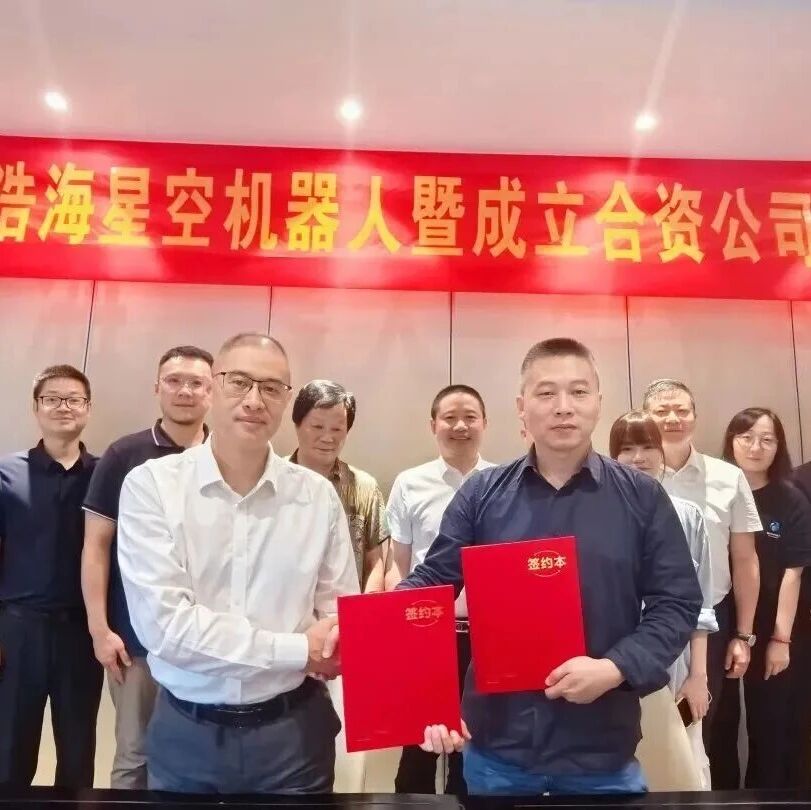
浩海星空与浙江仙通达成战略合作,开启具身智能机器人产业化新篇章
机器人大讲堂· 2025-09-26 12:14
Core Viewpoint - The strategic partnership between Shanghai Haohai Star Robot Co., Ltd. and Zhejiang Xiantong Rubber & Plastic Co., Ltd. aims to enhance the manufacturing capabilities of embodied intelligent robots and commercial service robots, marking a significant step towards industrialization in the robotics sector [1][4][9]. Group 1: Strategic Collaboration - Zhejiang Xiantong invests 40 million yuan in Haohai Star, acquiring a 10% stake and becoming a strategic shareholder [1]. - Both companies will establish a joint venture to build a robot manufacturing base, focusing on the production of various types of robots [1][2]. - The collaboration is seen as a critical move for Haohai Star as it transitions into the industrialization phase of its operations [4]. Group 2: Manufacturing and R&D Capabilities - Haohai Star's CEO emphasizes the need for technological leadership and scalable delivery capabilities to achieve breakthroughs in the robotics industry [4]. - Zhejiang Xiantong brings over 30 years of high-end precision manufacturing experience and a robust quality management system, which will support Haohai Star's transition from R&D to market delivery [4][5]. - The partnership aims to address the core challenges of industrializing robotics by converting embodied intelligence technology into scalable products [6]. Group 3: Market Insights and Future Outlook - The robotics industry is moving from technology demonstration to large-scale application, with mass production capabilities being a key bottleneck [6]. - Haohai Star has developed a product line covering education, healthcare, and commercial sectors, indicating a strategic insight into industry trends [6]. - The collaboration is expected to enhance the manufacturing capabilities and reduce costs, facilitating faster product development and market entry [5][6]. Group 4: Leadership and Experience - Haohai Star's CEO has 20 years of experience in the robotics field, having previously worked with leading companies and contributed to the development of notable humanoid robots [7]. - The CEO's vision for the company includes preparing for the mass production of humanoid robots aimed at complex applications in various sectors [7]. Group 5: Ecosystem Development - Haohai Star emphasizes the importance of ecosystem cooperation and industry chain collaboration, viewing the partnership with Zhejiang Xiantong as a key component of its strategy [9]. - The company plans to expand its network of industry partners to create a more comprehensive robotics ecosystem [9].