竹盐

Search documents
低钠盐、富硒盐、玫瑰盐、竹盐……这么多盐该怎么选?
Xin Hua Wang· 2026-01-31 14:20
Core Viewpoint - The article discusses the various types of salt available in the market, their nutritional values, and how to choose the right salt based on individual health needs, emphasizing that "high-end salts" do not necessarily provide significant health benefits compared to regular iodized salt [1][36]. Group 1: Types of Salt - Common salt types include regular iodized salt, selenium salt, low-sodium salt, and specialty salts like rose salt and bamboo salt, with the primary component being sodium chloride (95%-99%) [3][5][18]. - Regular iodized salt is cost-effective and prevents iodine deficiency diseases, making it suitable for most people [5][20]. - Selenium salt claims to provide selenium but only offers minimal benefits, insufficient to meet daily requirements [8][18]. - Low-sodium salt is beneficial for individuals with high blood pressure, but it is not suitable for everyone due to its potassium content [11][22]. - Specialty salts like rose salt and bamboo salt should be chosen based on specific needs rather than trends, as they do not provide significant health advantages [24][36]. Group 2: Choosing the Right Salt - The selection of salt should align with individual health conditions and dietary environments rather than blindly opting for expensive or trendy options [18][20]. - Regular iodized salt is recommended for the general population, while non-iodized salt is only for specific medical conditions [20][21]. - Low-sodium salt is ideal for those with hypertension but should be avoided by individuals with certain health issues [22][23]. - Specialty salts should be used judiciously, as they do not replace the need for a balanced diet [24][36]. Group 3: Salt Consumption Tips - It is crucial to control salt intake, with a recommended daily limit of 5 grams, and to be aware of hidden sources of salt in processed foods [32][30]. - Cooking techniques such as adding salt at the end of cooking and using natural flavor enhancers can help reduce overall salt consumption [33][34]. - Proper storage of salt is important to maintain its quality and nutritional value, particularly for iodized salt [34][36].

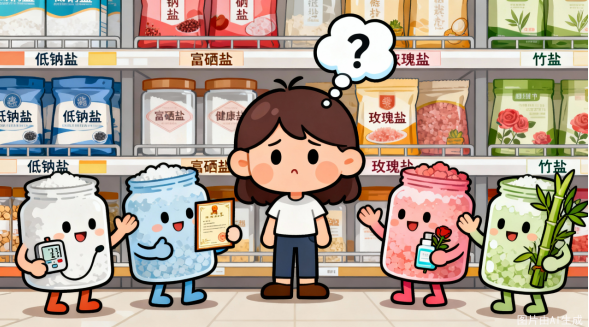
健康|为什么说盐不是越贵越好、吃得越少越好?
Xin Lang Cai Jing· 2026-01-31 10:15
Core Viewpoint - The article discusses the various types of salt available in supermarkets, highlighting their health implications and nutritional value, while questioning whether high-end salts are worth the price [1]. Group 1: Types of Salt - Supermarket shelves are filled with a variety of salts, including low-sodium salt, selenium-rich salt, rose salt, and bamboo salt, with prices ranging from a few yuan to several tens of yuan [1]. Group 2: Health Considerations - The article emphasizes the importance of salt in maintaining normal physiological functions and its role as a fundamental flavoring agent in cooking [1]. Group 3: Expert Insights - Dr. Ji Jing from the Northwest Women's and Children's Hospital discusses how to choose salt wisely and use it healthily, aiming to guide consumers in making informed decisions [1].
几块和几十块的盐,区别大吗?
Huan Qiu Wang· 2025-12-17 13:25
Group 1 - The core point of the article discusses the importance of salt in human health, emphasizing that sodium ions in salt play a crucial role in regulating bodily functions such as fluid balance, blood pressure, and energy metabolism [1][3] - The recommended daily intake of sodium is 1500 mg, and insufficient sodium can lead to health issues like hyponatremia, which can cause symptoms ranging from lethargy to severe complications like shock [3] Group 2 - Different types of salt available in the market include rock salt, lake salt, and sea salt, which are all essentially sodium chloride but differ in their sources and processing methods [5][9] - Rock salt is derived from ancient sea beds and is known for its high purity and low impurity levels, often sold at lower prices [6] - Lake salt is harvested from salt lakes and has larger granules that do not clump easily, while sea salt is produced through evaporation of seawater and may have lower sodium chloride purity [7][9] Group 3 - Specialty salts like bamboo salt and Himalayan pink salt are marketed as premium products, but they primarily serve the same purpose of sodium supplementation, with variations in flavor and appearance [10][11] - Nutritional salts, such as calcium and selenium salts, are available but provide minimal nutritional benefits compared to the recommended daily intake levels [12] Group 4 - When purchasing salt, consumers should focus on sodium and iodine content rather than price, with low-sodium salt being beneficial for individuals with hypertension [15] - Iodized salt is essential in iodine-deficient regions to prevent thyroid-related health issues, while some individuals may require non-iodized salt based on specific health conditions [17] Group 5 - The article stresses the importance of limiting salt intake to no more than 5 grams per day to avoid health risks associated with high salt consumption, such as hypertension and cognitive decline [18] - It also highlights the presence of hidden salts in various condiments and encourages a balanced diet with controlled salt intake [18]

年轻人的“发疯”大赛,正在被包装成“消费游戏”
3 6 Ke· 2025-12-08 02:30
Core Insights - The "Survival Challenge" event in Zhangjiajie has achieved over 5 billion views, significantly boosting local tourism and related businesses, with ticket revenue increasing by 310% year-on-year and sponsor revenue tripling [1][2][11] - The event reflects a growing trend among young people seeking unconventional ways to relieve stress, leading to a complete cycle of "emotional release - traffic explosion - commercial monetization" [2][11] - The outdoor and survival content has become a new trend in short video platforms, with significant increases in viewership and engagement [5][6][11] Industry Impact - The outdoor camping concept stocks in A-shares have surged, with companies like Sanfu Outdoor hitting the daily limit, and related products seeing explosive sales [1][11] - The outdoor equipment market is projected to grow significantly, with estimates suggesting a market size of $44.5 billion in 2024, expanding to $91.8 billion by 2030 [9][11] - Brands are heavily investing in marketing, with companies like Berghaus and Toread increasing their advertising costs significantly, indicating a strong focus on capturing the outdoor consumer market [10][11] Consumer Behavior - Young consumers are increasingly participating in outdoor challenges, with a notable rise in interest in extreme sports and adventure activities, as evidenced by the popularity of events like the Spartan Race [12][13][22] - The willingness to pay for experiences is rising, with many young people valuing emotional consumption and immersive experiences, leading to higher entry fees for events [22][23][24] - Social media plays a crucial role in transforming these experiences into "social currency," with young consumers willing to pay for shareable moments [25][26]

高盐饮食危害健康 赶快检查你的“盐值”超标了没?
Yang Shi Xin Wen· 2025-09-19 18:50
Core Viewpoint - The article emphasizes the importance of reducing salt intake in China, highlighting that the average daily salt consumption among adults is 11 grams, which is double the recommended limit by the World Health Organization and the Chinese Dietary Guidelines [1] Group 1: Salt Consumption in China - The average daily salt intake for adults in China is 11 grams, exceeding the recommended limit by two times [1] - Since 2019, the week of September 15 has been designated as "China Salt Reduction Week" to promote lower salt consumption [1] Group 2: Myths about Salt Intake - Myth 1: Reducing salt intake leads to salt deficiency and cramps; however, normal dietary sodium is usually sufficient, and cramps are more related to fatigue or dehydration [2][3][5] - Myth 2: Individuals with normal blood pressure do not need to reduce salt; high salt intake can have long-term health risks, including potential future hypertension [2][7][9] - Myth 3: Specialty salts like rose salt and sea salt are healthier; in reality, these salts primarily consist of sodium chloride, and their mineral content is negligible compared to other food sources [2][11][13]