
第三类创新医疗器械

Search documents
畅通科技—产业—金融高水平循环 | 上海“十五五”开局
Guo Ji Jin Rong Bao· 2026-02-24 11:52
Core Insights - The Shanghai International Science and Technology Innovation Center is transitioning from "innovation sourcing" to "results transformation," focusing on integrating innovation chains, industry chains, talent chains, and capital chains to accelerate the conversion of innovative results into productive forces [1][4][7] Group 1: Achievements and Goals - By 2025, the three leading industries—integrated circuits, biomedicine, and artificial intelligence—are expected to exceed a total scale of 2 trillion yuan, with high-tech industry output surpassing 900 billion yuan, accounting for 22.2% of the industrial output [1] - The 2025 Shanghai Technology Progress Report indicates that R&D expenditure intensity is projected to reach around 4.5%, with basic research investment intensity increasing to approximately 12% [2] - The integrated circuit industry in Shanghai is expected to account for over 25% of the national scale, with more than 1,000 enterprises and 40% of national talent concentrated in this sector [2] Group 2: Financial and Talent Development - A future industry fund with a scale of 15 billion yuan has leveraged six times the amount of social capital, while the "Big Zero Bay" fund matrix has been completed with a total scale of 27.3 billion yuan [3] - By 2025, Shanghai is expected to have 187 academicians and attract over 160 foreign young scientists from 42 countries through the "Shanghai Partner Research Program" [3] Group 3: Policy and Structural Changes - The focus during the "14th Five-Year Plan" period is shifting from quantity accumulation to "empowering capital circulation," enhancing market resource allocation efficiency and risk management functions [4][7] - The government aims to support small and medium-sized technology enterprises through inclusive financing and direct investment, enhancing the operational capabilities and exit mechanisms of state-owned funds [4] Group 4: Future Directions - In 2026, Shanghai will continue to strengthen its role as a source of innovation, focusing on key areas such as artificial intelligence, biomedicine, and integrated circuits to enhance global innovation influence [6] - Breaking down institutional barriers and constructing a service-oriented innovation ecosystem is crucial for accelerating the transformation of innovative results into productive forces [7]
畅通科技—产业—金融高水平循环
Guo Ji Jin Rong Bao· 2026-02-24 11:38
Core Insights - Shanghai's International Science and Technology Innovation Center is transitioning from "innovation sourcing" to "results transformation," focusing on integrating innovation chains, industry chains, talent chains, and capital chains to accelerate the conversion of innovative achievements into productive forces [1][4][7] Group 1: Achievements and Goals - By 2025, the three leading industries—integrated circuits, biomedicine, and artificial intelligence—are expected to exceed a total scale of 2 trillion yuan, with high-tech industry output surpassing 900 billion yuan, accounting for 22.2% of industrial output [1] - The 2025 Shanghai Science and Technology Progress Report indicates that R&D expenditure intensity is projected to reach around 4.5%, with basic research investment intensity increasing to approximately 12% [2] - Shanghai's integrated circuit industry is expected to account for over 25% of the national market, with more than 1,000 enterprises and 40% of national talent concentrated in the region [2] Group 2: Financial and Talent Development - A future industry fund of 15 billion yuan has leveraged six times the amount of social capital, while the "Big Zero Bay" fund matrix has a total scale of 27.3 billion yuan [3] - By 2025, Shanghai is expected to have 187 academicians and attract over 160 foreign young scientists from 42 countries through the "Shanghai Partner Research Program" [3] Group 3: Policy and Structural Changes - The focus during the "14th Five-Year Plan" period is shifting from quantity accumulation to "empowering capital circulation," enhancing market resource allocation efficiency and risk management functions [4][7] - The government aims to support small and medium-sized technology enterprises through inclusive financing and direct investment, enhancing the operational capabilities of state-owned funds [4][7] - Breaking down institutional barriers is essential for creating a service-oriented innovation ecosystem, with an emphasis on forming innovation consortia led by leading enterprises [7]
四川省药品监督管理局奋力书写“十四五”药品安全答卷 固本强基守底线 改革创新追高线
Si Chuan Ri Bao· 2025-12-25 07:45
Core Viewpoint - The Sichuan Provincial Drug Administration is actively enhancing drug regulation and quality control through a multi-faceted approach, focusing on safety, efficiency, and public welfare during the "14th Five-Year Plan" period [3][4][9]. Group 1: Regulatory Framework - The Sichuan Provincial Drug Administration is building a scientific and efficient drug regulatory system, emphasizing government leadership, departmental collaboration, and social governance [4]. - A clear responsibility system has been established to enhance regulatory effectiveness, with a three-tier and five-region regulatory framework [4]. - The administration has strengthened coordination with 26 departments to advance drug safety collectively [4]. Group 2: Digital Transformation - Digital transformation initiatives have made drug regulation smarter, with online processing for all regulatory procedures and an electronic traceability system for drugs [5]. - The implementation of a unique identification system for medical devices has resulted in over 22,600 data uploads, ranking eighth nationally [5]. - The establishment of seven key laboratories has positioned Sichuan as a leader in the western region for drug monitoring and safety [5]. Group 3: Talent Development - The administration has developed a professional title evaluation system for pharmaceutical engineering and non-clinical pharmacy, assessing 199 individuals to support high-quality industry development [6]. - Continuous training programs have been conducted, with over 10,000 participants, to enhance the professional skills of regulatory personnel [6]. - Competitions and events have been organized to showcase the capabilities of the drug inspection industry in Sichuan [6]. Group 4: Comprehensive Safety Control - A systematic approach has been adopted to ensure safety throughout the entire drug lifecycle, from research and development to usage [7]. - The administration has conducted over 60,000 inspections in the past five years, achieving a compliance rate of 99.6% for drugs and 98.2% for medical devices [8]. - Collaborative efforts with Chongqing have been initiated to create an integrated drug regulatory model, enhancing regional cooperation [8]. Group 5: Industry Support and Innovation - The Sichuan Provincial Drug Administration is addressing barriers to innovation in the pharmaceutical industry by launching a user community platform for medical devices [9]. - A proactive service model has been implemented to support enterprises, reducing the average review time for innovative products by 86% [10]. - The administration has streamlined approval processes, significantly improving efficiency in drug and medical device registrations [11].

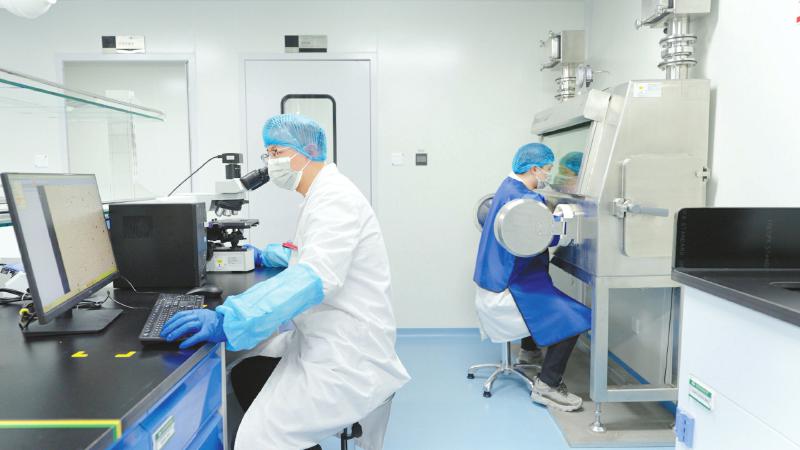
江西:支持符合条件的医药企业通过发行各类债券、资产证券化产品及基础设施公募REITs等拓宽融资渠道
Zheng Quan Shi Bao Wang· 2025-12-03 09:07
Core Viewpoint - The Jiangxi Provincial Government has issued implementation opinions to deepen the regulation reform of pharmaceuticals, medical devices, and cosmetics, aiming to promote high-quality development in the pharmaceutical industry [1] Summary by Relevant Sections Innovation Support Mechanism - The government plans to enhance innovation support mechanisms by initiating pilot programs for R&D services in pharmaceuticals, medical devices, and cosmetics [1] - A collaborative mechanism will be established between provincial drug regulatory departments and local governments to expedite the review process for innovative products [1] Regulatory and Policy Support - A "face-to-face" service mechanism will be set up to assist enterprises and R&D institutions in developing innovative products, with a focus on key drugs and medical devices that are prioritized for expedited registration [1] - The processing time for provincial-level related matters will be reduced by 15% [1] Financial Incentives - New 1st class innovative drugs and 3rd class innovative medical devices that generate economic benefits will receive a reward of 10 million yuan each, while newly approved generic chemical drugs will receive 2 million yuan each [1] - Local governments and park management committees are encouraged to implement reward and subsidy policies for national innovative drugs and other specified categories [1] Financing and Investment - Banks are encouraged to develop credit products tailored to the pharmaceutical industry's characteristics, focusing on long-term, low-collateral, and high-credit lending [1] - The provincial modern industry guidance fund and related science and technology innovation funds will be directed towards pharmaceutical companies with listing potential [1] - Pharmaceutical companies are supported in expanding financing channels through various means, including bond issuance and asset securitization [1]
上海生物医药产业规模将破万亿元
Zhong Guo Xin Wen Wang· 2025-10-25 05:59
Core Insights - Shanghai's biopharmaceutical industry is experiencing significant growth, projected to reach a scale of 1 trillion yuan by 2024, with a compound annual growth rate of 8.94% from 2021 to 2024 [1] - The emergence of the biopharmaceutical sector marks Shanghai's fifth trillion-yuan industry cluster, alongside electronics, automotive, high-end equipment, and software [1] - The city is focusing on three leading industries: artificial intelligence, integrated circuits, and biopharmaceuticals, which are becoming new economic pillars [1] Industry Growth - The manufacturing output of Shanghai's biopharmaceutical sector is also impressive, increasing from 171.2 billion yuan in 2021 to 201.17 billion yuan in 2024, with a compound annual growth rate of 6.9% [1] - By 2025, Shanghai aims to establish a world-class biopharmaceutical industry cluster, including six industrial parks each exceeding 10 billion yuan in scale [1] R&D and Innovation - From 2021 to August 2025, Shanghai has approved 30 domestic Class I innovative drugs, accounting for 17% of the national total, and 4 products in cell and gene therapy, representing 57% of the national market [2] - The city has also approved 45 Class III innovative medical devices, making up 20% of the national total, showcasing strong collaborative innovation between industry, academia, and research [2] - Shanghai's publication volume in top-tier life sciences journals has increased, with 93 articles in journals like "Cell," "Nature," and "Science" last year [2] Investment and Policy - In 2024, Shanghai established a biopharmaceutical mother fund with a total scale of 22.5 billion yuan, selecting 13 sub-funds and amplifying the capital scale by 5.59 times [3] - The city has also set up a 10 billion yuan merger and acquisition fund targeting key areas such as traditional Chinese medicine and vaccines [3] - Shanghai's biopharmaceutical sector has attracted cumulative financing of 238.37 billion yuan from 2021 to 2024, leading the nation [3] Ecosystem and Future Outlook - Shanghai hosts a complete ecosystem of multinational pharmaceutical companies, with 2,183 regulated biopharmaceutical enterprises as of 2024, including 19 of the top 20 global pharmaceutical and medical device companies having headquarters or R&D centers in the city [2] - The city's innovative policies and comprehensive ecosystem are driving the biopharmaceutical industry towards a trillion-yuan scale, representing a model for urban industrial upgrading [3]
城市24小时 | 经济第一城,又一个万亿产业来了
Mei Ri Jing Ji Xin Wen· 2025-10-13 16:19
Core Insights - The Shanghai biopharmaceutical industry is projected to grow from 761.71 billion yuan in 2021 to 984.70 billion yuan by 2024, with an average annual growth rate of 8.94% [1] - The biopharmaceutical manufacturing output is expected to increase from 171.20 billion yuan in 2021 to 201.17 billion yuan in 2024, reflecting a compound annual growth rate of 6.9% [1] - By the end of 2024, Shanghai will have 2,183 biopharmaceutical enterprises, with 19 of the top 20 global pharmaceutical and medical device companies having established headquarters or centers in the city [1] Industry Growth and Development - Shanghai has been a pioneer in the biopharmaceutical sector since 1993, emphasizing modern biotechnology and pharmaceuticals as key high-tech industries [2] - The "14th Five-Year Plan" for Shanghai aims to double the scale of three leading industries, including biopharmaceuticals, with a total fund of 100 billion yuan allocated for these sectors [2] - The biopharmaceutical industry accounted for a significant portion of the 1.8 trillion yuan combined scale of Shanghai's three leading industries in the previous year [3] Innovation and Market Position - Shanghai has established a complete biopharmaceutical industry chain with over 80,000 related enterprises, leading the nation with 30 companies listed on the Sci-Tech Innovation Board [4] - In 2024, Shanghai approved 7 first-class innovative drugs and 15 third-class innovative medical devices, representing 17.5% and 32.6% of the national total, respectively [4] - The city also leads in overseas licensing transactions, with 15 projects exceeding 500 million USD, totaling 19.83 billion USD, marking a 30.5% year-on-year increase [4] Future Prospects - Shanghai is on the verge of surpassing the 1 trillion yuan mark in its biopharmaceutical industry, with plans to enhance the entire value chain from basic research to application [5] - The city aims to become a world-class biopharmaceutical innovation hub and industrial cluster, focusing on accelerating technological innovation and high-end industry leadership [5]
湖北应急管理体制系统重塑新格局 “十四五”生产安全事故实现“三个下降”
Chang Jiang Shang Bao· 2025-09-29 00:31
Group 1: Safety Development in Hubei - Hubei province has achieved significant progress in safety development during the "14th Five-Year Plan" period, with a focus on risk prevention, safety assurance, and stability maintenance [1] - The province has been recognized for its safety production performance, ranking 5th nationally in 2023 and 4th in 2024, with a continuous decline in major safety incidents over the past 51 months [1] - Natural disaster response has improved, with a 57.3% reduction in affected population, a 69.9% decrease in deaths and disappearances, and a 68.4% drop in direct economic losses compared to the "13th Five-Year Plan" period [1] Group 2: Emergency Management System - Hubei has established a comprehensive emergency management system characterized by unified command, rapid response, and collaborative efforts across various levels [2] - The province has made significant investments in disaster relief resources, ensuring that supplies can meet the basic needs of 500,000 disaster-affected individuals for three days [2] - Over the past five years, Hubei has addressed over 2.59 million safety hazards, focusing on major disaster factors such as fire and explosion risks [2] Group 3: Natural Disaster Prevention - Hubei has enhanced its natural disaster prevention capabilities by building a unified early warning platform and conducting comprehensive risk assessments for 21 types of disasters [3] - Key infrastructure improvements include the reinforcement of 120 large and medium-sized reservoirs and the construction of 4,409 kilometers of forest fire emergency roads [3] - The province has provided assistance to 9.644 million disaster-affected individuals and repaired over 16,000 damaged homes in the past five years [3] Group 4: Pharmaceutical Industry Growth - The number of pharmaceutical companies in Hubei has increased by 42% during the "14th Five-Year Plan" period, reflecting a robust growth in the sector [4] - Hubei's drug safety measures have led to the investigation of 24,700 cases of violations, with a 99% pass rate in drug quality inspections [4] - Public satisfaction regarding drug safety has reached 89.4%, indicating improved public confidence in medication safety [4] Group 5: Support for Pharmaceutical Development - Hubei has approved 13 Class I innovative drugs, ranking 6th nationally and 1st in Central China, with a total of 445 pharmaceutical production enterprises established [5] - The province has also seen a 58% increase in Class II and III medical device manufacturers, contributing to a thriving market for safe and effective medical products [5] - The number of retail pharmacies has grown by 37%, enhancing access to quality pharmaceutical products for the public [5]
国家药品和医疗器械审评检查京津冀分中心在北京挂牌运行
Bei Jing Shang Bao· 2025-09-21 06:53
Core Viewpoint - The establishment of the Beijing-Tianjin-Hebei (Jing-Jin-Ji) Center for Drug and Medical Device Review and Inspection is a significant step by the National Medical Products Administration (NMPA) to enhance the drug and medical device approval system, promote innovation, and support high-quality development of the regional pharmaceutical industry [1][2] Group 1: Center Functions and Responsibilities - The Jing-Jin-Ji Center will serve the regions of Beijing, Tianjin, Hebei, and Shandong, providing technical services related to drug and medical device review, including research guidance, consultation acceptance, and review communication [1] - The center will also undertake registration verification and conduct inspections, contributing to the overall efficiency and quality of the review process [2] Group 2: Regional Pharmaceutical Industry Impact - Since 2021, the Jing-Jin-Ji region has approved 34 innovative drugs, accounting for 16.2% of the national total, and 68 Class III innovative medical devices, representing 25.7% of the national total [1] - The pharmaceutical industry's revenue in the region is projected to reach 841.5 billion yuan in 2024, which will constitute 28.3% of the national revenue [1]