细胞与基因治疗产品

Search documents
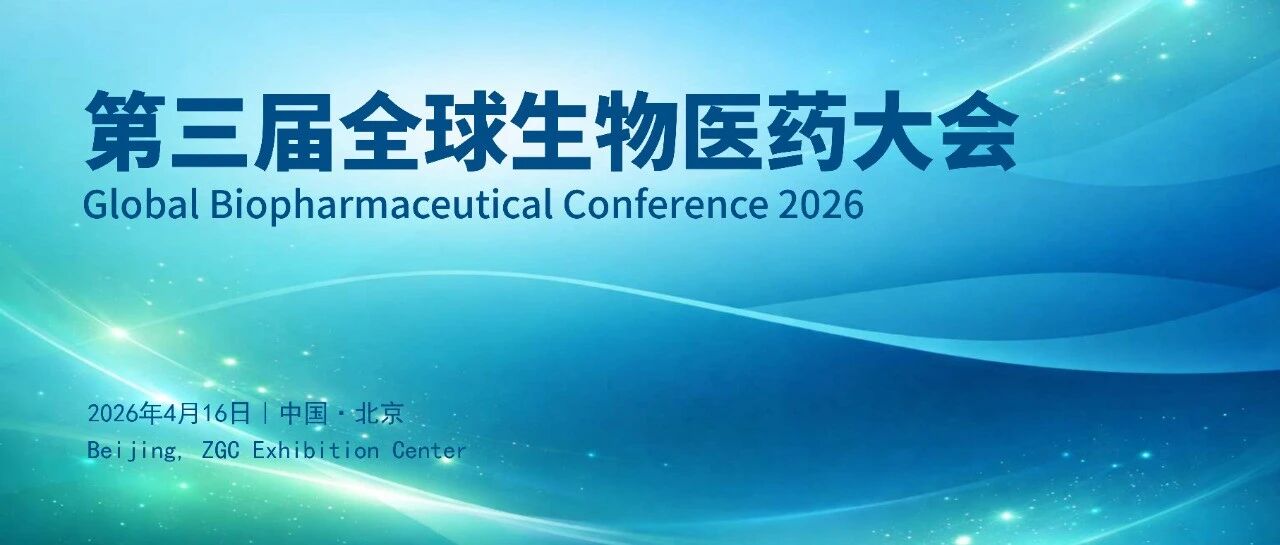
欢迎合作!第三届全球生物医药大会:展位+白皮书+奖项
思宇MedTech· 2026-02-10 07:08
Core Viewpoint - The innovation logic of the biopharmaceutical industry is undergoing adjustments due to intensified global competition, evolving technology platforms, and changing capital and regulatory environments. Systematic innovation capability and translational efficiency are becoming key factors influencing the industry's sustainable output [2]. Event Overview - The third Global Biopharmaceutical Conference 2026 will be held on April 16, 2026, at the Zhongguancun Conference Center, aiming to connect research, clinical, corporate, capital, and regulatory aspects of biopharmaceutical innovation [2][19]. - The conference will feature three main components: the release of a white paper, award evaluations, and multi-theme forums, presenting a comprehensive view of the global biopharmaceutical innovation ecosystem and development trends [2][9]. White Paper Release - The conference will officially release the "2026 Global Biopharmaceutical Innovation White Paper," focusing on technology evolution, product pipeline layout, corporate development paths, and changes in industry structure, providing valuable industry observation frameworks for enterprises, investors, and industry practitioners [9][10]. - The white paper serves as a significant window for companies to showcase their technological platform capabilities, research depth, and industry positioning [10]. Award Evaluation - The conference will announce multiple annual awards evaluating various dimensions of biopharmaceutical innovation, emphasizing long-term innovation capabilities rather than short-term market performance [11][12]. - Categories for awards include Annual Biopharmaceutical Innovation Enterprise, Annual Innovative Drug Product Award, Annual Technology Platform Innovation Award, and Annual Clinical Translation Innovation Award [15]. Multi-Theme Forums - The forums will address high-interest and collaborative potential topics in the biopharmaceutical industry, including trends in innovative drug development, antibody and ADC technologies, cell and gene therapy frontiers, nucleic acid drugs and delivery technologies, and biopharmaceutical innovation commercialization discussions [13][14]. - The forums aim to create a multi-perspective dialogue system involving various industry roles, enhancing collaboration and knowledge sharing [16]. Audience Composition - The conference targets a diverse audience, including research and clinical experts, biopharmaceutical company R&D and management teams, industry observers, investment institution representatives, and experts in registration, regulation, and payment [18][20]. - The event is positioned as an industry-focused, research-oriented, and systematic conference rather than a purely academic or promotional meeting [18].

观点 | 为CGT产业提供可借鉴的“深圳经验”
Sou Hu Cai Jing· 2026-01-16 11:17
Core Insights - Shenzhen has established itself as a leading area for the biopharmaceutical industry, particularly in cell and gene therapy (CGT), supported by the introduction of the first national legislation for the sector, the "Shenzhen Special Economic Zone Cell and Gene Industry Promotion Regulations" [1] - The CGT industry in Shenzhen is projected to generate over 8.5 billion yuan in total revenue by 2024, with nearly 200 companies in the industry chain and 17 CGT products currently in clinical trials [1] - The integration of national platforms and local funding has created a robust ecosystem that accelerates the clinical transformation of CGT products [3] Group 1 - Shenzhen's policy framework includes a comprehensive support system from basic research to industrial transformation, reinforced by the "20+8" industrial cluster policy [1] - The establishment of the cell and gene industry fund at the municipal level has contributed to a synergistic ecosystem characterized by "policy guidance + platform support + capital empowerment" [3] - The "818 Order" from the State Council provides a clear compliance pathway for clinical research and application, enhancing the stability of policy expectations for technological innovation and industrial transformation [3] Group 2 - The director of the National Engineering Research Center for Key Common Technologies in the Cell Industry suggests leveraging stem cell therapies as clinical engines while developing digitalized production lines and integrated quality monitoring platforms [5] - This proposed model aims to create a closed-loop industrial ecosystem that can be replicated in other biomedical technology fields, attracting more companies to the industry chain [5] - The complete cycle of "clinical transformation (technology) → standardized production (intelligent manufacturing) → compliance regulation (quality inspection) → data feedback optimizing technology/manufacturing" is emphasized as a pathway to build a vibrant biomedical technology industry cluster [5]
利好来了!刚刚,上海重磅发布!
券商中国· 2025-11-24 12:54
Core Viewpoint - The article highlights the recent policy support from the Shanghai government aimed at promoting high-quality development in the pharmaceutical and medical device industries, focusing on innovation and regulatory reforms [1][4][6]. Group 1: Policy Support and Regulatory Reforms - The Shanghai government has issued measures to support clinical research for innovative traditional Chinese medicine (TCM) and the development of classic TCM formulas [1][5]. - Clinical trial review and approval timelines for eligible innovative drugs will be shortened to 30 working days, with efforts to promote pilot experiences [4][7]. - The establishment of a service list for key research products in areas such as cell and gene therapy, rare diseases, and artificial intelligence medical devices is emphasized [4][5]. Group 2: Focus on Innovation in Medical Devices and Pharmaceuticals - The article discusses the encouragement of medical institutions to accelerate the development and use of self-researched in vitro diagnostic reagents [7]. - It mentions the establishment of a standardized mechanism for collecting real-world evidence from human experience data to support drug registration applications [5][6]. - The article outlines the importance of enhancing clinical data standardization and the establishment of an evaluation mechanism for innovative medical devices based on clinical value [4][5]. Group 3: Market Outlook and Investment Opportunities - Several brokerage firms express optimism about the innovation in the medical device and pharmaceutical sectors, particularly in the context of recent market adjustments [2][8]. - The article notes that the pharmaceutical sector's fundamentals remain strong, with a focus on innovative drugs and the potential for recovery in underperforming segments [9][10]. - It highlights the expected growth in the small nucleic acid drug sector, driven by technological breakthroughs and increased commercialization [9][10].

上海生物医药产业规模将破万亿元
Zhong Guo Xin Wen Wang· 2025-10-25 05:59
Core Insights - Shanghai's biopharmaceutical industry is experiencing significant growth, projected to reach a scale of 1 trillion yuan by 2024, with a compound annual growth rate of 8.94% from 2021 to 2024 [1] - The emergence of the biopharmaceutical sector marks Shanghai's fifth trillion-yuan industry cluster, alongside electronics, automotive, high-end equipment, and software [1] - The city is focusing on three leading industries: artificial intelligence, integrated circuits, and biopharmaceuticals, which are becoming new economic pillars [1] Industry Growth - The manufacturing output of Shanghai's biopharmaceutical sector is also impressive, increasing from 171.2 billion yuan in 2021 to 201.17 billion yuan in 2024, with a compound annual growth rate of 6.9% [1] - By 2025, Shanghai aims to establish a world-class biopharmaceutical industry cluster, including six industrial parks each exceeding 10 billion yuan in scale [1] R&D and Innovation - From 2021 to August 2025, Shanghai has approved 30 domestic Class I innovative drugs, accounting for 17% of the national total, and 4 products in cell and gene therapy, representing 57% of the national market [2] - The city has also approved 45 Class III innovative medical devices, making up 20% of the national total, showcasing strong collaborative innovation between industry, academia, and research [2] - Shanghai's publication volume in top-tier life sciences journals has increased, with 93 articles in journals like "Cell," "Nature," and "Science" last year [2] Investment and Policy - In 2024, Shanghai established a biopharmaceutical mother fund with a total scale of 22.5 billion yuan, selecting 13 sub-funds and amplifying the capital scale by 5.59 times [3] - The city has also set up a 10 billion yuan merger and acquisition fund targeting key areas such as traditional Chinese medicine and vaccines [3] - Shanghai's biopharmaceutical sector has attracted cumulative financing of 238.37 billion yuan from 2021 to 2024, leading the nation [3] Ecosystem and Future Outlook - Shanghai hosts a complete ecosystem of multinational pharmaceutical companies, with 2,183 regulated biopharmaceutical enterprises as of 2024, including 19 of the top 20 global pharmaceutical and medical device companies having headquarters or R&D centers in the city [2] - The city's innovative policies and comprehensive ecosystem are driving the biopharmaceutical industry towards a trillion-yuan scale, representing a model for urban industrial upgrading [3]
历下经开区获批复过半年,新进展透露哪些新信号
Qi Lu Wan Bao Wang· 2025-07-09 02:15
Core Insights - The Lixia Economic Development Zone has been identified as a key driver for the "Industrial Strong City" strategy in Jinan, with significant progress made since its approval six months ago [1][2] - The zone focuses on modern medicine and electronic information as its main industries, with a forward-looking approach to future industries such as brain-computer interfaces and artificial intelligence [2][3] Development Progress - The Lixia Economic Development Zone was officially approved as a provincial-level economic development zone on November 25, 2024, becoming the 14th such zone in Jinan [1] - Key breakthroughs include spatial layout optimization and the establishment of dual industrial chains centered around electronic information and modern medicine [2] Industry Focus - The zone aims to create a high-quality industrial park that integrates production and urban development, emphasizing green and low-carbon initiatives [2] - The development strategy includes building a modern medical industry demonstration park and a software industry cluster, leveraging partnerships with leading companies like Huawei and ZTE [3][4] Investment Strategy - A targeted investment strategy has been implemented, with a focus on attracting leading enterprises and high-value projects in key industries [4] - The zone has identified 21 chain-leading enterprises and 33 target enterprises for supply chain enhancement, aiming for concentrated industrial development [4] Future Outlook - The Lixia Economic Development Zone is positioned as a central hub for industrialization in the Lixia District, with ongoing projects aimed at enhancing industrial capacity and resource aggregation [5] - Plans include the establishment of a software industry cluster and collaboration with national think tanks for comprehensive research and development [5]
14个医药健康重大项目签约落地昌平
Bei Jing Ri Bao Ke Hu Duan· 2025-07-06 21:43
Group 1 - The 42nd National Pharmaceutical Industry Information Annual Conference and the 2025 Beijing-Changping Life Science Forum opened, focusing on the layout of pharmaceutical research and the transformation of original achievements, with 14 major pharmaceutical health industry projects signed in Changping District [1] - Major projects include investments from companies such as Mindray Medical, Diyi Group, Yourui Bio, and others, as well as innovative collaborations with institutions like Shantou University and the National Research Institute of High-Performance Medical Devices [1][2] - The Beijing Future Pharmaceutical Industry Chain Research Institute was unveiled, aiming to support key technology collaboration and promote international development of the pharmaceutical industry [1] Group 2 - A joint initiative was launched among Tsinghua University, Peking University, China Agricultural University, and Beijing University of Chemical Technology to drive breakthroughs in biomedicine and synthetic biology, enhancing China's position in the global pharmaceutical value chain [2] - The "Support Measures for the Development of the Pharmaceutical Health Industry in the Changping Group of the China (Beijing) Free Trade Pilot Zone" were announced, focusing on cross-border R&D cooperation and aligning with international standards [2] - Changping District has established a complete industrial chain from basic research to terminal medical services, with an average annual growth rate of 9.3% in pharmaceutical health industry revenue over the past three years, projected to reach 104 billion yuan in 2024, a year-on-year increase of 14.3% [2][3] Group 3 - The district has seen continuous innovation, with four key technologies selected as major scientific achievements for the 2025 Zhongguancun Forum, and 27 cell and gene therapy pipelines entering clinical stages, accounting for 5% of the national total [3] - The Zhongguancun synthetic biology manufacturing industry cluster has attracted 121 innovative enterprises, and the "Future City" health industry has formed a 10 billion yuan cluster [3] - Changping District aims to enhance the ecosystem of industrial elements and improve service quality, striving to make the Life Science Park a globally competitive hub for the pharmaceutical health industry [3]