
算力贷

Search documents
连续4年,实现双位数股票投资收益率!中国银行,重磅发布!
券商中国· 2026-03-31 13:45
Core Viewpoint - China Bank has demonstrated a stable and progressive performance in the past year, achieving a balance of growth and quality in a low-interest-rate environment [1] Financial Performance - In 2025, China Bank reported total operating income of 659.9 billion yuan, a year-on-year increase of 4.28%, leading among the four major banks [2] - The bank achieved a net profit after tax of 257.9 billion yuan, with shareholder profit reaching 243 billion yuan, reflecting growth rates of 2.06% and 2.18% respectively [2] - The average return on total assets (ROA) and return on equity (ROE) remained within a reasonable range, with a dividend payout ratio maintained at a high level of 30% [2] - The total assets of China Bank reached 38.36 trillion yuan, growing by 9.4% compared to the previous year [4] Revenue and Profitability - Non-interest income reached 219.2 billion yuan, growing by 19.21% year-on-year and accounting for 33.21% of total operating income, an increase of 4.16 percentage points [5][6] - The net interest margin (NIM) was stable at 1.26%, providing crucial support for revenue growth [8] - The bank's non-performing loan ratio was 1.23%, a decrease of 0.02 percentage points year-on-year, indicating improved asset quality [5] Globalization and International Business - China Bank's overseas assets exceeded 1.27 trillion USD, with a growth rate of 10.18%, marking a four-year high [10] - The bank served approximately 28,000 Chinese enterprises "going global" and over 330,000 foreign enterprises in China, with a service coverage rate exceeding 90% for Fortune 500 foreign companies [11] - The bank has established itself as a leading player in cross-border financial services, handling about 25% of cross-border settlements [12] Technological Financial Services - By the end of 2025, the balance of technology loans surpassed 4.8 trillion yuan, representing over 30% of corporate loans, positioning the bank as a leader in the industry [15] - The bank has developed a comprehensive service system for technology enterprises, with a stable non-performing loan rate in the technology loan segment [16] Strategic Outlook - For 2026, China Bank aims to enhance its support for new productive forces, maintain high levels of overseas profit contributions, and effectively manage risks while promoting stable profit growth [17]



跨境人民币业务破6300亿!天津公布2025年金融运行情况
2 1 Shi Ji Jing Ji Bao Dao· 2026-02-06 02:57
Core Insights - The People's Bank of China Tianjin Branch announced that the social financing cumulative increment in Tianjin reached 5384 billion yuan in 2025, marking a historical high with an increase of 464 billion yuan year-on-year [2] - The loan structure in Tianjin is continuously optimizing, with significant growth in key sectors such as technology, green finance, and inclusive finance, contributing to high-quality economic development [1][3] Social Financing - In 2025, Tianjin's social financing cumulative increment was 5384 billion yuan, which is 464 billion yuan more than the previous year, setting a historical record [2] - The average annual increment during the 14th Five-Year Plan period is 4451 billion yuan, maintaining a high level of social financing [2] Deposit and Loan Growth - By the end of 2025, total deposits in Tianjin reached 5.06 trillion yuan, an increase of 3279.58 billion yuan from the beginning of the year [2] - The total loan balance was 4.84 trillion yuan, with an increase of 2187.27 billion yuan year-on-year, reflecting a growth of 673.61 billion yuan [2] Key Sector Support - Loans in key sectors, referred to as the "Five Major Articles," exceeded 1 trillion yuan, with technology loans growing by 11.3%, green loans by 21.2%, and inclusive small and micro-enterprise loans by 19.8% [3][4] - The technology sector saw a significant increase in loans, with a total of 304 billion yuan in tech bonds issued, ranking seventh nationwide [4] Green Finance - By the end of 2025, green loans in Tianjin surpassed 860 billion yuan, reflecting a growth of 21.2% from the beginning of the year [4] - The issuance of green bonds reached 234 billion yuan, doubling from the previous year [4] Inclusive Finance - Inclusive finance initiatives led to a 19.8% year-on-year increase in loans for small and micro enterprises [5] - The balance of loans in the elderly care industry grew by 103.9%, ranking sixth nationwide [5] Digital Finance - Loans in the digital economy sector increased by 11.9%, surpassing the average loan growth rate by 7.2 percentage points [5] - The digital yuan was implemented across 16 application scenarios, with a cumulative transaction volume exceeding 5672 million transactions, amounting to 39 billion yuan [6] Cross-Border RMB Business - Cross-border RMB business volume exceeded 6300 billion yuan, marking a historical high with a year-on-year growth of 17% [7] - The Free Trade Account (FT Account) system was expanded, with a total settlement volume reaching 1.49 trillion yuan [7] E-commerce and International Financing - The cross-border e-commerce comprehensive service platform was successfully established, leading to a 1.1-fold increase in cross-border RMB business [8] - The issuance of "Panda Bonds" by overseas enterprises reached 6.8 billion yuan, reflecting a year-on-year growth of 1.3 times [8]
19条产业链将累计获超6600亿元授信支持
Da Zhong Ri Bao· 2026-02-06 00:59
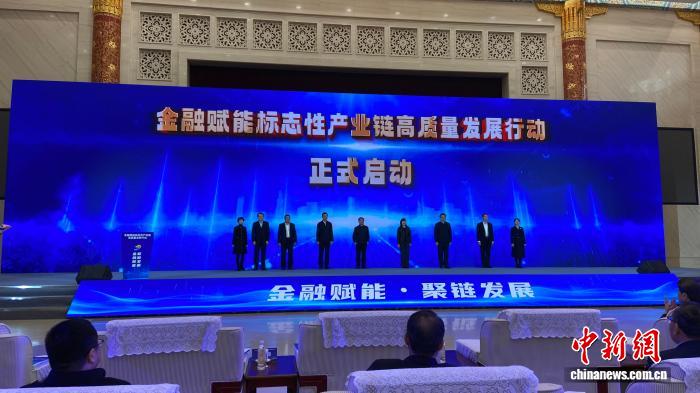
Group 1 - The "Financial Empowerment for High-Quality Development of Iconic Industrial Chains" initiative was launched in Jinan, focusing on 19 iconic industrial chains and selecting 14 banks as "financial chain leaders" to provide over 660 billion yuan in credit support [1] - By the end of 2025, the industrial loan balance in Shandong is projected to reach 3.19 trillion yuan, with a year-on-year growth of 11.4% [1] - The initiative aims to enhance financial resource integration into industrial development, particularly in key areas of the industrial chain, through various activities such as "one chain per month" and "integrating finance with chains" [1] Group 2 - Agricultural Bank of Shandong has launched the "Agricultural Machinery Loan" financial scheme for the specialized equipment industry chain, while China Everbright Bank has expanded financing targets to automotive parts to meet the financing needs of small and micro enterprises in the automotive industry chain [2] - The China Bank of Shandong plans to cover over 400 enterprises in the artificial intelligence industry chain through financial salons and project roadshows this year [2] - Financial institutions are introducing specialized financial products like computing power loans and low-carbon transformation loans, while also embedding resources deeper into industrial chain research, investment attraction, and chain extension [2] Group 3 - Shandong's industrial chain dominance is solidified, with 19 iconic industrial chains accounting for over 90% of the province's industrial enterprises and revenue [3] - By 2025, the province's industrial added value is expected to grow by 7.6%, surpassing the national growth rate by 1.7 percentage points [3] - The province's manufacturing loans increased by 187.5 billion yuan, with long-term loans exceeding 1 trillion yuan, reflecting a year-on-year growth of 10.6% [3]
山东促金融活水流向工业领域 赋能标志性产业链高质量发展
Zhong Guo Xin Wen Wang· 2026-02-05 14:43
Group 1 - The core viewpoint of the article emphasizes the launch of financial empowerment initiatives for key industrial chains in Shandong Province, aiming to enhance high-quality development through tailored financial products and services [1][3][5] - Shandong has identified 19 key industrial chains that encompass over 90% of the province's industrial enterprises and contribute more than 90% of industrial revenue, with a projected industrial added value growth rate of 7.6% by 2025, exceeding the national average by 1.7 percentage points [1][5] - The province plans to strengthen overall research on industrial chains and customize financial solutions, integrating various financial resources such as funds, insurance, and venture capital to support different sectors and stages of industrial chain development [1][3] Group 2 - The Shandong Provincial Financial Committee aims to establish "financial chain leaders" for the identified industrial chains, providing innovative financial policies and tools to enhance efficiency and effectiveness in financial support [3] - Agricultural Bank of China Shandong Branch has achieved full coverage of financial services for the 19 key industrial chains, providing credit support to 79 chain leader enterprises with a total credit line of 238.8 billion yuan [3] - The province's industrial clusters include critical sectors such as new-generation information technology, high-end equipment, and modern pharmaceuticals, which require precise financial resources to support their autonomous control and capability enhancement [5]
2025年浙江金融“成绩单”揭晓 多项核心指标位居全国前列
Mei Ri Shang Bao· 2026-01-26 23:31
Group 1 - The year 2025 is crucial for Zhejiang's high-quality development and the construction of a common prosperity demonstration zone, with significant financial support for economic stability and growth [1] - As of the end of November 2025, the balance of financial "five major articles" loans in Zhejiang reached 12.8 trillion yuan, a year-on-year increase of 10.9%, accounting for 11.9% of the national total [1] - The balance of loans in the province's financial system reached 25.69 trillion yuan, with a year-on-year growth of 8%, surpassing the national growth rate by 1.8 percentage points [1] Group 2 - Zhejiang has implemented 17 measures in technology finance to support seed and startup enterprises, with technology loans and loans for strategic emerging industries growing by 13.7% and 14.9% respectively [2] - The province has introduced 20 measures in green finance, with green loan balances reaching 4.57 trillion yuan, a year-on-year increase of 19.3%, ranking among the top in the country [2] - The province has optimized the business environment for private enterprises, with inclusive small and micro loans and agricultural loans ranking first nationally as of the end of 2025 [2] Group 3 - The development of pension finance and digital finance is accelerating, with loans for service consumption and the pension industry exceeding 100 billion yuan, and pension industry loans growing by 92.2% year-on-year [3] - The balance of loans in the core digital economy sectors increased by 14.9% as of the end of November 2025, focusing on areas like integrated circuits and artificial intelligence [3] - A new credit repair policy effective from January 1, 2026, allows individuals to have overdue information removed from the credit system if they repay overdue debts by March 31, 2026, without needing to apply [3]
央行2026年适度宽松货币政策对不同类型银行的影响与应对
Jin Rong Jie· 2026-01-08 13:01
Core Viewpoint - The People's Bank of China (PBOC) will implement a moderately accommodative monetary policy in 2026, focusing on promoting high-quality economic development and reasonable price recovery, while maintaining ample liquidity and relatively loose financing conditions [1][2]. Monetary Policy Predictions - The PBOC is expected to lower the reserve requirement ratio (RRR) 1-2 times in 2026, releasing long-term liquidity of 1-2 trillion yuan, and reduce interest rates by 10-25 basis points, with a higher probability of lowering the 5-year Loan Prime Rate (LPR) [2]. - The target for social financing costs is to maintain them at historically low levels, with the average interest rate for new corporate loans around 3% [2]. - Social financing and M2 growth rates are expected to align with economic growth (around 5%) and price level targets (around 2%), with an average asset growth rate of about 8% across industries [2]. Impacts on Different Types of Banks Large State-owned Commercial Banks - Expected to increase new loans by approximately 15 trillion yuan, with a focus on key sectors [3]. - Net interest margin is projected to be around 1.4%, as the decline in funding costs is expected to exceed the decline in asset yields [3]. - Anticipated growth in bond underwriting income and wealth management scale by over 10% due to strong comprehensive financial service capabilities [3]. - Non-performing loan (NPL) ratio is expected to drop below 1.2% [3]. Joint-stock Banks - Anticipated growth in technology and green finance loans by around 20% due to high marketization and product innovation capabilities [4]. - Net interest margin is expected to decline to below 1.5% [4]. - Digital transformation is expected to accelerate, with online credit approval rates reaching 80% [4]. - New customer acquisition is expected to increase significantly, with innovative products like "computing power loans" being introduced [4]. Urban Commercial Banks - Expected loan growth in local key industries and small businesses by around 20% [5]. - Net interest margin is projected to be between 1.4% and 1.5% [5]. - Anticipated growth in inclusive finance loans by around 15% [6]. - Digital service capabilities are expected to improve, with online channel coverage reaching 90% [6]. Rural Small Banks - Expected growth in agricultural and small business loans by around 15% [7]. - Anticipated reduction in funding costs, with the reserve requirement ratio dropping to around 4.5% [7]. - Policy support for inclusive finance is expected to increase by 30% [7]. - NPL ratio is projected to decrease to around 2.5% [7]. Challenges Faced by Different Types of Banks Large State-owned Banks - Facing pressure from narrowing net interest margins due to competitive pricing from large clients [8]. - Digital transformation efforts may be hindered by organizational complexity [8]. - High risk concentration in real estate and local government debts [8]. Joint-stock Banks - Expected further narrowing of net interest margins due to high funding costs [9]. - Capital replenishment pressure is significant, with an estimated need for 800 billion yuan [9]. - Risk control capabilities will be tested due to the high-risk nature of technology finance [9]. Urban Commercial Banks - Anticipated decline in net interest margins, with some nearing 1% [10]. - Increased liquidity risk due to high reliance on central bank funding [10]. - Digital transformation may lag behind due to insufficient investment [10]. Rural Small Banks - Weak risk control capabilities may lead to higher NPL ratios [11]. - Expected decline in net interest margins, with some nearing 1% [11]. - Digital transformation challenges due to small scale and lack of professional talent [11]. Differentiated Response Strategies - Large state-owned banks should focus on comprehensive financial services and enhance their role as policy transmission hubs [13]. - Joint-stock banks should strengthen their competitive advantages in technology and green finance [14]. - Urban commercial banks should deepen their local market presence and enhance digital services [15]. - Rural banks should focus on serving rural revitalization and enhance their financial service capabilities [16]. Summary and Outlook - The PBOC's accommodative monetary policy presents opportunities for total expansion, structural optimization, and profit enhancement for the banking sector, while also posing challenges such as narrowing net interest margins and risk management [17]. - Different types of banks should adopt differentiated strategies based on their strengths and characteristics to navigate the evolving landscape [18].
中国银行青岛市分行:金融赋能兴链 产业逐光向新
Qi Lu Wan Bao· 2025-12-17 03:02
Core Viewpoint - The "10+1" modern industrial system is a key driver for economic vitality and urban development, with Qingdao Bank playing a crucial role in supporting high-quality industrial growth through targeted financial services [2][8]. Group 1: Financial Support and Services - Qingdao Bank focuses on the "10+1" industrial system, providing tailored financial solutions to key sectors such as intelligent equipment and green energy, aiming to build a comprehensive industrial financial service system [2][3]. - The bank has introduced specialized financial products, including credit loans for technology, computing power, talent, and specialized new enterprises, serving nearly 1,000 specialized enterprises with over 11 billion yuan in loans [3]. - Qingdao Bank has allocated over 30 billion yuan in credit to technology-oriented enterprises, facilitating a shift from "following" to "running alongside" in industrial development [5]. Group 2: Support for Semiconductor Industry - The integrated circuit sector is identified as a leading area for breakthrough within the "10+1" industrial system, requiring substantial and stable financial support for technology development and capacity expansion [4]. - Qingdao Bank has streamlined approval processes and customized financial service plans to meet the specific needs of semiconductor companies, effectively addressing funding gaps for research and production [4][5]. Group 3: Agricultural Technology Development - Modern agricultural technology is a core support for food security and rural revitalization, with Qingdao Bank providing comprehensive credit solutions to enhance research and production capabilities in this sector [6][7]. - The bank has established dedicated service teams to address the diverse financial needs of agricultural enterprises, facilitating collaboration across the supply chain to enhance the overall industrial ecosystem [7]. Group 4: Future Directions - Qingdao Bank aims to continue aligning with the "10+1" industrial development framework, focusing on strengthening the real economy and providing sustained financial support for industrial growth [8].
广西农行出手八百亿,AI金融挺进东盟
Zhong Guo Xin Wen Wang· 2025-11-28 10:04
Core Viewpoint - The Agricultural Bank of China Guangxi Branch has launched an "AI + Finance" initiative aimed at establishing itself as a leading brand in AI-driven financial services by 2030, with a financial support target exceeding 80 billion yuan for the AI industry in Guangxi, focusing on ASEAN markets [1][2]. Group 1: Initiative Overview - The initiative will focus on integrating AI with financial services through a structured approach involving a main line, dual empowerment, three application scenarios, four major projects, five systems, and six actions [1][2]. - The bank aims to leverage Guangxi's geographical advantages to create a distinctive "AI + Finance" brand, promoting a replicable financial service model for ASEAN [1]. Group 2: Financial Services and Products - The initiative will provide differentiated financial services across the entire AI industry chain, introducing innovative products like "Guangxi AI Loan" and "Computing Power Loan" [2]. - The focus will also include smart cross-border settlement and investment services targeting ASEAN markets, alongside applications in smart agriculture and rural digital finance [2]. Group 3: Development Strategies - The bank plans to implement four major projects, including building a financial data sharing platform, advancing smart risk control technologies, and participating in cross-border AI financial development [2]. - Five systems will be established to drive financial service transformation, including smart credit, smart risk control, smart channels, smart operations, and smart services [2]. Group 4: Recent Achievements - As of the end of October, the Agricultural Bank of China Guangxi Branch led its peers in both deposit and loan growth, becoming the first bank in the region to exceed 100 billion yuan in technology loans [3].

江苏银行上海分行深耕区域金融,以创新服务赋能金山产业高质量发展
Sou Hu Cai Jing· 2025-11-12 05:48
Core Insights - The event highlighted Jiangsu Bank's commitment to serving the local economy and its role as a leading city commercial bank in supporting regional development [1][2]. Group 1: Local Engagement - Jiangsu Bank's Shanghai branch emphasized its deep-rooted connection to Jinshan District, with Vice President Zhu Hailin sharing personal experiences that reflect the bank's understanding of local economic changes [2]. - The bank aims to align its financial resources with the development strategies of Shanghai and Jinshan, focusing on injecting financial momentum into the region's transformation [2]. Group 2: Tailored Financial Solutions - Jiangsu Bank has developed a diversified credit system that moves away from traditional collateral reliance, with real estate-backed loans now accounting for less than 10% of its portfolio [3]. - The bank offers specific solutions for challenges faced by technology-driven enterprises, such as "Talent Sci-Tech Loans" and knowledge property pledges, which help reduce financing costs through alignment with local policies [3]. - Online supply chain financial products like "e-Rongdan" are designed to convert accounts receivable into efficient financing tools without affecting the credit of core enterprises [3]. Group 3: Industry Cluster Support - Jiangsu Bank is focusing on providing financial services at the industry cluster level, conducting in-depth research to understand the unique financial needs of various sectors [4]. - The bank has launched specialized financial products tailored to specific industry clusters, such as "G60 Sci-Tech Loan" and "Computing Power Loan," to support innovation in key sectors like drones and health technology [4]. - The bank's service framework is designed to match the financial support with the development cycles and asset characteristics of the industries in Jinshan [4]. Group 4: Performance Metrics - Since its establishment, Jiangsu Bank's Jinshan branch has served over 300 enterprises, with a credit scale exceeding 1.5 billion yuan, demonstrating significant success in supporting specialized and innovative technology companies [5]. - The bank's approach illustrates how a financial institution can achieve high-quality development while fulfilling its mission to serve the real economy through deep regional engagement [5].

前三季度湖北省人工智能产业规模达1100亿元
Zhong Guo Jing Ji Wang· 2025-10-30 09:03
Core Viewpoint - Hubei Province is actively developing its artificial intelligence (AI) industry, aiming to create a comprehensive development system driven by technological innovation and supported by a robust industrial base and digital infrastructure [1][2] Group 1: Industry Development - Hubei's AI industry scale is projected to reach 110.7 billion yuan in 2024, with a compound annual growth rate of nearly 40% over the past five years [2] - As of January to September this year, the industry scale has already exceeded 110 billion yuan, marking a year-on-year growth of nearly 30% [2] - The province is home to 1,215 AI companies, a 49% increase from the previous year, including 40 listed companies and 120 national-level "little giant" enterprises [2] Group 2: Infrastructure and Talent - Hubei has established 12 provincial-level manufacturing innovation centers and 87 major innovation platforms in the AI field [1] - The "Ten-Hundred-Thousand" talent initiative has attracted 21 academicians in AI-related fields and trains over 5,000 professionals annually [1] - The province is implementing a "61020" initiative to tackle six major foundational research projects, ten key core technologies, and develop 20 flagship products each year [1] Group 3: Future Plans and Financial Support - Hubei plans to optimize its policy environment, break through core technologies, and deepen integrated applications to build a nationally influential AI innovation hub [2] - Financial institutions have introduced innovative financial products like "data loans" and "computing power loans," providing support to 126 companies [2] - The province aims to enhance its role as a strategic support point for the rise of the central region of China [2]