米糠油

Search documents
江宁区2025年生态低碳农业结硕果
Jiang Nan Shi Bao· 2026-02-10 23:29
Core Insights - Jiangning District in Nanjing is implementing a sustainable agricultural ecosystem transformation project aimed at ecological priority and green development, providing a model for agricultural green transformation in the Yangtze River Delta region [1] Group 1: Low-Carbon Technology Implementation - Jiangning District has established a core demonstration system in three streets, focusing on low-carbon technology application, moving from single-point trials to large-scale applications [2] - The modern agricultural park in Hushu Street has implemented organic fertilizer substitution technology, achieving a dual increase in rice and wheat yield and nitrogen fertilizer efficiency [2] - The area of ecological farming practices such as rice-duck and rice-shrimp co-cultivation has reached 35 hectares, with a 5% reduction in chemical pesticide usage compared to 2021 [2] Group 2: Value Chain Innovation - Jiangning District is enhancing agricultural value chains through brand empowerment, deep processing, and agricultural-tourism integration, leading to significant economic benefits [4] - The region has developed public brands like "Jiangning Rice" and introduced eight green food products and three organic products, increasing farmers' direct income by 20% [4] - The introduction of advanced equipment has achieved 100% mechanization in rice production, saving 600 yuan per mu in labor costs [4] Group 3: Agricultural and Tourism Integration - Agricultural-tourism integration has become a new growth point, attracting over 500,000 visitors through various themed activities and experiences [5] - The development of "rice field study" courses has increased local agritourism revenue by 40% [5] Group 4: Capacity Building and Community Engagement - Jiangning District has conducted training sessions for 139 participants, with a focus on increasing female participation in agricultural training [7] - The establishment of a tripartite benefit-sharing mechanism has led to an average annual income increase of over 12,000 yuan for farmers [7] Group 5: Ecological Benefits - The district has achieved significant greenhouse gas reductions through various agricultural practices, equivalent to the carbon sequestration of 360,000 adult trees annually [8] - The area under crop rotation and diverse planting has reached 3,333.35 hectares, enhancing the stability of the agricultural ecosystem [8]
中国经济信心说丨奔向中国式现代化,“三农”这篇文章大有前景
Yang Shi Xin Wen· 2026-02-06 03:14
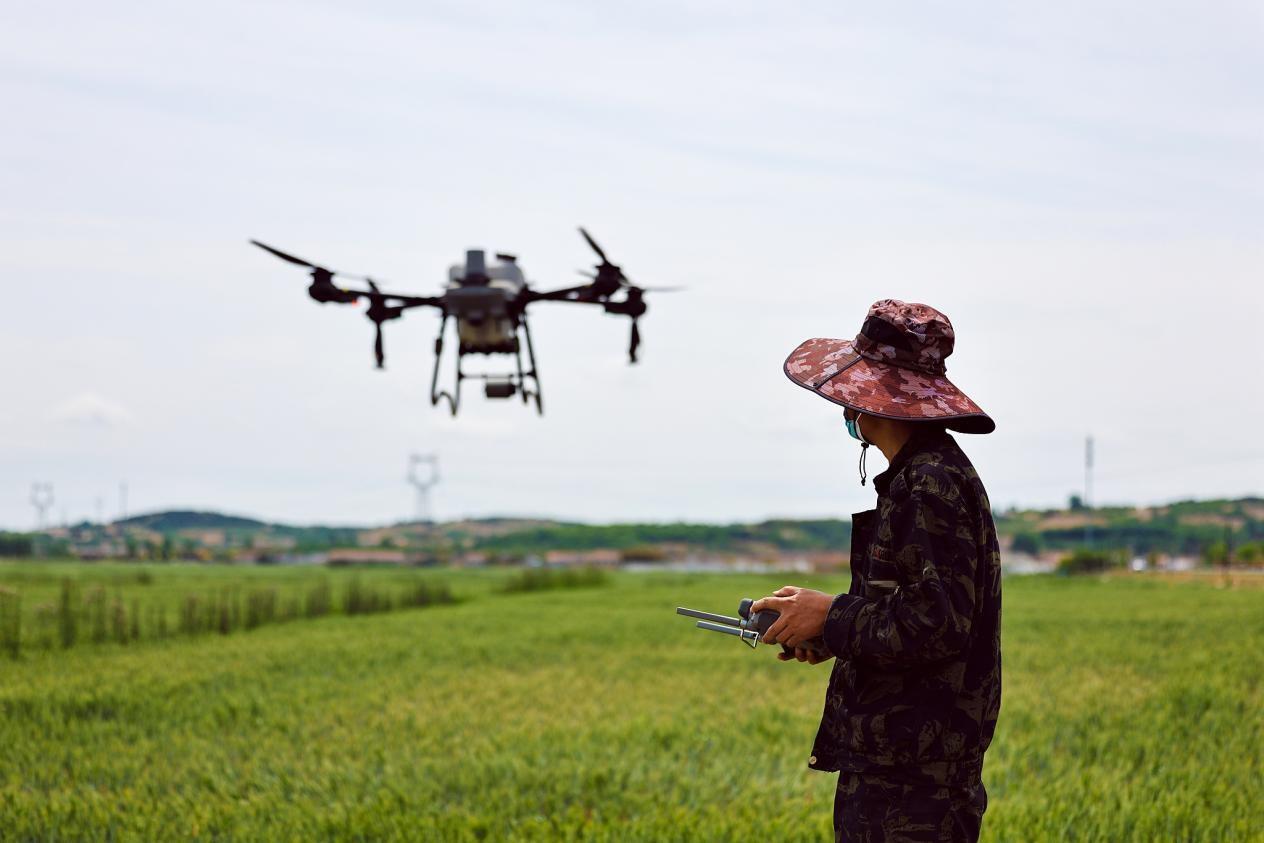
Core Insights - The central document emphasizes the importance of modernizing agriculture and rural areas, signaling a strong commitment to agricultural development and rural revitalization as part of China's broader modernization strategy [1] - The goal is to achieve a grain production of 1.43 trillion jin by 2025, ensuring food security and improving the livelihoods of farmers, which is crucial for the overall success of China's modernization [1] Group 1: Agricultural Modernization - The document highlights the need to transform agriculture into a modernized large industry, focusing on enhancing quality and efficiency rather than just increasing production scale [3] - The integration of technology, such as drones and artificial intelligence, is reshaping agricultural practices, moving from traditional methods to data-driven and algorithm-based operations [3] Group 2: Diversification and Value Addition - The concept of a "modernized large industry" includes expanding the agricultural value chain, addressing issues like "overproduction without profit" by enhancing processing and branding of agricultural products [3] - There is a push towards a diversified food supply system that includes not just traditional crops but also products from forests, grasslands, and aquatic environments, promoting health and quality in food consumption [3] Group 3: Rural Revitalization and Economic Growth - The integration of agriculture with tourism and cultural experiences is becoming increasingly important, creating new economic opportunities in rural areas and enhancing the quality of life for residents [5] - The central document outlines four key tasks and two major support guarantees for rural revitalization, emphasizing the need for sustained efforts to address rural development challenges and stimulate economic growth [5]

【新华社】新春走基层丨“农业+文化+旅游” 桦川星火村解锁旅游新玩法
Xin Lang Cai Jing· 2026-02-04 11:16
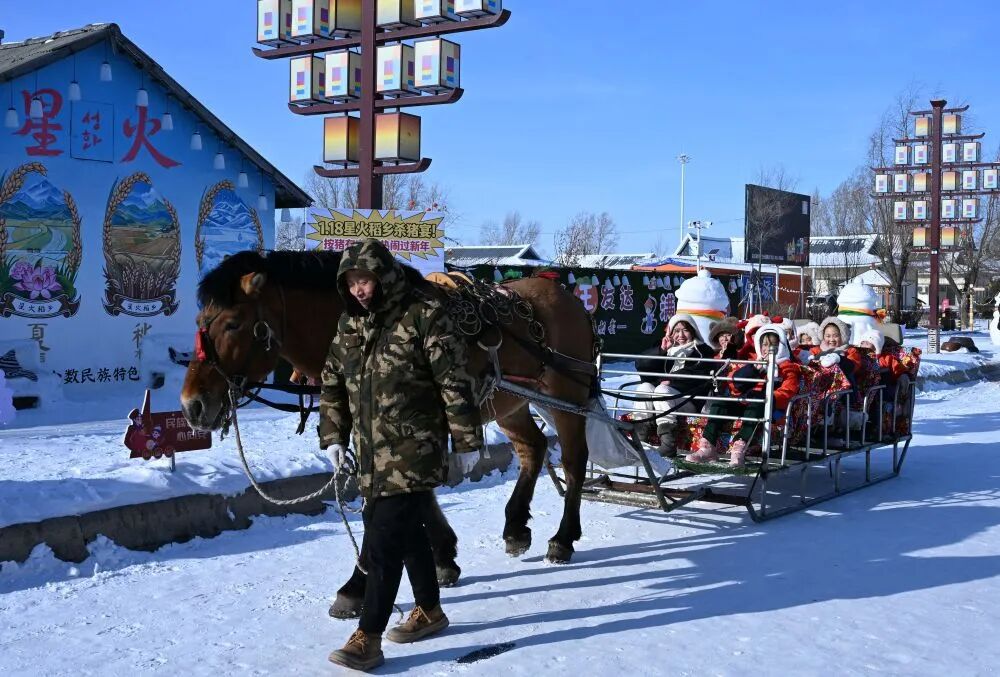
Group 1 - The tourism boom in Xinghuo Village has significantly increased local entrepreneurship and attracted external investors, leading to the establishment of new winter tourism projects such as the Xinghuo Snow World and Ice Park [2] - The integration of agriculture, culture, and tourism in Huachuan County has transformed traditional agriculture into customized agriculture, enhancing local product sales and increasing income for residents [2][5] - The county achieved a tourism revenue of 136 million yuan last year, contributing to a total comprehensive income of 316 million yuan across the entire chain [5] Group 2 - The Xinghuo Rice Country Tourism Scenic Area has hosted over 20 special events, attracting more than 1.1 million visitors, which has significantly boosted local businesses, including restaurants [1][2] - The average income increase from customized agriculture is 1,200 yuan per mu, with 20,000 mu currently under customization, benefiting local farmers [5] - The local economy is seeing a resurgence as returning residents, like Jin Longzhe, are starting new businesses, indicating a positive outlook for the future of Xinghuo Village [5]
黑龙江:“农业+文化+旅游” 桦川星火村解锁旅游新玩法
Xin Hua She· 2026-02-03 12:19
Core Insights - The tourism boom in Xinghuo Village, Heilongjiang Province, has transformed the local economy, with significant increases in visitor numbers and local business revenues [1][2] - The integration of agriculture, culture, and tourism has led to a shift from traditional farming to customized agricultural practices, enhancing local income [2] Group 1: Tourism Development - Xinghuo Village, previously a typical agricultural village, has developed into a tourist destination with over 110 million visitors since the establishment of the Xinghuo Rice Tourism Scenic Area in 2025 [1] - The scenic area features over 10 attractions, including the Xinghuo Supply and Marketing Cooperative and rice paddy art, which have significantly increased local tourism activity [1] - Local businesses, such as the "Liuhua Sister Restaurant," have seen daily revenues exceeding 16,000 yuan, reflecting a multiple increase compared to previous earnings [1] Group 2: Economic Impact - The tourism boom has attracted external investments, leading to the establishment of new winter tourism projects, such as the Xinghuo Snow World, which generated over 120,000 yuan in revenue during the New Year holiday [2] - The integration of local agricultural products into the tourism sector has resulted in increased sales of items like rice and chili sauce, showcasing the successful fusion of agriculture and tourism [2] - The county has achieved a total tourism revenue of 136 million yuan, contributing to a comprehensive income of 316 million yuan across the entire industry chain [2]
2026-2032年中国米糠油市场研究与市场运营趋势报告
Sou Hu Cai Jing· 2025-11-26 07:08
Core Insights - The report provides a comprehensive analysis of the rice bran oil market in China from 2026 to 2032, focusing on market trends, operational strategies, and industry dynamics [2]. Group 1: Industry Overview - The rice bran oil industry is defined and categorized, with distinctions made between similar concepts and classifications according to national economic standards [2]. - The report outlines the data sources and methodologies used for analysis, including interviews with industry experts and a proprietary analytical model [2]. Group 2: Macro Environment Analysis - A PEST analysis is conducted, examining the political, economic, social, and technological environments affecting the rice bran oil industry in China [3]. - The regulatory framework and standards governing the rice bran oil industry are detailed, including current and upcoming regulations [3]. - The impact of China's "14th Five-Year Plan" on the rice bran oil industry is analyzed, highlighting relevant policies and development plans [3]. Group 3: Global Market Context - The report discusses the global development history of the rice bran oil industry, including macroeconomic factors and the effects of the COVID-19 pandemic [3]. - An analysis of the global market size and segmentation of the rice bran oil industry is provided, along with competitive dynamics and key player case studies [3]. Group 4: Domestic Market Analysis - The development history and current state of the rice bran oil industry in China are examined, including import and export trade conditions [4]. - The report analyzes market supply and demand, identifying key market players and their strategies [4]. - Market pain points and challenges faced by the industry are discussed, providing insights into potential areas for improvement [4]. Group 5: Competitive Landscape - A Porter's Five Forces analysis is presented, assessing competitive rivalry, supplier and buyer power, and the threat of new entrants and substitutes in the rice bran oil market [5]. - The report reviews investment trends, mergers, and acquisitions within the industry, highlighting the competitive landscape and market concentration [5]. Group 6: Value Chain and Supply Chain Analysis - The structure and dynamics of the rice bran oil industry value chain are analyzed, including upstream raw material supply and downstream application demands [6]. - The report identifies key technological processes and innovations within the industry, along with R&D investments and patent activity [6]. Group 7: Strategic Recommendations - A SWOT analysis is conducted to evaluate the strengths, weaknesses, opportunities, and threats facing the rice bran oil industry [7]. - The report provides strategic recommendations for market entry and investment opportunities, focusing on underdeveloped segments and regional markets [7].

大米产业:破局"稻强米弱"困境 强化区域品牌建设
Zhong Guo Chan Ye Jing Ji Xin Xi Wang· 2025-07-31 22:21
Core Insights - The seminar on the development status and challenges of the rice industry in the Yangtze River Delta focused on the collaboration across the entire rice industry chain and addressed the dilemma of "strong rice production but weak rice quality" [1] - Jiangsu has entered the "good rice" era, with 14 million acres of rice achieving integrated production, supply, and sales upgrades [1] - High-quality soft rice varieties like "Ningxiang Jing 9" and "Nanjing Jing 46" have gained popularity, with major companies like COFCO and Yihai Kerry purchasing over 10,000 tons annually [1] Industry Development Strategies - Companies are exploring "variety-specific planting" and developing order agriculture to enhance the value chain, including the production of functional rice such as low-sugar and selenium-rich rice [2] - A pricing mechanism based on quality is suggested to incentivize growers, alongside the promotion of tailored cultivation techniques based on variety characteristics [2] - The need for deep processing of rice to develop high-value products like rice protein and rice bran oil is emphasized, as well as strengthening regional branding [2] Breeding and Market Alignment - Seed companies stress the importance of market-oriented breeding development, with a focus on consumer needs and cultivation models [3] - The establishment of a new provincial seed company aims to integrate resources and align breeding research with rice industry demands [3] - Addressing issues such as high-temperature sensitivity in quality varieties is crucial for improving yield rates [3] Functional Rice Development - Breeders are encouraged to develop rice varieties that cater to different consumer segments, including high-end quality rice for affluent consumers and high-yield varieties for the general public [4] - The need for varieties that adapt to mechanized and simplified cultivation methods is highlighted, along with the importance of stability in rice varieties [4] - The seminar involved over 20 leading companies and research institutions, indicating a collaborative effort to enhance the rice industry [4]
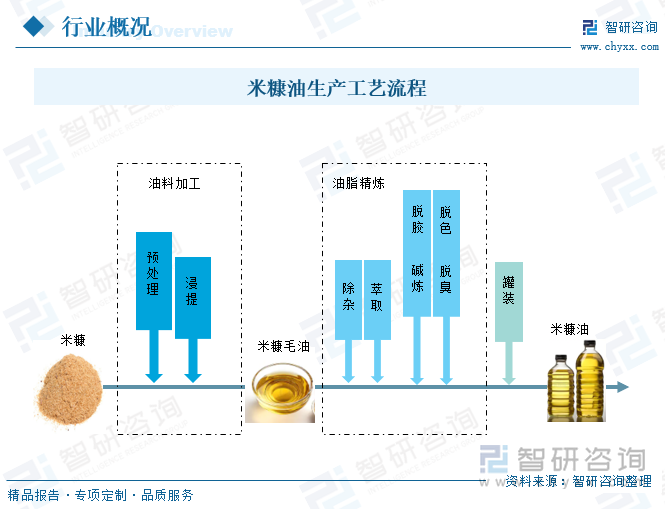
2025年中国米糠油行业生产工艺流程、政策汇总、供需现状、竞争格局及发展趋势研判:市场竞争日趋激烈[图]
Chan Ye Xin Xi Wang· 2025-06-27 01:51
Overview - Rice bran oil is produced from rice bran and is rich in nutrients such as oryzanol, vitamin E, and phytosterols, making it a healthy cooking oil choice [1][10] - The demand for rice bran oil in China is projected to reach 943,000 tons by 2024, with a market size of 5.97 billion yuan and an average product price of approximately 6,330.9 yuan per ton [1][10] Market Policies - Recent policies in China support the cultivation of rice and the development of deep processing industries, which benefit rice bran oil as a significant byproduct [5][7] Industry Chain - The rice bran oil industry chain includes upstream rice planting, rice processing, production equipment, and packaging materials, with rice bran being the primary raw material for oil production [8] Current Development - The increasing awareness of healthy eating among consumers has led to a growing preference for rice bran oil, which is recognized for its health benefits [10] Competitive Landscape - The rice bran oil market in China is characterized by intense competition, with major players including Yihai Kerry, Zhejiang Dele Kang, Hubei Modern Agriculture Group, and COFCO [13][16] Industry Representative Companies - Jiangxi Tianyu Oil Co., Ltd. is recognized for its extensive production capabilities and has received multiple quality certifications [16] - Liaoning Fenghe Source Oil Technology Co., Ltd. focuses on the processing of rice bran and has established advanced production lines [18] Development Trends - The demand for high-quality rice bran oil products is expected to rise, with companies investing in organic and non-GMO options, as well as functional foods [23]