
红利类基金

Search documents
低利率时代,如何积累资产,打造无限现金流?|投资小知识
银行螺丝钉· 2026-03-21 13:15
Group 1 - The article emphasizes the importance of dividend indices as a stock asset, highlighting their higher volatility compared to bond assets, and suggests investing in dividend funds when undervalued [3] - It discusses a cash flow fund combination, such as "monthly salary treasure," which allows for regular cash flow on a weekly or monthly basis, with a composition of 40% stocks and 60% bonds, resulting in lower volatility compared to dividend index funds [4] - The article outlines a balanced stock-bond strategy that automatically triggers rebalancing mechanisms to sell stocks when the market rises and to buy stocks when the market falls, thus achieving a "buy low, sell high" effect without requiring investor intervention [5][6] Group 2 - REITs (Real Estate Investment Trusts) are introduced as a significant asset class distinct from traditional real estate investments, focusing on commercial properties like shopping malls and office buildings, and they distribute about 90% of rental income as dividends to holders [7] - The article suggests identifying cash flow assets that are undervalued and have high cash flow yields for investment, indicating that high cash flow yields often coincide with undervalued asset phases [8] - It recommends using income to purchase assets, which leads to an accumulation of assets and increasing cash flow over time, and suggests utilizing asset cash flow to cover household expenses and reduce family debt [9][10]


我加仓红利的逻辑~2026年1月19日 市场温度
Xin Lang Cai Jing· 2026-01-19 13:06
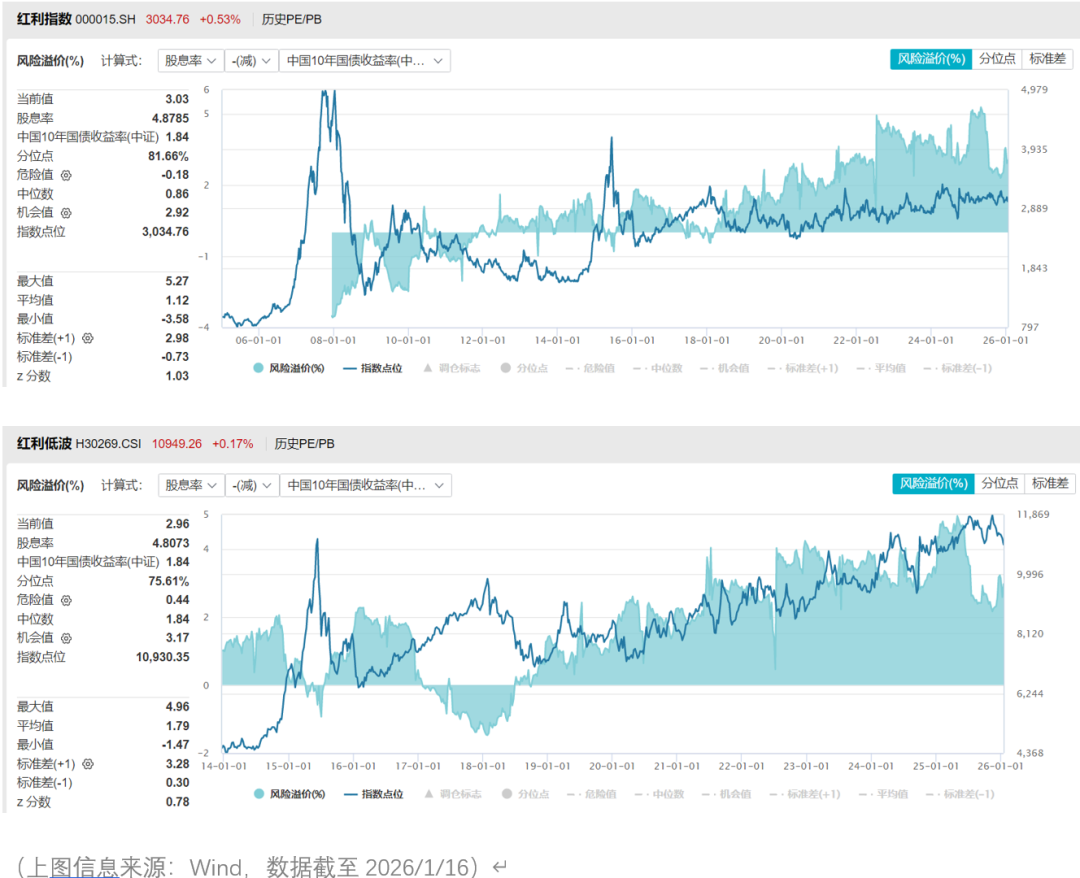
Group 1 - The company has three main investment accounts: an on-market ETF account, an off-market fund account, and an off-market advisory portfolio account [1] - The on-market ETF account reported a loss of 0.06 million (assets of 2.6 million), while the off-market fund account reported a loss of 0.05 million (assets of 5.5 million), totaling a combined loss of 0.11 million, which is a loss ratio of 0.14% [1] - Despite the current market conditions, the company continues to gradually increase its allocation to dividend products, indicating a long-term positive outlook on dividend returns [1][2] Group 2 - A recent article from Huatai-PB suggests that while dividends may be challenging in the short term, their long-term returns remain stable, reinforcing the need for dividend investments [2][3] - The company emphasizes the importance of maintaining a balanced portfolio to manage volatility, particularly in high-risk sectors like commercial aerospace, which can experience significant price swings [4] - The company is optimistic about technology growth but acknowledges the need to reduce exposure to mitigate overall portfolio volatility, suggesting that dividend yields of 5%-6% may be the only stable option in the current low-interest-rate environment [5] Group 3 - The risk premium for dividend indices has been historically high, with the dividend index risk premium exceeding its historical average 81.66% of the time since its inception [9] - The company highlights the defensive nature of high dividend yields, which can provide some recovery even when prices decline [9] - Huatai-PB has been a pioneer in dividend index products since launching the first dividend-themed ETF in 2006, and has since expanded its offerings to include a variety of dividend products covering both A-shares and Hong Kong stocks [9] Group 4 - The current market temperature for A-shares is at 70.60, indicating a slight increase of 0.6 degrees from the previous trading day, while the Hong Kong market temperature is at 51.73, showing a decrease of 0.2 degrees [10][11] - The temperature metrics suggest that buying should commence below 30 degrees and selling should begin above 50 degrees, providing a framework for investment decisions [10]
年内公募分红逼近2300亿元 权益类基金规模占比有所提升
Huan Qiu Wang· 2025-12-21 01:35
Core Insights - As of December 19, 2025, a total of 3,492 public funds have distributed dividends amounting to 225.684 billion yuan, marking a year-on-year increase of 13.5% compared to 198.846 billion yuan in the previous year [1][3] Fund Distribution - Bond funds continue to dominate dividend distributions, accounting for 73% of the total, although this is a decrease of 10 percentage points from 83% in the previous year [3] - Conversely, equity funds are increasing their share of dividends, with notable performance in both distribution amounts and frequency [3] - ETFs have emerged as the top performers in dividend distribution, with the top five funds being ETFs, and several funds distributing over 1 billion yuan [3] Notable Fund Performances - The Huatai-PB CSI 300 ETF leads with a dividend of 8.39 billion yuan, followed by the E Fund CSI 300 Initiated ETF at 7.15 billion yuan, and several others exceeding 5 billion yuan [3] - Funds with significant dividends have generally shown positive returns over the past year, with some notable examples including the Huashang Advantage Industry Mixed Fund, which returned over 94%, and the E Fund Kexun Mixed Fund, which achieved a return of 106% [3] Market Trends - There is a growing trend of irrational enthusiasm for high-frequency dividend products, with some companies using dividends as a marketing gimmick, potentially misleading less informed investors [3][4] - Industry experts advise that investors should not prioritize dividends as the main criterion for selecting funds, but rather focus on long-term performance and sound asset management [4]

公募大手笔分红 全年逼近2300亿元
Shang Hai Zheng Quan Bao· 2025-12-19 19:40
Group 1 - The total dividend amount for public funds in 2025 is approaching 230 billion yuan, with 3,492 public funds having distributed dividends totaling 225.68 billion yuan, marking a year-on-year increase of 13.5% from 198.85 billion yuan last year [1] - Equity funds have emerged as a significant contributor to dividends this year, with their share of total dividends increasing, while bond funds' share has decreased from 83% to 73% [1] - The top five funds by dividend amount this year are all ETFs, with Huatai-PB CSI 300 ETF leading at 8.39 billion yuan, followed by E Fund CSI 300 Initiated ETF at 7.15 billion yuan [1] Group 2 - A total of 48 funds have distributed dividends more than 10 times this year, with many being dividend-focused funds such as Guotai CSI Hong Kong Stock Connect High Dividend Investment ETF [2] - The trend of increased dividend distribution is supported by a recovering A-share market and improved market risk appetite, which provides a foundation for fund dividends [3] - Regulatory efforts to enhance the dividend mechanism for listed companies and the public fund reform focusing on investor interests have contributed to the increase in fund dividends [3] Group 3 - There is a growing concern regarding the potential misleading nature of high-frequency dividend distributions, as some funds may use dividends as a marketing tactic without necessarily indicating strong performance [4] - High-frequency dividends do not equate to additional returns, as they merely return a portion of fund assets to investors, which may confuse uninformed investors [4] - It is emphasized that dividends should not be the sole focus for investors; long-term performance and sound asset management are crucial for sustainable growth [4]
红利底仓可以,全仓大可不必
雪球· 2025-11-29 04:09
Core Viewpoints - The article emphasizes that ETFs will become the ultimate destination for most retail investors, encouraging them to act as their own fund managers [2][4]. Group 1: Dividend and Low Volatility - Dividends are essentially akin to bond assets, providing a form of down protection through stable cash flows [4][5]. - The low volatility characteristic of dividend assets offers a safe haven during market turbulence, as evidenced by the difference in maximum drawdowns between total return indices and price indices [5][7]. - Full allocation to dividend stocks may lead to missed opportunities for upward gains, as these stocks often belong to mature companies with stable cash flows but limited growth potential [7][13]. Group 2: Asset Allocation Strategy - A balanced allocation strategy is recommended, with 30% in dividend stocks to provide stable cash flow and reduce overall portfolio volatility [8][11]. - An additional 20% should be allocated to growth technology stocks to capture upward potential, as demonstrated by significant market movements [9]. - The remaining allocation can include diverse assets such as 10% in gold, 10% in bonds, and 20% in indices like the Nasdaq [10]. Group 3: Market Response and Rebalancing - The strategy of "not predicting, only responding" is highlighted as the ultimate solution to market unpredictability [11]. - Rebalancing is essential to manage risk; during market downturns, dividend stocks provide stability, while profits from growth stocks can be reinvested into undervalued dividend assets [12]. - Full allocation to a single investment style is viewed as a gamble, and diversification across different styles and asset classes is encouraged for long-term health [13][15].

UP向上,投资有温度︱长寿时代下的资产配置新机遇
Xin Lang Ji Jin· 2025-11-27 10:42
Group 1 - The core concept of the article emphasizes the importance of asset allocation planning in the context of an aging population and the challenges posed by declining pension replacement rates [3][4] - The initiative "UP向上,投资有温度" by 中信保诚基金 aims to provide comprehensive wealth management support throughout the investor's life cycle, focusing on investor education and professional investment decision-making [1][8] - The event in Hainan specifically addressed the new opportunities for asset allocation in the "longevity era," highlighting the need for proactive financial planning to ensure adequate retirement resources [3][4] Group 2 - The article discusses the demographic changes in China, including a significant drop in birth rates and an increase in life expectancy, which are leading to a declining pension dependency ratio, projected to fall to 2.3:1 in the future [3][4] - It emphasizes that diversified asset allocation is essential for achieving stable retirement outcomes, as relying solely on social security is insufficient for maintaining a quality lifestyle [4][6] - Public funds are positioned as a crucial component in addressing the pension funding gap and enhancing the pension security system, with a diverse product matrix that caters to various retirement needs [6][7] Group 3 - As of September 30, 2025, the number of personal pension funds has reached 302, with over 98% of these funds generating positive returns since their inception, providing investors with a wider range of retirement investment options [7] - The article highlights that public funds not only serve as financial products but also play a vital role in building a multi-tiered and sustainable pension security framework, complementing basic pension insurance and corporate annuities [7][8] - The company plans to continue its initiatives to support investors in their asset allocation journey, ensuring that retirement expectations are met with solid financial backing [8]
投资进化论丨在科技成长大热的当下,还有必要关注红利资产吗?
Sou Hu Cai Jing· 2025-11-19 06:48
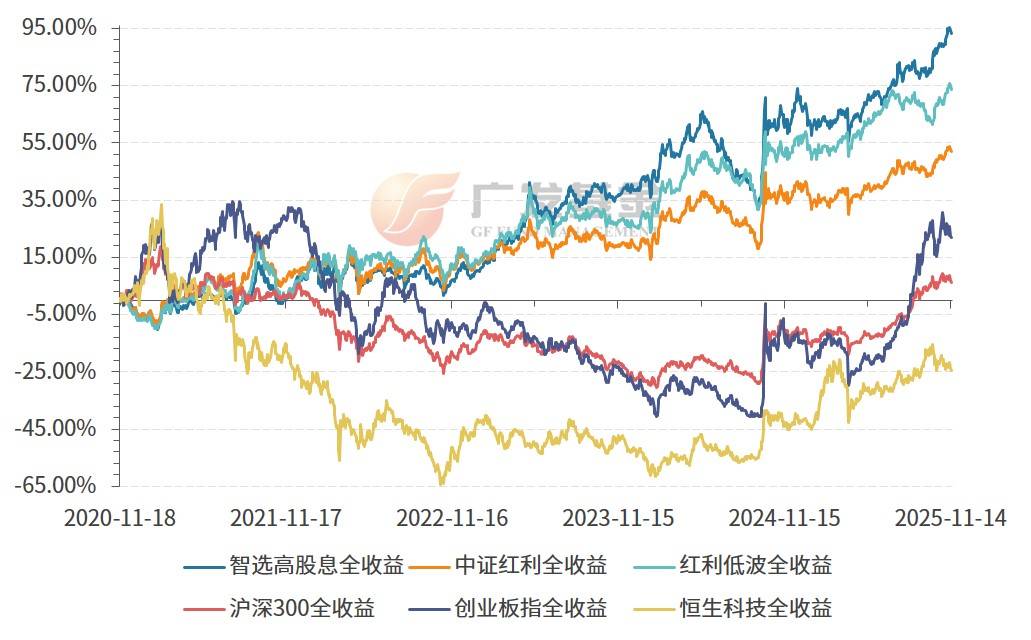
Core Viewpoint - The article discusses the resurgence of interest in dividend assets amid market volatility, suggesting that they can serve as a stabilizing component in investment portfolios, especially as technology growth stocks face pressure after significant gains [1][2][3]. Market Performance - Technology growth stocks have shown strong performance this year, while dividend value assets have lagged behind, leading to the perception of a "small year" for dividend assets [1]. - As of November 17, the ChiNext Index and the STAR 50 have declined by 4.11% and 9.45% respectively in the fourth quarter, while the CSI Dividend All-Return Index has increased by 5.37% during the same period [2]. Reasons for Renewed Interest in Dividend Assets - The first reason for the renewed focus on dividend assets is the high valuation of technology growth stocks, which has led to profit-taking and increased market volatility [3]. - The second reason is the growing trend of mid-term dividends among listed companies, with 1,035 companies announcing mid-term dividends totaling 735.69 billion yuan, surpassing last year's figures [3]. Long-term Investment Perspective - Investing in dividend assets requires a long-term perspective, as they are still subject to short-term price fluctuations typical of equity assets [4]. - Compared to the high volatility of technology growth indices, dividend indices exhibit more stable performance, with a generally lower degree of fluctuation over the past five years [4]. Historical Performance of Dividend Indices - Over the past decade, dividend indices have shown commendable performance, with annualized returns ranging from 8% to 11%, and annualized volatility generally lower than that of the CSI 300 All-Return Index [7][9]. - The "Smart High Dividend All-Return Index" has achieved an annualized return of 10.92% with a Sharpe ratio of 0.65, indicating strong relative performance [7][9]. Supporting Factors for Dividend Assets - The macroeconomic environment is favorable for dividend assets, with major economies entering a rate-cutting cycle and China's 10-year government bond yield around 1.8%, enhancing the appeal of dividend assets due to their higher dividend yields [10]. - Policy support for dividend distribution has been consistent, fostering a market atmosphere conducive to long-term and value investing [11]. - Insurance capital has significantly increased its allocation to dividend assets this year, reflecting a recognition of their value [12]. Conclusion - Overall, dividend assets are worth attention for both short-term resilience and long-term returns, making them suitable for inclusion in investment portfolios [13]. - For conservative investors, quality dividend index funds can be considered as core assets for long-term holding, while aggressive investors may benefit from diversifying their portfolios with dividend assets to reduce overall volatility [14].
[8月28日]指数估值数据(A股上涨,神奇两点半再现;成长股强势,为何价值股低迷;红利指数估值表更新;指数日报更新)
银行螺丝钉· 2025-08-28 14:03
Market Overview - The market experienced a decline of 1% during the day but rebounded significantly before closing, with the CSI All Share Index rising by 1.5% [1] - Both large, medium, and small-cap stocks saw an increase, although small-cap stocks rose less [2][3] - Recently, the ChiNext and STAR Market have been strong, attracting funds, which led to a decline in small-cap stocks [5] Growth vs. Value Styles - Growth styles have been strong, while value styles have been relatively weak [6] - Dividend and value indices saw slight increases, indicating some resilience in value stocks [7] - The A-share market has shown a pattern of style rotation, with growth styles outperforming value styles in certain years [21][32] Hong Kong Market Dynamics - The Hong Kong stock market continued to decline, particularly in technology stocks, while dividend and value styles remained stable [8][10] - Since the Chinese New Year, the Hong Kong market has experienced a stronger rally compared to A-shares, with technology stocks in Hong Kong outperforming A-share technology stocks by 20-30% at one point [11] - A-shares have recently shown a catch-up rally, while the Hong Kong market remains relatively subdued [12] Bond Market Insights - The bond market has been weak, with long-term pure bonds experiencing significant declines [15][16] - The yield on 10-year government bonds is currently around 1.7-1.8%, which is not considered attractive compared to historical averages [17][18] - Fixed income plus products, which include some equity exposure, have remained stable this year [19] Historical Performance of Growth and Value Styles - Historical data shows that from 2020 to 2025, the performance of dividend low-volatility and ChiNext indices has varied significantly, with growth styles outperforming in some years and value styles in others [24][28][30] - The average return of dividend low-volatility stocks since early 2020 is approximately 68%, while the ChiNext has returned around 62% [30][31] - The rotation of styles typically occurs every 3-5 years, with recent years favoring value styles [34][37] Investment Strategies - The company suggests a balanced approach to investing in both growth and value styles, adjusting the allocation based on valuation levels [65][66] - Growth styles are likened to offensive strategies, while value styles are seen as defensive, requiring different management approaches [66][67] - The company emphasizes the importance of patience and understanding market cycles for long-term investment success [56][76]
普通人能吃上的最大红利是什么?
雪球· 2025-06-13 08:32
Core Viewpoint - The article emphasizes that the greatest dividend for ordinary people is not external opportunities but rather the development of an internal system, categorized into "chaotic systems" and "compound systems" [3][4]. Group 1: Chaotic System - A chaotic system is characterized by frequent decision-making changes and high uncertainty, leading to a lack of accumulation in any particular field [7][8]. - Individuals in a chaotic system often rely on external influences and emotions for decision-making, which can result in missed opportunities [5][9]. Group 2: Compound System - A compound system focuses on long-term goals and experience accumulation, leading to clearer decision-making paths and reduced external interference [10]. - The advantages of a compound system include strong certainty, reduced anxiety, and a stable mindset despite market fluctuations [11]. - The article discusses various investment strategies within a compound system, such as technical analysis, value investing, and a "permanent portfolio" approach that emphasizes asset diversification and dynamic balance [11][12]. Group 3: Investment Performance - The author's "permanent portfolio" consists of dividend funds in the A-share market, index funds in the US (Nasdaq and S&P 500), and investments in India and Southeast Asia [13]. - The performance of the author's fund account shows a year-to-date increase of 6.33%, outperforming the CSI 300 index, which has decreased by 1.7% [16]. - The article notes that the stock market has shown positive trends, particularly after the worst impacts of tariff storms have passed [17][19].

每日钉一下(什么情况下,适合投资红利类品种呢?)
银行螺丝钉· 2025-03-31 13:48
文 | 银行螺丝钉 (转载请注明出处) 从历史数据看,指数增强基金的平均收益,多数年份是可以跑赢对应指数的。 但其中也有一部分跑输了指数,如果不谨慎挑选的话,也有可能买到的基金,实际上跑不赢指数。 那应该如何挑选优秀的指数增强基金呢? 这里有一门限时免费的福利课程,介绍了指数增强基金的投资方法。 想要获取这个课程,可以添加下方「课程小助手」,回复「 指数增强 」领取哦 ~ ◆◆◆ 不过,红利也有低迷的阶段。比如到了2019 -2020年,成长风格强势。 当时成长风格指数两年翻倍,但红利指数只 是微涨,大幅跑输市场,红利类基金也被投 资者嫌弃。 那么,什么情况下,比较适合考虑红利类品 种呢? 对普通投资者,红利投资有两种定位。 (1) 把红利品种,作为投资组合中的价值 风格部分。 因为红利是典型的价值风格品种,熊市比较 抗跌,牛市的时候进攻性会弱一些。 ▼点击阅读原 文,免费学习大额家庭资产配置课程 可以跟成长风格品种搭配。 (2) 看中红利指数的分红现金流。 低估的时候买入,此时股息率也比较高,长 期持有获得现金流。 此时就不在乎红利导不是跑赢古场,口更和 ...