组件等)

Search documents
《关于调整光伏等产品出口退税政策的公告》政策解读
Lian He Zi Xin· 2026-01-15 11:10
Policy Overview - The Ministry of Finance and the State Taxation Administration announced a differentiated adjustment to the export tax rebate policy for photovoltaic (PV) products, effective April 1, 2026, marking a strategic shift from subsidy-driven to market-driven growth[5] - The policy aims to address issues of overcapacity, price competition, and international trade friction in the PV manufacturing industry[4] Short-term Impacts - The export tax rebate for all PV products, including silicon wafers, solar cells, and modules, will be completely eliminated, with the previous 9% rebate rate reduced to 0%[6] - The export volume for polysilicon, silicon wafers, solar cells, and modules in 2024 is projected to be approximately 40,000 tons, 60.9 GW, 58.3 GW, and 236.2 GW, respectively, with module exports accounting for 40.2% of production[9] - The removal of the rebate will increase tax costs for exporting companies, leading to a significant drop in profitability; for example, the profit margin for solar modules will decrease from 7.73% to -0.17%[9] Long-term Effects - The policy is expected to accelerate the exit of less competitive small and medium-sized enterprises (SMEs) from the market, leading to a structural reshaping of the industry[10] - By eliminating reliance on export tax rebates, the industry will shift towards a focus on technology and value-driven competition, enhancing innovation and quality[11] - The market concentration in the PV manufacturing sector is projected to increase, with the CR5 market share for polysilicon, silicon wafers, solar cells, and modules expected to rise to 78%, 77%, 62%, and 63% respectively by 2025[12] Strategic Implications - The adjustment is seen as a proactive measure to mitigate international trade disputes and enhance the global competitiveness of Chinese PV products[13] - Companies with established overseas production capabilities will benefit from the policy, as they can mitigate risks associated with the removal of export rebates and tariffs[12]
光伏主产业链环节盈利能力逐渐改善 出口总额降幅明显收窄
Ren Min Ri Bao· 2025-12-23 22:11
Core Insights - The photovoltaic industry has responded to the "involution" competition by enhancing self-discipline, leading to improved profitability across the main industry chain and a significant recovery in prices [1] - The average prices of polysilicon, wafers, battery cells, and modules have increased by 38.9%, 2.2%, 0.4%, and 2.3% respectively since the beginning of the year [1] - Losses among main industry chain enterprises have narrowed, with third-quarter losses decreasing by over 5.6 billion yuan, a reduction of approximately 46.7% compared to the second quarter [1] Industry Performance - Despite a decline in operating revenue, the gross profit margin in the main industry chain has improved, indicating that photovoltaic companies are moving away from low-price, low-profit orders [1] - The new capacity growth trend in the main industry chain has been effectively controlled [1] - In the first ten months of the year, the export volume of photovoltaic products has shown signs of recovery, with total export value exceeding 24.4 billion USD, and the decline rate significantly narrowing compared to the same period in 2024 [1] Capacity and Utilization - As of the end of October, the installed capacity of photovoltaic power generation reached 114 million kilowatts, a year-on-year increase of 43.8% [1] - The proportion of photovoltaic power generation capacity in total installed capacity has increased from approximately 12% in 2020 to around 30% [1] - The share of photovoltaic power generation in total electricity consumption has risen from about 3.5% in 2020 to 11.6% [1] Future Directions - The National Energy Administration emphasizes the need for the photovoltaic industry to advocate for a competitive order centered on technological innovation, quality improvement, and service optimization [2] - The industry is encouraged to enhance its regulatory capabilities to meet diverse application needs, such as photovoltaic sand control, agricultural photovoltaic integration, and building-integrated photovoltaics [2] - There is a push to explore new non-electric utilization pathways and to integrate photovoltaic technology with green hydrogen, ammonia, and alcohol, directly addressing energy demands in commercial refrigeration, heating, and agricultural product drying [2]
打好促进新能源集成融合发展"组合拳" 让"电"亮生活向新向绿向未来
Yang Shi Wang· 2025-11-13 12:27
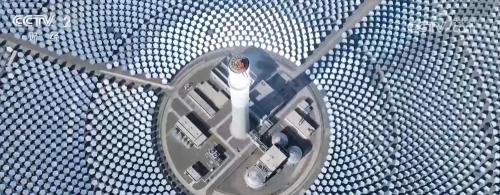
Group 1: New Energy Development Guidelines - The National Energy Administration has issued guidelines to promote the integrated development of new energy, focusing on multi-dimensional development and collaboration with various industries [1][4] - The guidelines emphasize optimizing the power structure in the development of new energy bases, particularly in the Shagou Desert, and encourage the establishment of 100% new energy bases in suitable areas [1] - For hydropower and wind-solar integrated bases, the guidelines suggest leveraging hydropower's rapid adjustment capabilities to facilitate large-scale and high-quality development of surrounding wind and solar resources [1] Group 2: Distributed New Energy Development - The guidelines advocate for the deep integration of new energy with various energy consumption scenarios such as transportation, buildings, and rural areas, aiming to enhance local consumption and alleviate pressure on the grid [4] Group 3: Multi-Industry Collaboration - The guidelines encourage the establishment of green, low-carbon new energy equipment manufacturing bases in resource-rich areas, utilizing local green electricity for production, thus creating a closed loop of "producing green equipment with green energy" [6] - There is a push to develop the green hydrogen, ammonia, and alcohol industries in areas rich in wind and solar resources, promoting local consumption and utilization of new energy [8] Group 4: High-altitude Wind Power Development - The world's largest high-altitude wind power capturing parachute, with an area of 5000 square meters, successfully completed its test in Inner Mongolia, marking significant progress in China's large-scale high-altitude wind power project [9][11] - This high-altitude wind energy system can capture wind energy at altitudes above 300 meters and convert it into electricity through a ground-based generator, demonstrating the feasibility of large-capacity and high-power generation [15] - High-altitude wind energy is seen as an untapped area with high wind speeds and stable directions, offering substantial potential for energy generation [13] Group 5: Solar Industry Self-Regulation - The Chinese photovoltaic industry has made progress in self-regulation to address issues like supply-demand imbalance and intense competition, leading to a more stable market environment [16] - From November 2024 to October 2025, the average price of photovoltaic components has shown slight increases, indicating a recovery from previous price drops below production costs [17] - The industry association emphasizes the importance of collaboration to maintain a healthy and orderly market environment [19]