
绿能

Search documents
新华视点丨解读2025经济数据:稳中向好 向新向优
Xin Hua Wang· 2026-01-21 06:02
Economic Performance Overview - In 2025, China's GDP surpassed 140 trillion yuan, marking a 5.0% increase from the previous year [1] - China maintains its position as the world's second-largest economy, with growth rates among the top of major economies [2] Economic Stability and Growth - The industrial added value above designated size grew by 5.9%, with an average urban unemployment rate of 5.2% [4] - The total value of goods trade reached a new high, and foreign exchange reserves exceeded 3.3 trillion USD [4] - High-tech manufacturing's added value accounted for 17.1% of the total industrial added value, with final consumption contributing over 50% to economic growth [4] Quality of Development - China's economy is transitioning from quantity accumulation to quality enhancement, showcasing stronger resilience and confidence in high-quality development [6] Foreign Trade Dynamics - The total import and export value increased by 3.8%, with exports rising by 6.1% and imports reaching a record high of 18.48 trillion yuan [8] Domestic Demand and Consumption - The total retail sales of consumer goods surpassed 50 trillion yuan, growing by 3.7% year-on-year, highlighting the importance of domestic consumption in economic stability [10] - Service consumption emerged as a significant highlight in the economic performance of 2025 [10]

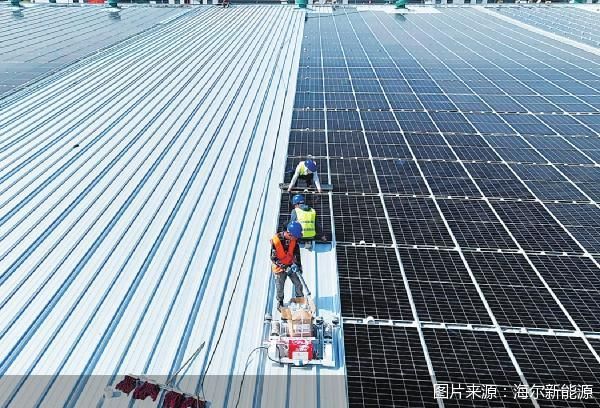
新能源提速IPO “海尔系”欲拓A股版图
Bei Jing Shang Bao· 2026-01-19 15:17
Core Viewpoint - Haier New Energy has completed over 1 billion yuan in Series B financing, marking a significant step in its capital expansion and IPO preparation, positioning it as a key player in the A-share market for the Haier Group [1][3]. Group 1: Financing and IPO Progress - Haier New Energy has successfully raised over 1 billion yuan in its Series B financing round, with participation from various investors including Agricultural Bank Investment and China Merchants Bank [1][3]. - The company aims to accelerate its IPO process after initiating listing guidance, having previously completed over 1.7 billion yuan in financing [1][3]. - The company focuses on providing integrated services in solar energy, energy storage, and smart energy control systems for both domestic and international users [3][4]. Group 2: Market Position and Strategy - Haier New Energy is the only new energy entity under the Haier Group, which has diversified its business beyond home appliances into multiple sectors, including new energy [3][7]. - The company aims to build an energy internet ecosystem that integrates with smart homes and offices, providing efficient and green energy solutions [4][10]. - The trend of home appliance giants entering the new energy sector is growing, with competitors like Midea, TCL, and Skyworth already established in solar and energy storage markets [9][10]. Group 3: Financial Performance of Haier Group - As of January 19, the total market capitalization of Haier Group's listed companies reached approximately 328.96 billion yuan, with Haier Smart Home leading at 230.1 billion yuan [6][7]. - All six A-share listed companies under Haier Group reported profitability, with Haier Smart Home achieving a net profit of 17.37 billion yuan in the first three quarters of 2025 [7][8].
(经济观察)产业结构优化彰显中国经济动能
Xin Lang Cai Jing· 2026-01-19 15:07
Group 1: Economic Growth and Structural Optimization - In 2025, China's GDP is projected to grow by 5.0% compared to the previous year, with a significant shift towards optimizing industrial structure, injecting new momentum into economic growth [1] - The "Three New" economy, focusing on new industries, new business formats, and new models, is expected to account for 18.01% of GDP in 2024, maintaining a high level in 2025 [1] - The automotive industry is projected to maintain its global leadership in production, sales, and exports, with new energy vehicles expected to account for over 50% of domestic new car sales [1] Group 2: Green Transition - By 2025, clean energy sources such as hydropower, nuclear power, wind power, and solar energy are expected to see an 8.8% increase in generation from the previous year, with non-fossil energy consumption rising by approximately 2 percentage points [2] - The green transformation of traditional industries is yielding significant results, with major energy-consuming sectors like construction materials, steel, and non-ferrous metals showing a notable decrease in energy consumption per unit of added value [2] - New energy vehicle production is anticipated to exceed 16 million units, maintaining global leadership in production and sales for 11 consecutive years [2] Group 3: Future Industries - 2025 is viewed as the year of artificial intelligence, with rapid advancements in future industries, particularly in AI, which is becoming a core driver for new productive forces and new market opportunities [3] - The integration of 5G technology is expected to cover 86 out of 97 sectors of the national economy, while industrial internet applications will comprehensively cover 41 industrial categories, enhancing value in the real economy [3] - Future industries such as advanced manufacturing, information technology, materials, energy, space, and health are identified as key areas for breakthrough developments during the 14th Five-Year Plan period [3]
2025年中国绿色转型取得新进展
Zhong Guo Xin Wen Wang· 2026-01-19 06:58
Core Insights - In 2025, China made significant progress in developing new productive forces and green transformation, with a focus on clean energy and green economy [1] Group 1: Clean Energy Development - Clean energy generation from hydropower, nuclear, wind, and solar sources increased by 8.8% compared to the previous year [1] - The proportion of non-fossil energy in total energy consumption rose by approximately 2 percentage points year-on-year [1] - Production of green energy equipment and materials saw rapid growth [1] Group 2: New Energy Vehicles - The annual production and sales of new energy vehicles exceeded 16 million units [1] - New energy vehicles accounted for over 50% of domestic new car sales [1] Group 3: Traditional Industry Transformation - Significant improvements were noted in the green transformation of traditional industries, with major energy-consuming sectors like building materials, steel, and non-ferrous metals showing a marked decrease in energy consumption per unit of added value compared to the previous year [1] Group 4: Overall Economic Quality - Progress was made in innovation-driven development, industrial quality enhancement, digital empowerment, and green transformation, leading to higher quality and more sustainable economic growth [1]